 fellfolio
Flemish cattle and farm dog
Bouvier des Flandres
The Bouvier des Flandres is a powerful dog with a rough coat, a substantial beard and a long history of helping on Flemish farms. Many are closely attached to their families and watch their surroundings attentively. Shared exercise, useful activities and thorough grooming belong in its daily routine. Its strength should be considered from the outset when training and arranging the home.
At a glance
- Size
- Large
- Height at shoulder
- 59 to 68 cm
- Weight
- 27 to 40 kg
- Lifespan
- 10 to 12 years
- Activity
- High
- Grooming
- Several times weekly
- Training
- Often cooperative
- Owner experience
- Experience recommended
An attentive working dog who belongs with the family
The international breed standard describes the Bouvier as calm, thoughtful and energetic. Many Bouviers watch their surroundings calmly and can react quickly and decisively. They often enjoy learning with their people and tasks that use their nose and mind. Patience and clear cues taught through rewards help direct that attention.
Its guarding background may show when the doorbell rings or someone approaches the property. Visits are easier with a practised routine, such as waiting on a bed while the door is opened. A safe distance from the entrance makes this easier to teach. Visitors should give the dog time to settle rather than immediately reaching to touch it.
An adult Bouvier is very strong. Adults should supervise interactions with children and make sure nobody is knocked over during play. Its previous experiences matter when considering cats and other animals. The American Kennel Club notes a strong prey drive. Small animals should be protected from chasing, and introductions should be carefully prepared.
Everyday life
Longer walks, exploring together and varied training suit a healthy adult Bouvier. A securely enclosed area can provide additional room for free movement and play. Activities should reflect the dog's age, fitness and health. Long, forced exercise should be avoided while a puppy is growing.
A simple search is one way to make use of its enthusiasm for work. A familiar object can initially be placed in clear view. Finding it earns a reward. Later, the object can be placed behind a low visual barrier. Tracking, in which the dog follows a scent trail along the ground, is another option with knowledgeable guidance. Walking comfortably on a lead and a reliable recall remain important everyday skills.
At home, the Bouvier needs room to stretch out and a quiet place to rest. A large garden does not replace shared outings. Learning to be alone should start with brief separations during which the dog stays relaxed. Longer absences require care arrangements. Persistent barking, restless pacing or damage to doors should prompt a change in the training plan, with professional help when needed.
Staying home alone
Dogs learn to stay home alone in small steps. The RSPCA advises no more than four hours at a time. Puppies and dogs that become unsettled when left alone need shorter absences and gradual practice. Arrange someone to care for your dog when you will be away longer.
Everyday dog training: recall, a loose lead and clear communication ↗
Day-to-day care
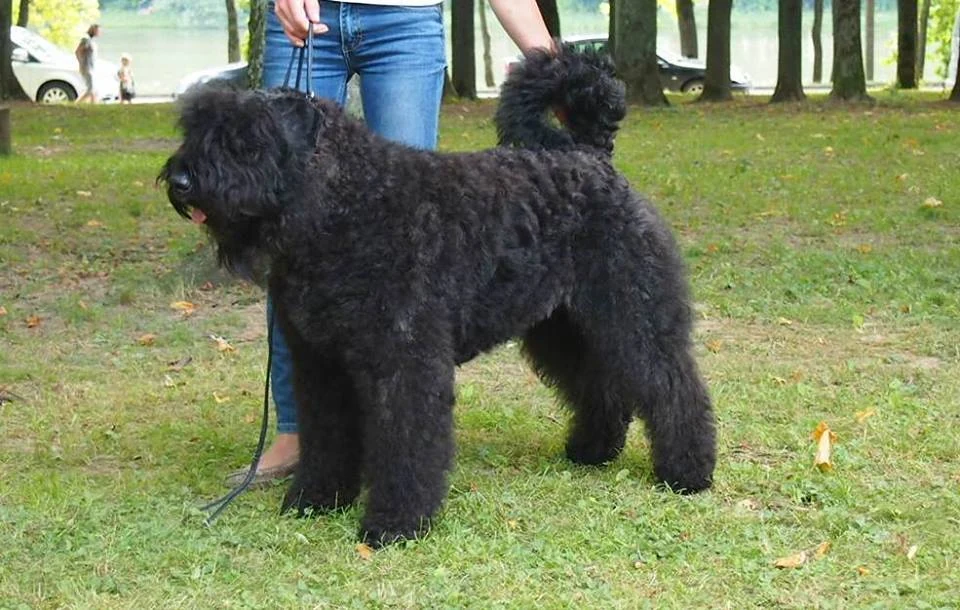
The coat combines rough outer hair with a dense, softer undercoat. This undercoat sits beneath the coarser visible hairs and can become matted while the surface still looks tidy. Brush and comb should therefore be worked gently through separate sections of coat. Behind the ears, the armpits and beneath the harness deserve particular attention. The American Kennel Club recommends brushing once or twice a week, with more care when tangles or dirt build up.
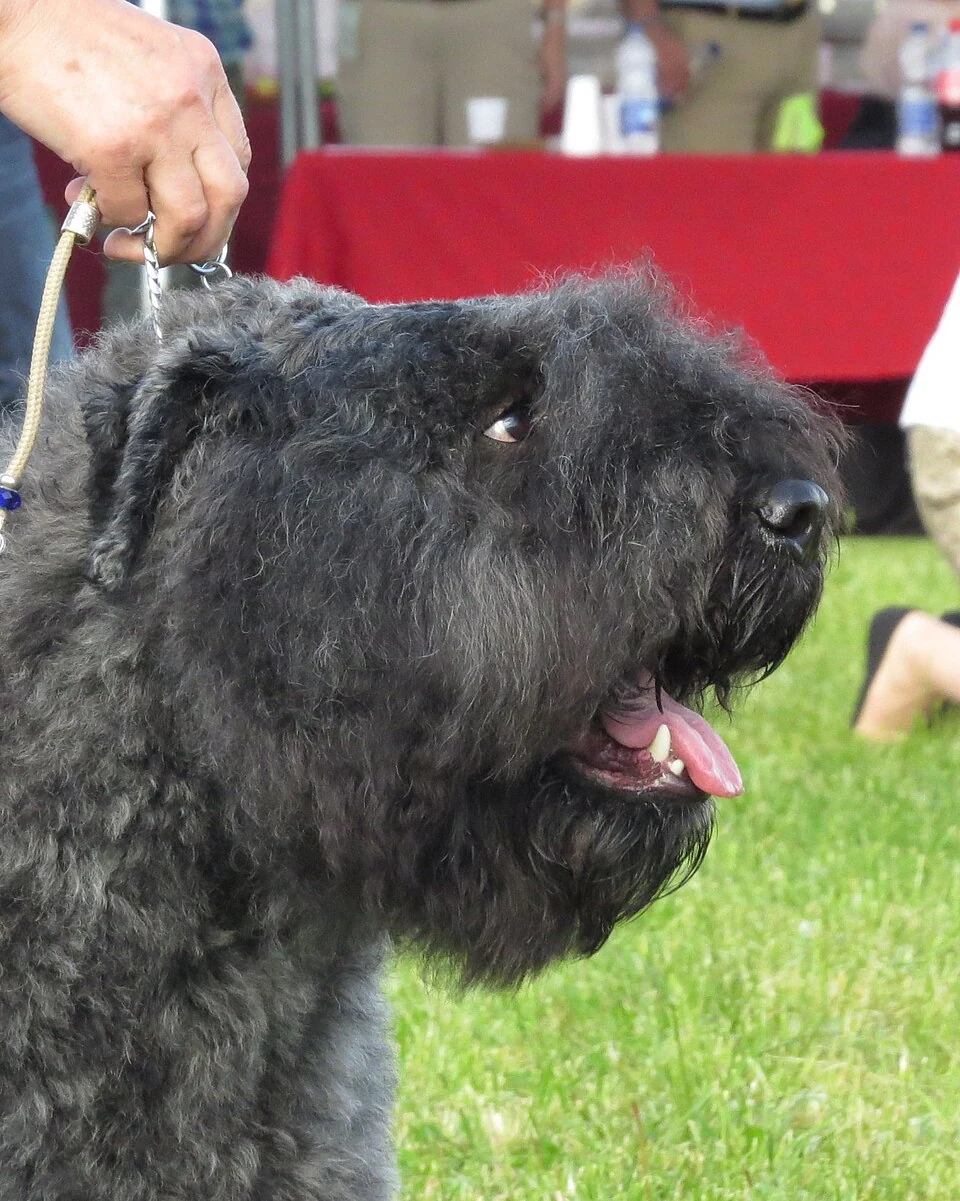
Water and food can collect in the beard. It should be cleaned when needed and dried thoroughly. A groomer experienced with rough-coated breeds can demonstrate suitable tools, coat maintenance and a practical trim. Tight mats should be removed professionally. Pulling hard or cutting close to the skin can cause injuries.
Hair should not interfere with the eyes. Ears and feet should be checked regularly for redness, foreign material and injuries. Head shaking, an unpleasant ear smell or pain needs veterinary attention. Nail care and daily brushing with dog toothpaste should also be planned. Brief, rewarded grooming steps help the dog become comfortable with handling.
Size and build
The breed developed in the Belgian and French parts of Flanders. Farm dogs moved cattle, guarded the premises and helped with pulling work. As farming changed, other roles developed, including police and search work. This varied background helps explain the Bouvier's physical capability and attention to its surroundings.
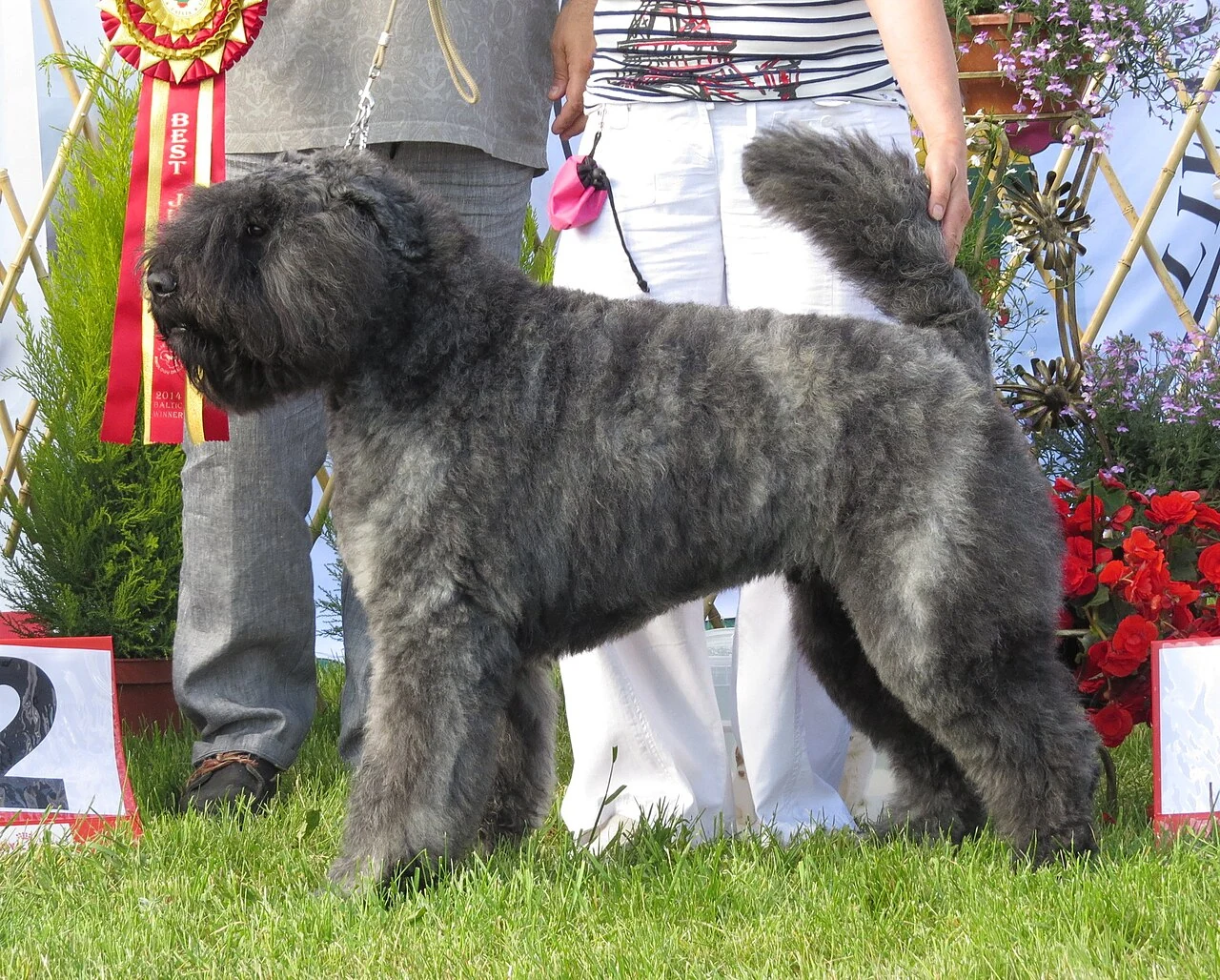
Its body is compact and almost square. Rough hair, eyebrows and a substantial beard shape the head. The standard of the international canine organisation FCI gives males a shoulder height of 62 to 68 cm and females 59 to 65 cm, with a tolerance of 1 cm in either direction. Weights are approximate: 35 to 40 kg for males and 27 to 35 kg for females. Grey, brindle and black shades are described. Brindle means darker stripes over a lighter base colour.
From puppy to senior: caring for your dog through every life stage ↗
Health
Both parents' health reports should be available when choosing a puppy. The Bouvier Health Foundation recommends hip and elbow assessments, heart examinations and regular eye examinations, among other checks. Hip dysplasia means that the hip joint develops incorrectly, which can cause pain and arthritis. Lameness, stiffness or difficulty getting up should be investigated.
Glaucoma is an important eye condition. Pressure inside the eye rises because fluid cannot drain properly. This can cause pain and permanent loss of vision. A red or squinting eye, cloudiness or a sudden change in vision needs prompt veterinary examination.
As with other large, deep-chested dogs, owners should know the signs of gastric dilatation-volvulus, often called bloat with a twisted stomach. The stomach expands and twists, disrupting blood flow. Unproductive retching, an increasingly swollen abdomen, marked restlessness or weakness are emergency signs. Immediate emergency veterinary care is needed.
Regular preventive care, a suitable weight and exercise matched to physical development are useful. The American Kennel Club gives a lifespan of 10 to 12 years. This helps with planning and cannot predict the lifespan of an individual dog.
Could this breed fit your life?
Could work well if …
- You want to involve a large, active dog closely in daily life.
- You can manage its strength calmly and enjoy training together.
- You can make time for thorough brushing, beard care and skilled grooming.
What to consider
- Physical strength and guarding behaviour require reliable training and well-managed visits.
- The dense undercoat can mat. Grooming should reach the lower coat layers.
- Both parents’ hip, elbow, heart and eye reports should be available before choosing a puppy.
Similar needs, different dogs.
Selected by shared size, activity, grooming and training characteristics.
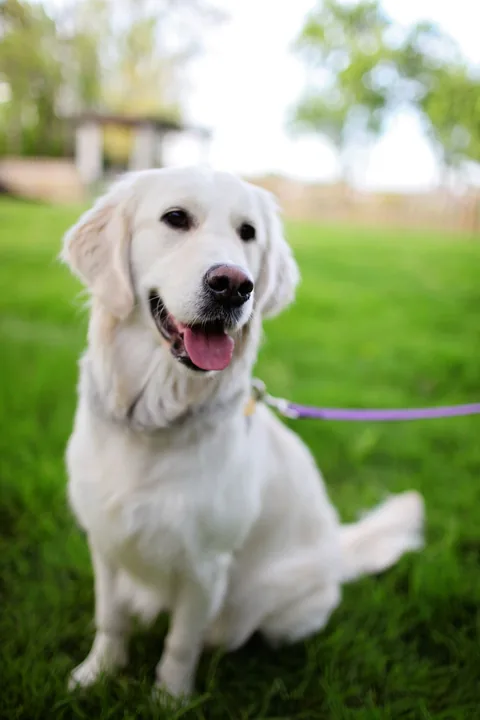
Retriever
Golden Retriever
Bred to retrieve shot game, Golden Retrievers often like searching and carrying things back. They need long walks, regular coat care and people who can safely handle a strong young dog.
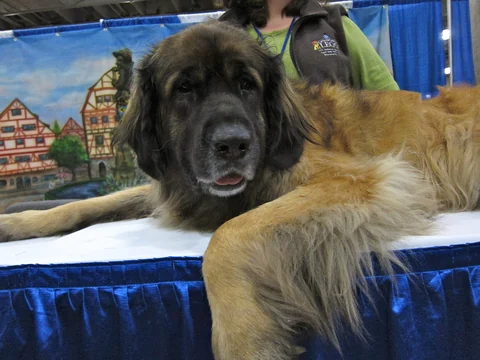
Giant companion and working dog
Leonberger
The Leonberger is a giant, usually calm dog with an abundant coat. Life with one calls for space, long walks and a practical plan for food, transport and veterinary costs.
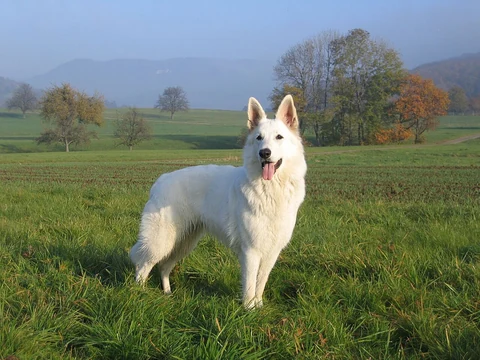
Herding dog
White Swiss Shepherd
The White Swiss Shepherd is striking, with a pale coat and upright ears. Behind that elegant appearance is a large, active dog that needs shared outings, training and close family involvement. Choosing one for its colour alone misses much of what everyday care involves.
Sources and photograph credit
- Teaching your dog to be left alone
Used in this profile for: Staying home alone
- Bouvier des Flandres
Used in this profile for: Temperament, Everyday life, Day-to-day care, Health, Lifespan, Could this breed fit your life?
- Bouvier des Flandres, FCI Standard No.191
Used in this profile for: Size / Weight, Temperament, Day-to-day care, Size and build, Could this breed fit your life?
- Recommended Testing
Used in this profile for: Health
- Gastric dilatation volvulus (GDV) or bloat
Used in this profile for: Health
- Glaucoma
Used in this profile for: Health
- Canine hip dysplasia (CHD)
Used in this profile for: Health
- Dental disease in dogs
Used in this profile for: Day-to-day care
- Ear problems in pets
Used in this profile for: Day-to-day care
- Grooming and bathing pets
Used in this profile for: Day-to-day care
- Teaching your dog to be left alone
Used in this profile for: Everyday life
- Separation-related behaviour
Used in this profile for: Everyday life
- Training your dog
Used in this profile for: Everyday life
Photo credits
Portrait · Flandres Moletai May 2014.jpg · Томасина · CC BY-SA 4.0 · Edited

Coat and features · Bouvier des Flandres head Moletai May 2014.jpg · Томасина · CC BY-SA 4.0 · Edited

Puppy · Bouvier2.JPG · Franz27 · CC BY-SA 3.0 · Edited

Everyday life · Bouvier des Flandres 2016.jpg · AnetaAponik · CC BY-SA 4.0 · Edited
