 fellfolio
Shorthair and longhair
Scottish Fold
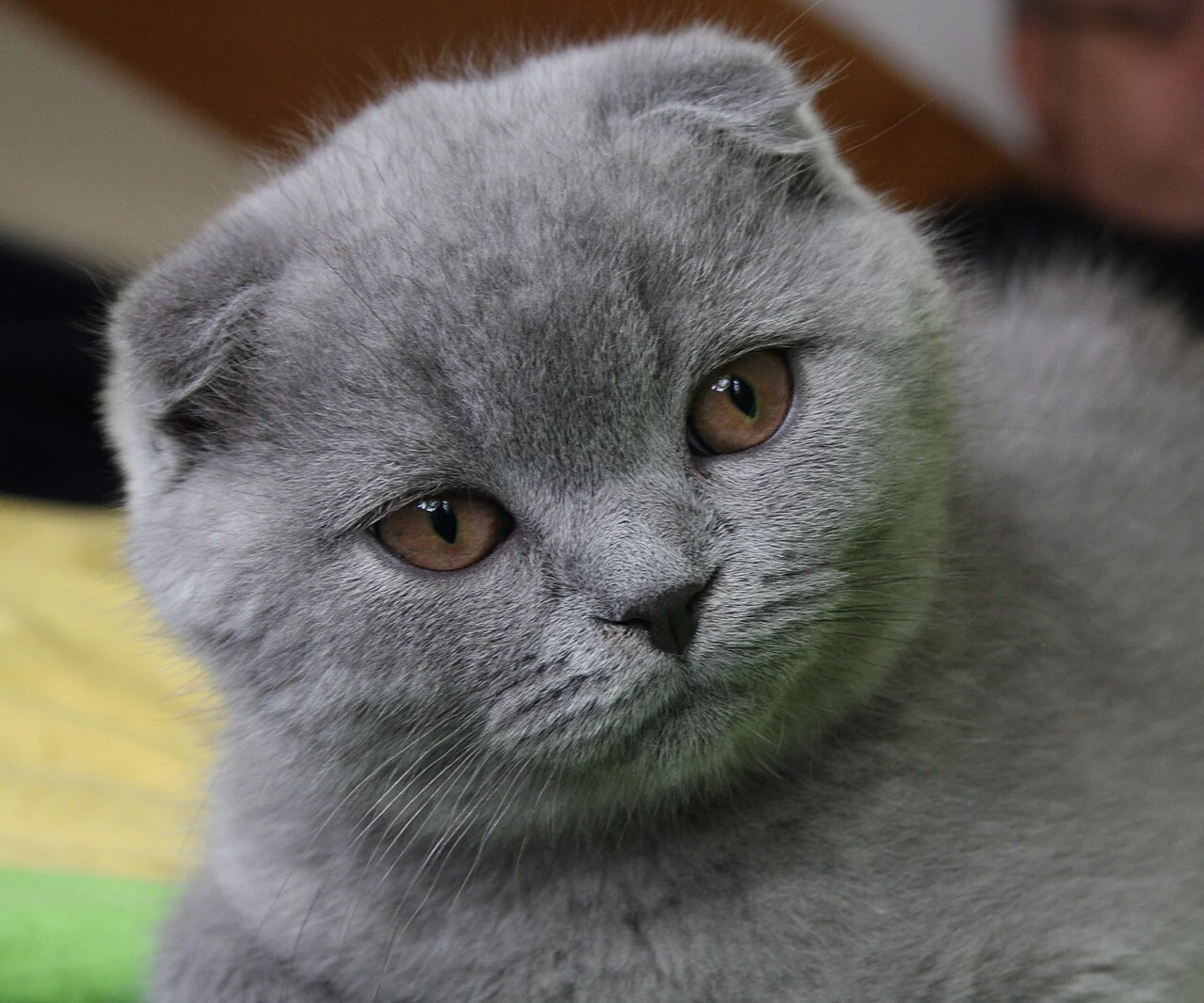
The Scottish Fold’s ears fold forwards because of an inherited change in cartilage development. The same change can cause painful damage to bones and joints. This portrait explains the breed and the care needs that owners of an existing cat should understand.
At a glance
- Size
- Medium
- Activity
- Not sufficiently documented
- Care needs
- Not sufficiently documented
Folded ears and their significance for health
Round eyes, a rounded head and forward-folded ears create the Scottish Fold’s familiar appearance. Cats may have short or long coats in many colours. The ears are more than a visible feature. The responsible genetic change affects cartilage development beyond the outer ear. Cartilage is the resilient tissue that covers joint surfaces, among other structures, and helps movement remain smooth.
The breed traces back to Susie, a white farm cat whose folded ears were noticed in Scotland in 1961. Selective breeding developed from her descendants. Some associations recognise the Scottish Fold. The international cat association FIFe does not recognise breeds with the relevant skeletal abnormalities that impair health and explicitly names the Scottish Fold.
Breed descriptions often portray Folds as affectionate and relatively calm. A cat may enjoy lying beside her person while still taking an interest in play. Limited movement should not, however, automatically be attributed to an easy-going temperament in this breed. Jumping less, withdrawing or avoiding touch may be signs of pain. You should respect her preferences for company and rest while paying attention to changes.
A home with accessible favourite places
A Scottish Fold should be able to reach essential places without difficult jumps. A low bed, a litter tray with an easy entrance and food on the same floor can make daily life more comfortable. A broad, stable step or ramp may help her reach a favourite window perch. The route should have secure footing. If she stops visiting a place she once enjoyed, you should consider which part of the journey has become difficult.
Interesting activities still matter for a cat with restricted mobility. A soft toy can be moved slowly along the floor so that she can catch it with a paw. Short searches for a few pieces of her usual dry food provide a task without a high jump. You should discuss play ideas with the practice in relation to her mobility and treatment plan. Play should be paused if she shows discomfort.
In a home with several cats, food, litter trays and beds should be provided in several accessible places. This gives the Fold another option if a companion blocks one route. Shared games should also allow each cat a chance to participate. Children should understand that she can choose whether to interact. Lifting or restraining her may hurt when joints are affected.
For practical play, food searches and quiet retreats, read Indoor Cat Enrichment: Play, Food Puzzles and Safe Retreats ↗
Grooming without painful handling
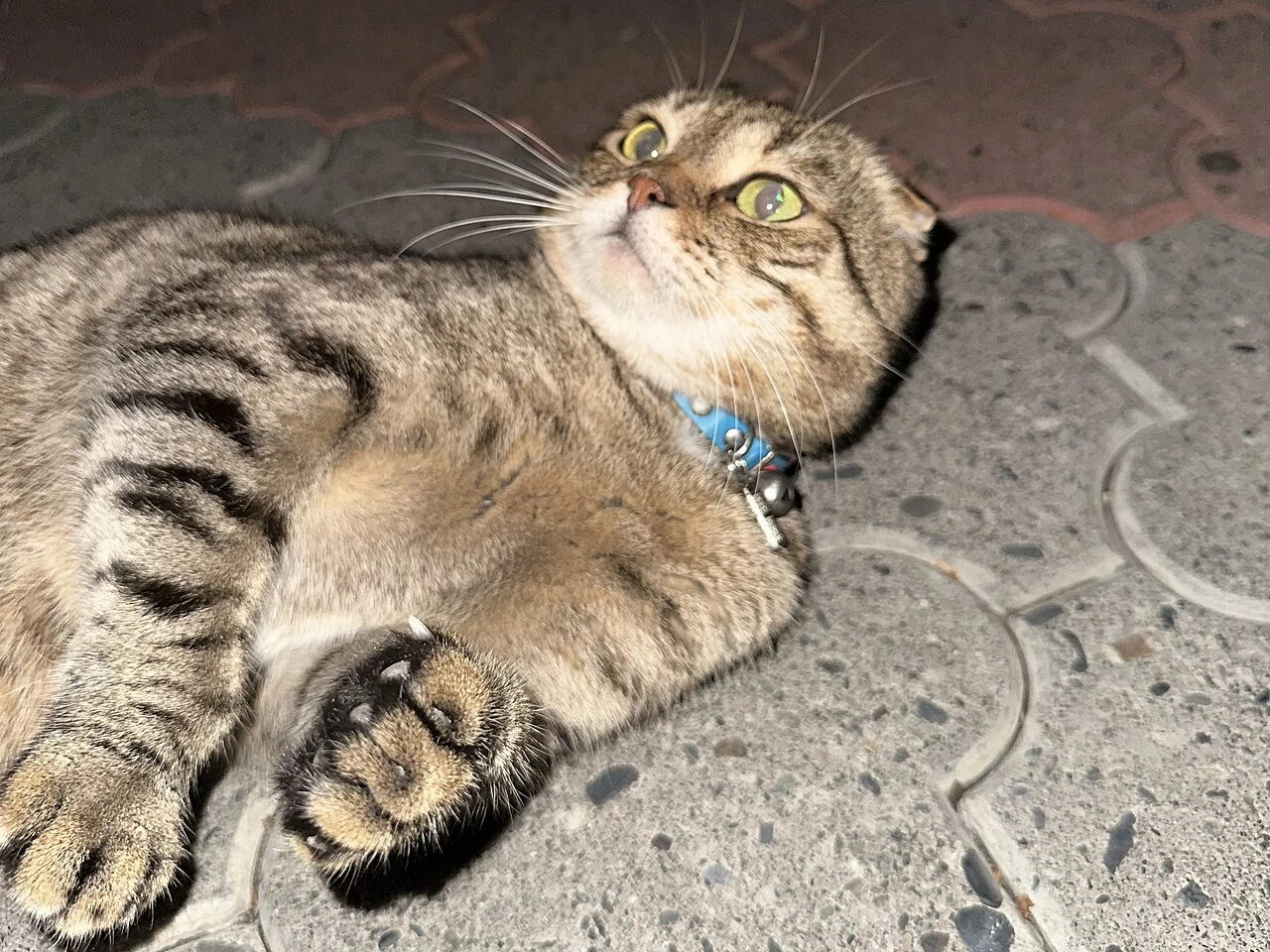
Regular gentle brushing often removes loose hair from a short-haired Fold. A longer coat should be checked and combed more frequently for tangles. If she cannot comfortably reach her back or hind legs, she may need help with grooming. New matting should also prompt an assessment of mobility and possible pain.
Grooming should take place in a comfortable position. You should use as little restraint as possible and avoid working on sensitive areas against her resistance. Tight mats should be removed by someone qualified to do so because they pull on the skin and removal can hurt. The outside of the folded ears should be checked for unusual smells, discharge or irritated skin. Your practice should show you any cleaning that is appropriate.
A stiff tail should not be bent or repeatedly tested for flexibility at home. If she moves away or resists when touched, or shows an unusual change in posture, your veterinary practice should assess her.
Noticing changes early
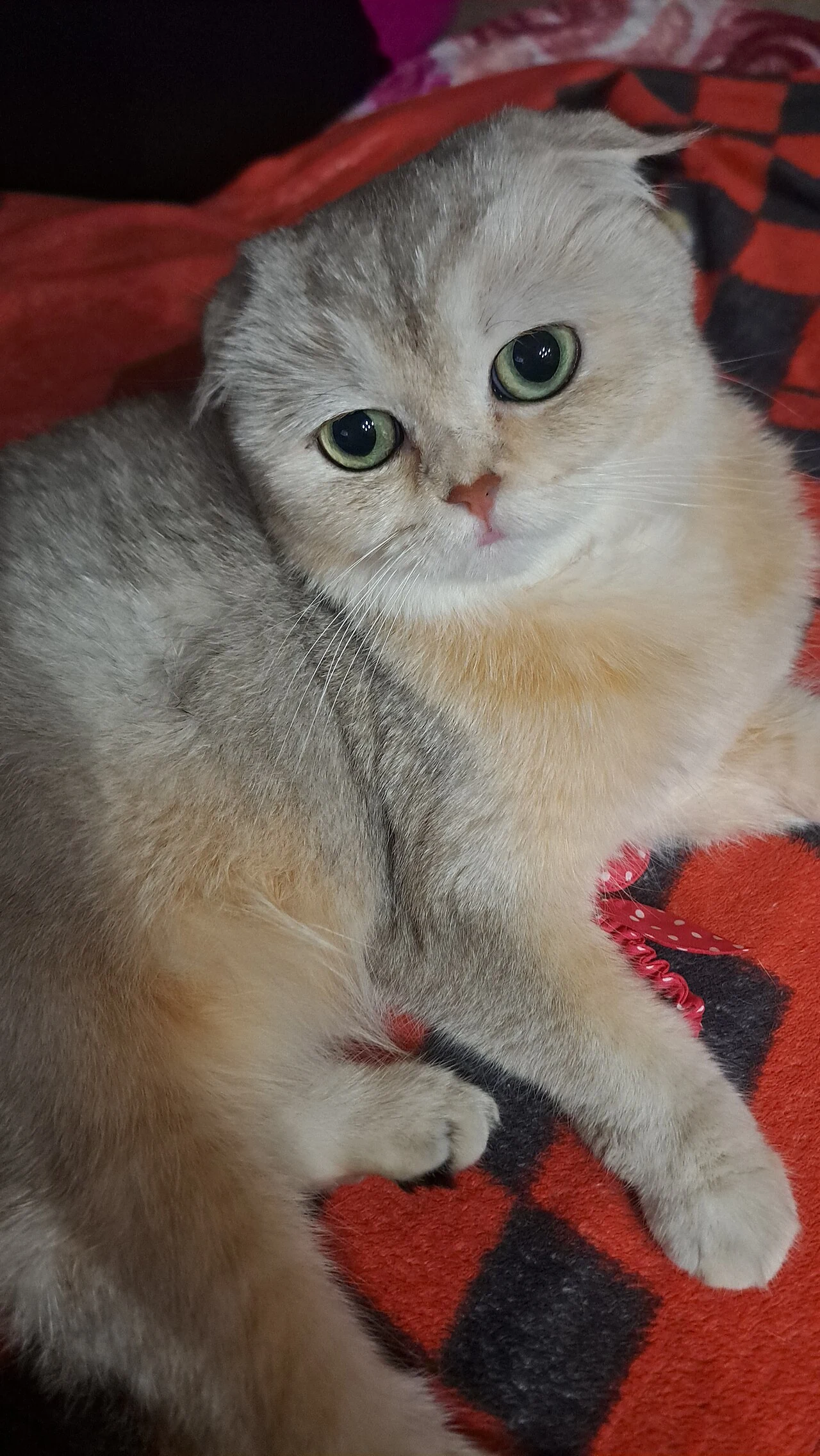
Young Folds initially have upright ears. In affected kittens, the ears begin to fold after a few weeks. Their future health cannot be determined fully from this change. A DNA test can identify whether the relevant variant in the TRPV4 gene is present and how many copies a cat has. It cannot show exactly when or how severely an individual cat will develop symptoms.
You should observe gait, play and sensitivity to touch from a young age. A short video of normal movement can be useful for comparison later. Your cat should not be prompted to jump or make unusual movements for the recording. As she gets older, she may need further support at home. The treatment plan should be reviewed to assess whether it helps her take part in her usual activities more comfortably.
Understanding cartilage, joints and pain
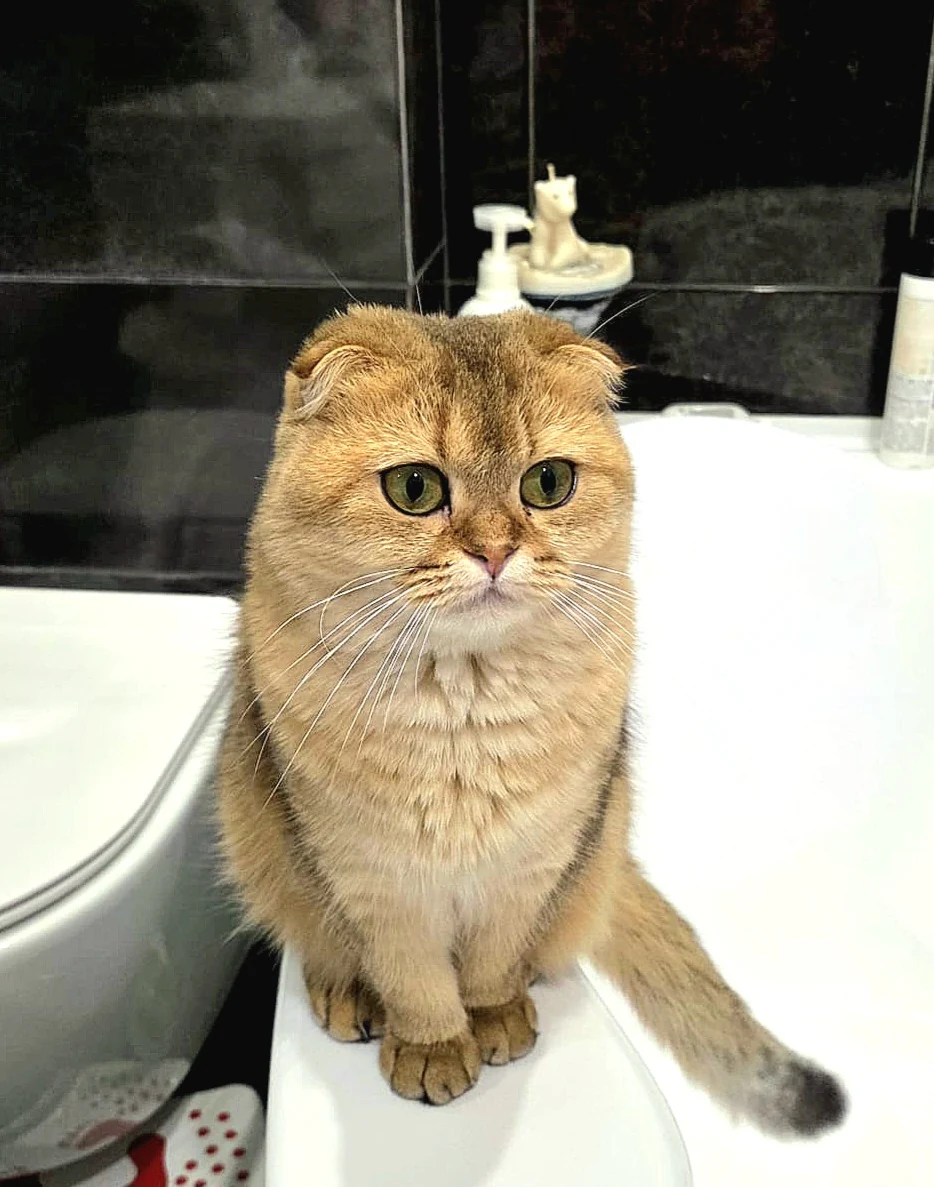
The disorder associated with folded ears is called osteochondrodysplasia. This means abnormal development of bone and cartilage. The limbs and tail can be affected, among other areas. These changes can cause painful joint damage and restricted movement. Cats with two copies of the Fold variant have a particularly high risk of severe changes. A single copy can also cause symptoms. Breeding with a cat without the variant therefore does not remove the risk for offspring with folded ears.
Signs of pain are often subtle. A cat may stop jumping onto the sofa, groom less, walk stiffly or hesitate to use the litter tray. She may also become irritable when touched. These observations should be assessed by a vet. Depending on the findings, examination may include watching her move, feeling the affected areas and taking X-rays.
Treatment should be tailored to the individual and may include pain relief, weight management and changes at home. You should not give human medicines yourself because some are dangerous for cats. Prescribed medicines, examination results and daily observations can be kept together in Fellfolio. A specific note such as “using the low litter tray again without hesitation” is useful. It gives the practice more information than a general impression that she seems better.
Caring for an existing Fold
Everyday care
- An existing Scottish Fold should have a veterinary plan for monitoring mobility and possible pain.
- Her home should provide accessible resting places, litter trays and activities. Changes should address the things she actually finds difficult.
- If you are considering a new cat, you should avoid supporting breeding for folded ears. A compatible cat without this harmful inherited feature can also be an affectionate companion.
Health and breeding concerns
- A Fold with only one copy of the relevant genetic variant can still develop disease. Normal behaviour early in life does not rule out later symptoms.
- Stiff movement, less play and resistance to touch should not be dismissed as breed characteristics.
- DNA testing and veterinary examination answer different questions. The test identifies the variant, while examination assesses current health and possible pain.
Meet other cat breeds.
Selected by size, activity, care and play needs.
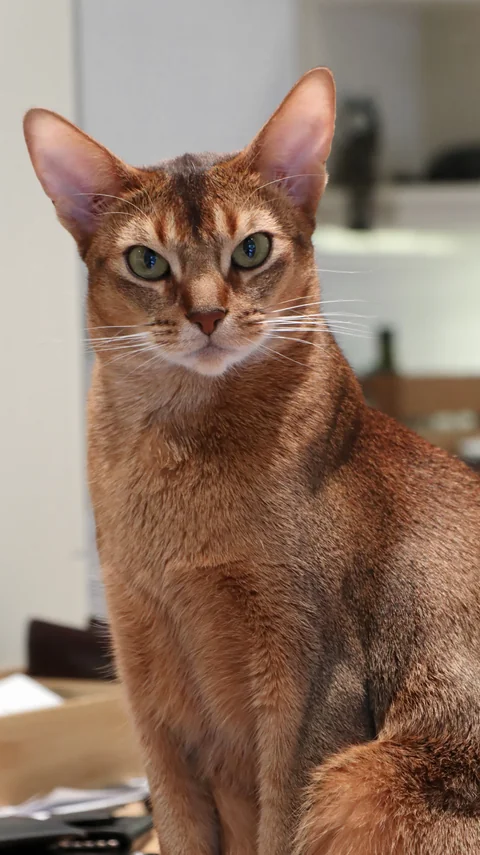
Shorthair cat · Great Britain
Abyssinian
An agile, curious cat that enjoys climbing and joining in household life. Light and dark bands on individual hairs give its short coat a finely shaded appearance.
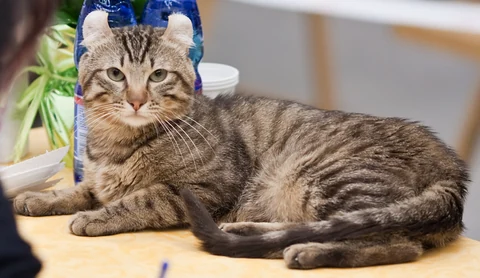
Shorthair and semilonghair · USA
American Curl
The American Curl is recognisable by ears that curve backwards. In everyday life, her curiosity and enjoyment of company often make the stronger impression. She comes with a short or longer silky coat and needs gentle handling around her ears.
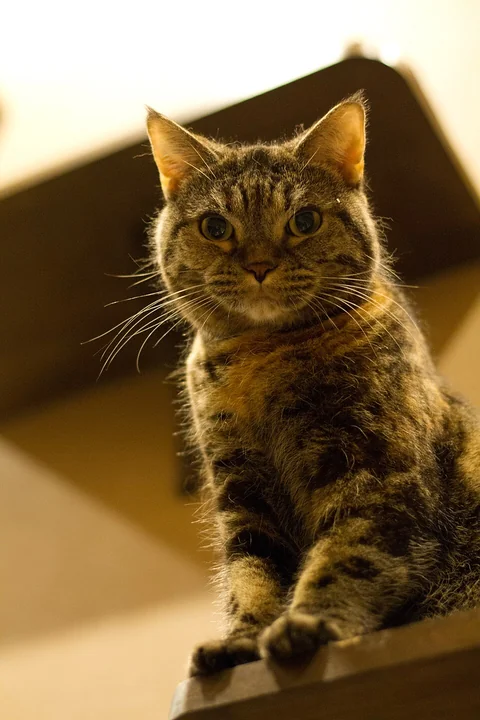
Shorthair cat · United States
American Shorthair
Sturdy, even-tempered and playful, the American Shorthair enjoys shared games while keeping a measure of independence.
Sources and photograph credit
- Is your cat slowing down?
Used in this profile for: Day-to-day care, Size and build, Health
- Grooming your cat
Used in this profile for: Day-to-day care, Size and build
- Indoor cats
Used in this profile for: Everyday life
- Tips for grooming longhaired cats
Used in this profile for: Day-to-day care
- Cats and play
Used in this profile for: Everyday life
- Loving Care for Older Cats
Used in this profile for: Everyday life, Could this breed fit your life?
- Breeding and welfare rules
Used in this profile for: Temperament, Could this breed fit your life?
- Cats with folded ears
Used in this profile for: Everyday life, Day-to-day care, Health, Could this breed fit your life?
- Scottish Fold breed profile
Used in this profile for: Temperament, Size and build
- Scottish Fold breed profile
Used in this profile for: Temperament
- Scottish breed group standard, revision 30 April 2024
Used in this profile for: Temperament
- Scottish Fold genetic test and cartilage disease
Used in this profile for: Temperament, Size and build, Health, Could this breed fit your life?
- Introducing your new cat to other cats in your home
Used in this profile for: Everyday life
- How to keep your cat healthy and happy
Used in this profile for: Health


