 fellfolio
Shorthair and semi-longhair
Munchkin
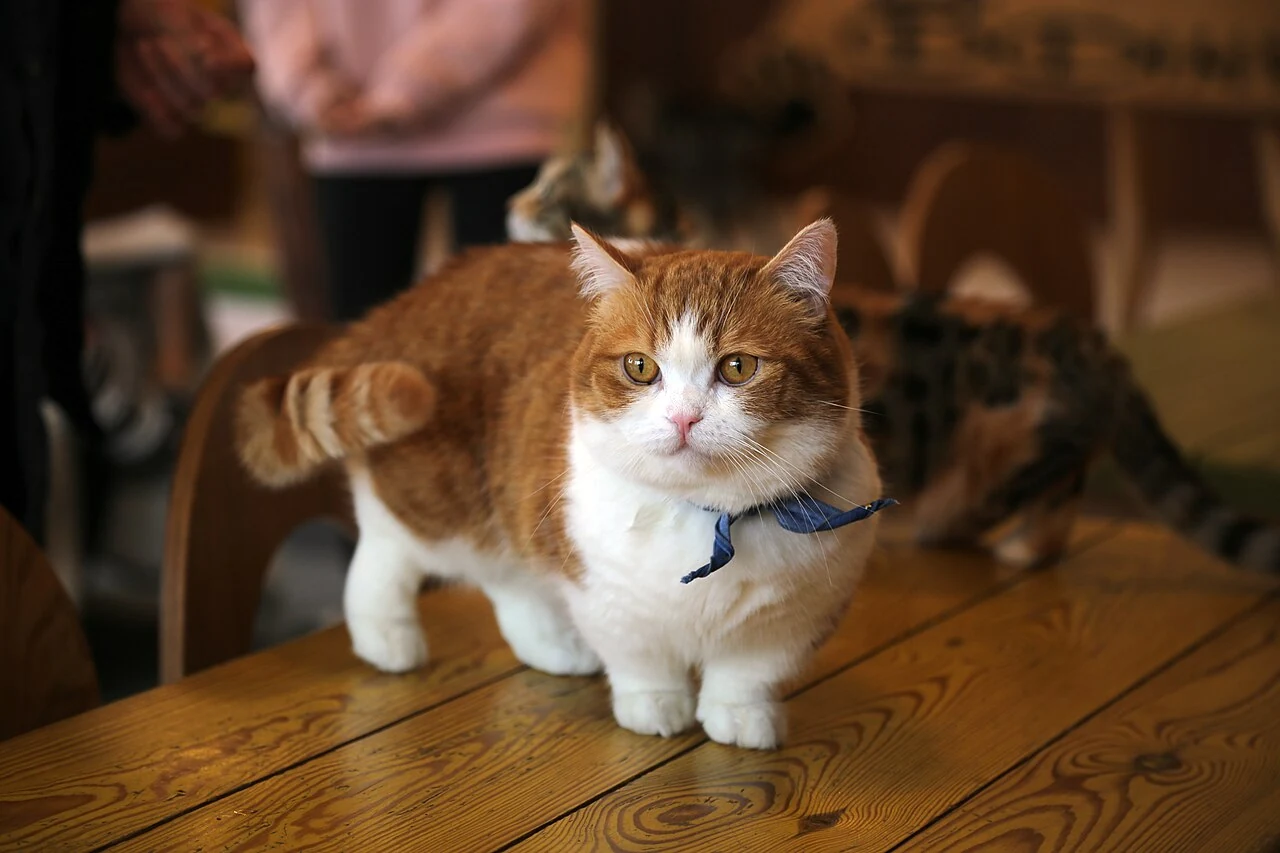
An inherited change in bone growth gives the Munchkin markedly shortened legs. These cats may be curious and playful, but their care should reflect their actual mobility. This portrait explains the trait and supports the care of cats who already live with people.
At a glance
- Size
- Medium
- Activity
- Not sufficiently documented
- Care needs
- Not sufficiently documented
Short legs change a cat’s possibilities
A Munchkin has a medium-sized body and noticeably shortened legs. The coat may be short or semi-long, with many colours and patterns. Cats with normal-length legs also occur within the breed. The short-legged trait affects growth of the long bones in the limbs. It therefore creates different body proportions from those of an ordinarily small cat.
The short-legged trait is linked to a change in the UGDH gene. This gene helps produce components of cartilage. In the growth plates of bones, cartilage has an important role in their development. This process is altered in short-legged cats. Welfare organisations point to possible difficulties with jumping, climbing and grooming, as well as health concerns.
Modern breed development began with short-legged cats in the United States in the 1980s. The international cat association TICA recognises the breed. FIFe, another international cat association, declines recognition because of the associated skeletal abnormality. Many Munchkins are described as lively and interested in people. In daily life, you should observe how your own cat moves, climbs and grooms herself.
Accessible routes and suitable games
A suitable home for an existing Munchkin starts with how she reaches essential places. A litter tray should have an easy entrance and enough room for her to turn around. Broad, low steps can make favourite resting places accessible. They should be stable and provide secure footing. You should observe whether she actually uses a route or pauses in front of it and turns back.
Games should suit her abilities. A small ball rolling slowly across the floor or a wand attachment kept low offers opportunities to stalk and catch. She should be able to capture the toy. You should not ask for high jumps just because a toy looks exciting. Brief pauses let you see whether she chooses to continue. If she lags behind, sits in an unusual position or walks stiffly, the cause should be investigated.
Food activities can also take place at floor level. A few pieces of her usual dry food placed in easy-to-reach recesses in a food toy can create a small puzzle. The task should be simple at first. In a home with several cats, the Munchkin should be able to reach food, water and litter trays without another animal intercepting her. Quiet places of her own are especially important if she cannot readily create distance by climbing.
For practical play, food searches and quiet retreats, read Indoor Cat Enrichment: Play, Food Puzzles and Safe Retreats ↗
Help with coats and claws
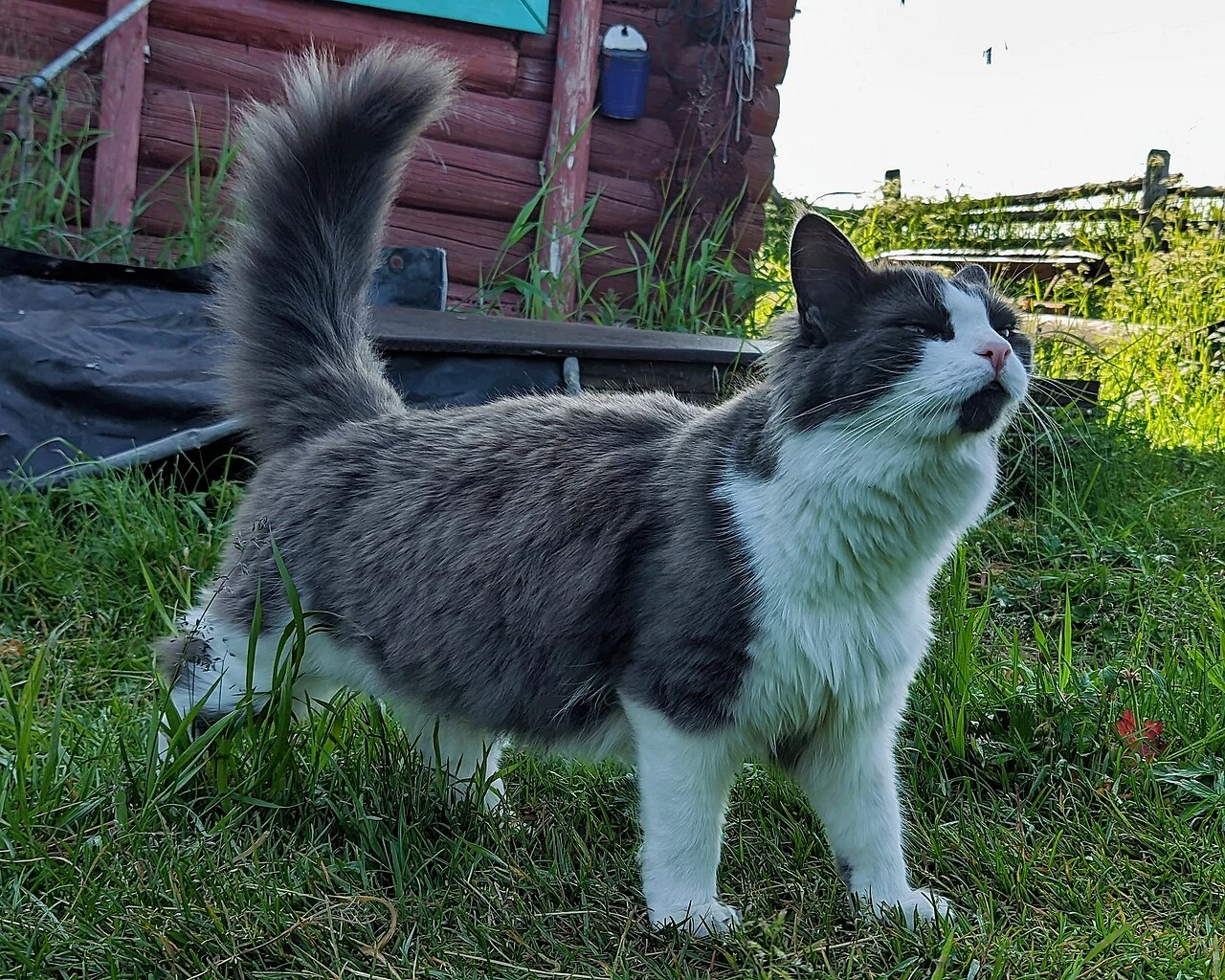
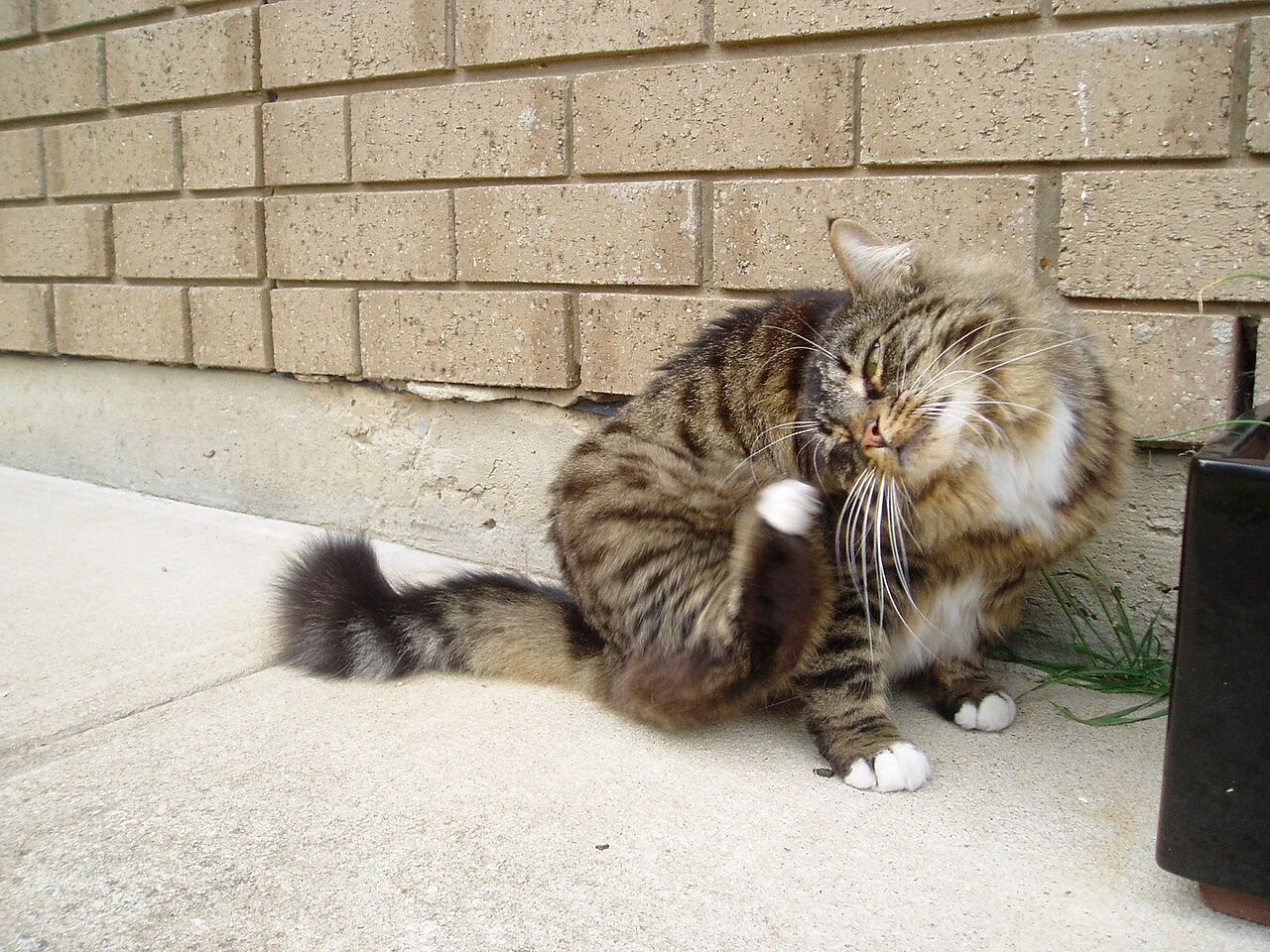
Gentle brushing may be enough to remove loose hair from a short coat. A semi-long coat should be combed regularly and checked for tangles, especially under the front legs, around the belly and on the hind legs. If she cannot reach certain areas while grooming, she should receive help. The practice should also assess whether body shape, pain or another illness makes grooming difficult.
Combing should take place while she can sit or lie comfortably. Small steps are more pleasant than a long session involving restraint. Mats close to the skin should not be tackled with scissors. Your practice can show you how to care for the coat safely or arrange professional removal of matting.
Claws and weight also deserve attention. A cat who climbs or scratches less may need help with claw care. The practice should show you which claws need trimming and how to do it. Excess weight can make movement more difficult and adds strain to joints. Appropriate food and portions agreed with the practice support her care.
Keeping daily mobility in view
A kitten should have a veterinary examination so that body structure, gait and any abnormalities can be assessed. Lively play on a single day does not show how she will cope with her physical traits over time. Small, recurring observations at home are more useful, such as whether she enters the litter tray easily or grooms her hind legs.
Familiar routes can become harder as time passes. An extra step beside the sofa or another litter tray on her preferred floor may then help. These changes should accompany medical assessment when mobility changes. You can gently practise grooming, carrier use and calm handling. If she moves away, you should simplify the exercise and respect her response.
Understanding shortened legs
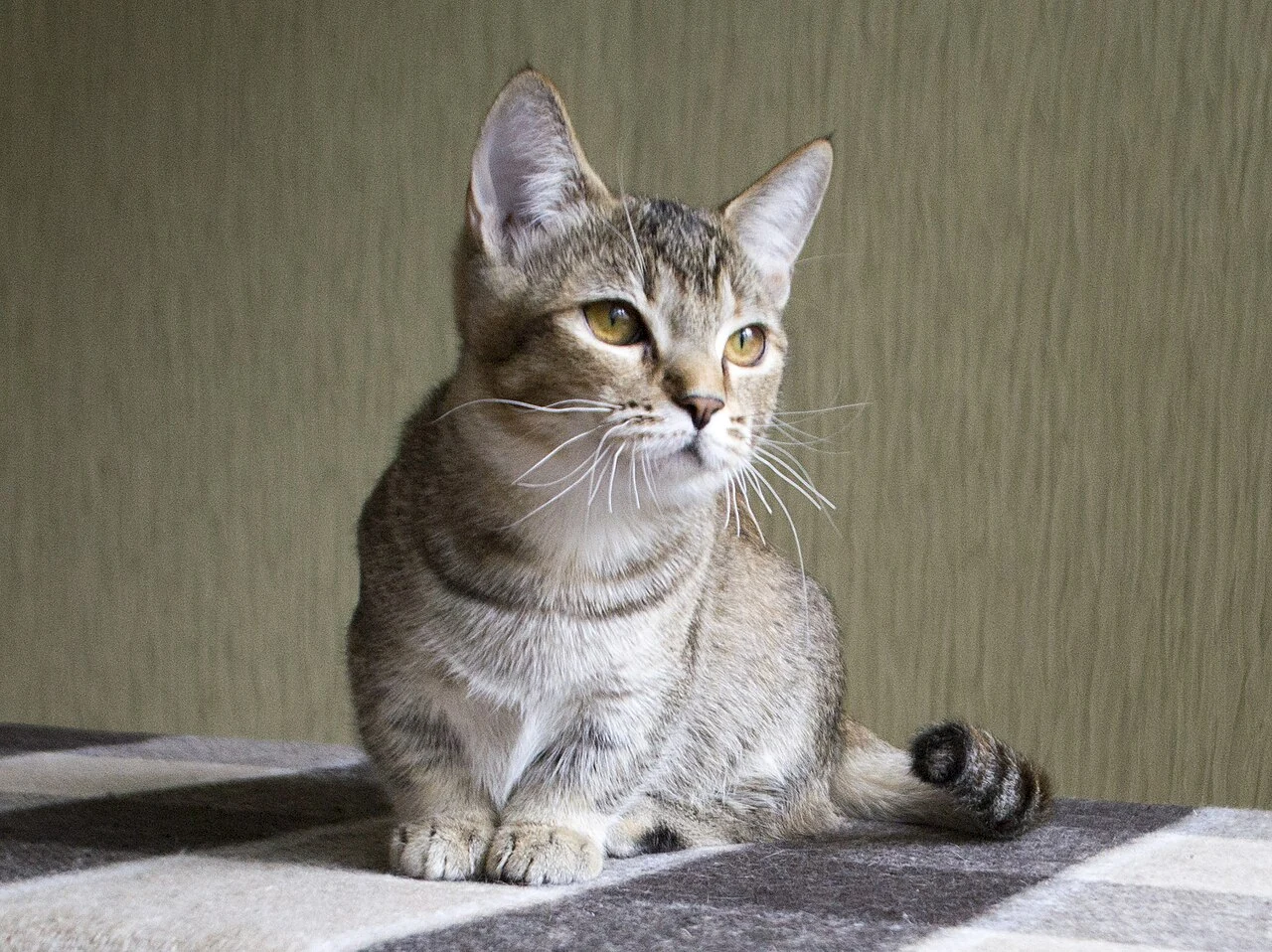
The short-legged trait is an inherited form of dwarfism affecting mainly the limbs. It can restrict a cat’s normal movement and behaviour. The effects on an individual should be assessed through daily observation and veterinary examination. Signs of additional skeletal problems should be investigated carefully.
Important changes include moving less, difficulty grooming, an altered gait or hesitation at the litter tray entrance. Withdrawal and resistance to touch can also indicate pain. During an examination, the practice can decide whether further investigation, such as X-rays, is appropriate. A genetic explanation for short legs does not replace assessment of current symptoms.
An existing Munchkin should have an individual plan for preventive care and treatment if needed. Weight, mobility and quality of life should be discussed regularly. Findings and specific observations can be kept together in Fellfolio. A short recording of normal walking may help the conversation with your practice. It should show ordinary movement without encouraging a jump for the video.
Caring well for an existing Munchkin
Everyday care
- An existing Munchkin’s home should suit her actual mobility. Accessible resources matter more than a particularly tall scratching tower.
- Owners should allow time for possible help with grooming and for regular veterinary assessments.
- If you are looking for a new cat, you should avoid supporting deliberate breeding for shortened legs. Cats without this trait also offer varied personalities and rewarding companionship.
Health and breeding concerns
- The genetic cause of short legs and current health are separate questions. Symptoms should be examined even if a cat previously played energetically.
- Difficulties with jumping, grooming or using the litter tray should be eased through suitable support and medically assessed when they change.
- A normal-legged cat from a Munchkin line is not automatically affected by the same short-legged trait. Individual body structure and health should be assessed on their own merits.
Meet other cat breeds.
Selected by size, activity, care and play needs.
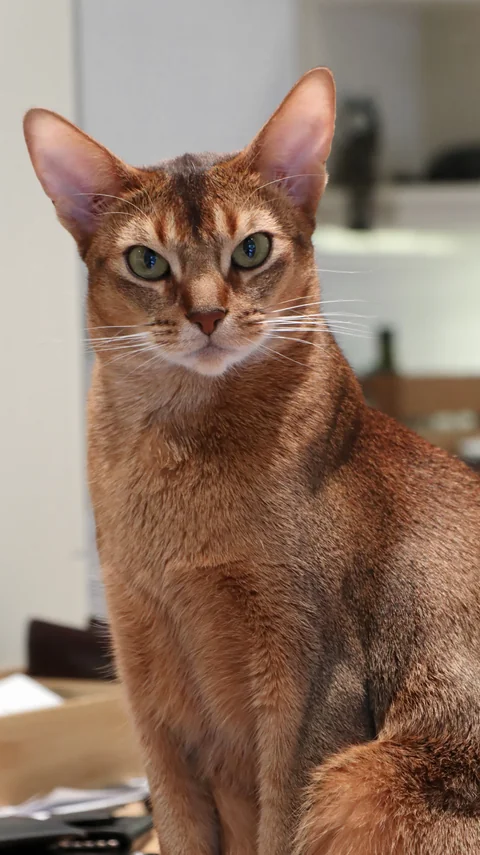
Shorthair cat · Great Britain
Abyssinian
An agile, curious cat that enjoys climbing and joining in household life. Light and dark bands on individual hairs give its short coat a finely shaded appearance.
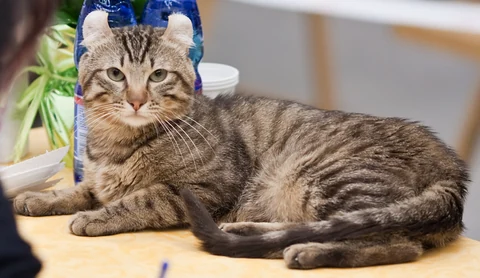
Shorthair and semilonghair · USA
American Curl
The American Curl is recognisable by ears that curve backwards. In everyday life, her curiosity and enjoyment of company often make the stronger impression. She comes with a short or longer silky coat and needs gentle handling around her ears.
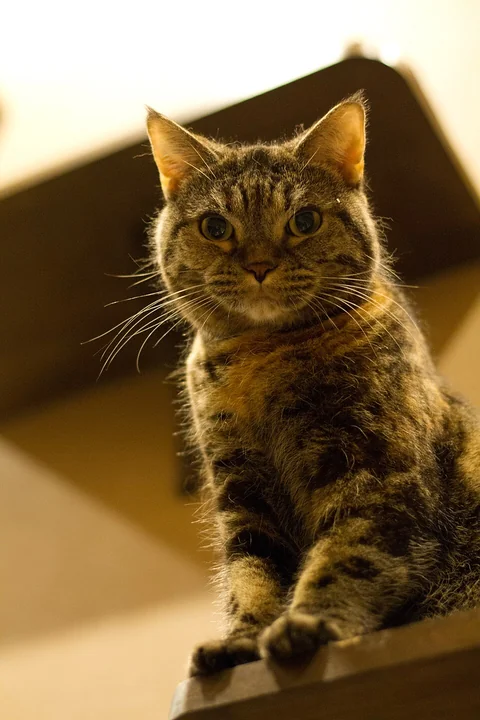
Shorthair cat · United States
American Shorthair
Sturdy, even-tempered and playful, the American Shorthair enjoys shared games while keeping a measure of independence.
Sources and photograph credit
- Is your cat slowing down?
Used in this profile for: Day-to-day care, Size and build, Health
- Grooming your cat
Used in this profile for: Day-to-day care, Size and build
- Indoor cats
Used in this profile for: Everyday life
- Tips for grooming longhaired cats
Used in this profile for: Day-to-day care
- Cats and play
Used in this profile for: Everyday life
- Loving Care for Older Cats
Used in this profile for: Everyday life, Size and build, Could this breed fit your life?
- Cats with dwarfism
Used in this profile for: Temperament, Everyday life, Day-to-day care, Size and build, Health, Could this breed fit your life?
- A new domestic cat genome assembly based on long sequence reads empowers feline genomic medicine and identifies a novel gene for dwarfism
Used in this profile for: Temperament, Health
- Breeding and welfare rules
Used in this profile for: Temperament, Could this breed fit your life?
- Munchkin breed profile
Used in this profile for: Temperament, Day-to-day care
- Munchkin breed standard, revision 1 January 2009
Used in this profile for: Temperament
- Introducing your new cat to other cats in your home
Used in this profile for: Everyday life
- How to keep your cat healthy and happy
Used in this profile for: Health
Photo credits
Portrait · Munchkin cat 2.jpg · Tasy Hong · CC0

Everyday life · Munchkin cat grooming.jpg · Pockle · CC BY-SA 3.0 · Edited

Portrait · Munchkin Aliska Karapuz.jpg · Fedorov078 · CC BY-SA 4.0 · Edited

In action · Munchkin cat stretching.jpg · Egor Plenkin · CC BY 2.0 · Edited
