 fellfolio
Semi-longhaired cat · Manx family
Cymric
The Cymric is the semi-longhaired sister of the Manx. Beneath her soft, dense coat is a strong cat with a rounded head and longer hind legs. Many Cymrics form close bonds with their people and enjoy playing together. Choosing this breed also means carefully considering the possible health effects of inherited tail shortening.
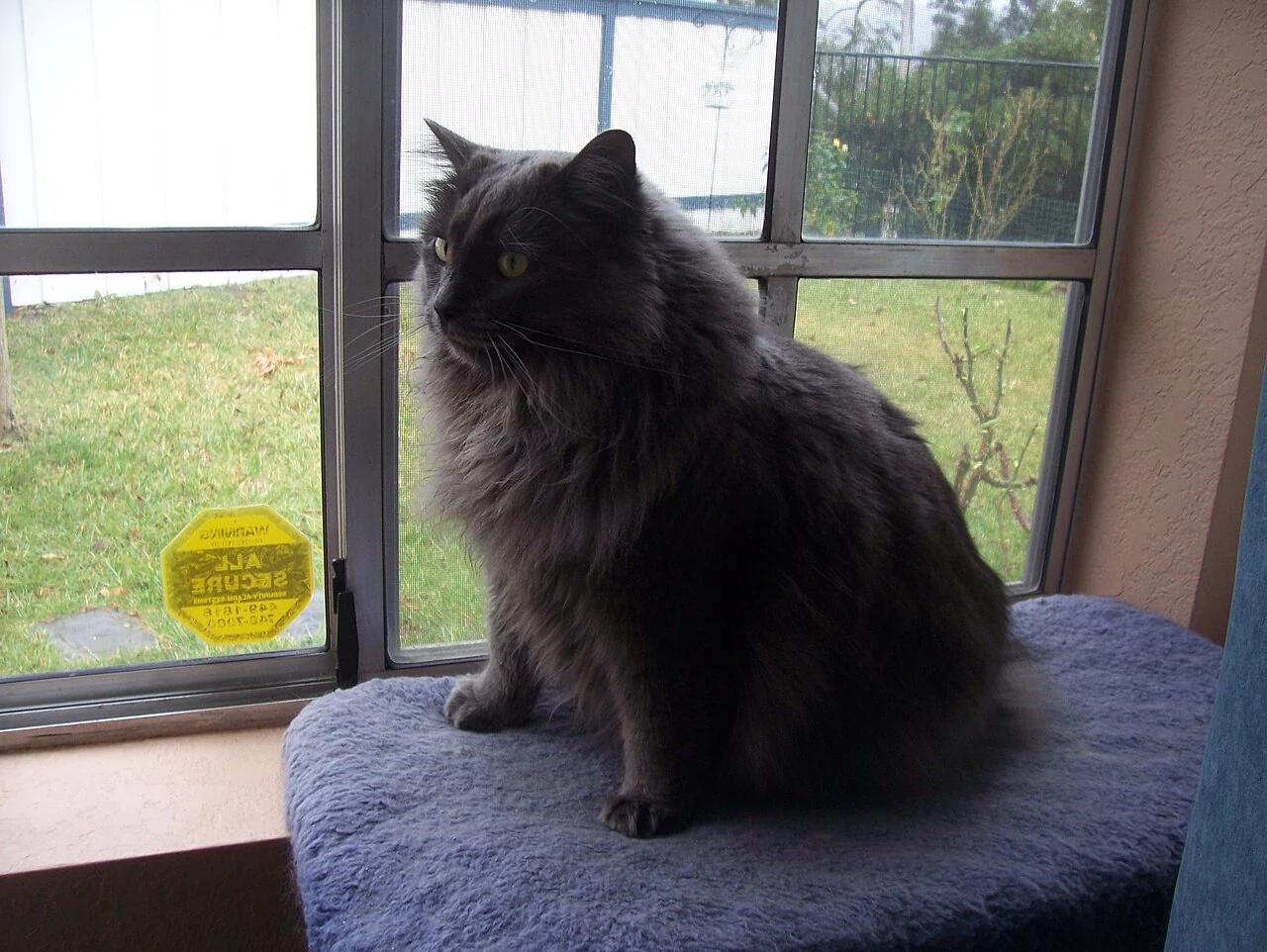
At a glance
- Size
- Medium
- Weight
- 3.6 to 5.4 kg
- Activity
- Moderate
- Care needs
- Moderate
- Enrichment
- Enjoys learning together
- Owner experience
- Experience recommended
Close company, quiet conversation and playful surprises
A Cymric may spend a long time resting contentedly beside her person, then follow a toy across the room. The international cat registry TICA describes the Manx family as people oriented, generally even tempered and playful. Some cats communicate with soft trills or bring a toy they would like thrown again. Others particularly enjoy a familiar resting place close to you.
Time together should therefore include more than feeding and a quick stroke. A brief game, quiet company and gentle grooming can fit naturally into the day. If she withdraws or turns her head away, you should let her rest. With a newly adopted adult, it helps to discover her preferences before expecting particular forms of affection.
Children should get acquainted with the cat on the floor and should neither restrain her nor press a short tail or the place where the tail is missing. When lifting her, you should support her hindquarters as well. Another cat should be introduced gradually. Separate feeding places, litter trays and beds allow both cats to keep some distance when they want to.
Shared games and safe climbing
A larger soft ball or wand toy can suit shared games. You could start by rolling the ball a short distance and watching whether she follows or bats it back. If she chooses to bring it to you, a small retrieving game may develop. A wand attachment can mimic the movement of a small prey animal, scurrying briefly, pausing and disappearing behind a box. She should also have opportunities to catch the attachment.
Strong hind legs may enable a healthy Cymric to make considerable jumps. Climbing places should still have stable intermediate steps and a safe route back to the floor. For a cat with restricted movement, you should discuss the layout with the veterinary team. Wide, low resting surfaces may be more comfortable than narrow shelves high above the floor.
Hiding places and undisturbed beds should be as much a part of the home as play. Open windows should be secured against falls and escapes when airing rooms. Before starting a washing machine or adjusting moving furniture, you should also check where she is resting. During longer absences, she needs a carer familiar with her eating and toilet habits.
For practical play, food searches and quiet retreats, read Indoor Cat Enrichment: Play, Food Puzzles and Safe Retreats ↗
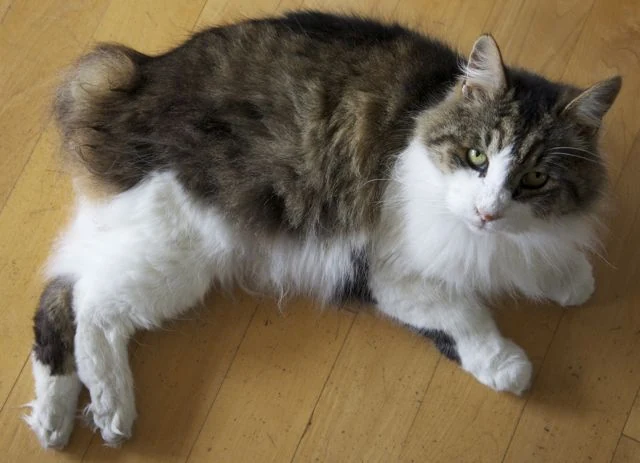
Grooming the dense coat without pulling
The Cymric has a double coat. Soft, dense undercoat lies beneath silky outer hair, which becomes longer towards the hindquarters. The neck and hind legs may look especially well furnished. Loose hair should be removed regularly before it forms mats.
A wide toothed comb may suit this coat. The American Cat Fanciers’ Association recommends thorough weekly grooming for the Longhair Manx, paying particular attention beneath the legs and at the sides of the face. Between these sessions, you should briefly check areas where tangles develop and comb more often when needed. Considerably more undercoat may loosen during shedding. Short, pleasant sessions are usually easier than trying to complete all the grooming at once.
Firm mats close to the skin should be removed by the veterinary team. Pulling them or cutting with scissors can injure a cat’s thin skin. Dental care should also be introduced gradually with appropriate cat products. Pain when chewing or inflamed gums should be examined before trying to brush a sore mouth.
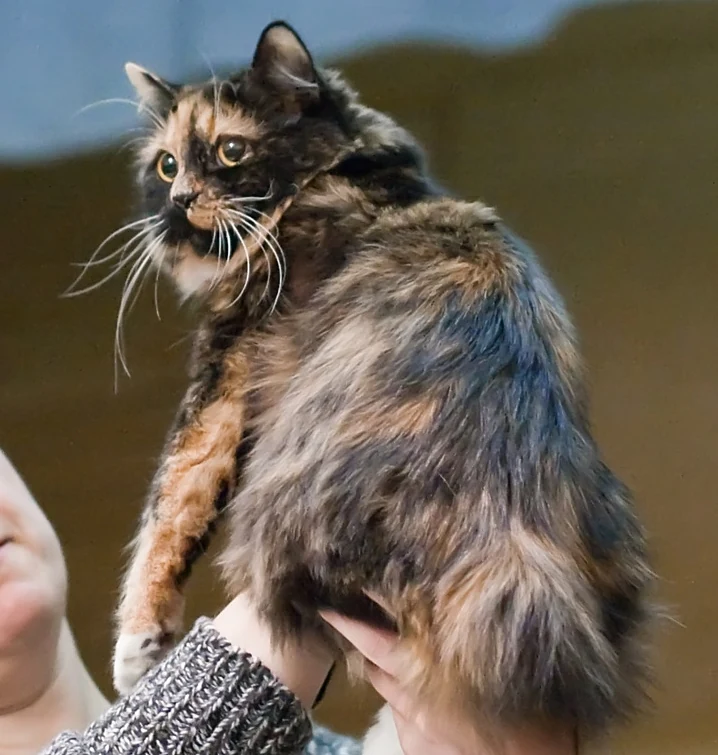
The longhaired sister of the Manx
The Cymric’s history belongs to the Manx, the cat breed from the Isle of Man in the Irish Sea. An inherited change spread through the island population, producing cats with shortened or missing tails. Where the first cats on the island came from remains uncertain. Longhaired cats also occurred within this family.
FIFe, the international cat federation, has recognised the Cymric as the semi-longhaired sister of the Manx since 2006. TICA places both within one breed group. The Cat Fanciers’ Association calls the longer coated form the Longhair Manx. These names describe the same close relationship, although they may appear differently on pedigrees.
A Cymric need not be completely tailless. FIFe’s 2026 standard recognises all tail lengths, from no tail to a longer straight tail. The body is medium sized, compact and muscular, with a broad chest and rounded head. As a rough guide for the Manx family, TICA gives weights equivalent to approximately 3.6 to 4.5 kilograms for females and 4.5 to 5.4 kilograms for males, converted and rounded from pounds. Your own cat’s body condition should guide decisions about feeding. In later life, steps, easily reached litter trays and gentle games should be adapted to her actual mobility.
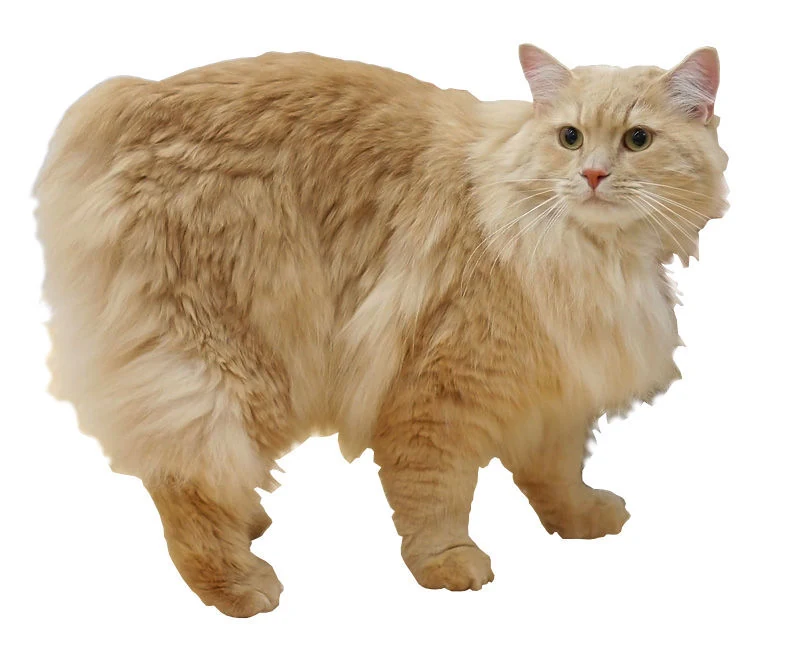
Understanding tail shape, spine and nerves
Inherited tail shortening can also affect development of the lower spine and its associated nerves. Several related problems are grouped under the term Manx syndrome. Affected cats may have trouble walking or controlling urine and faeces. Constipation can occur when nerves do not adequately control the lower bowel. Some cats have congenital abnormalities in which the spine does not develop fully.
Not every Cymric is affected. Before taking a cat home, you should nevertheless request specific examination records and discuss movement, urination and bowel function with a veterinarian. You should also ask about related conditions in parents and siblings. The research team at the University of Missouri’s College of Veterinary Medicine notes that relationships between individual inherited variants, tail length and health problems are still being investigated. A DNA test alone therefore cannot replace assessment of the cat and how her body functions.
An unusual hopping gait, pain around the hindquarters, recurring constipation or uncontrolled urine loss should be examined. Repeated attempts to urinate with little or no urine need immediate help. Besides possible nerve problems, a blocked urethra may be responsible. An affected cat should have an individual treatment and care plan. Fellfolio can keep results, appointments and observations about movement or toilet visits together. These details also help a carer notice changes early.
What to consider before taking a Cymric home
Could work well if …
- You would enjoy a cat who seeks human company and have time for shared games and regular grooming.
- You want to investigate the cat’s health history and actual mobility carefully before taking her home.
- You can adapt the home with accessible resting places and litter trays when needed.
Before you bring one home
- Taillessness should also be discussed as a health issue in this breed. Examination records and the function of hind legs, bladder and bowel deserve particular attention.
- Children should not press a short tail or the area where the tail is missing. The hindquarters should be supported when lifting the cat.
- A dense semi-long coat should be checked regularly. Mats close to the skin should be removed professionally.
Meet other cat breeds.
Selected by size, activity, care and play needs.
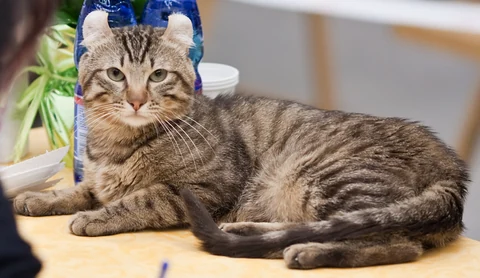
Shorthair and semilonghair · USA
American Curl
The American Curl is recognisable by ears that curve backwards. In everyday life, her curiosity and enjoyment of company often make the stronger impression. She comes with a short or longer silky coat and needs gentle handling around her ears.
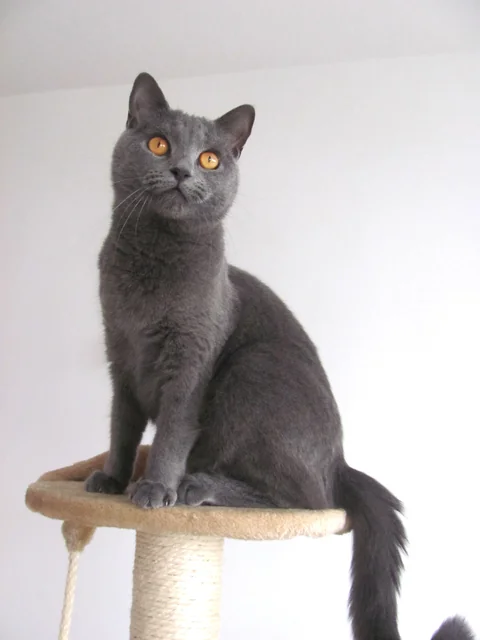
Shorthair · France
Chartreux
The Chartreux pairs a dense blue-grey coat and copper eyes with a calm, observant manner. During play, it often reacts quickly to a moving toy.
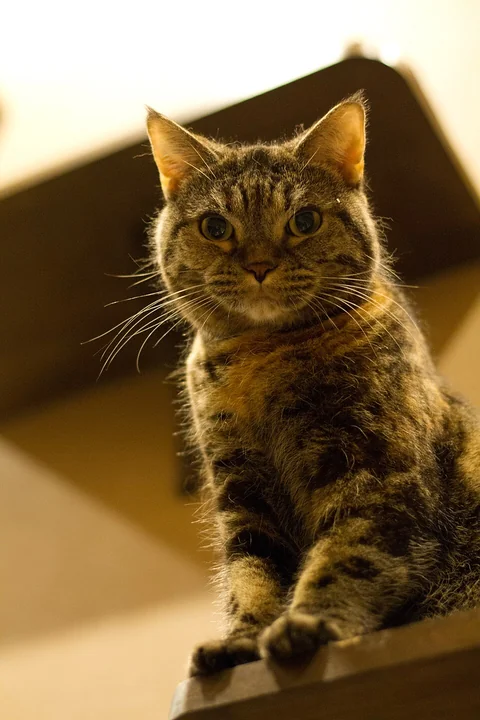
Shorthair cat · United States
American Shorthair
Sturdy, even-tempered and playful, the American Shorthair enjoys shared games while keeping a measure of independence.
Sources and photograph credit
- Opinion on the welfare implications of feline breeding practices
Used in this profile for: Health, Could this breed fit your life?
- Grooming your cat
Used in this profile for: Day-to-day care
- Indoor cats
Used in this profile for: Everyday life, Could this breed fit your life?
- Tips for grooming longhaired cats
Used in this profile for: Day-to-day care
- Cats and play
Used in this profile for: Everyday life
- Feline Dental Disease
Used in this profile for: Day-to-day care
- Feline Lower Urinary Tract Disease
Used in this profile for: Health
- Loving Care for Older Cats
Used in this profile for: Size and build
- Manx and Cymric breed profile
Used in this profile for: Temperament, Size and build
- Manx and Cymric breed standard, 1 January 2026
Used in this profile for: Day-to-day care, Size and build
- Cymric breed profile
Used in this profile for: Size / Weight, Temperament, Everyday life, Size and build, Could this breed fit your life?
- Manx breed profile and Longhair Manx care
Used in this profile for: Day-to-day care, Size and build, Health
- Manx cat short-tail research project
Used in this profile for: Health, Could this breed fit your life?
- Introducing your new cat to other cats in your home
Used in this profile for: Temperament
- How to keep your cat healthy and happy
Used in this profile for: Health
Photo credits
Portrait · CymricCatPerched.jpg · Robertlucien · CC BY 3.0 · Edited

Everyday life · Cymric - Norwegian forest cat presentation show Kotka 2009-02-01 IMG 0687.JPG · Heikki Siltala · CC BY 3.0 · Edited

Side view · Cymric Fond Blanc.jpg · Desaix83 / Heikki Siltala · CC BY 3.0 · Edited

Everyday life · GeorgeManxProfile.jpg · Jumpinjim · CC BY-SA 3.0 · Edited
