 fellfolio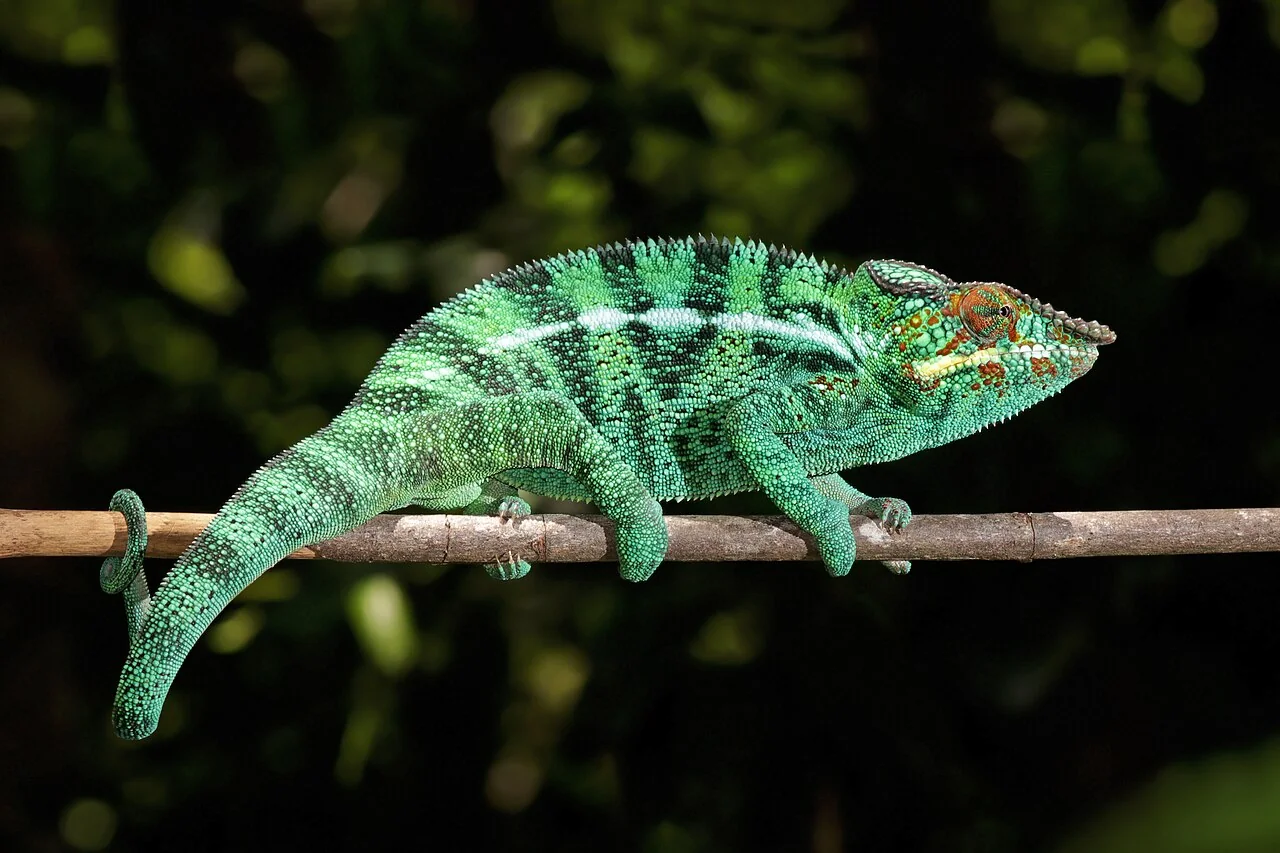
Origins and daily life
Panther chameleons occur in Madagascar, including open lowland areas and dry deciduous habitats. They are active during daylight and often occupy vegetation above the ground. In an enclosure, usable height therefore matters alongside overall room. Branches and leaves should form routes the animal can travel, with places to pause and withdraw along the way.
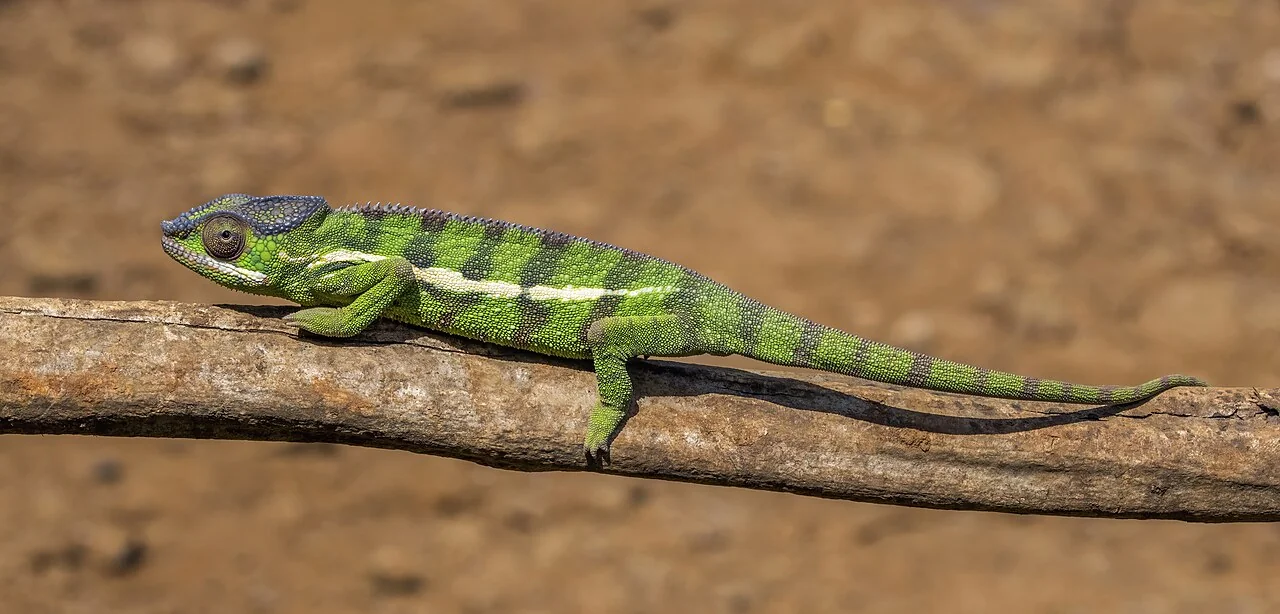
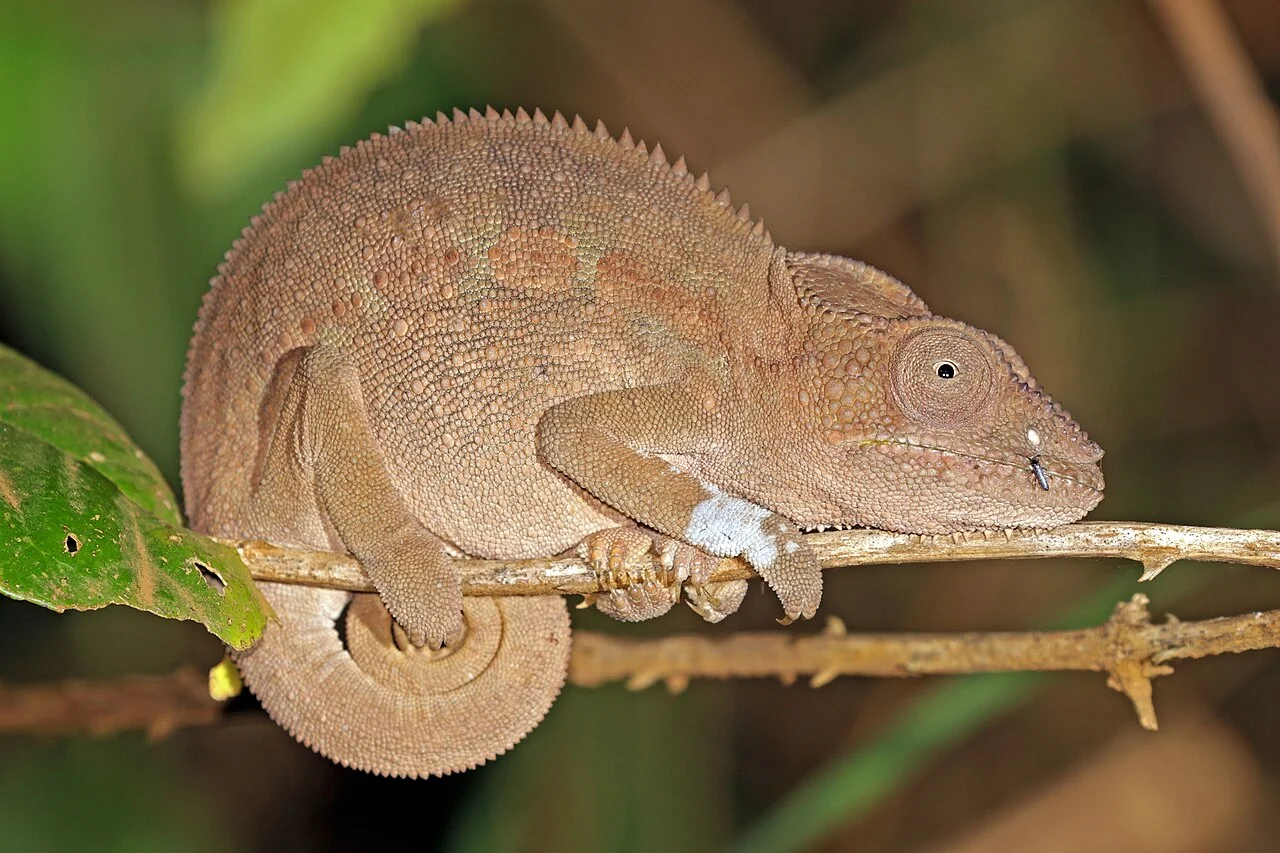
Males show colour patterns that vary with geographic origin; females are generally smaller and less brightly coloured. Colour alone cannot establish an individual animal’s exact locality. WWF reports an adult length of about 25 to 46 cm and an average lifespan in captivity of around five years. These are broad species figures, and an individual animal’s life may differ.
Sources for this section
- Furcifer pardalisUniversity of Michigan Animal Diversity Web
- Panther chameleon responsible pet guideWorld Wildlife Fund
An enclosure built for climbing
For one adult panther chameleon, the specialist care guide ReptiFiles gives 60 cm wide, 60 cm deep and 120 cm high as a lower planning figure; more usable room is welcome. Secure branches at several levels should connect useful perches, with diameters the feet can grip. Leafy areas provide visual cover, so the chameleon can move away from exposed spots without leaving its climbing routes.
Panther chameleons generally live alone and defend space from others. Separate housing is the appropriate starting point, and constant sight of another chameleon may make retreat difficult. Foliage and the enclosure’s position should allow a quieter route away from the sight of another chameleon.
Sources for this section
- Panther chameleon responsible pet guideWorld Wildlife Fund
- Furcifer pardalisUniversity of Michigan Animal Diversity Web
- Care and Housing for ChameleonsVCA Animal Hospitals
- Panther Chameleon Care SheetReptiFiles, specialist-authored husbandry guide
Temperature, airflow and UVB
WWF gives approximate panther chameleon temperatures of 32 °C in a warm area and 25 °C in a cooler one. Branches and cover should connect the zones so the animal can move between them. ReptiFiles describes humidity changing through the day: about 50 to 60 percent by day and 75 to 100 percent at night. Measurements at occupied perch levels show what the animal experiences; shade and a route away from heat belong in the same plan.
UVB light helps reptiles produce vitamin D3, which is involved in using calcium. The distance to the lamp and any mesh between lamp and perch affect the light that reaches the animal. Ventilation allows wet leaves to dry after misting and helps avoid stagnant, damp air. Keep a consistent daytime light period and a dark night. Measure and control heat so the basking area does not overheat and cooler perches remain available.
Sources for this section
- Panther chameleon responsible pet guideWorld Wildlife Fund
- Providing a Home for a ReptileMerck Veterinary Manual
- Panther Chameleon Care SheetReptiFiles, specialist-authored husbandry guide
Drinking and feeding
Chameleons often drink droplets from leaves. Clean misting or a drip system can provide them, and accessible fresh water may be a useful addition where it suits the enclosure. What matters is that the individual animal actually drinks. Drainage should prevent standing water and continuously soaked areas, while airflow should let foliage dry between wetting periods.
Panther chameleons are primarily insect eaters. Offer appropriately sized insects such as crickets, locusts and suitable roaches for variety. Feed the insects well before they are offered so they carry useful nutrients. Calcium supplementation should fit the wider plan for diet and UVB exposure. Fruit is not a staple for this species. A reptile veterinarian can help adjust food and supplements to the animal’s age and circumstances.
Sources for this section
- Panther chameleon responsible pet guideWorld Wildlife Fund
- Furcifer pardalisUniversity of Michigan Animal Diversity Web
- Care and Housing for ChameleonsVCA Animal Hospitals
- Providing a Home for a ReptileMerck Veterinary Manual
- Panther Chameleon Care SheetReptiFiles, specialist-authored husbandry guide
Quiet routines and reproduction
A panther chameleon is best approached as an animal to observe calmly rather than handle often. Its territorial habits and use of cover favour predictable care with limited disturbance. When work in the enclosure is necessary, accessible climbing routes and sheltered perches remain important. Familiar patterns of movement and posture are easier to notice when the animal can use its usual space.
A female may produce eggs without a male. A reptile veterinarian can help prepare a suitable laying place before the female reaches maturity. Reproduction may also shorten a female’s life. Changes in activity, climbing or appetite are worth discussing in that context.
Sources for this section
- Panther chameleon responsible pet guideWorld Wildlife Fund
- Furcifer pardalisUniversity of Michigan Animal Diversity Web
- Reptiles: DystociaVCA Animal Hospitals
Health signs and a lasting commitment
Visible breathing difficulty needs immediate veterinary assessment. Weak grip, repeated falls, closed or sunken eyes, inability to remain on a perch or persistent refusal of food also require prompt attention from a reptile veterinarian. These signs can have different causes. Notes about when a change began and how it developed can help at the appointment, but cannot establish a diagnosis at home.
Before acquiring a chameleon, the enclosure, lighting, measuring equipment, insect supply and access to a reptile veterinarian should be in place. WWF describes this species’ care as demanding. A clear account of an animal’s origin and previous care also gives its next keeper useful context. Consistent conditions and attention to meaningful changes will matter throughout its life.
Sources for this section
- Panther chameleon responsible pet guideWorld Wildlife Fund
- Providing a Home for a ReptileMerck Veterinary Manual
Common questions
Can two panther chameleons share an enclosure?
This species is solitary and territorial. A separate enclosure for each animal is the appropriate starting point, with positioning that also considers constant visual contact.
How can I tell whether the enclosure climate is suitable?
Readings at the perches the animal uses show whether distinct warm and cooler areas are available. WWF’s species figures are reference points; airflow and drying after misting also need attention.
Does a female need reproductive care without a male?
She may produce eggs without mating. A reptile veterinarian can advise on a suitable laying place and assess concerning changes in behaviour or appetite.
A closer look
Sources and photo credit
- Panther chameleon responsible pet guideWorld Wildlife Fund
- Furcifer pardalisUniversity of Michigan Animal Diversity Web
- Care and Housing for ChameleonsVCA Animal Hospitals
- Providing a Home for a ReptileMerck Veterinary Manual
- Reptiles: DystociaVCA Animal Hospitals
- Panther Chameleon Care SheetReptiFiles, specialist-authored husbandry guide
Photo: Panther chameleon (Furcifer pardalis) male Nosy Be.jpg · Charles J. Sharp · CC BY-SA 4.0. Resized and converted to WebP; scene unchanged.
Photo: Panther chameleon (Furcifer pardalis) male Montagne d’Ambre.jpg · Charles J. Sharp · CC BY-SA 4.0. Resized and converted to WebP; scene unchanged.
Photo: Panther chameleon (Furcifer pardalis) female Montagne d’Ambre.jpg · Charles J. Sharp · CC BY-SA 4.0. Resized and converted to WebP; scene unchanged.
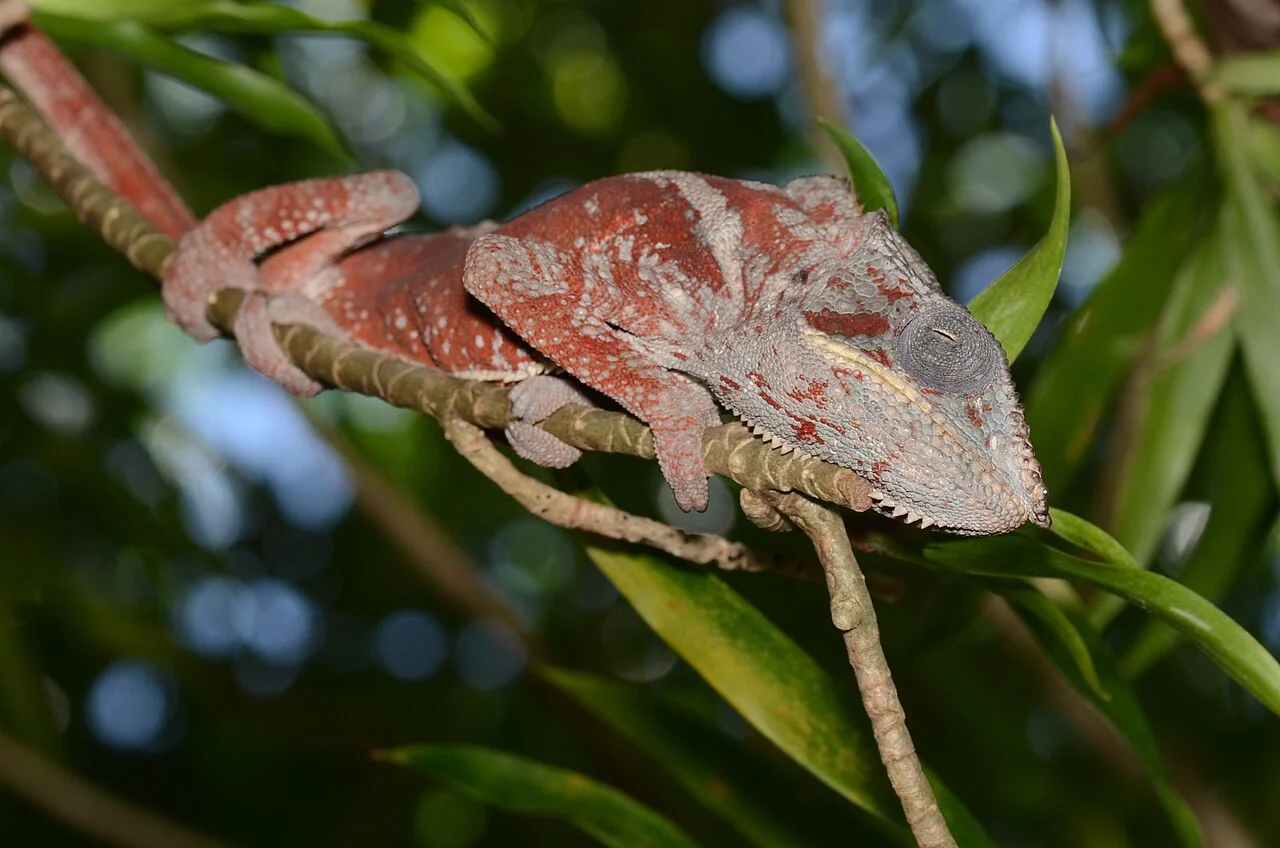
Photo: Furcifer pardalis 59338039.jpg · Pasha Kirillov · CC BY-SA 4.0. Resized and converted to WebP; scene unchanged.
_male_Nosy_Be.jpg)
_male_Montagne_d%E2%80%99Ambre.jpg)
_female_Montagne_d%E2%80%99Ambre.jpg)
