 fellfolio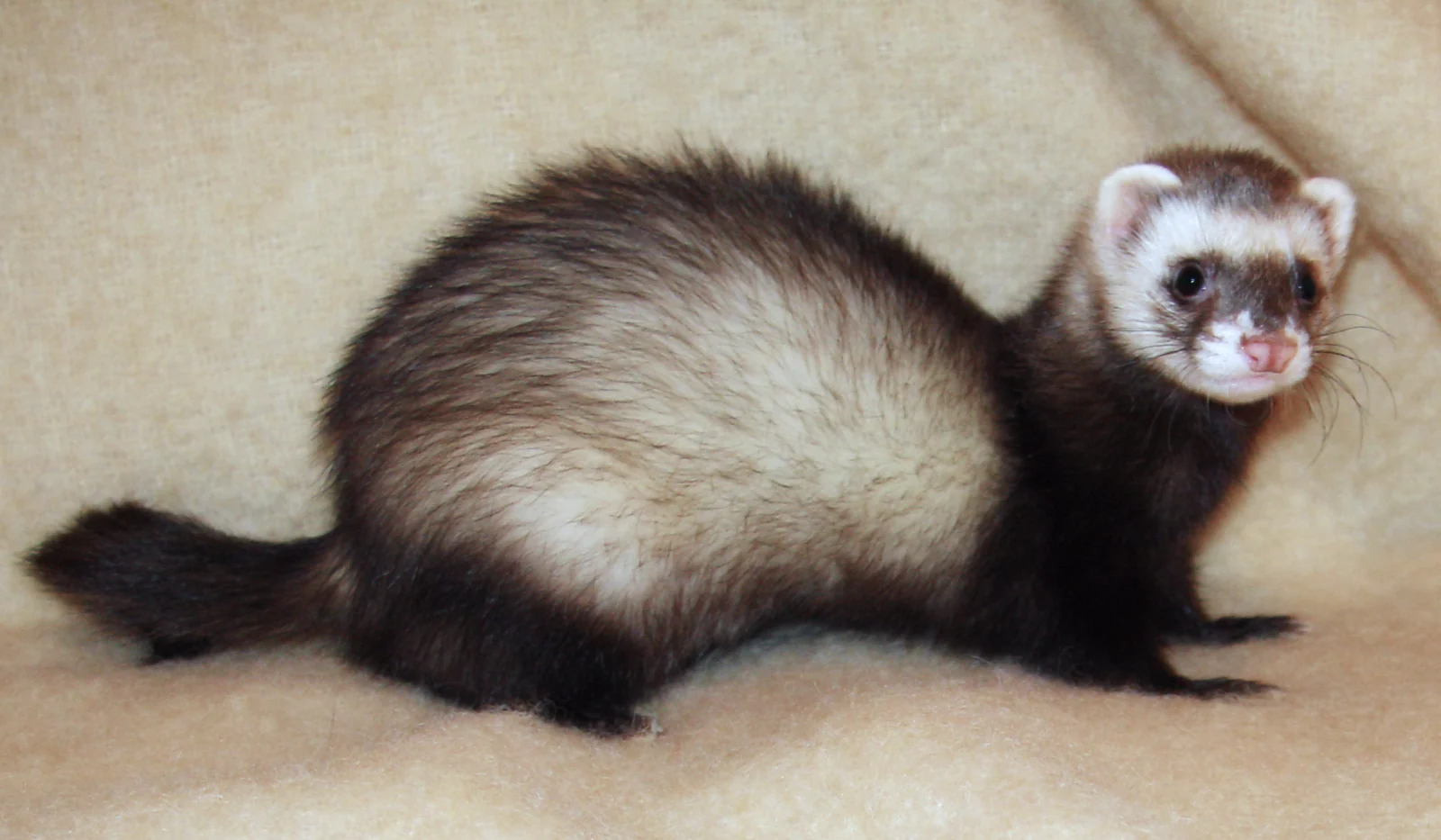
Build safe habits during the early months
Before arrival, the youngster’s familiar diet, previous housing and completed health care should be known. Veterinary and vaccination records belong in the handover. A ferret-experienced practice can assess condition and arrange the next preventive steps.
Young ferrets investigate using their noses, bodies and mouths. Gaps behind furniture, accessible foam and swallowable rubber pieces should therefore be removed or securely screened before exercise. Reclining mechanisms and open household appliances are also dangerous. A manageable play area makes supervision easier.
Calm encounters help a kit become familiar with hands and daily care. Tiny suitable rewards can accompany approaching voluntarily or entering a carrier. Overexcited rough play can be interrupted calmly and redirected towards a suitable activity. Hitting, shouting or rough restraint does not explain the desired behaviour. Predictable handling and access to a retreat offer a clearer way to learn what happens next.
Read more: Keeping ferrets: making curiosity safe
Sources for this section
- Ferret careUC Davis School of Veterinary Medicine
- Keeping your pet ferret happy and healthyRSPCA
Plan for reproductive maturity early
Ferrets reach sexual maturity within their first year, influenced by timing and season. In females, the reproductive period is called oestrus or being in season. If it continues without appropriate management, persistently high oestrogen levels can interfere with blood-cell production and cause life-threatening anaemia.
Reproductive and health management should therefore be discussed early with the veterinary practice. Depending on the individual, options may include hormonal approaches or surgery. Benefits, risks and timing differ. One universal age rule or a treatment chosen without veterinary assessment would be inappropriate.
Where a hormonal implant is used, its date, planned review and individual veterinary instructions should be recorded. Duration of effect is not identical in every animal. Visible signs of returning reproductive activity or other unusual changes should be discussed even before the scheduled follow-up. Pregnancy is not a necessary preventive health measure. A clear written plan makes it easier for a second caregiver to recognise when advice is needed.
Sources for this section
- Ferret neutering and contraceptionRSPCA
- Ferret careUC Davis School of Veterinary Medicine
Balance active exploration with protected rest
Adult ferrets need daily access to a safe area for exploring, playing and searching. Spacious tunnels, boxes with several exits and accessible hiding places create varied routes. Materials need regular checks for damage and parts that could be swallowed.
Between active periods, ferrets sleep extensively and prefer protected places. Familiar beds should remain dry, clean and free of loose threads. Caregivers need to know where every animal sleeps so it can be located before a door is closed or an appliance used. Retreats should remain available when visitors arrive.
Ferrets are strict carnivores. A suitable complete diet should match weight, health and activity. Sweet rewards and plant-based snacks are inappropriate choices. Gradual food changes and observation of each animal’s intake help maintain consistency. The practice can also advise if a ferret struggles to chew or repeatedly leaves food. Feeding records are particularly helpful where several people share the routine.
Sources for this section
- Keeping your pet ferret happy and healthyRSPCA
- Ferret careUC Davis School of Veterinary Medicine
Make everyday routes easier
As ferrets age, food, water, litter trays and beds may need to be placed on more accessible levels. Low entrances and shallow secure connections ease movement. A favourite sleeping place can often remain available if its access route is adapted.
It is not possible to determine reliably at home whether slowing down reflects reduced strength, pain or another illness. Repeated stumbling, substantially less interest in play or difficulty rising should be assessed by a vet. Activity and exercise can then be adjusted to the findings.
An older ferret may still enjoy a short food-searching task or familiar tunnel. It should be able to withdraw and rest while more energetic companions continue playing. Compatible company remains important; permanent solitary housing is not an automatic solution to ageing. Persistent conflict needs knowledgeable help with group arrangements. Several resting places and feeding points can make it easier for individuals to follow different routines.
Sources for this section
- Ferret careUC Davis School of Veterinary Medicine
- Keeping ferrets togetherRSPCA
Preventive care and quality of life
UC Davis recommends regular veterinary examinations and notes that more frequent checks may become useful as ferrets age. The treating practice should decide which examinations, vaccinations and other measures fit the animal and local requirements. Existing disease may change the schedule.
Weight, appetite, droppings, activity and coat condition should be observed over time. Marked hair loss, unusual drinking, new lumps or difficulty urinating need assessment. Sudden severe weakness, collapse or breathing difficulty requires immediate veterinary help. Trying play or a diet change at home should not delay that care.
With a long-term condition, specific daily observations support decisions: does the ferret rest comfortably, reach its litter tray, eat independently and seek familiar contact? Treatment and quality of life should be reviewed with the practice. A current care plan containing prescribed medicine instructions, emergency contacts and individual needs also makes unexpected handover easier. Recording when changes occur can reveal a trend that a single brief appointment cannot show.
Sources for this section
- Caring for your ferretsRSPCA
- Ferret careUC Davis School of Veterinary Medicine
Common questions
Is every five-year-old ferret a senior?
Age provides a reference for preventive care, while mobility, previous illness and examination findings determine useful changes. A fixed threshold cannot replace that assessment.
Can an older ferret live with younger ones?
Yes, when the group remains compatible and the older animal can eat, rest and withdraw undisturbed. Persistent harassment or health limitations may require a different arrangement.
Sources and photo credit
- Ferret careUC Davis School of Veterinary Medicine
- Caring for your ferretsRSPCA
- Keeping your pet ferret happy and healthyRSPCA
- Ferret neutering and contraceptionRSPCA
- Keeping ferrets togetherRSPCA
Photo: Ferret 2008 · Alfredo Gutiérrez · CC BY-SA 4.0. Resized and converted to WebP; scene unchanged.
