 fellfolio
Hungarian pointing dog with a wiry coat and close family bonds
Wirehaired Vizsla
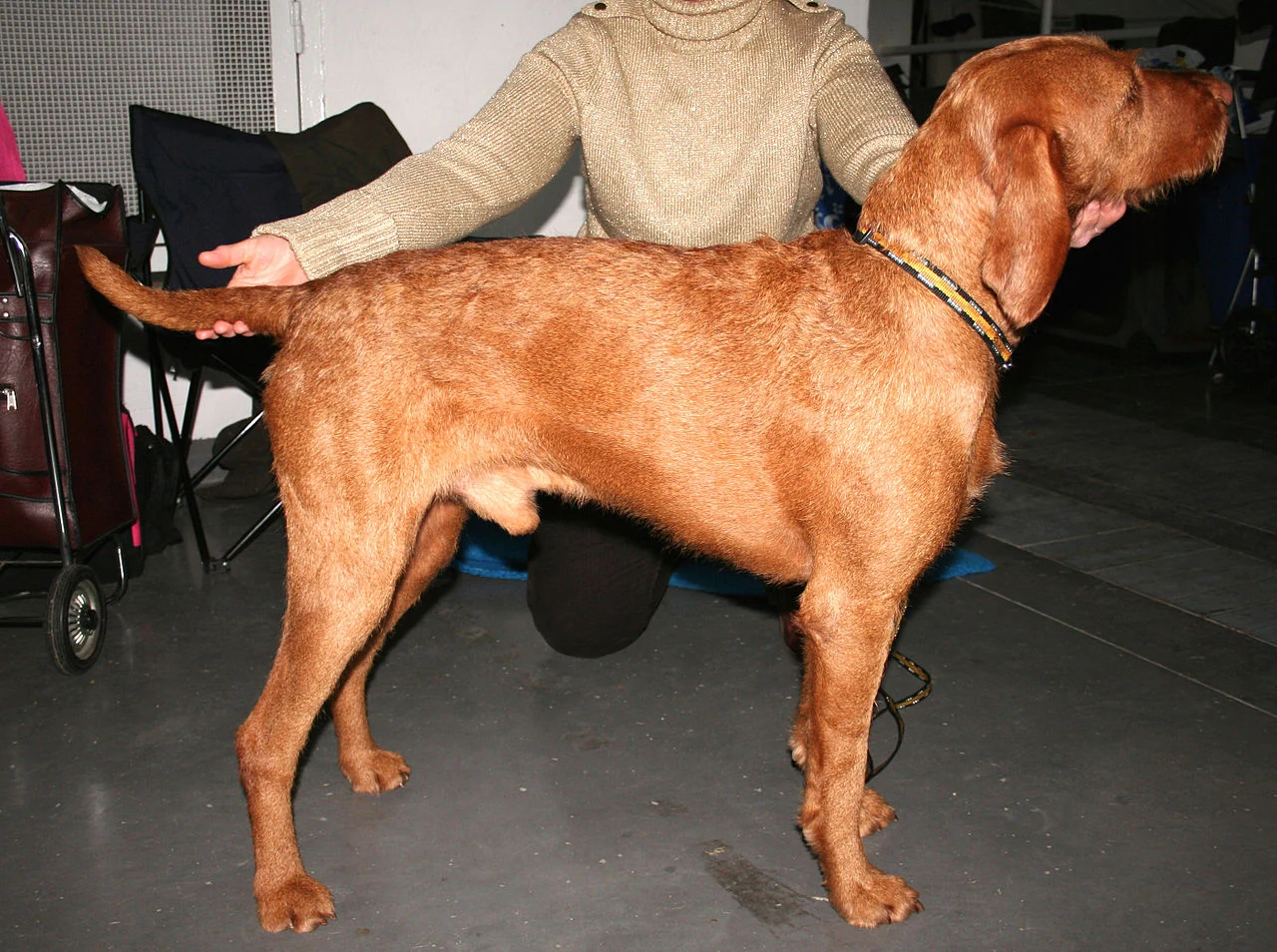
The Wirehaired Vizsla combines the golden rust colouring of the smooth Vizsla with a firmer coat, beard and distinctive eyebrows. It is a separate Hungarian breed developed for hunting across fields, woodland and water. In family life it often seeks close companionship and needs people who enjoy exercise and shared tasks.
At a glance
- Size
- Medium
- Height at shoulder
- 54 to 64 cm
- Lifespan
- 12 to 14 years
- Activity
- High
- Grooming
- Several times weekly
- Training
- Patience & clear guidance
- Owner experience
- Experience recommended
A golden rust coat for work in rough weather
During the 1930s, Hungarian breeders crossed smooth coated Vizslas with German Wirehaired Pointers. They wanted a versatile hunting dog with a stronger build and denser protective coat for rough ground and cold weather. The result became the Wirehaired Vizsla, known in Hungarian as Drótszőrű Magyar Vizsla.
It belongs to the pointing breeds. On finding the scent of hidden game, a pointing dog pauses and indicates its location through its body position. The Wirehaired Vizsla was also selected for retrieving and searching in water. This versatility helps explain its enjoyment of movement and tasks shared with a handler.
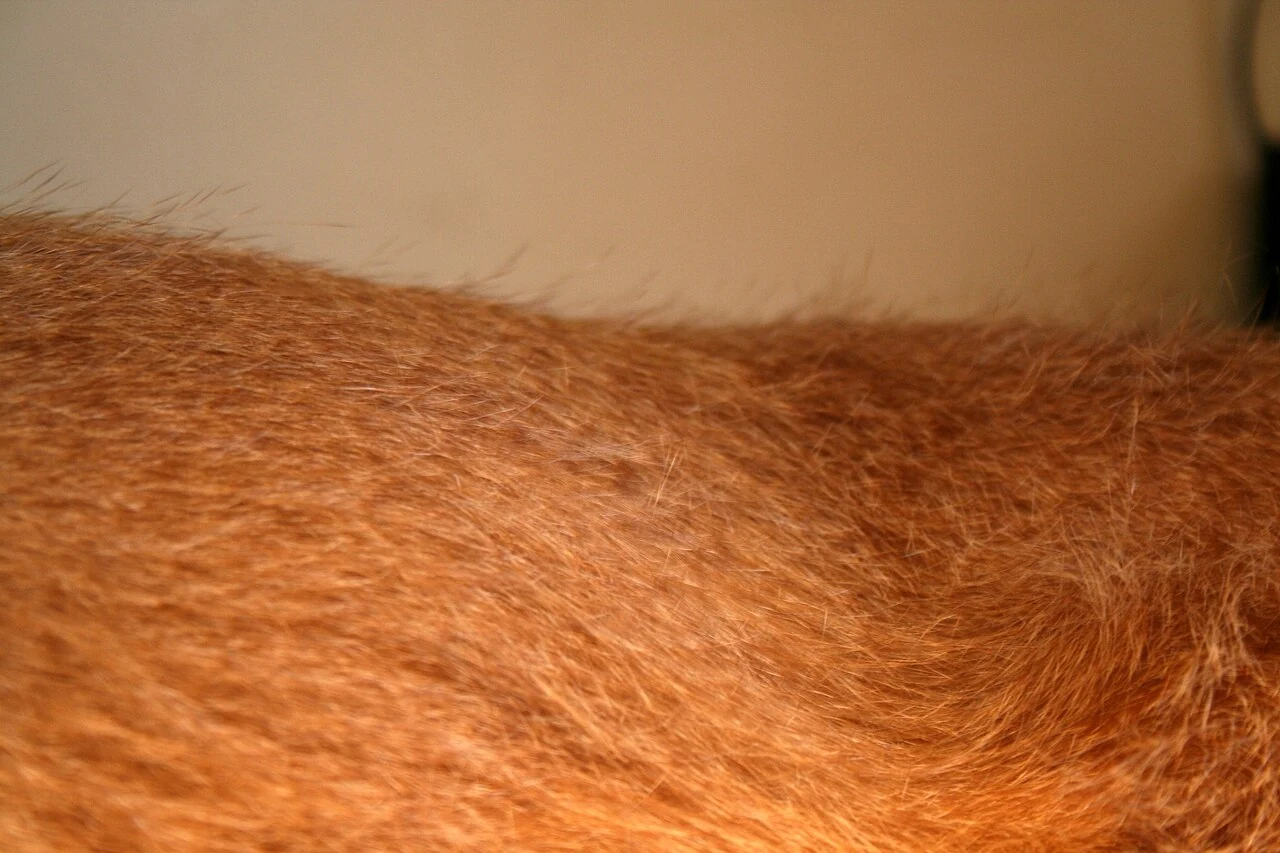
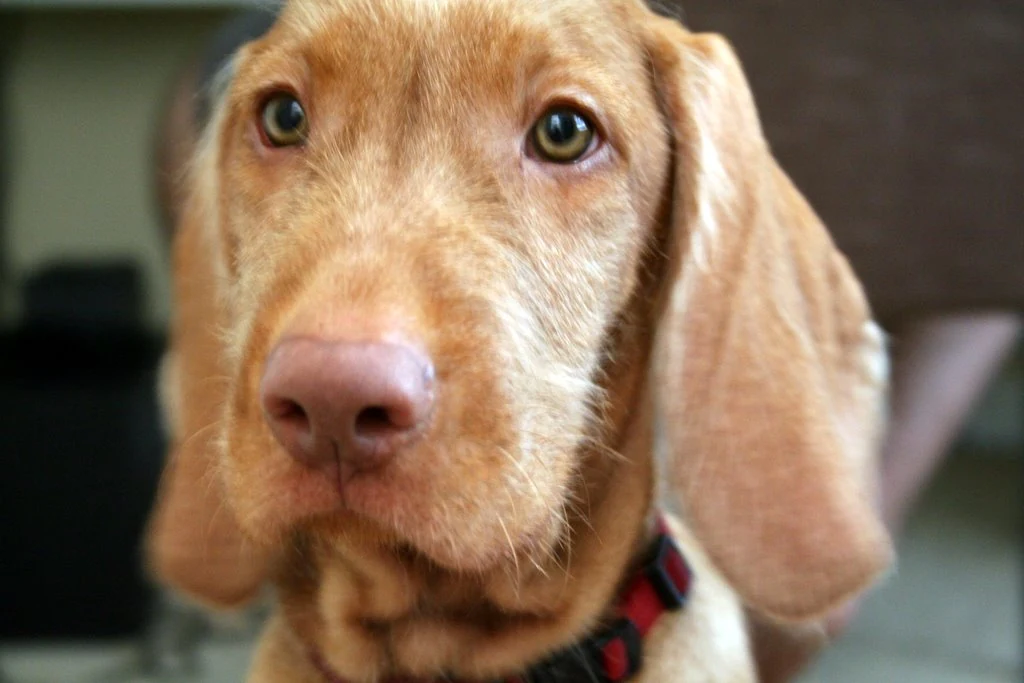
The wiry outer coat lies over a dense undercoat. A beard and eyebrows give the face its distinctive expression. Colour ranges from russet gold to darker sandy gold. The international canine organisation FCI gives shoulder heights of 58 to 64 centimetres for males and 54 to 60 centimetres for females.
At home it is often affectionate and attentive. In training it responds well to friendly, clear guidance. Shouting or physical punishment can undermine its confidence. An adult should guide interactions with children, and small prey pets should be kept physically separate. A dog resting calmly in the living room can still react strongly to a bird outdoors.
Everyday life
A healthy adult Wirehaired Vizsla needs substantial daily exercise and mental activity. Varied walks, suitable hikes and guided scent work can all fit. Fitness should be built gradually, with the length of outings reflecting weather, health and previous training.
For dogs that do not hunt, dog sports and exercises with a retrieving dummy can be engaging. A dummy is a training object that the dog picks up and brings back. A course can help you develop searching and retrieving together. Constant ball throwing offers less scope for calm cooperation and can involve many abrupt turns.
Coming back when called should be introduced early, first without strong distractions. Outdoors, a long lead attached to a suitable harness can help prevent a chase. A securely fenced space is useful for free running. A home with adequate space and convenient access to outdoor routes makes daily life easier. Quiet time together matters as well. Being left alone should be taught separately and gradually, because a close family bond can make separation difficult.
Staying home alone
Dogs learn to stay home alone in small steps. The RSPCA advises no more than four hours at a time. Puppies and dogs that become unsettled when left alone need shorter absences and gradual practice. Arrange someone to care for your dog when you will be away longer.
Everyday dog training: recall, a loose lead and clear communication ↗
Day-to-day care
The firm coat should be brushed regularly and checked for loose hair and small tangles. More frequent attention may be needed during shedding. A suitable brush or grooming mitt should remove hair without scratching the skin. An experienced groomer can show you which care suits your dog’s coat texture.
After exploring long grass, you should inspect the beard, ears, belly and paws. A soft cloth can remove damp dirt from the beard. Wet skin areas and ears should be checked after bathing or swimming. An unusual smell, redness or repeated head shaking warrants veterinary attention.
Nails and teeth deserve the same attention as the coat. Toothbrushing with dog toothpaste should be introduced in short, pleasant steps. Early practice with gentle paw handling also helps make later checks and nail trimming easier.
Size and build
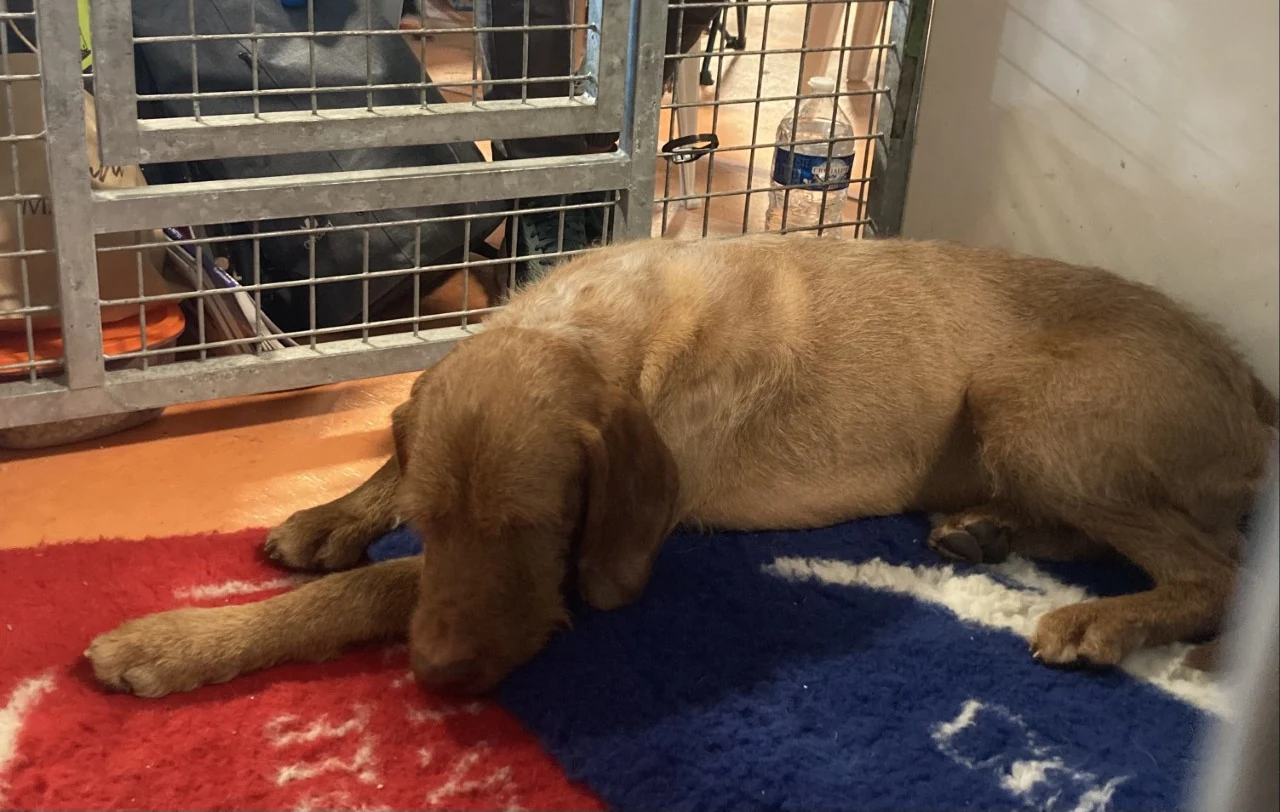
A puppy should have calm introductions to everyday situations, including different people, car journeys and relaxed meetings with dogs. Brief positive experiences help build confidence. Its enthusiasm for running should not be mistaken for fully developed stamina. Long jogging routes, repeated high jumps and hard landings should wait while its body is growing.
An adult’s exercise and learning tasks should reflect fitness and interests. Even after an active day, it needs plenty of undisturbed sleep. You should arrange care during longer absences. Shorter routes and easy search targets may suit an older dog well. Weight, mobility and behavioural changes deserve attention. The American Kennel Club lists a life expectancy of twelve to fourteen years.
From puppy to senior: caring for your dog through every life stage ↗
Health
The Royal Kennel Club recommends a DNA test for hyperuricosuria, or HUU, for breeding dogs, alongside hip and elbow screening. The American breed club also identifies a specialist eye examination. Before choosing a puppy, you should ask about both parents’ results and how they informed the pairing.
Inherited hyperuricosuria causes excessive uric acid in the urine, increasing susceptibility to bladder or kidney stones. The DNA test checks a particular inherited variant. Two copies of this variant mean an increased susceptibility to these stones. The result does not exclude other causes of urinary stones.
Repeated straining to urinate, small amounts of urine or blood in the urine should be investigated. If your dog tries to urinate but nothing comes out, it needs immediate veterinary help. A stone may be blocking the flow. Treatment and any special diet depend on the examination. You should therefore not devise a diet from a DNA result alone. Fellfolio can keep observations and findings together for subsequent appointments.
Could this breed fit your life?
Could work well if …
- You want to spend plenty of time out with your dog and develop scent work or dog sports.
- You enjoy a close family companion and can organise care for longer absences.
- You can manage hunting behaviour safely and plan regular grooming and preventive health care.
What to consider
- The wire coated dog is a separate breed and should not be confused with the smooth Vizsla.
- Plenty of exercise should be combined with calm learning tasks and sufficient sleep.
- Straining without producing urine requires immediate veterinary help.
Similar needs, different dogs.
Selected by shared size, activity, grooming and training characteristics.
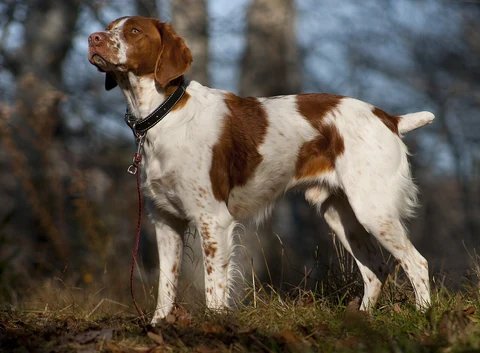
French pointing dog
Brittany
The Brittany is a compact French gundog with plenty of energy and a keen nose. It searches for game, points and retrieves. Pointing means pausing near game it has located to show the handler where it is. Anyone considering a Brittany as a companion should take its hunting instincts as seriously as its often friendly, people-oriented nature.
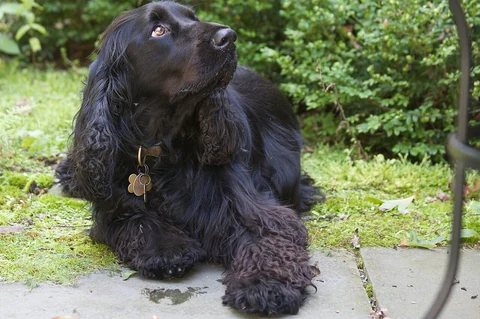
Sensitive hunting companion with a long silky coat
Field Spaniel
The Field Spaniel is an active, sensitive dog that enjoys following scents outdoors and being close to its people at home. Beneath the long silky coat is an enduring hunting companion. Varied exercise, shared activities and kind training give this attentive dog plenty to enjoy with its family.
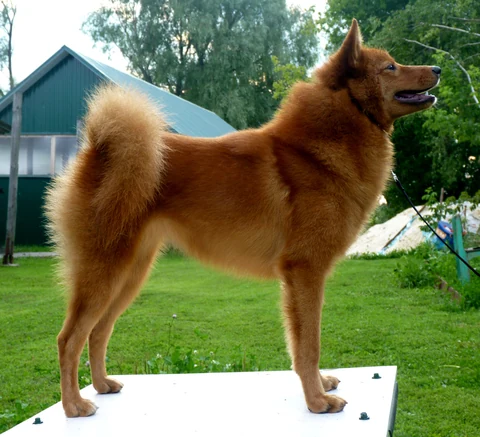
Vocal hunting dog from Finland
Finnish Spitz
A reddish gold coat, pointed ears and a tail curled over the back make the Finnish Spitz easy to recognise. Its voice is as much a part of its history as its appearance. When hunting, it barks to indicate a bird’s position in a tree. Life with this breed calls for plans that take exercise, hunting interest and noise into account together.
Sources and photograph credit
- Teaching your dog to be left alone
Used in this profile for: Staying home alone
- Position Statements and Humane Dog Training
Used in this profile for: Everyday life
- Bladder stones in dogs
Used in this profile for: Health
- Ear problems in pets
Used in this profile for: Day-to-day care
- Exercising Your Puppy
Used in this profile for: Size and build
- Training Your Dog to Be Left Alone
Used in this profile for: Everyday life, Size and build
- Children and Dogs
Used in this profile for: Temperament
- Caring for Your Dog’s Teeth
Used in this profile for: Day-to-day care
- Train Your Dog to Come When Called
Used in this profile for: Everyday life
- Hyperuricosuria
Used in this profile for: Health
- Wirehaired Vizsla
Used in this profile for: Temperament, Everyday life, Day-to-day care, Size and build, Health, Lifespan, Could this breed fit your life?
- HWV Health Checks
Used in this profile for: Health
- Hungarian Wire Haired Pointer, FCI Standard No.239
Used in this profile for: Size / Weight, Temperament, Day-to-day care
- Hungarian Wirehaired Vizsla
Used in this profile for: Everyday life, Day-to-day care, Health, Could this breed fit your life?
Photo credits
Side view · Wyżeł węgierski szorstkowłosy 554.jpg · Pleple2000 · CC BY-SA 3.0 · Edited

Puppy · WHV Oskar.jpg · Rodric Gagnon · Public domain

Coat and features · Wirehaired coat.JPG · Rodric Gagnon · Public domain

Everyday life · Chien braque hongrois à poil dur.jpg · Thomon · CC BY-SA 4.0 · Edited
