 fellfolio
Hunt, point and retrieve dog
Weimaraner
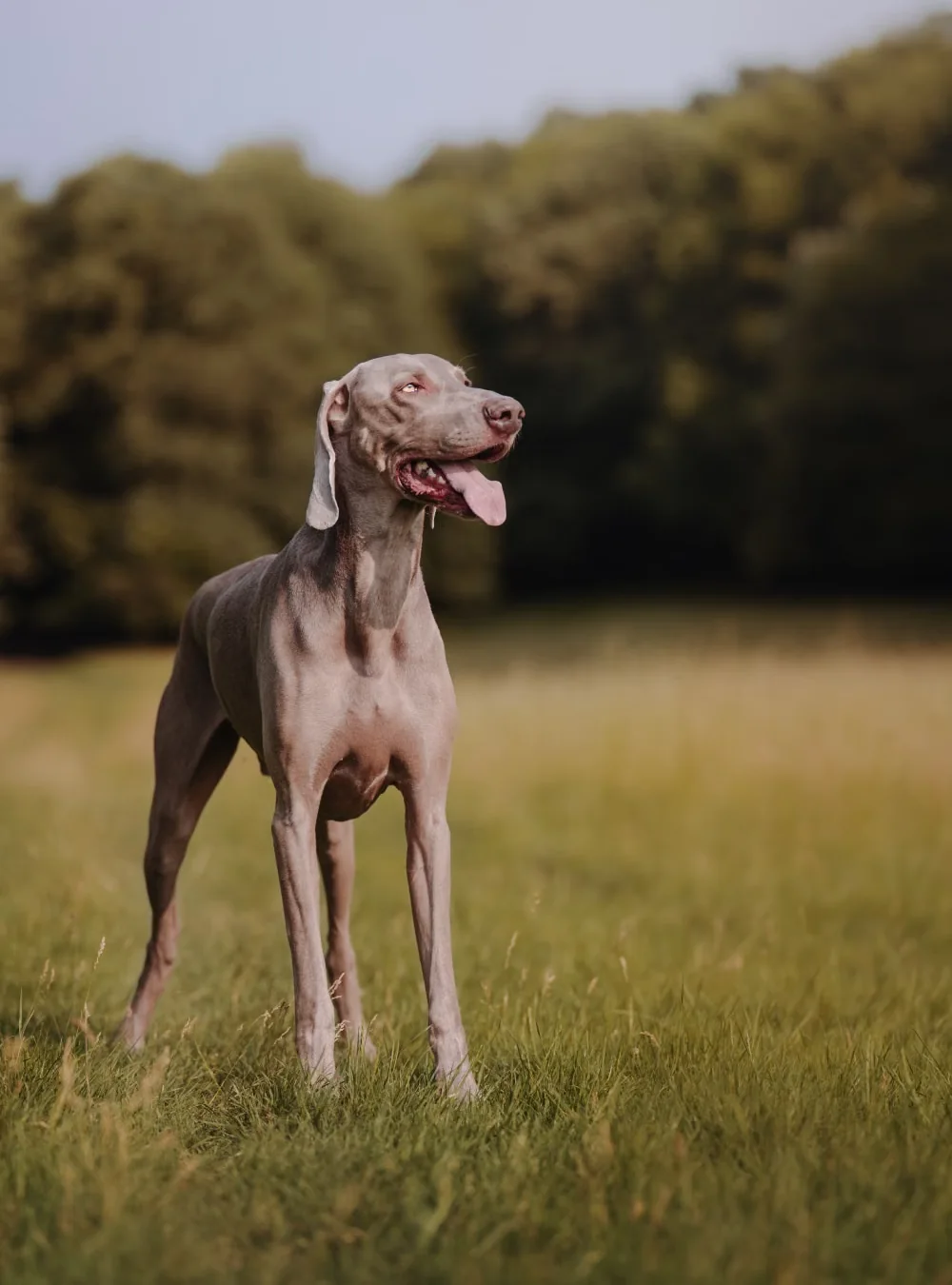
The silver-grey coat and pale eyes stand out first. The Weimaraner is a hunting dog with plenty of stamina that likes to work closely with its people.
At a glance
- Size
- Large
- Height at shoulder
- 56 to 69 cm
- Weight
- 25 to 40 kg
- Lifespan
- over 10 years
- Activity
- Very high
- Grooming
- Low
- Training
- Demanding activities
- Owner experience
- Experience recommended
A hunting dog that stays close
The Weimaraner was developed in Germany for hunting. It uses its nose to find game, points to its location and can retrieve. Outdoors it may be intensely focused; at home it usually wants to be near its people. Many learn quickly, but chasing wildlife can become a habit just as fast. Practise coming when called and turning back to you early, using rewards and a long line at first. Some Weimaraners are reserved with unfamiliar people or dogs. Give them space rather than insisting on a greeting.
Everyday life
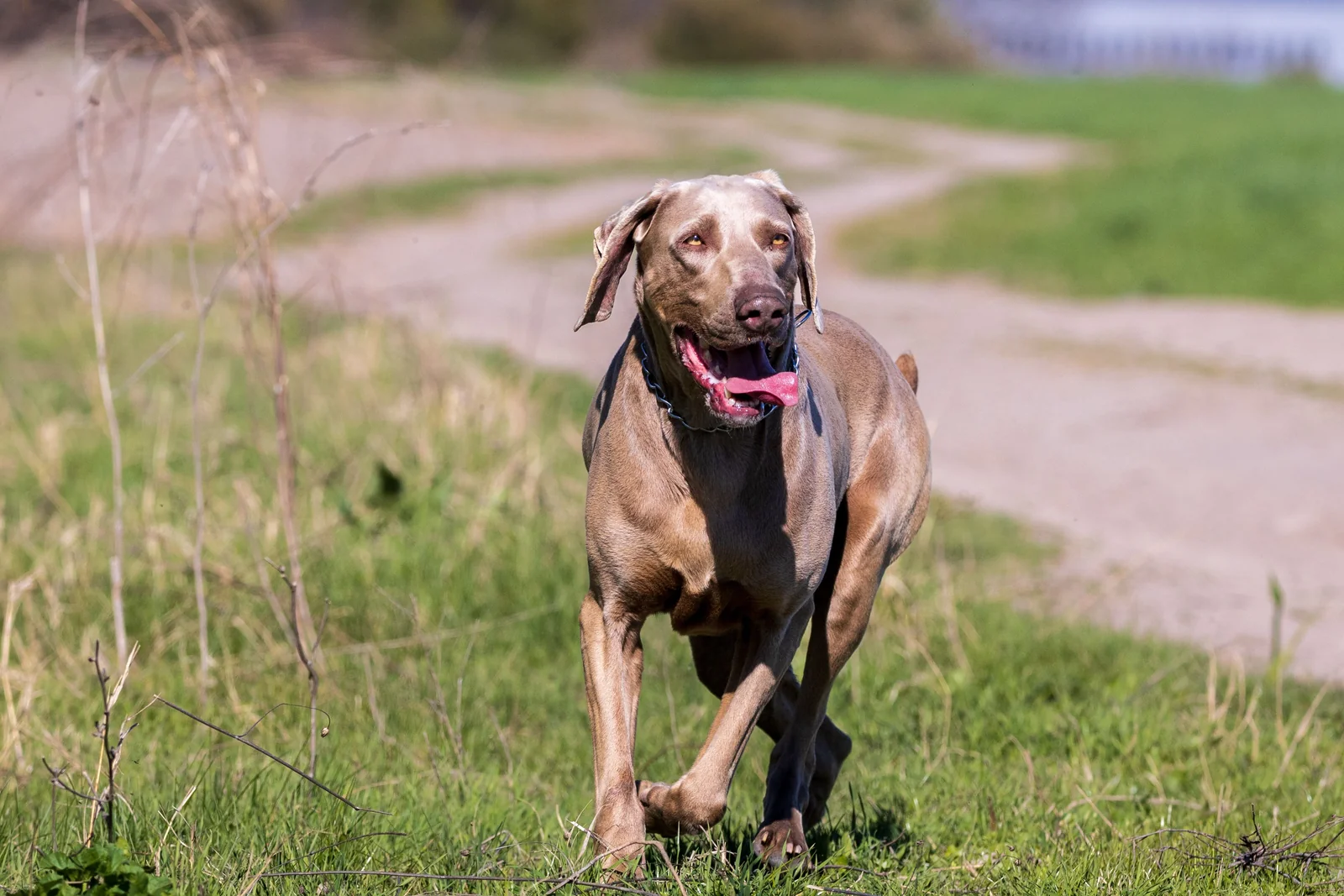
The UK veterinary charity PDSA recommends at least two hours of exercise a day for adult Weimaraners. Longer walks, safe opportunities to run and scent tasks all have a place. Hide a food pouch in long grass, for example, and let the dog find and bring it back. This gives its hunting skills a useful outlet. Off-lead time makes sense only once recall holds up around distractions; a long line is often wiser where wildlife is present. At home, the dog needs a quiet place to rest and regular company. A garden alone does not replace outings or training together. Supervise time with small children because of the dog’s size; small pets can trigger its prey drive.
Staying home alone
Dogs learn to stay home alone in small steps. The RSPCA advises no more than four hours at a time. Puppies and dogs that become unsettled when left alone need shorter absences and gradual practice. Arrange someone to care for your dog when you will be away longer.
Everyday dog training: recall, a loose lead and clear communication ↗
Day-to-day care
The short, smooth coat usually needs brushing once a week, more often during shedding. After walks through long grass, check between the toes and around the ears for grass seeds or small injuries that are easy to miss. Let the long drop ears dry after swimming. Frequent head shaking or an unpleasant ear smell calls for a vet check rather than cleaning deep inside the ear yourself. Include nails and teeth in the care routine.
Size and build
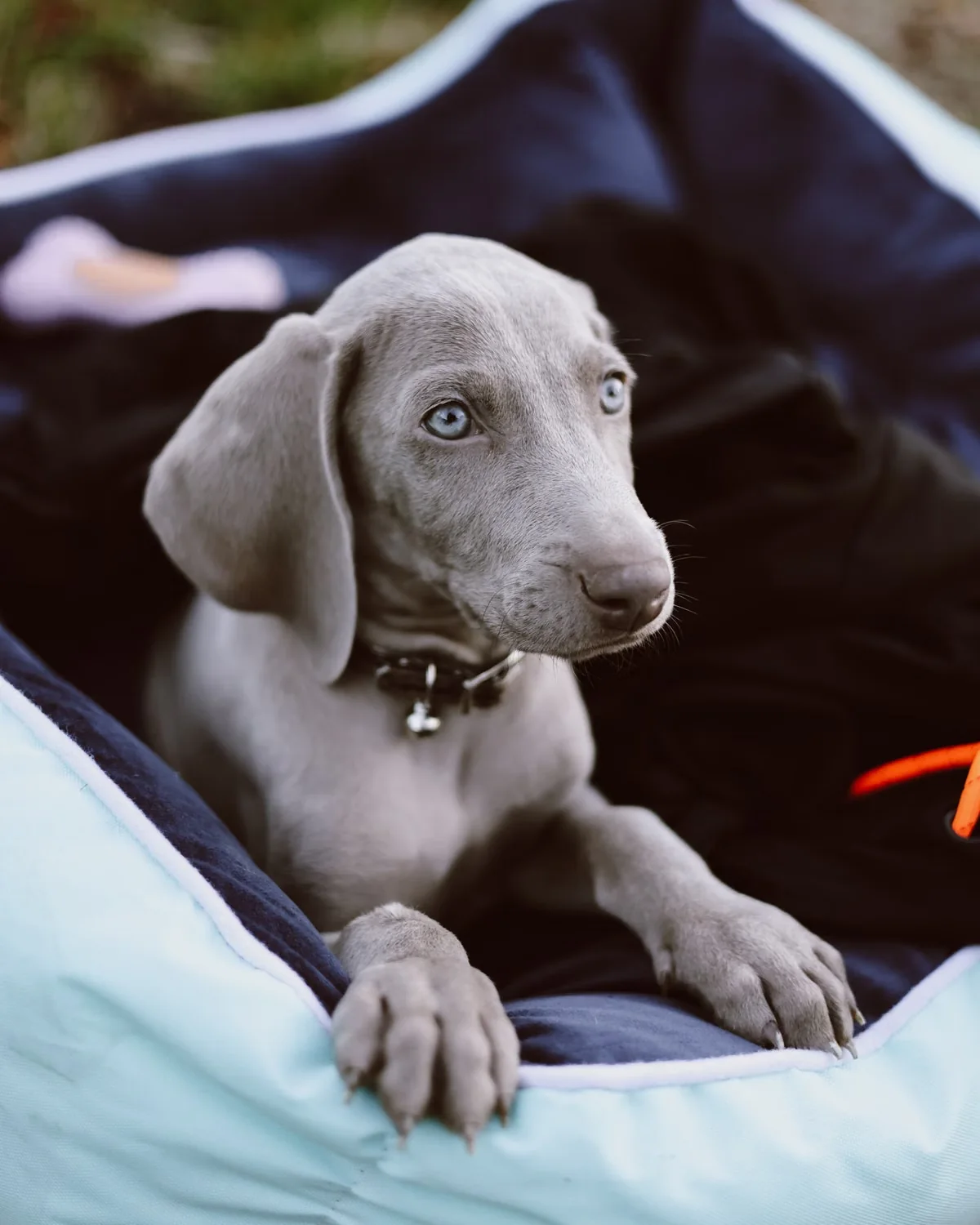
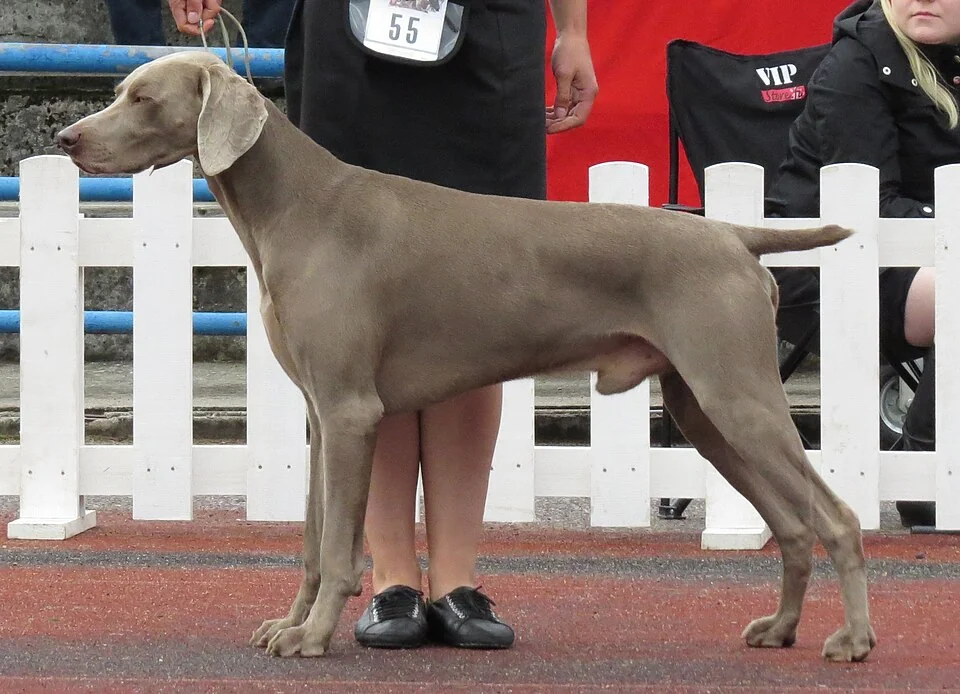
A Weimaraner is a large, lean, clearly muscled dog. Its chest is deep, the legs long and straight, and the back stays firm in motion. The body is slightly longer than it is tall, without looking heavy. The UK breed standard gives a shoulder height of 56 to 64 cm for females and 61 to 69 cm for males; PDSA lists roughly 25 to 40 kg. Silver, roe and mouse-grey coats are typical, along with amber or blue-grey eyes. Most have a short, close coat, although a less common long-haired variety exists.
From puppy to senior: caring for your dog through every life stage ↗
Health
If you are choosing a puppy, ask to see both parents’ hip and elbow results and recent eye examinations. The Royal Kennel Club lists these tests for the breed. A poorly developed hip joint can later cause pain and arthritis. PDSA also lists distichiasis: extra eyelashes grow along the eyelid and can rub the eye. Repeated blinking, squinting or tearing calls for a vet check. Ask about cancers in close relatives too, rather than relying on a general assurance that the family is healthy.
Gastric dilatation-volvulus is an emergency. The stomach expands and may twist. If your Weimaraner repeatedly tries to vomit without bringing anything up, becomes suddenly very restless or develops a swollen abdomen, go straight to an emergency vet.
Could this breed fit your life?
Could work well if …
- You enjoy spending plenty of time outdoors and want to search, train and learn with your dog.
- You can give a strong hunting dog daily exercise, company and safe boundaries.
May be less suitable if …
- The dog would regularly be alone for long periods or have little opportunity to be active with you.
- You want effortless off-lead walks around wildlife or keep small pets that roam freely.
Similar needs, different dogs.
Selected by shared size, activity, grooming and training characteristics.
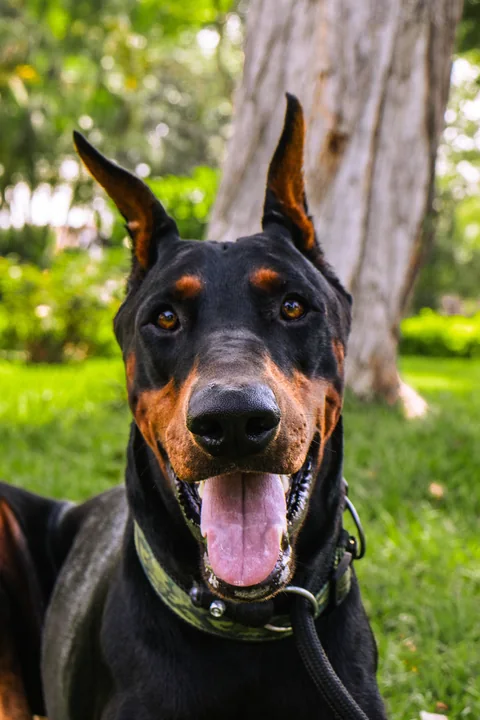
Working and guarding dog
Dobermann
The Dobermann is athletic and alert, and needs daily exercise and shared tasks. Practise walking on lead, recall and calm introductions early so you can handle its strength safely.
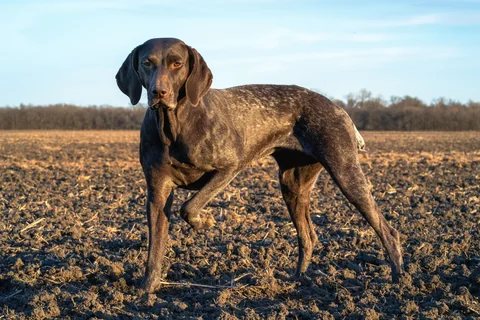
Pointing dog
German Shorthaired Pointer
The German Shorthaired Pointer is an enduring hunting dog bred to find game, point by standing still and retrieve shot game. Away from hunting, it needs long outings, scent work and a practised recall around wildlife.
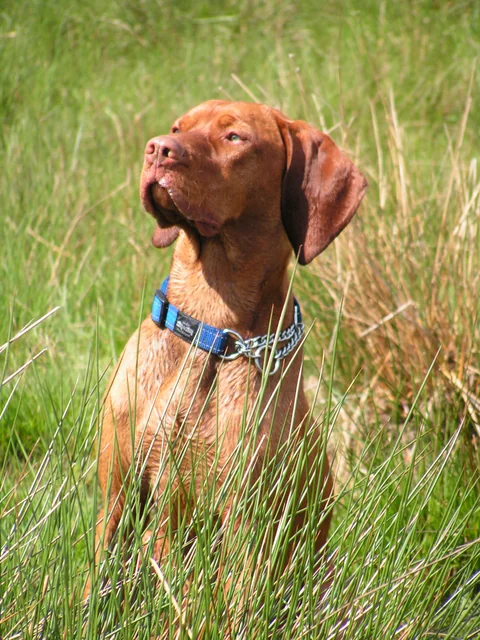
Hunt, point and retrieve dog
Hungarian Vizsla
The Hungarian Vizsla thrives on long walks, interesting scents and being close to its people. Bred as a hunting dog, it combines stamina with a strong willingness to work with a handler.
Sources and photograph credit
- Teaching your dog to be left alone
Used in this profile for: Staying home alone
- GDV (gastric dilatation volvulus) in dogs
Used in this profile for: Health
- Weimaraner · breed and health
Used in this profile for: Health
- Weimaraner · breed standard
Used in this profile for: Temperament, Size and build
- Weimaraner · breed guide
Used in this profile for: Size / Weight, Temperament, Everyday life, Day-to-day care, Size and build, Health, Lifespan, Could this breed fit your life?
Photo credits
Portrait · Nina Kvaltinova · Pexels License
In action · Denitsa Kireva · Pexels License
Puppy · Ivan Georgiev · Pexels License
Side view · File:Weimaraner in Tallinn 3.JPG · Томасина · CC BY-SA 3.0 · Edited
