 fellfolio
Pointing dog
German Shorthaired Pointer
The German Shorthaired Pointer is an enduring hunting dog bred to find game, point by standing still and retrieve shot game. Away from hunting, it needs long outings, scent work and a practised recall around wildlife.
At a glance
- Size
- Large
- Height at shoulder
- 53 to 64 cm
- Weight
- 20 to 34 kg
- Lifespan
- over 10 years
- Activity
- Very high
- Grooming
- Low
- Training
- Demanding activities
- Owner experience
- Experience recommended
Hunting instinct and teamwork
The German Shorthaired Pointer was developed as an all-round hunting dog. It searches for game by scent, stands still to indicate a find and can retrieve after the shot. That still stance is called pointing. Many are affectionate at home and intensely focused outdoors. Even without field work, this dog spends much of a walk following scents. A fresh wildlife trail may hold its attention even if recall works well in the garden.
Everyday life
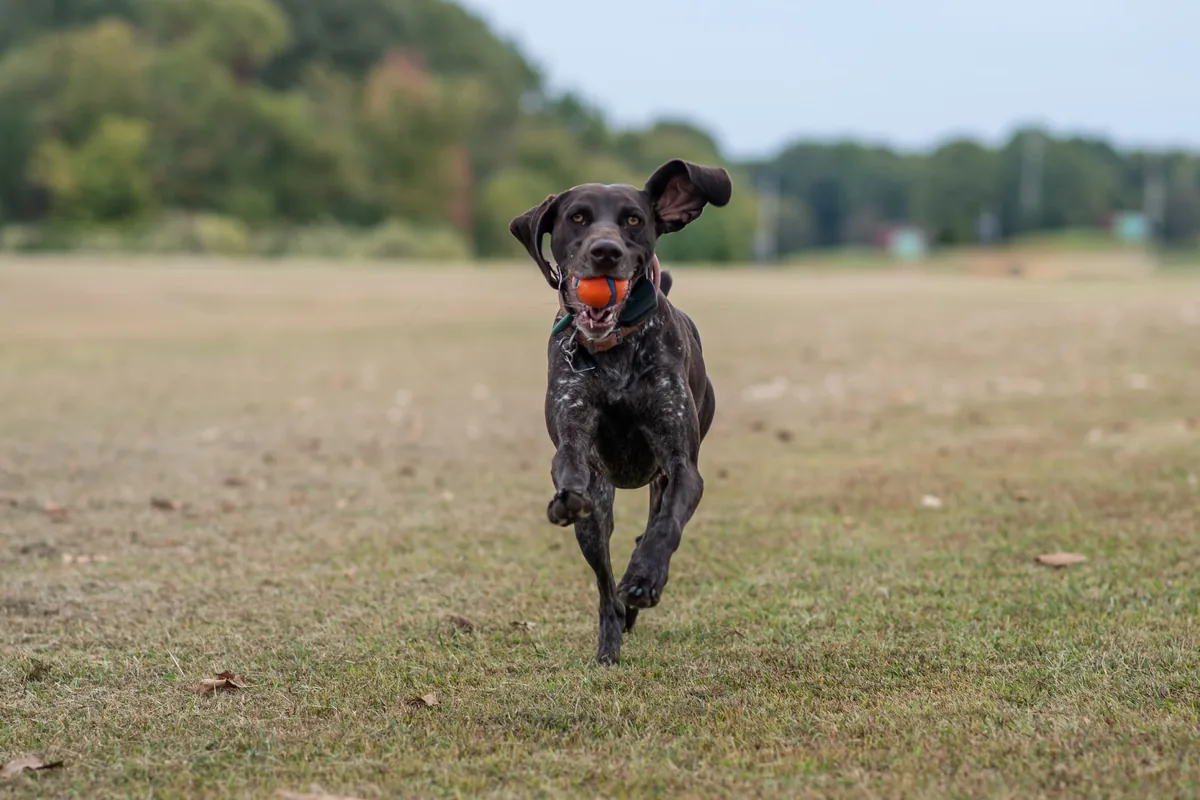
An adult German Shorthaired Pointer needs plenty of exercise each day; the UK veterinary charity PDSA gives more than two hours as a guide. Varied walks are a start. Add searches for hidden toys, retrieving or, where available, guided field work. Practise recall in quiet places before trying it around wildlife. In areas with game, use a long line until the dog can turn back reliably despite the scent.
After a long outing, it needs time to sleep at home. Its speed could easily knock over a small child during play, so an adult should supervise. Build a young dog’s fitness gradually; long cycle rides are for fully grown dogs.
Staying home alone
Dogs learn to stay home alone in small steps. The RSPCA advises no more than four hours at a time. Puppies and dogs that become unsettled when left alone need shorter absences and gradual practice. Arrange someone to care for your dog when you will be away longer.
Everyday dog training: recall, a loose lead and clear communication ↗
Day-to-day care
The short, close coat does not need elaborate grooming. Brushing once or twice a week removes loose hair and dirt. After a run through long grass, check between toes, around ears and under the front legs for grass seeds or ticks that can irritate the skin. Dry a wet dog and look for small cuts from dense cover.
Size and build
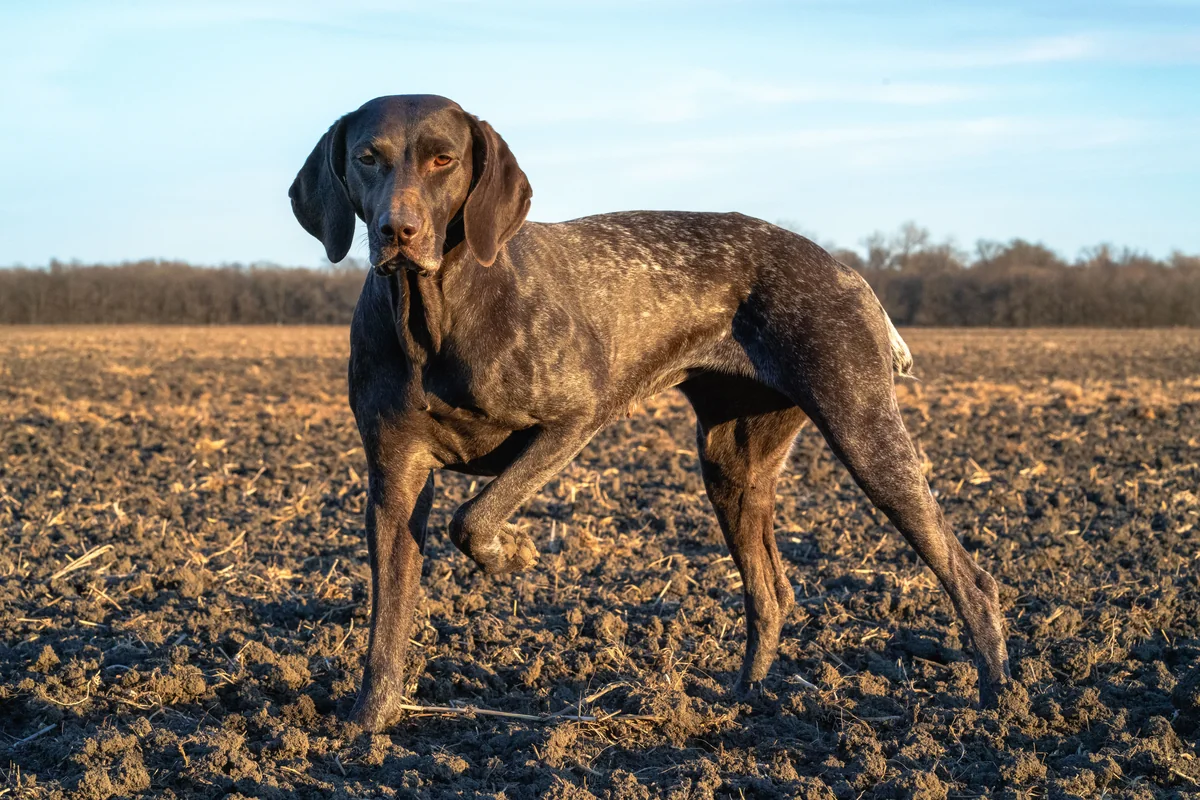
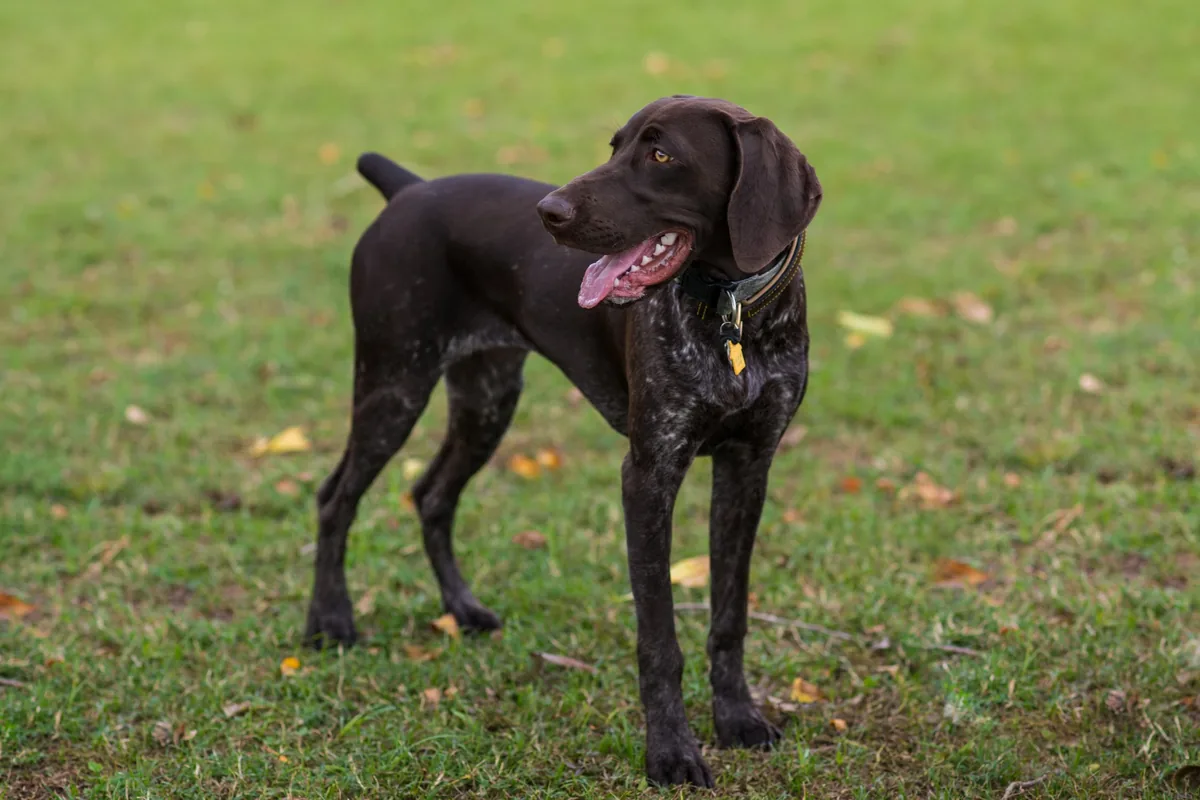
The German Shorthaired Pointer is lean and strongly muscled, with a deep chest and long legs. Its back is short and firm. On the move, the front legs reach well forward and the hind legs provide the drive for long strides. The British breed standard places males at 58 to 64 cm at the shoulder and females at 53 to 59 cm.
Its broad, hanging ears lie close to the head and reach almost to the corner of the mouth when brought forward. The coat is short, smooth and slightly firm to the touch. It may be solid liver or black, or patterned with white patches and ticking. The feet are compact and well padded.
From puppy to senior: caring for your dog through every life stage ↗
Health
Hip or elbow problems can have a particular impact on such an active dog. The Royal Kennel Club recommends screening breeding dogs for both joints and their eyes. Ask to see the parents’ results. Also ask about persistent skin problems in close relatives. If your dog keeps scratching, ask a vet to find the cause rather than changing its food on a guess.
Like other deep-chested dogs, the German Shorthaired Pointer can develop gastric torsion, when the stomach twists. Repeated retching without bringing anything up, restlessness or a swollen belly are warning signs. Seek emergency veterinary care immediately.
Could this breed fit your life?
Could work well if …
- You have time outdoors each day and would enjoy working with your dog’s nose.
- You like patient recall training and can manage hunting behaviour safely.
May be less suitable if …
- You want a dog content with a few short city walks.
- You keep small pets and cannot reliably manage a strong prey drive.
Similar needs, different dogs.
Selected by shared size, activity, grooming and training characteristics.
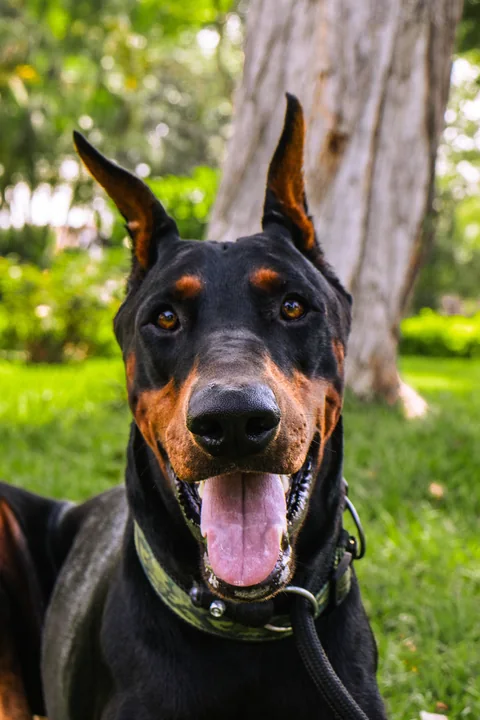
Working and guarding dog
Dobermann
The Dobermann is athletic and alert, and needs daily exercise and shared tasks. Practise walking on lead, recall and calm introductions early so you can handle its strength safely.
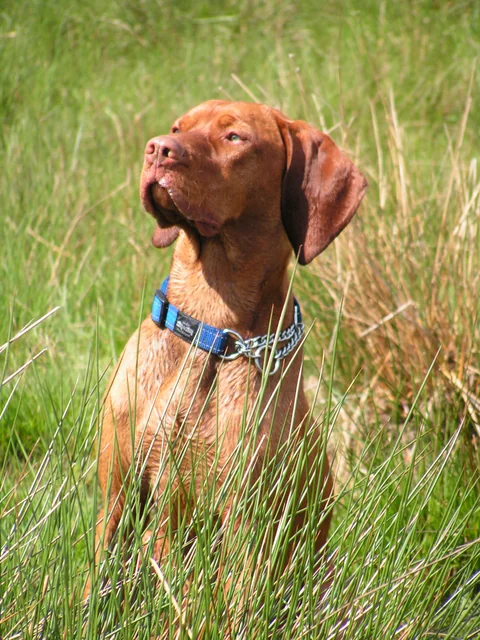
Hunt, point and retrieve dog
Hungarian Vizsla
The Hungarian Vizsla thrives on long walks, interesting scents and being close to its people. Bred as a hunting dog, it combines stamina with a strong willingness to work with a handler.
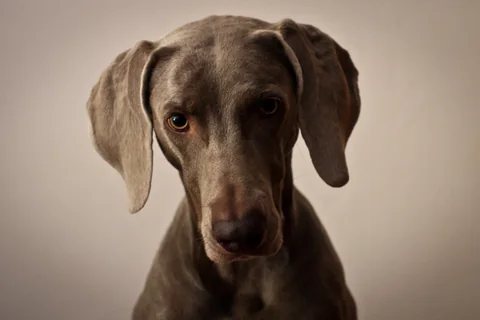
Hunt, point and retrieve dog
Weimaraner
The silver-grey coat and pale eyes stand out first. The Weimaraner is a hunting dog with plenty of stamina that likes to work closely with its people.
Sources and photograph credit
- Teaching your dog to be left alone
Used in this profile for: Staying home alone
- The Kennel Club Health Standard
Used in this profile for: Health
- GDV (gastric dilatation volvulus) in dogs
Used in this profile for: Health
- German Shorthaired Pointer · breed and health
Used in this profile for: Temperament, Everyday life, Health, Could this breed fit your life?
- German Shorthaired Pointer · breed standard
Used in this profile for: Size / Weight, Temperament, Day-to-day care, Size and build
- German Shorthaired Pointer · breed guide
Used in this profile for: Everyday life, Day-to-day care, Health, Lifespan, Could this breed fit your life?
Photo credits
Portrait · gabesdotphotos · Pexels License
Side view · Brixiv · Pexels License
In action · Brixiv · Pexels License
Puppy · Brixiv · Pexels License