 fellfolio
Hunt, point and retrieve dog
Hungarian Vizsla
The Hungarian Vizsla thrives on long walks, interesting scents and being close to its people. Bred as a hunting dog, it combines stamina with a strong willingness to work with a handler.
At a glance
- Size
- Large
- Height at shoulder
- 54 to 64 cm
- Weight
- 20 to 30 kg
- Lifespan
- over 12 years
- Activity
- Very high
- Grooming
- Low
- Training
- Demanding activities
- Owner experience
- Experience recommended
Alert, active and closely connected to people
The Hungarian Vizsla was bred to hunt in fields, woodland and water. It finds game by scent, stands still to indicate its position and can retrieve shot game. That blend of searching, observation and close contact with a handler still shapes many Vizslas today.
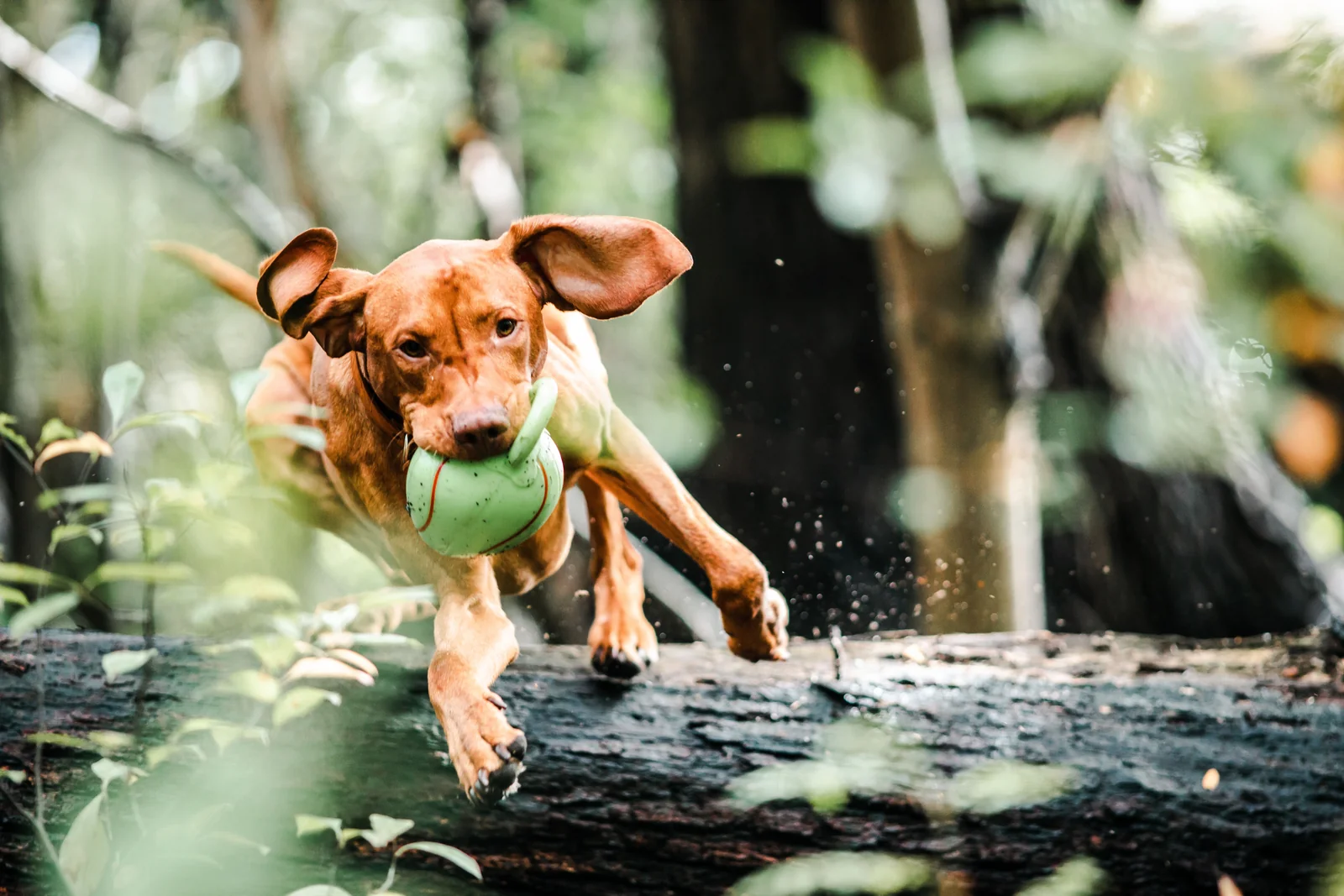
On a walk, a hidden food container or a toy to find and bring back puts those skills to use. Recall needs early practice too: a fresh wildlife trail can be more tempting than the next treat. The international kennel federation FCI describes the breed as lively, friendly and even-tempered. Clear, calm cues and praise work better than pressure.
Everyday life
The UK veterinary charity PDSA recommends at least two hours of exercise a day for adult Vizslas, spread over several outings. Longer walks, safe off-lead running and scent tasks all fit. For example, hide a toy in some bushes, ask the dog to wait and then let it search. With a dog keen to follow wildlife, practise these games on a long line before trying off-lead walks in open country.
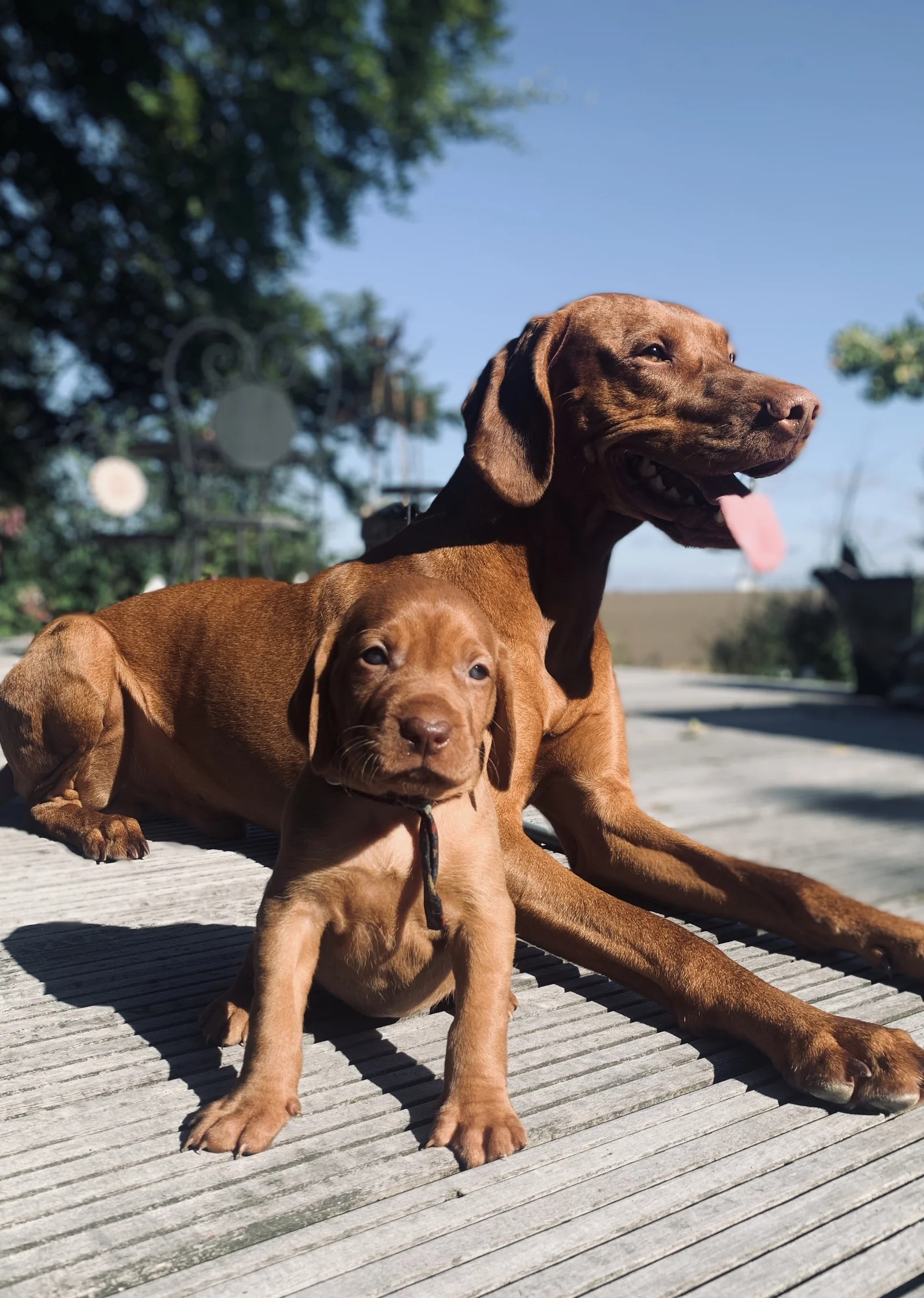
Vizslas often seek company indoors too, following their people from room to room. Teach time alone gradually from an early age. Young dogs need activity but are not ready for long runs or strenuous training; increase the load as they grow.
Staying home alone
Dogs learn to stay home alone in small steps. The RSPCA advises no more than four hours at a time. Puppies and dogs that become unsettled when left alone need shorter absences and gradual practice. Arrange someone to care for your dog when you will be away longer.
Everyday dog training: recall, a loose lead and clear communication ↗
Day-to-day care
The short coat is easy to maintain: a weekly brush removes loose hair and gives you a chance to spot small scratches or ticks after an outing. After a walk through long grass, check the paws and hanging ears for trapped grass seeds. Repeated head shaking or an unpleasant smell from an ear needs a veterinary check.
Vizslas have no undercoat. Dry them promptly after swimming and give them a warm place to rest in cold weather. A short coat does not mean that no hair ends up on clothes or furniture.
Size, build and coat
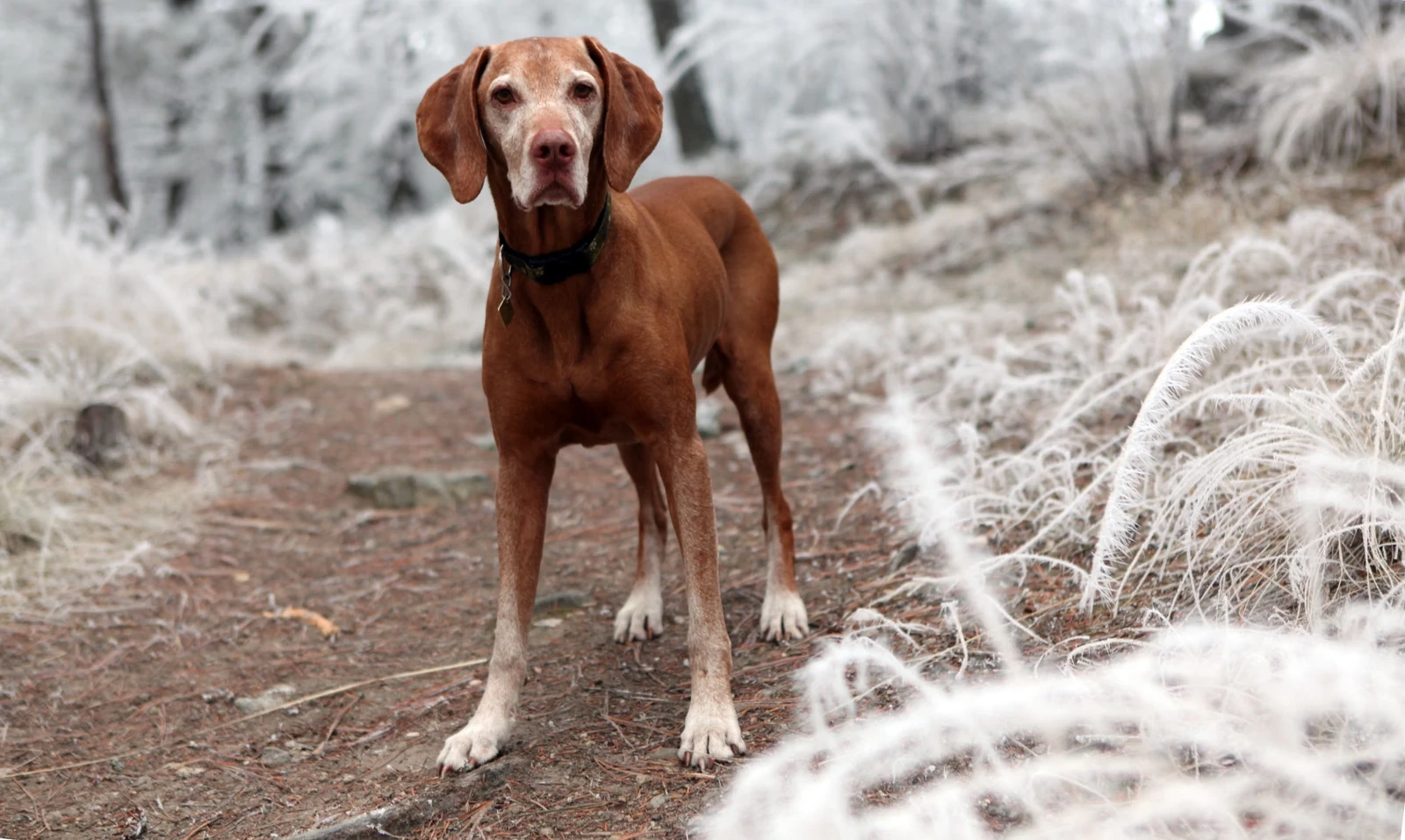
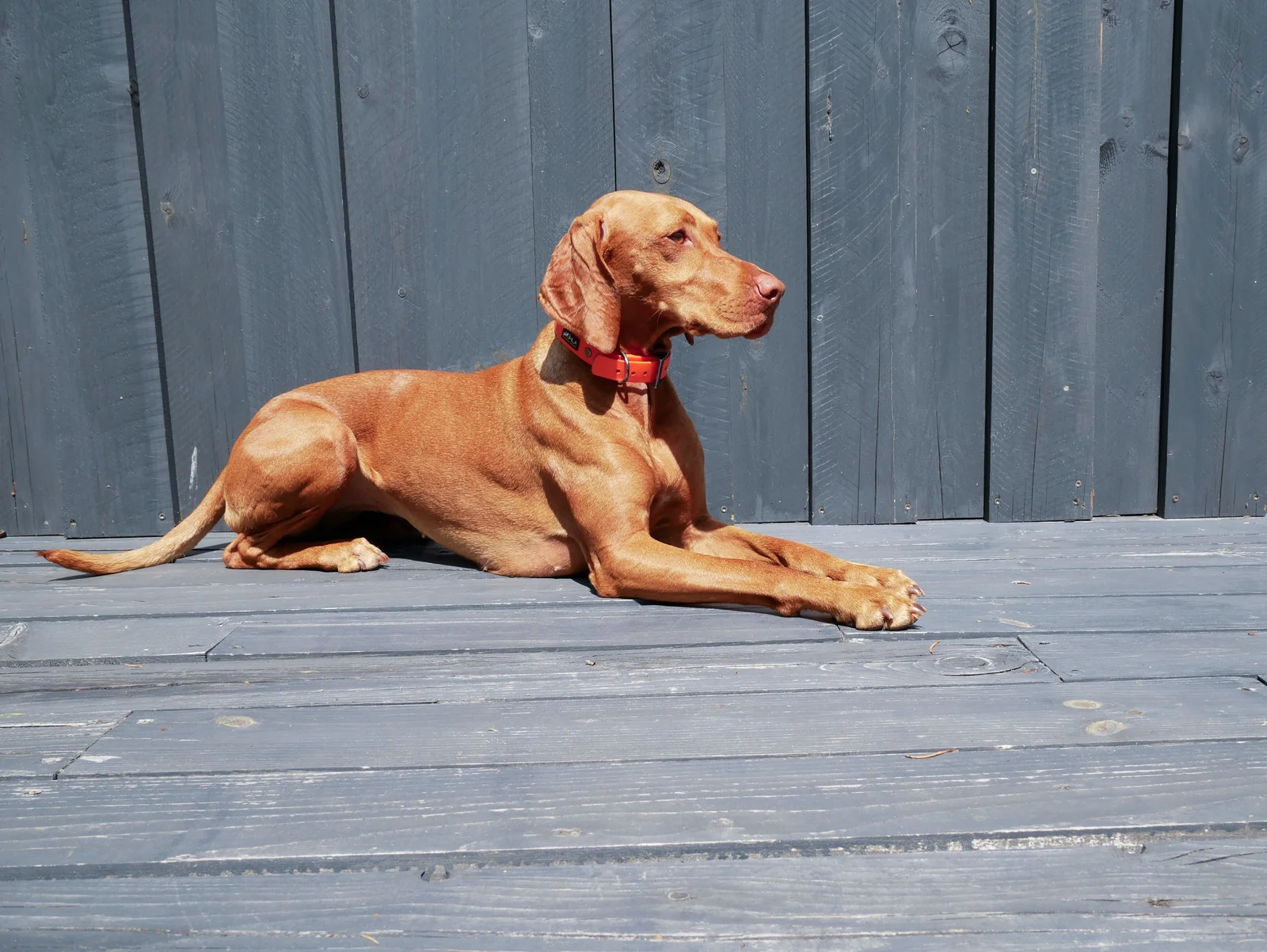
FCI height is 58 to 64 cm for males and 54 to 60 cm for females. The PDSA gives a typical weight range of 20 to 30 kg. The Hungarian Vizsla is medium-sized and elegant, with a lean, visibly muscular body. It is only slightly longer than it is tall. The chest reaches the elbows and the long hind legs are strong. The short, dense, hard coat lies close to the body and has no undercoat. It ranges from russet gold to dark sandy gold; the standard permits a small white patch on the chest or throat.
From puppy to senior: caring for your dog through every life stage ↗
Health: what to know
The PDSA lists hip dysplasia, entropion, epilepsy, some cancers and autoimmune conditions as possible concerns. In autoimmune conditions, the immune system attacks healthy tissue. With hip dysplasia, the joint does not fit securely and may later develop arthritis. Entropion is an inward-rolling eyelid that irritates the eye; epilepsy can cause recurring seizures. Time a seizure and call your vet after it stops. If it lasts more than two minutes or another occurs within 24 hours, call your vet or an emergency vet immediately. Ask for written hip X-ray results and an eye examination for the breeding dogs. Also ask whether close relatives have had seizures, cancer or autoimmune disease.
Could this breed fit your life?
Could work well if …
- You want to spend plenty of time outdoors and enjoy scent work, retrieving or training.
- You can provide company and train calmly, consistently and with rewards.
May be less suitable if …
- You need a dog that can routinely be left alone for long stretches.
- You want a quiet companion content with little exercise or mental activity.
Similar needs, different dogs.
Selected by shared size, activity, grooming and training characteristics.
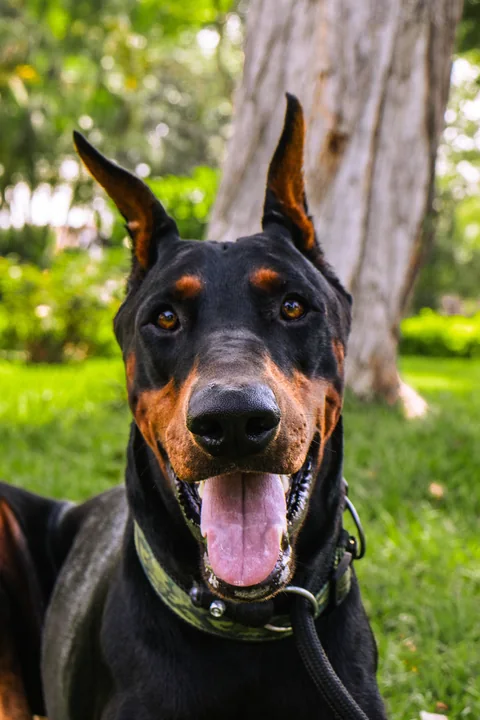
Working and guarding dog
Dobermann
The Dobermann is athletic and alert, and needs daily exercise and shared tasks. Practise walking on lead, recall and calm introductions early so you can handle its strength safely.
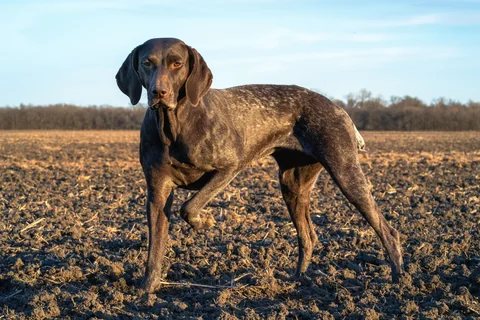
Pointing dog
German Shorthaired Pointer
The German Shorthaired Pointer is an enduring hunting dog bred to find game, point by standing still and retrieve shot game. Away from hunting, it needs long outings, scent work and a practised recall around wildlife.
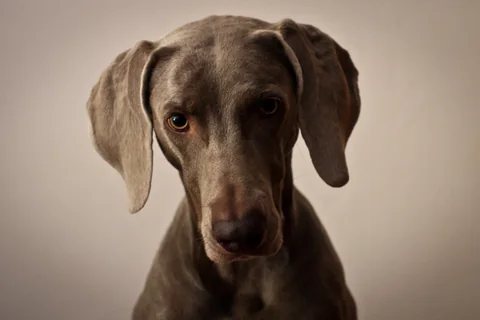
Hunt, point and retrieve dog
Weimaraner
The silver-grey coat and pale eyes stand out first. The Weimaraner is a hunting dog with plenty of stamina that likes to work closely with its people.
Sources and photograph credit
- Teaching your dog to be left alone
Used in this profile for: Staying home alone
- FCI Standard No. 57: Hungarian Short-Haired Pointer (Vizsla)
Used in this profile for: Size / Weight, Temperament, Everyday life, Day-to-day care, Size, build and coat, Health, Could this breed fit your life?
- What to do if your pet has a seizure
Used in this profile for: Health
- Hungarian Vizsla · breed guide
Used in this profile for: Size / Weight, Temperament, Everyday life, Day-to-day care, Size, build and coat, Health, Lifespan, Could this breed fit your life?
Photo credits
Portrait · Liz Tremblay · Pexels License
Side view · Lena Netkach · Pexels License
In action · chepté cormani · Pexels License
Puppy · Vizsla Deckrüde mit Welpen · Florrez Maximal · CC BY 4.0 · Edited
