 fellfolio
Northern spitz
Samoyed
The Samoyed comes from Siberia, where its ancestors pulled loads and herded reindeer. Today it needs long walks, company and daily time to brush its dense coat.
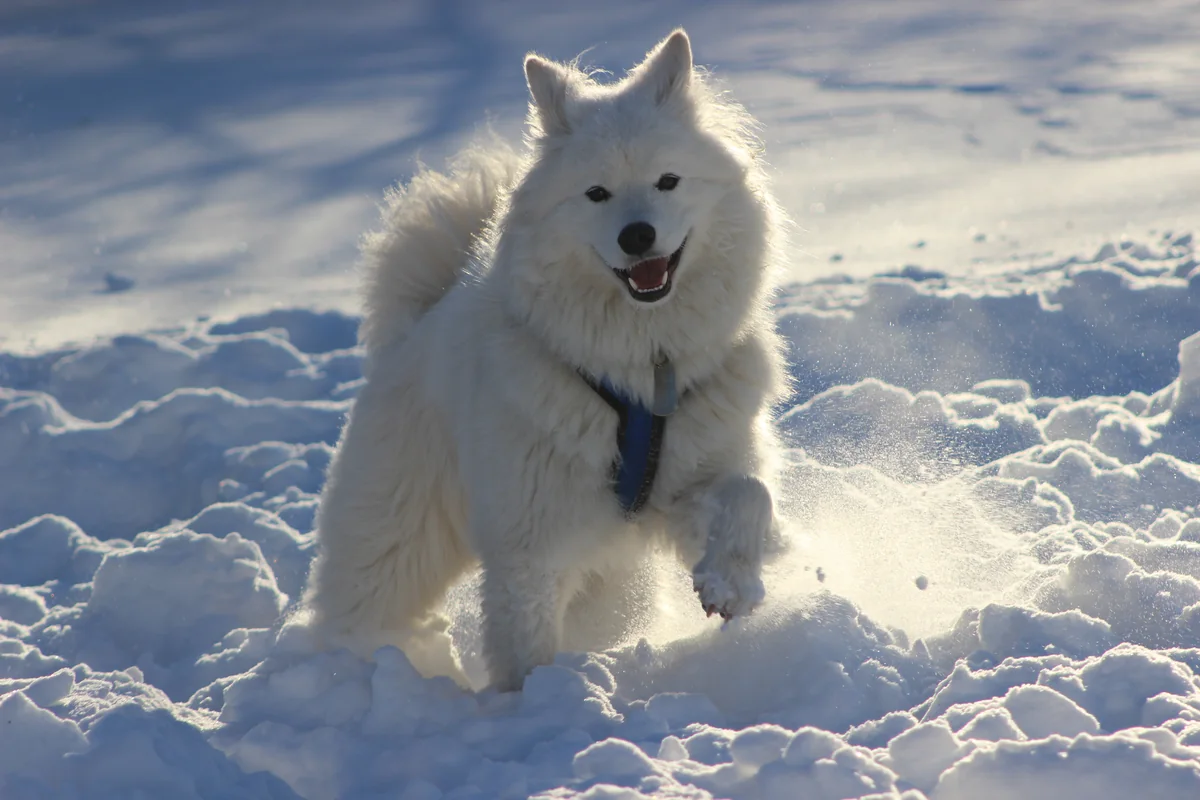
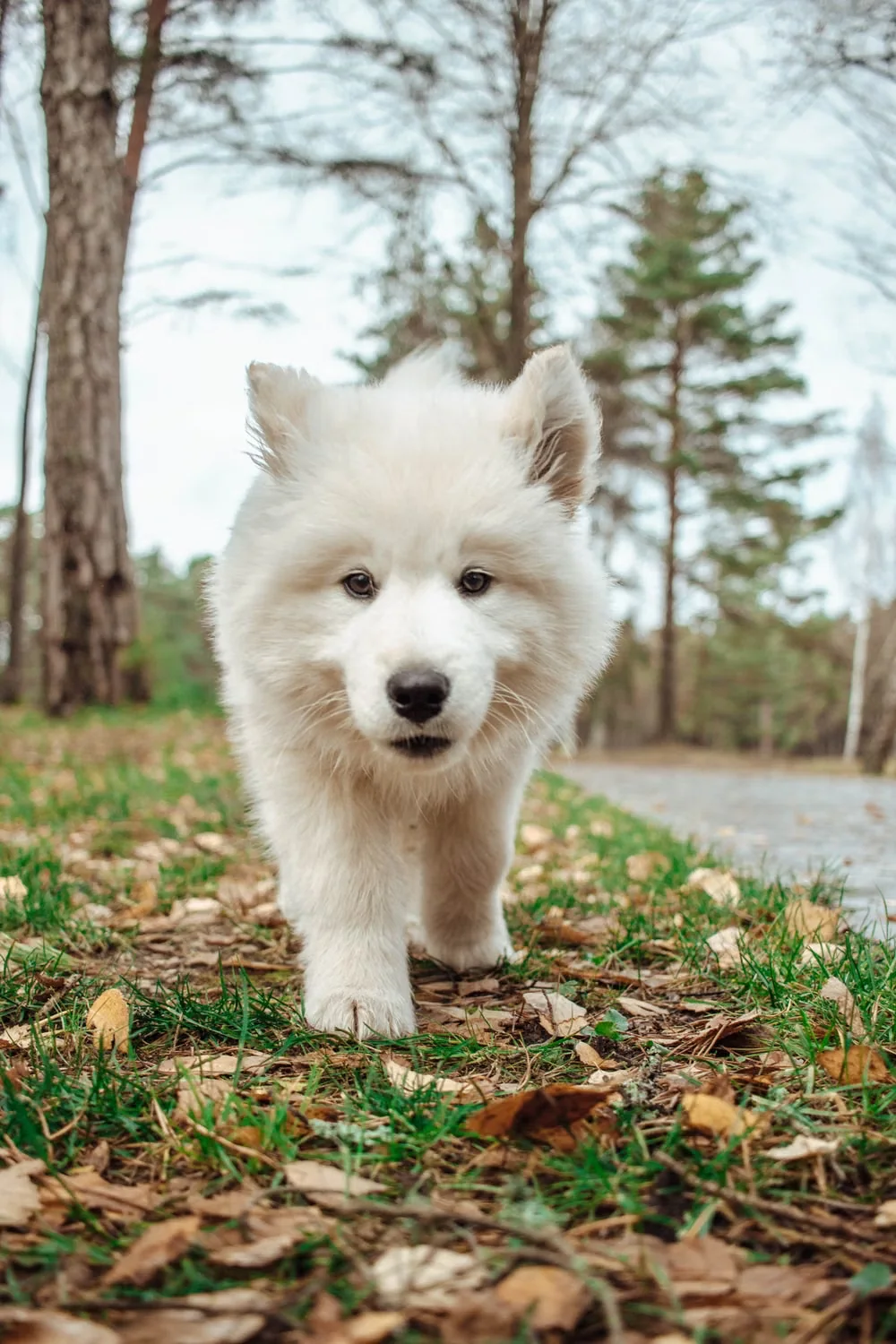
At a glance
- Size
- Medium
- Height at shoulder
- 46 to 56 cm
- Weight
- 16 to 29 kg
- Lifespan
- over 10 years
- Activity
- Very high
- Grooming
- Daily
- Training
- Patience & clear guidance
- Owner experience
- Experience recommended
Sociable, energetic and thick-coated
In Siberia, the Samoyed’s ancestors helped herd reindeer and pull loads. Those jobs demanded stamina and close cooperation with people. Many still enjoy being close to their family, although a scent or a glimpse of wildlife may hold their attention more firmly than a cue.
Samoyeds often have plenty to say. Some howl when left alone; others announce visitors or excitement. In a home with close neighbours, that matters. Practising short, calm absences early is more useful than waiting for a noise problem to develop.
Everyday life
The UK veterinary charity PDSA recommends at least two hours of exercise each day for an adult Samoyed. Long walks, shared games and short training sessions suit this dog better than a quick circuit of the block. You could hide a toy in the garden and let your dog search for it.
Prey drive can make recall difficult outdoors. Practise in quiet places first and use a long line until your dog responds reliably around distractions. Check the garden fence as well: Samoyeds are good at finding a weak point.
Staying home alone
Dogs learn to stay home alone in small steps. The RSPCA advises no more than four hours at a time. Puppies and dogs that become unsettled when left alone need shorter absences and gradual practice. Arrange someone to care for your dog when you will be away longer.
Everyday dog training: recall, a loose lead and clear communication ↗
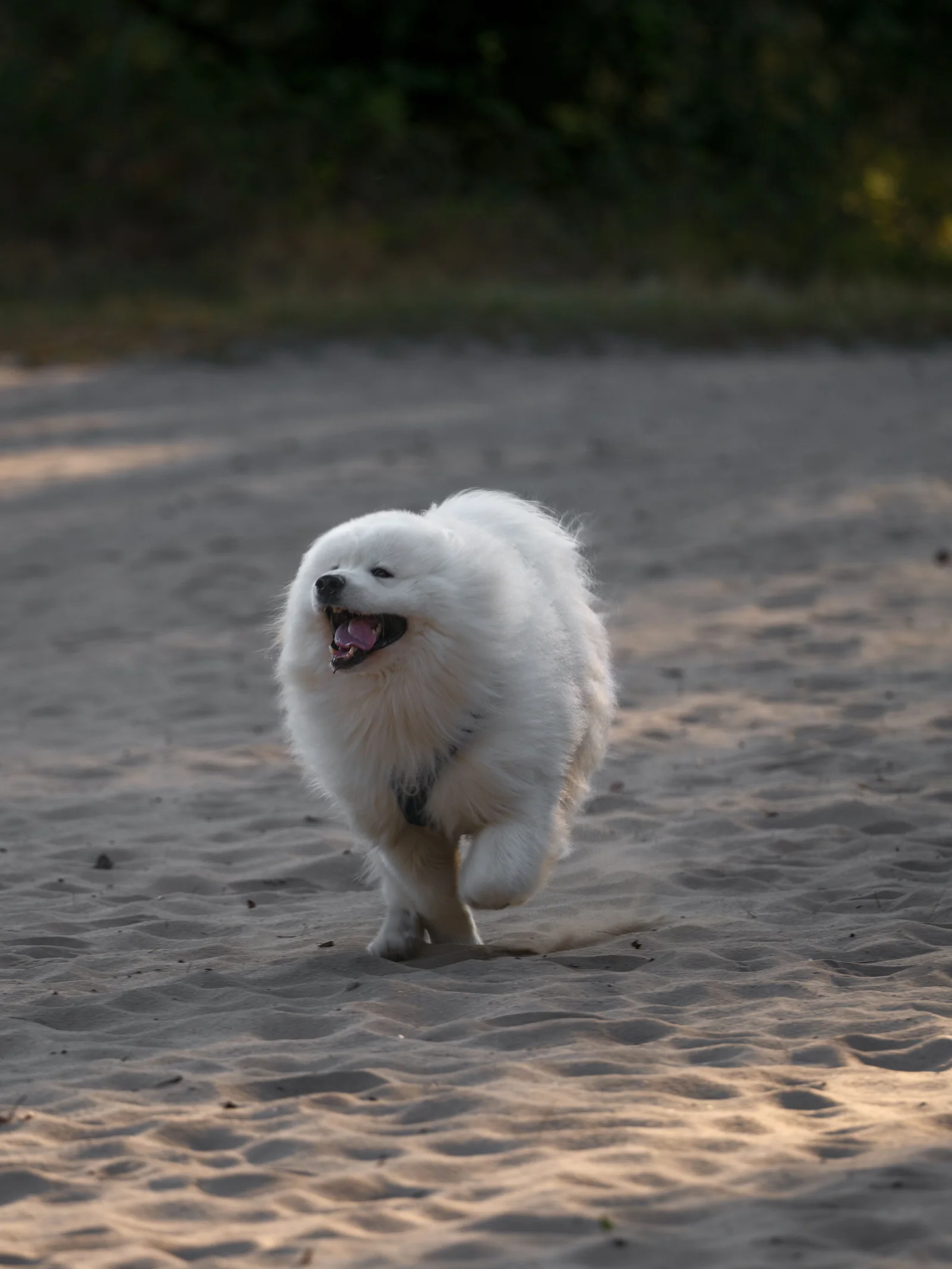
Day-to-day care
A soft, dense undercoat sits beneath the longer outer hairs. Brush down to the skin every day, especially behind the ears, under the belly and around the back legs, where tangles are easy to miss. During shedding seasons the loose undercoat can fill a brush quickly; smoothing the surface will not remove it.
Regularly clipping the whole coat short is no shortcut to grooming: it can interfere with the coat’s insulating structure. Do not pull at a tight mat with a comb. Ask an experienced groomer to remove it gently and show you how to comb through to the undercoat in future. Discuss medically necessary clipping with your vet. Hair between the paw pads can be trimmed by someone experienced when needed.
Size and build
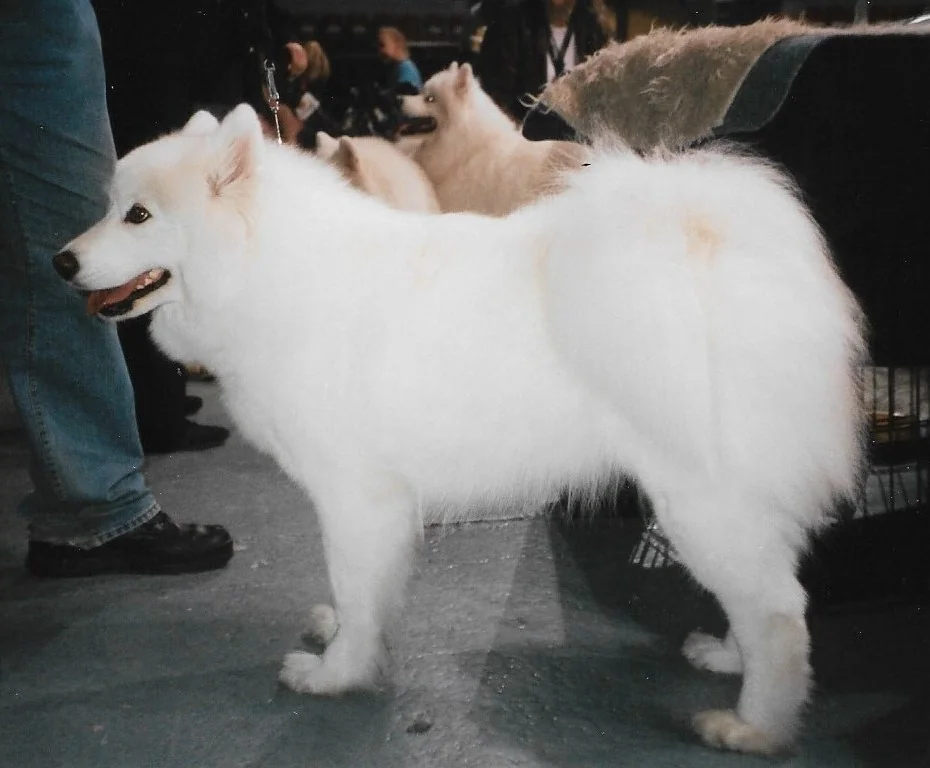
PDSA gives a height of 46 to 56 cm at the shoulder and a weight of 16 to 29 kg. Beneath the abundant coat is a balanced, muscular dog with a deep chest and straight legs. The ears stand upright; the full tail is carried over the back when alert but may hang down at rest.
The coat may be white, cream, or white with biscuit shading. Dense undercoat and weather-resistant outer hair helped these dogs work in Siberian cold. In warm weather, provide shade and water and choose cooler times for walks.
From puppy to senior: caring for your dog through every life stage ↗
Health
Hip dysplasia and eye disease deserve attention in Samoyeds. A poorly fitting hip joint can lead to pain and arthritis; PDSA also names cataracts, which cloud the lens, and corneal ulcers, painful wounds on the eye’s surface. If buying a puppy, ask to see the breeding dogs’ hip results and recent eye screening rather than accepting a verbal assurance that the parents are healthy.
PDSA also lists diabetes. Much greater thirst, more frequent urination and weight loss despite a good appetite are reasons to call your vet. Ask whether close relatives have had diabetes, hip problems or eye disease too.
Could this breed fit your life?
Could work well if …
- You enjoy long outdoor days and want to train and play with your dog.
- You have time to brush a dense coat thoroughly every day.
May be less suitable if …
- You need a quiet dog or are often away for many hours.
- Daily grooming and loose undercoat around the home would be hard to live with.
Similar needs, different dogs.
Selected by shared size, activity, grooming and training characteristics.
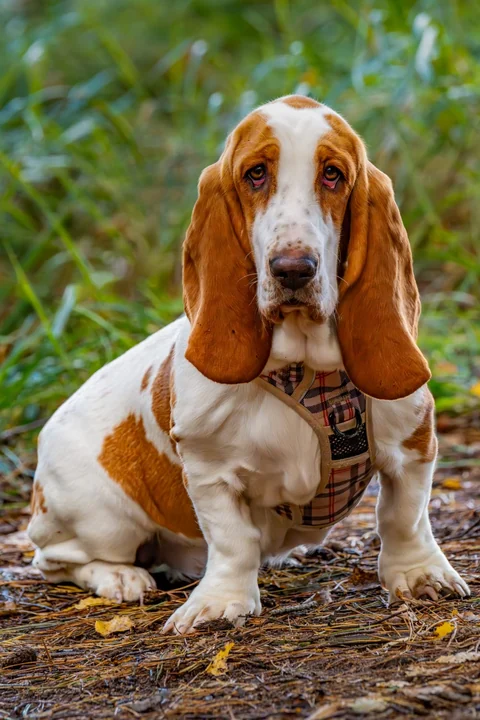
Scent hound
Basset Hound
The Basset Hound is a sociable hunting dog that may look easygoing at home but follow a scent for a long time outdoors. Allow time to sniff on walks and keep it on lead near roads and in open areas.
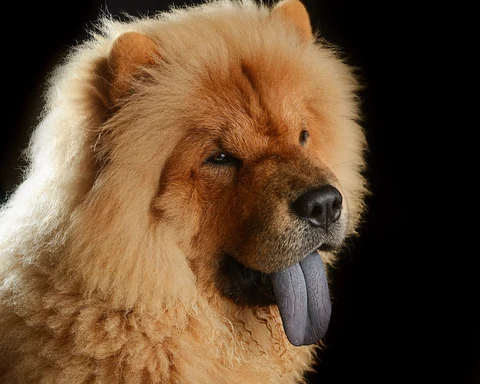
Spitz-type guard and companion dog
Chow Chow
The Chow Chow is an often quiet, independent dog from China with a dense coat and blue-black tongue. It forms close bonds with familiar people and needs time to get to know strangers. Its coat, skin and eyes need regular care and checks.
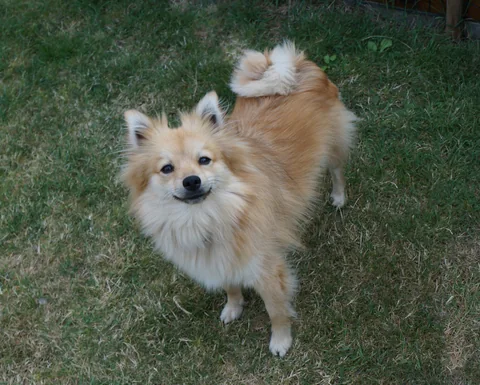
Spitz
Medium German Spitz (Mittelspitz)
Alert, lively and instantly recognisable by its full ruff, the Medium German Spitz notices what is happening around the front door and often has plenty to say about it.
Sources and photograph credit
- Teaching your dog to be left alone
Used in this profile for: Staying home alone
- Samoyed · breed profile
Used in this profile for: Temperament
- Samoyed · breed standard
Used in this profile for: Size and build
- Samoyed · breed guide
Used in this profile for: Size / Weight, Temperament, Everyday life, Day-to-day care, Size and build, Health, Lifespan, Could this breed fit your life?
Photo credits
Portrait · Lulu - Samoyed in Snow · Johnjptraynor · CC BY-SA 4.0 · Edited

In action · Haberdoedas Photography · Pexels License
Puppy · ERD- SNAPHOTO · Pexels License
Side view · File:Helsinki2006 samojedinkoira.jpg · Canarian · CC BY-SA 4.0 · Edited
