 fellfolio
Spitz
Pomeranian
Small enough to fit on a lap, the Pomeranian is often too curious to stay there for long. It needs walks, company and regular coat care.
At a glance
- Size
- Small
- Height at shoulder
- 18 to 24 cm
- Weight
- 2 to 3 kg
- Lifespan
- over 12 years
- Activity
- Moderate
- Grooming
- Several times weekly
- Training
- Patience & clear guidance
- Owner experience
- First dog with support
A small dog that notices everything
The Pomeranian watches what happens around the home and likes to be involved. A visitor at the door may get a loud announcement. Make quiet arrivals part of everyday practice: reward a pause in barking, greet guests calmly and give the dog a familiar place to settle.
Recall is worth practising outdoors even with a dog this small. Start on a quiet path, reward it for coming back and add distractions gradually. That gives you a way to call your Pomeranian to you during a dog encounter if it gets excited, without picking it up every time.
Everyday life
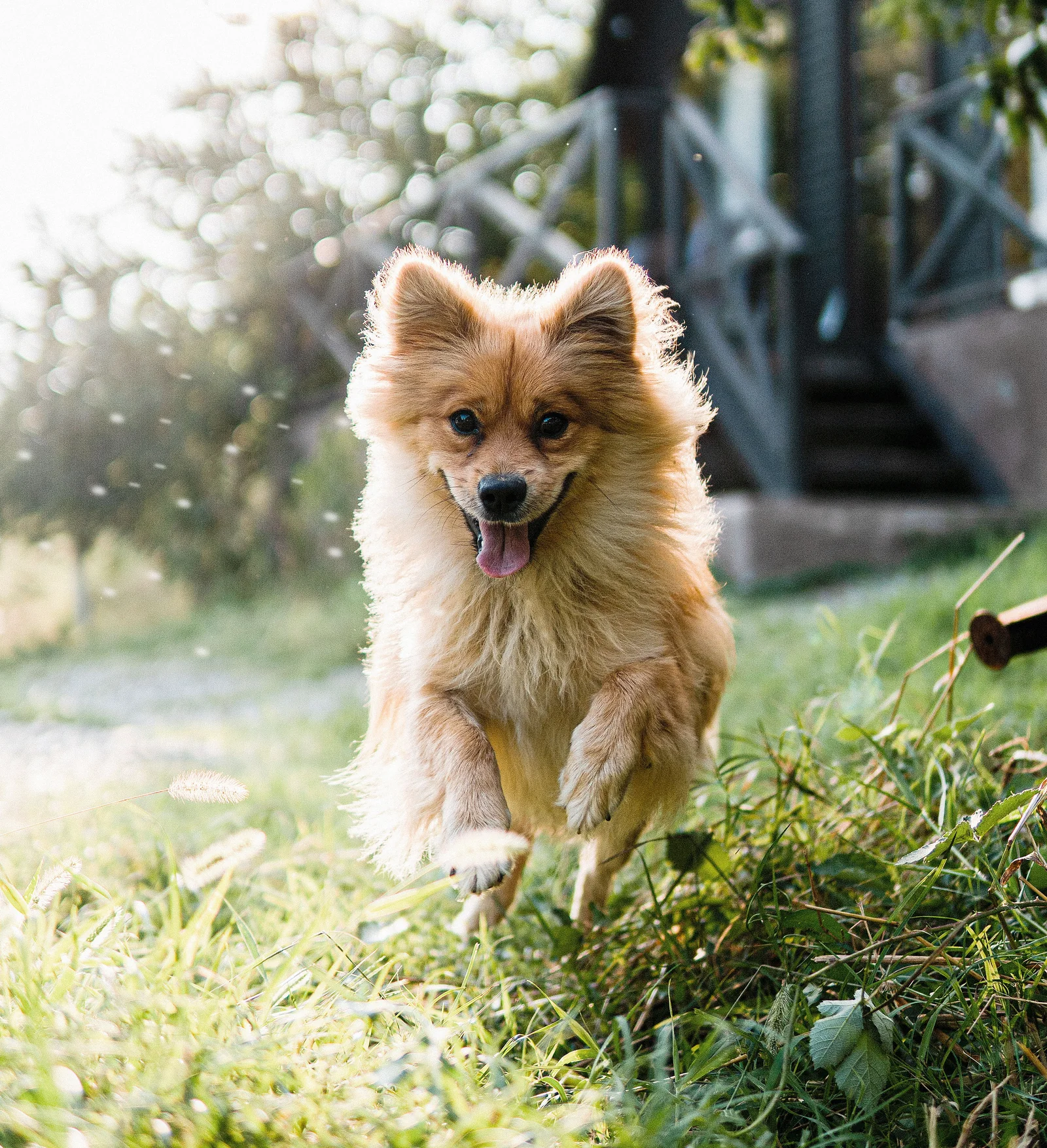
Around 30 minutes of exercise a day is a useful guide. Two short outings with time to sniff offer more than a hurried circuit of the block. At home, hide a few pieces of food or a familiar toy for the dog to find. The Pomeranian may be tiny, but it still wants to explore on its own feet rather than being carried everywhere.
Around much larger dogs, give your Pomeranian space to watch before deciding whether to greet. Help your dog on steep stairs and prevent jumps from high furniture. In a crowd, make space or carry your dog briefly if there is a risk of being stepped on. In calm encounters, let your dog walk.
Staying home alone
Dogs learn to stay home alone in small steps. The RSPCA advises no more than four hours at a time. Puppies and dogs that become unsettled when left alone need shorter absences and gradual practice. Arrange someone to care for your dog when you will be away longer.
Everyday dog training: recall, a loose lead and clear communication ↗
Day-to-day care
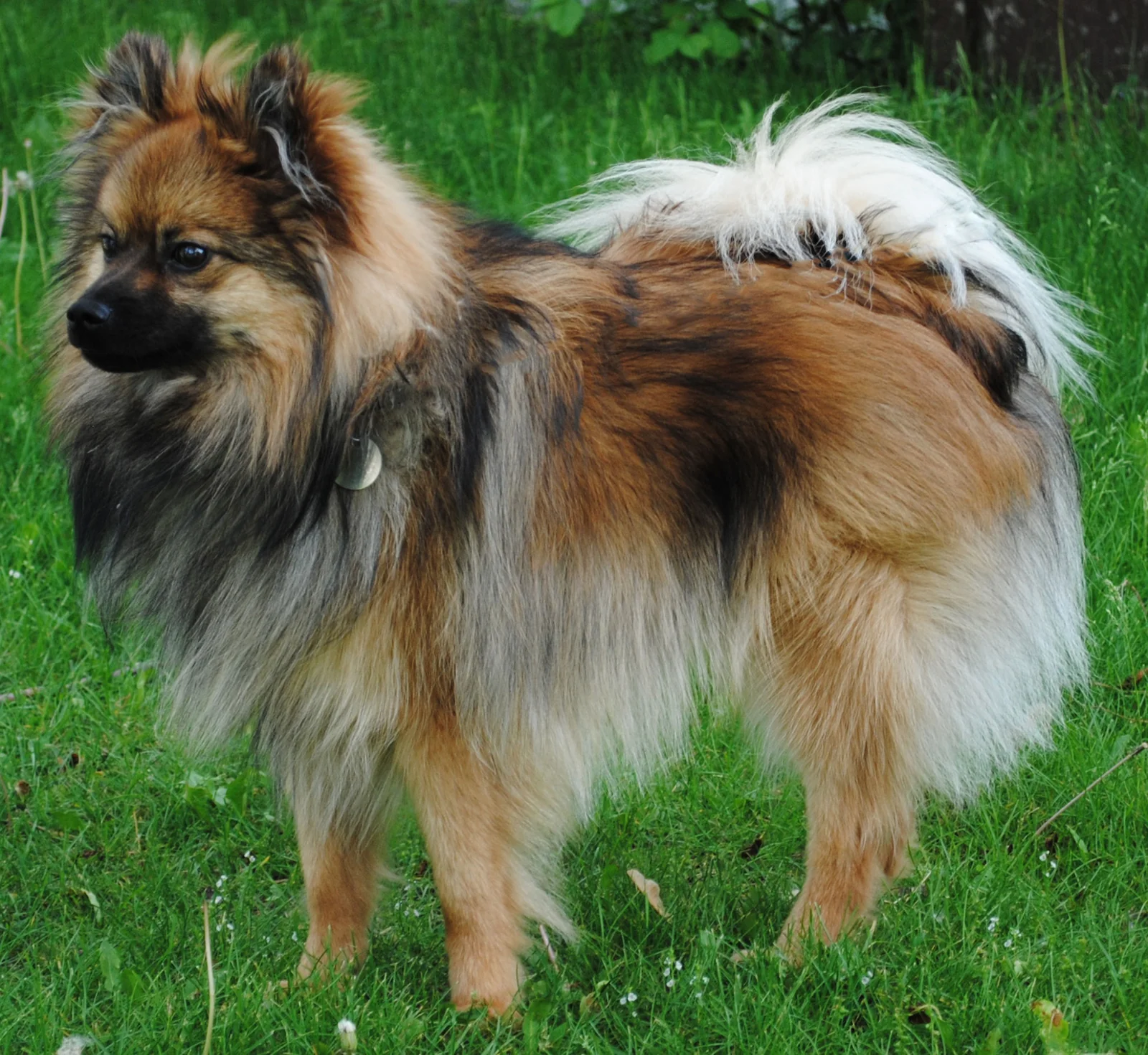
The thick double coat needs brushing below the fluffy surface. Work gently through the undercoat two or three times a week, and more often during seasonal shedding. Longer hair behind the ears, under the collar and around the hind legs can tangle first.
Introduce the brush and paw checks in short, pleasant sessions. This also makes it easier to notice sore skin or overgrown nails. After brushing, run a comb through the undercoat to check for hidden tangles.
Size and build
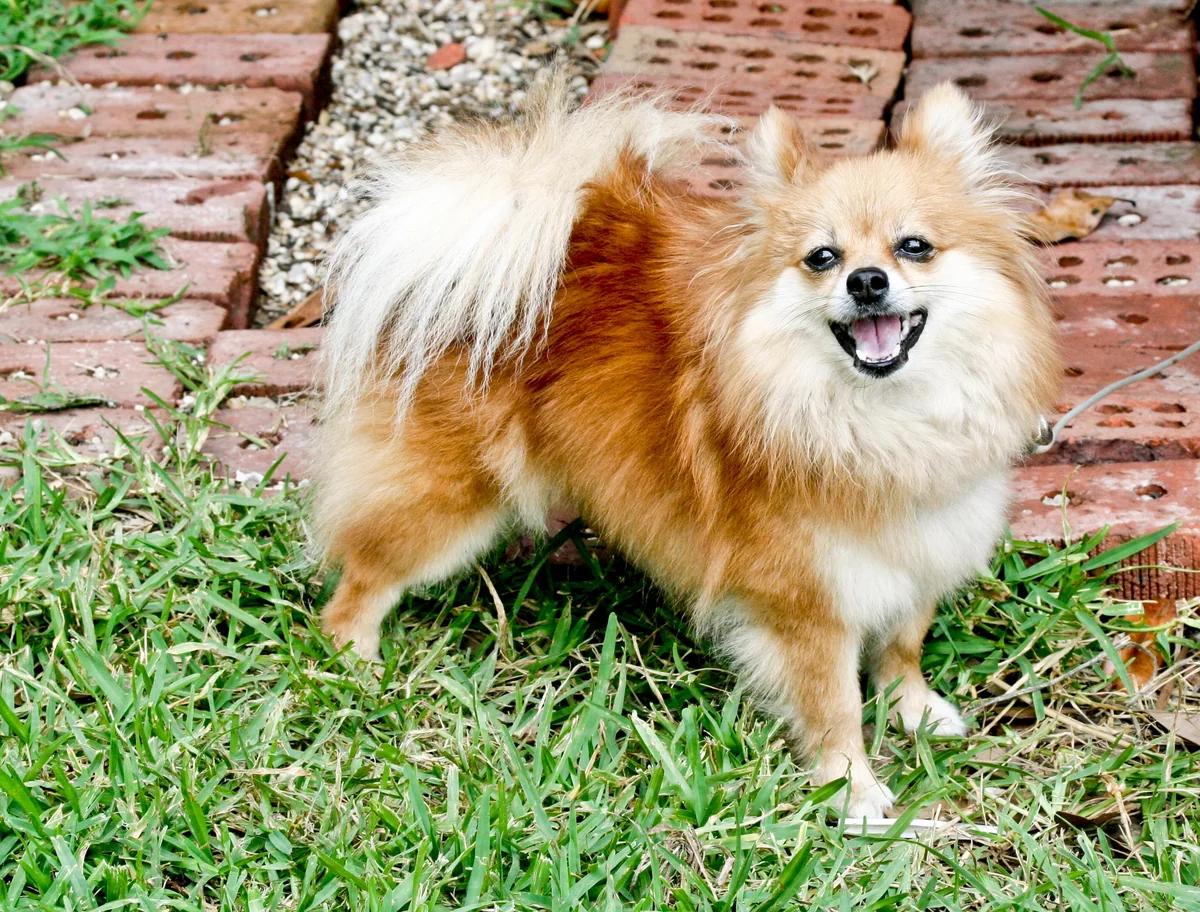
Under the current standard of the international kennel federation FCI, a Pomeranian stands about 18 to 24 cm at the shoulder; the UK veterinary charity PDSA gives a usual weight of 2 to 3 kg. Its compact body, short back and high-set bushy tail create the familiar spitz outline. The double coat pairs dense undercoat with longer guard hair that stands away from the body; the full ruff makes the dog look especially round. Beneath that volume is a very small frame that needs protection from knocks and high jumps.
From puppy to senior: caring for your dog through every life stage ↗
Health
Knees, breathing and eyes deserve particular attention in a Pomeranian. With a luxating patella, the kneecap slips out of place and the dog may briefly carry a hind leg. Tracheal collapse narrows the windpipe and can cause a persistent dry cough or breathing difficulty. Eye disease, including progressive retinal atrophy (PRA), is also reported. Have new difficulty seeing in dim light, frequent coughing or repeated skipping on one leg checked by a vet. If your Pomeranian struggles to breathe, call your vet or an emergency vet immediately.
PDSA also lists Chiari malformation, an abnormal shape or limited space at the back of the skull, and syringomyelia, in which cavities form in the spinal cord and can cause pain. A UK screening scheme is available for these neurological conditions. When considering a puppy, ask for the parents’ documented knee and eye results and whether they have a result from that scheme. Ask about similar problems in close relatives too. Written results matter more than a general assurance that the line is healthy.
Could this breed fit your life?
Could work well if …
- You want a lively small dog and can keep training calm and consistent.
- You can plan coat care and take your dog’s small size into account.
May be less suitable if …
- You need a consistently quiet dog.
- Children or larger dogs might often overwhelm the small spitz by accident.
More breeds to compare
Explore their build, activity and care needs in these profiles.
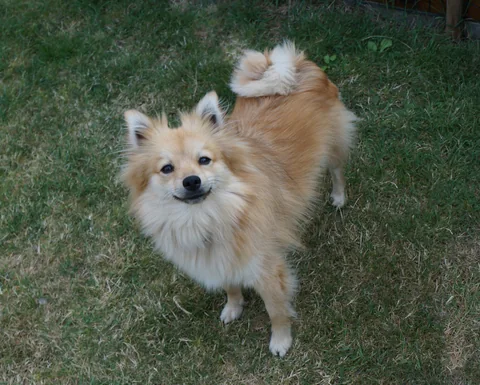
Spitz
Medium German Spitz (Mittelspitz)
Alert, lively and instantly recognisable by its full ruff, the Medium German Spitz notices what is happening around the front door and often has plenty to say about it.
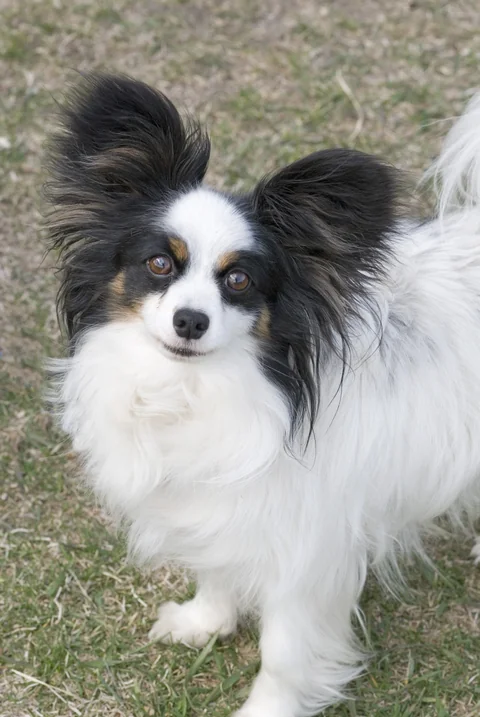
Toy companion dog
Papillon
A tiny, alert companion with striking butterfly ears. It can live well in a small home but still wants to walk, play and use its brain.
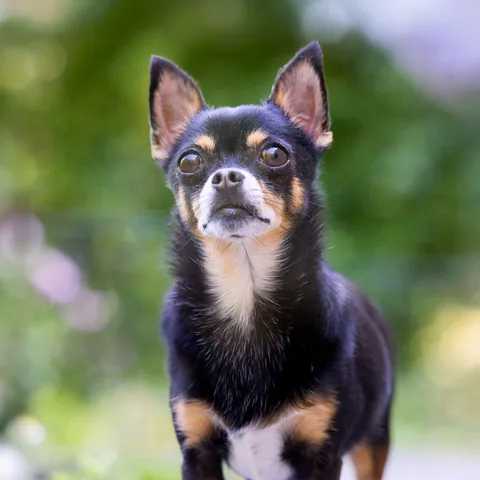
Companion dog
Chihuahua
Small, alert and active, a Chihuahua still needs daily walks and short scent games, gentle introductions and protection from rough handling.
Sources and photograph credit
- Teaching your dog to be left alone
Used in this profile for: Staying home alone
- German Spitz · FCI Breed Standard No. 97
Used in this profile for: Size / Weight, Size and build
- First aid for pets struggling to breathe
Used in this profile for: Health
- Cavalier King Charles Spaniel · breed guide
Used in this profile for: Health
- Pomeranian · breed guide
Used in this profile for: Size / Weight, Temperament, Everyday life, Day-to-day care, Size and build, Health, Lifespan, Could this breed fit your life?
Photo credits
Portrait · LR_MG_1965 · willc2 · CC BY-SA 2.0 · Edited

Side view · Jpkollman · CC0 1.0

In action · Zakir Rushanly · Pexels License
Puppy · Pomeranian Pup · André Lage Freitas · CC BY-SA 3.0 · Edited
