 fellfolio
Herding dog
Polish Lowland Sheepdog
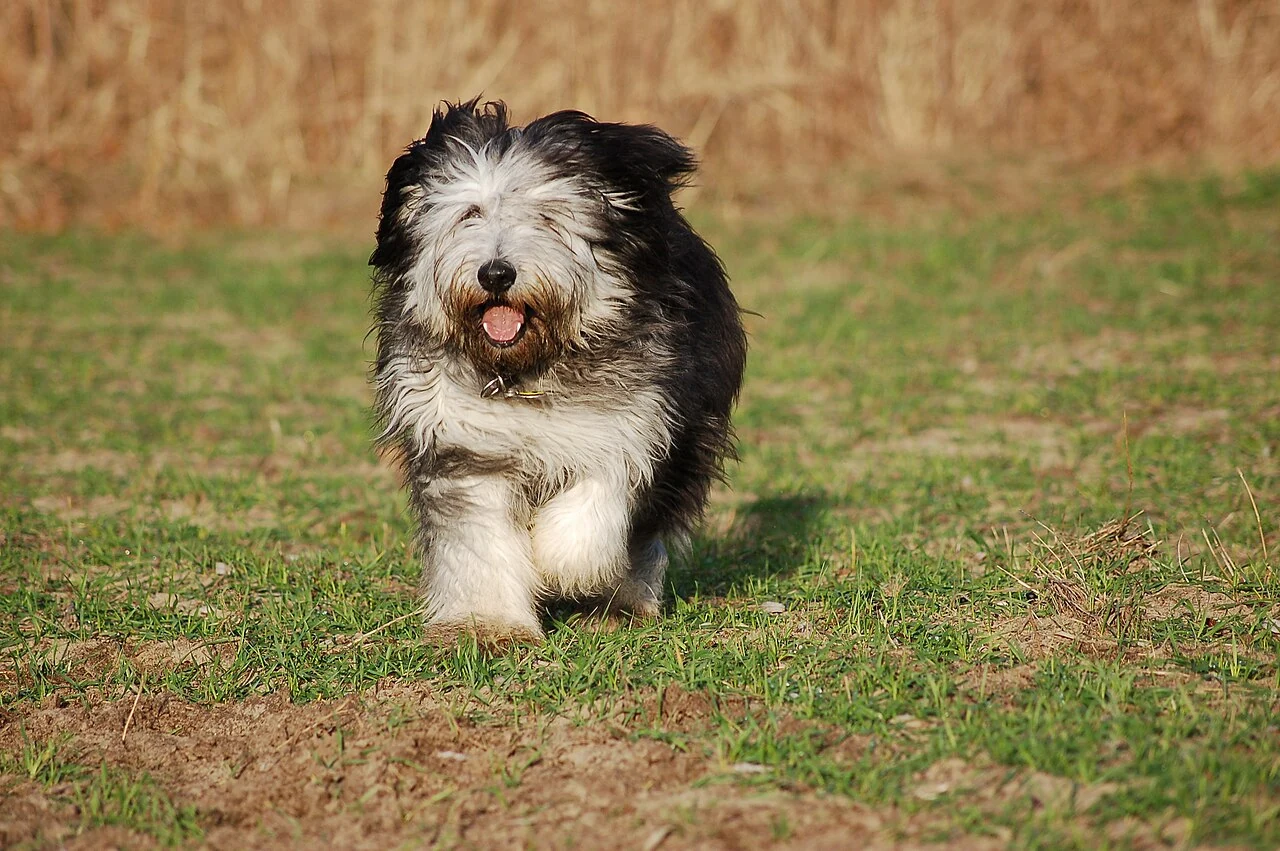
Beneath the Polish Lowland Sheepdog’s long coat is a compact, agile herding dog. Its Polish name, Polski Owczarek Nizinny, is usually shortened to PON. People who enjoy shared outings and make grooming a regular commitment may find an attentive companion in this breed. Clear, consistent teaching matters, even when the shaggy coat gives the dog a relaxed appearance.
At a glance
- Size
- Medium
- Height at shoulder
- 42 to 50 cm
- Lifespan
- over 10 years
- Activity
- High
- Grooming
- Daily
- Training
- Patience & clear guidance
- Owner experience
- First dog with support
An observant companion that remembers routines
The PON comes from Poland, where it was used to herd and watch livestock. Its Polish name refers to a lowland herding dog. The FCI, the international organisation that publishes breed standards, describes it as lively, attentive and able to learn. Those qualities help explain why a PON may quickly notice small changes in a familiar routine. Whether your dog greets visitors enthusiastically or prefers to watch first depends on the individual.
A good memory can help with learning. It may also encourage a dog to repeat a successful visit to the kitchen counter. Food should therefore be stored out of reach. When you are preparing a meal, you can offer a particular resting place and reward your dog for waiting calmly there. This makes the expected behaviour in that situation easier to understand.
Some PON keep their distance from unfamiliar people or announce noises by barking. First meetings should be unhurried and allow the dog a choice about approaching. Visitors can sit down and let the dog decide whether to come closer. An adult should be present when children interact with the dog, and its rest, meals and retreat should be respected. Introducing a cat also needs preparation, separate places to withdraw and a pace at which both animals can remain calm.
Everyday life
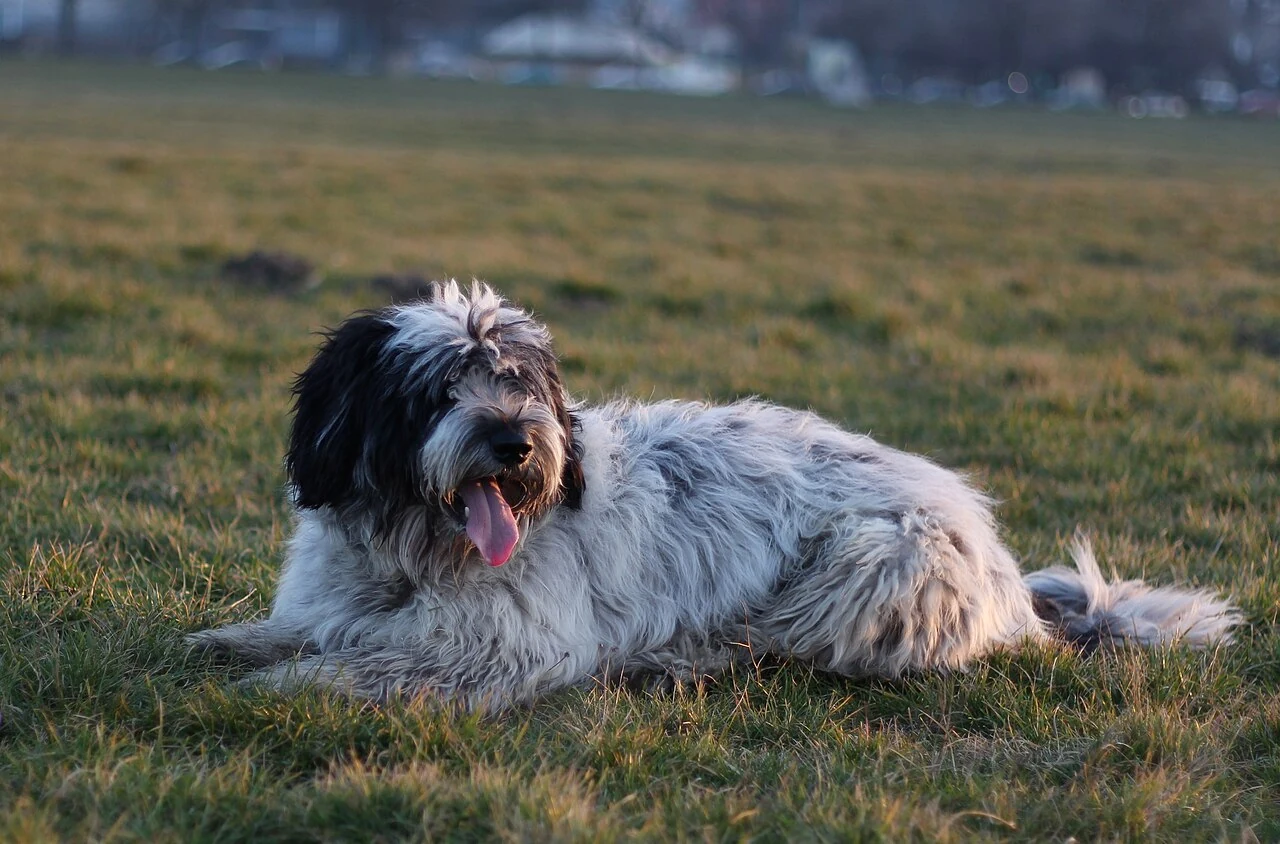
A PON can combine walks with small practical exercises. On a familiar route, you might practise stopping and looking towards you before crossing a road. A quieter stretch afterwards offers time to sniff. For a searching game, a familiar toy can be hidden in an easy place within reach. As your dog gains experience, the task can become a little more challenging.
Reward-based training works well with a dog that notices repeated routines. It means connecting the behaviour you want with something pleasant, such as food, play or continuing the walk together. If your PON finds food especially exciting, training treats should be included in its daily food allowance. A training goal should also be specific enough to practise: going to a mat when the doorbell rings is easier to teach than expecting the dog to be “less stubborn”.
An enjoyable routine includes time with no task to complete. Being alone should be introduced gradually, with an easier starting point if the dog remains unsettled. Holiday care needs to include grooming as well as walks. Ideally, the person looking after your dog should get to know both the dog and its care routine before the first longer stay.
Staying home alone
Dogs learn to stay home alone in small steps. The RSPCA advises no more than four hours at a time. Puppies and dogs that become unsettled when left alone need shorter absences and gradual practice. Arrange someone to care for your dog when you will be away longer.
Everyday dog training: recall, a loose lead and clear communication ↗
Day-to-day care
The long outer coat covers a softer undercoat, the shorter, dense layer of hair close to the skin. Grooming needs to reach both layers. Hair may look tidy on the surface while tangles are developing underneath. You should work through small sections and use a suitable comb to check that the hair is free of knots close to the skin. Areas such as the armpits, behind the ears and around the legs need particular attention.
The British breed club for Wales and the West of England describes the transition from puppy hair to adult coat as especially demanding. Frequent short checks may be needed during this period. A knowledgeable breeder or groomer should demonstrate a routine that suits your dog. It should be able to stand or lie comfortably without prolonged pulling at a knot. Painful matting or irritated skin needs appropriate professional care.
After walks, you should remove twigs, leaves and dirt before they become embedded in the coat. Dirty hair around the paws, mouth and rear needs targeted cleaning followed by drying. A maintenance trim may be useful if a long coat cannot be kept comfortably groomed in everyday life. It should take the dog’s skin and welfare into account. A short haircut alone does not make hot weather safe. Nail checks, clean ears and regular toothbrushing with dog toothpaste are also part of basic care.
Size and build
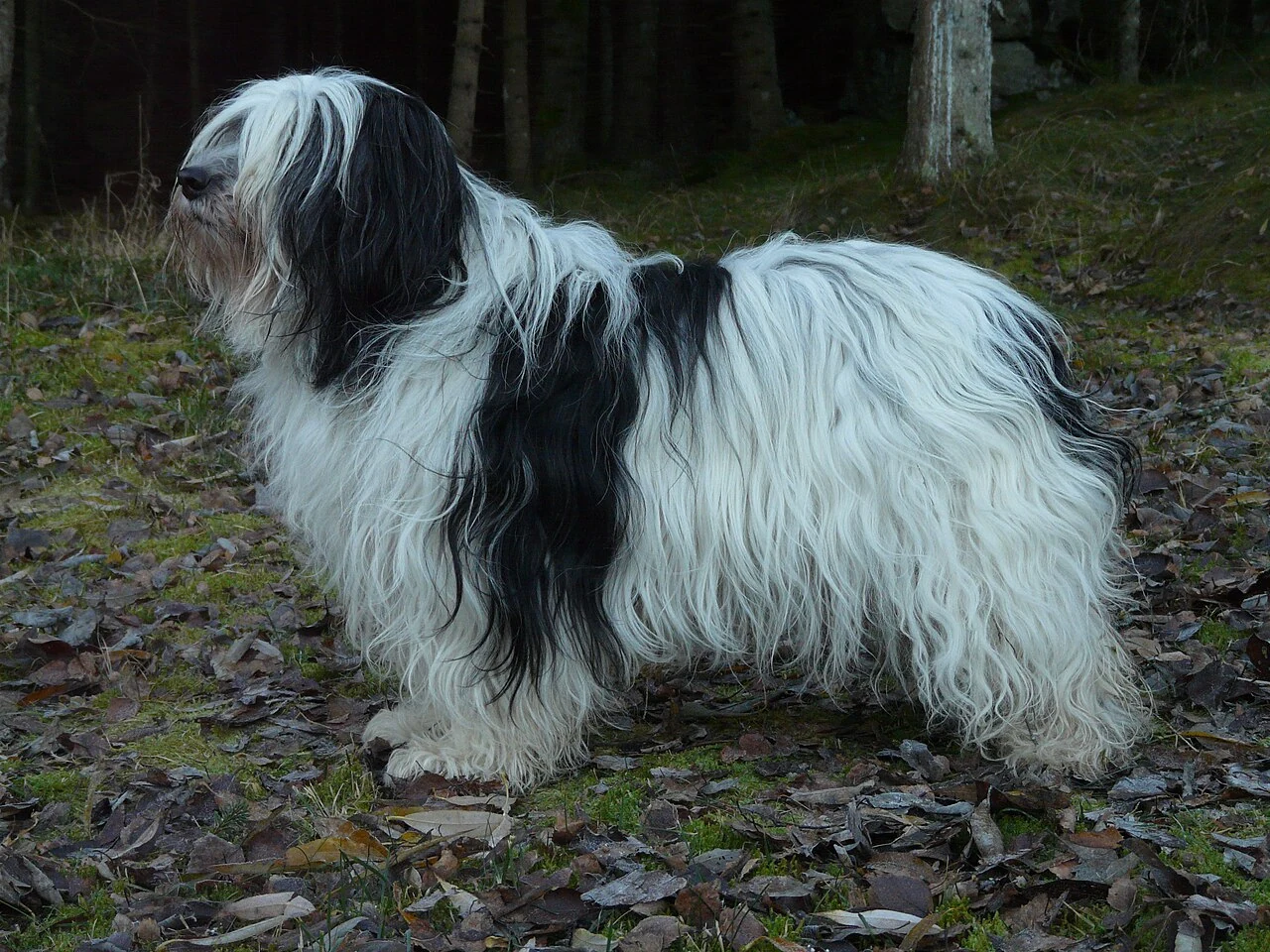
The FCI gives adult males a height of 45 to 50 cm and females 42 to 47 cm. Height is measured at the withers, the highest point of the back just behind the neck. This standard does not specify a weight range. Body condition should therefore also be checked by hand beneath the thick coat. Your veterinary team can show you how the ribs and waist should feel on your dog.
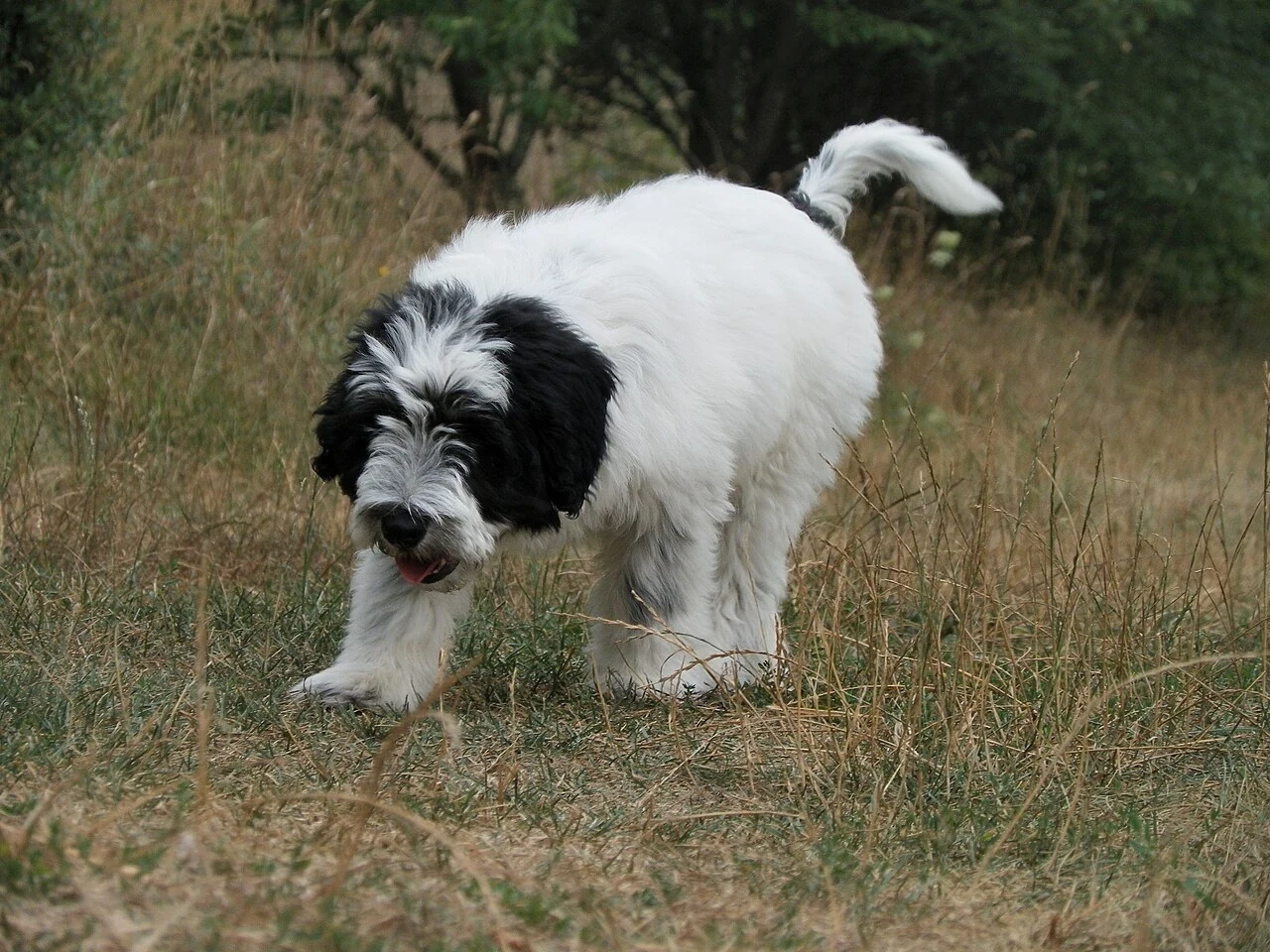
For a puppy, grooming is a learning task from the beginning. Showing a comb briefly, gently touching a small section of hair and rewarding relaxed cooperation are possible first steps. Sessions should lengthen only as the young dog becomes comfortable with them. A stable surface and a comfortable position help make the process easier.
Exercise should increase gradually. Long hikes or repeated fast ball games should not overwhelm a young PON. Pleasant searching games and different routes can keep an adult dog interested too. For an older dog, distances and breaks may need adjusting. Changes in getting up, using stairs or seeing should be investigated so that pain or declining vision is not overlooked.
From puppy to senior: caring for your dog through every life stage ↗
Health
Before buying a puppy, you should check the parents’ hip-screening results and examinations by a veterinary eye specialist. Hip dysplasia is abnormal development of the hip joint, which can cause pain and contribute to joint wear. Parental assessments provide useful information, but cannot rule out every future joint problem in a puppy.
The British PON club also lists a DNA test for the inherited eye condition PRA-rcd4. This checks for a particular variant in the dog’s genetic material. PRA means progressive retinal atrophy. The retina, the light-sensitive layer inside the eye, gradually deteriorates and affected dogs can lose their sight. An rcd4 test detects one particular genetic cause. It therefore does not replace an examination by a veterinary eye specialist.
You should ask for the results to be explained, with the identities of the tested dogs clearly shown. A DNA parentage record confirms a dog’s parents, rather than testing its health. Taking time to examine these documents is worthwhile even when you already feel attached to a puppy. If your PON becomes less confident in dim light, bumps into objects or hesitates before jumping, the cause should be investigated. Fellfolio lets you keep weight records, veterinary findings and observations together for the appointment.
Could this breed fit your life?
Could work well if …
- You would enjoy involving an attentive dog in shared walks and small practical learning tasks.
- You can groom thoroughly through to the undercoat and allow extra time during the coat transition.
- A clear routine with calm visitor arrivals, household agreements and dependable care suits your home.
What to consider
- A tidy-looking coat does not automatically mean that the hair underneath is free of tangles.
- Attention and a good memory can also reinforce unwanted routines that have worked well for the dog.
- Grooming, skin checks and exercise should continue in poor weather and when someone else is caring for the dog.
Similar needs, different dogs.
Selected by shared size, activity, grooming and training characteristics.
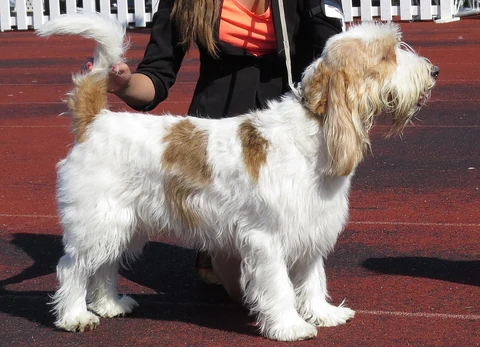
Scent hounds
Grand Basset Griffon Vendéen
Long ears, a rough coat and a steady, tireless stride distinguish the Grand Basset Griffon Vendéen. This French scent hound was bred to hunt hare and rabbit. It suits people who enjoy substantial walks and can make time for grooming, scent games and patient training.
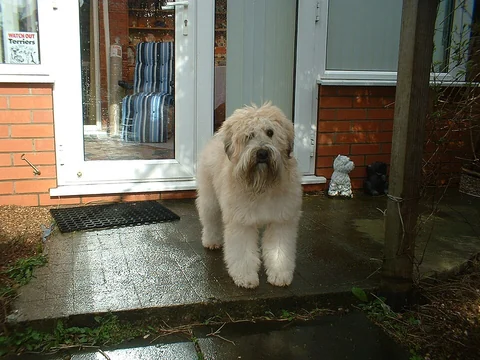
Terrier
Soft Coated Wheaten Terrier
The Irish Wheaten Terrier often greets people with enthusiasm and follows interesting scents outside. Its soft coat sheds little but needs regular combing down to the skin.
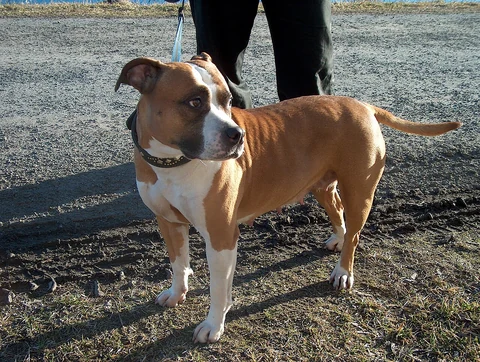
Powerful American terrier
American Staffordshire Terrier
The American Staffordshire Terrier is a compact, muscular dog that enjoys shared activity and close contact with its people. Its strength, often energetic play and possible difficulties with other dogs require thoughtful handling. Legal requirements where you live should also be checked before bringing one home.
Sources and photograph credit
- Teaching your dog to be left alone
Used in this profile for: Staying home alone
- Canine Hip Dysplasia
Used in this profile for: Health
- Position Statements and Humane Dog Training
Used in this profile for: Everyday life, Size and build
- Heatstroke in Dogs
Used in this profile for: Day-to-day care
- Exercising Your Puppy
Used in this profile for: Size and build
- Polish Lowland Sheepdog Questions
Used in this profile for: Temperament, Everyday life, Day-to-day care, Could this breed fit your life?
- Polish Lowland Sheepdog Health
Used in this profile for: Health
- Polish Lowland Sheepdog: Breed Information
Used in this profile for: Lifespan
- FCI Standard 251: Polish Lowland Sheepdog
Used in this profile for: Size / Weight, Temperament, Day-to-day care, Size and build
- Training Your Dog to Be Left Alone
Used in this profile for: Everyday life
- Understanding Your Dog’s Behaviour
Used in this profile for: Temperament, Everyday life
- Children and Dogs
Used in this profile for: Temperament, Could this breed fit your life?
- Caring for Your Dog’s Teeth
Used in this profile for: Day-to-day care
Photo credits
Portrait · Argo-Jack von Nora's Nizina.JPG · Nizina · CC BY 3.0 · Edited

Side view · Storalvens Dione.JPG · Beltapar · CC BY 3.0 · Edited

Everyday life · PON BrunobyVetulani.jpg · Franek Vetulani · CC BY-SA 4.0 · Edited

Puppy · Polish Lowland Sheepdog puppy Bruno by Vetulani.JPG · Franek Vetulani · CC BY-SA 3.0 · Edited
