 fellfolio
Scent hound
Otterhound
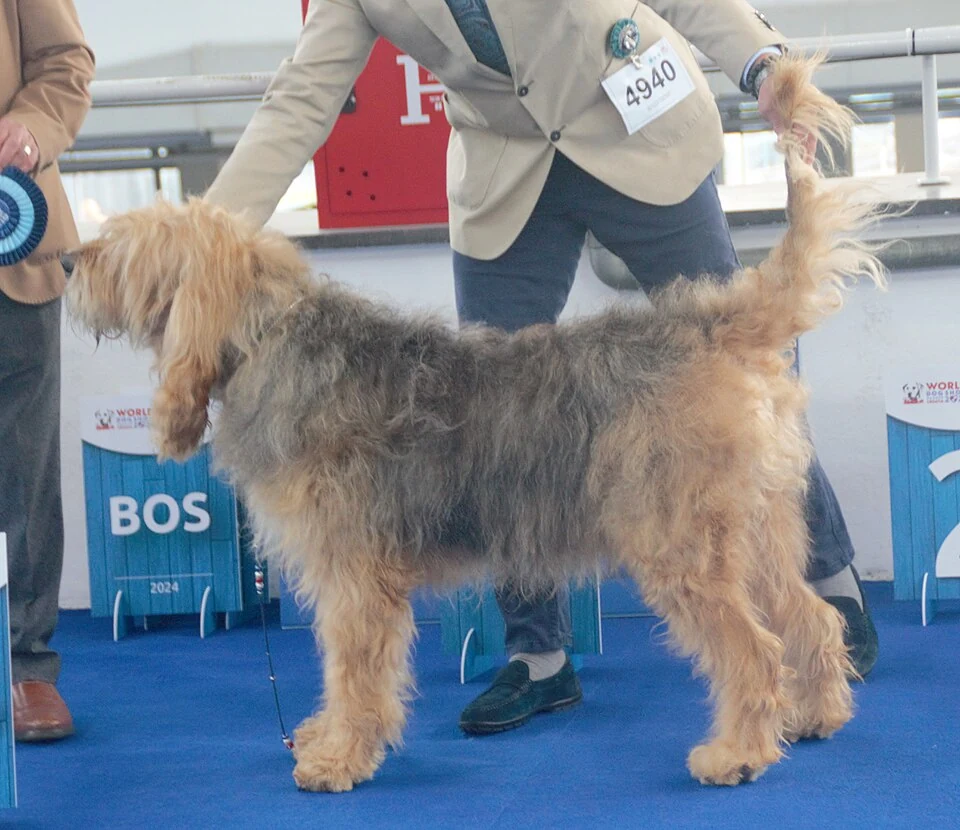
The rare Otterhound follows scents with persistence and often enjoys swimming. It needs long sniffing walks, secure boundaries and care for its dense coat and long ears.
At a glance
- Size
- Large
- Height at shoulder
- 61 to 69 cm
- Weight
- 36 to 52 kg
- Lifespan
- over 10 yearsUK Royal Kennel Club breed profile
- Activity
- Very high
- Grooming
- Several times weekly
- Training
- Patience & clear guidance
- Owner experience
- Experience recommended
Built for trails, even in water
The Otterhound was developed in England for long hunting days beside rivers. Its broad feet, strong nose and coarse coat worked together: it could follow scent on banks and through water. Today it is usually friendly and sociable, but it may pursue an interesting trail with real persistence.
It learns best when training stays kind and varied. Practise recall without distractions first, then use a long line as the difficulty rises. Supervise time with children because of its size. Smaller pets need protected spaces, since living together alone does not remove a hunting instinct.
Everyday life
The Royal Kennel Club places the Otterhound in its more-than-two-hours-a-day exercise category. This is about more than distance: give it long, interesting sniffing walks. Drag a toy along the ground, hide it and let the dog follow the trail. That makes better use of its talent than endless ball throwing. Secure fencing matters because a scent can take it far.
Water may be great fun, but choose safe banks and watch the current and exit points. Dry the coat well after swimming. A large garden alone does not replace shared walks.
Staying home alone
Dogs learn to stay home alone in small steps. The RSPCA advises no more than four hours at a time. Puppies and dogs that become unsettled when left alone need shorter absences and gradual practice. Arrange someone to care for your dog when you will be away longer.
Day-to-day care
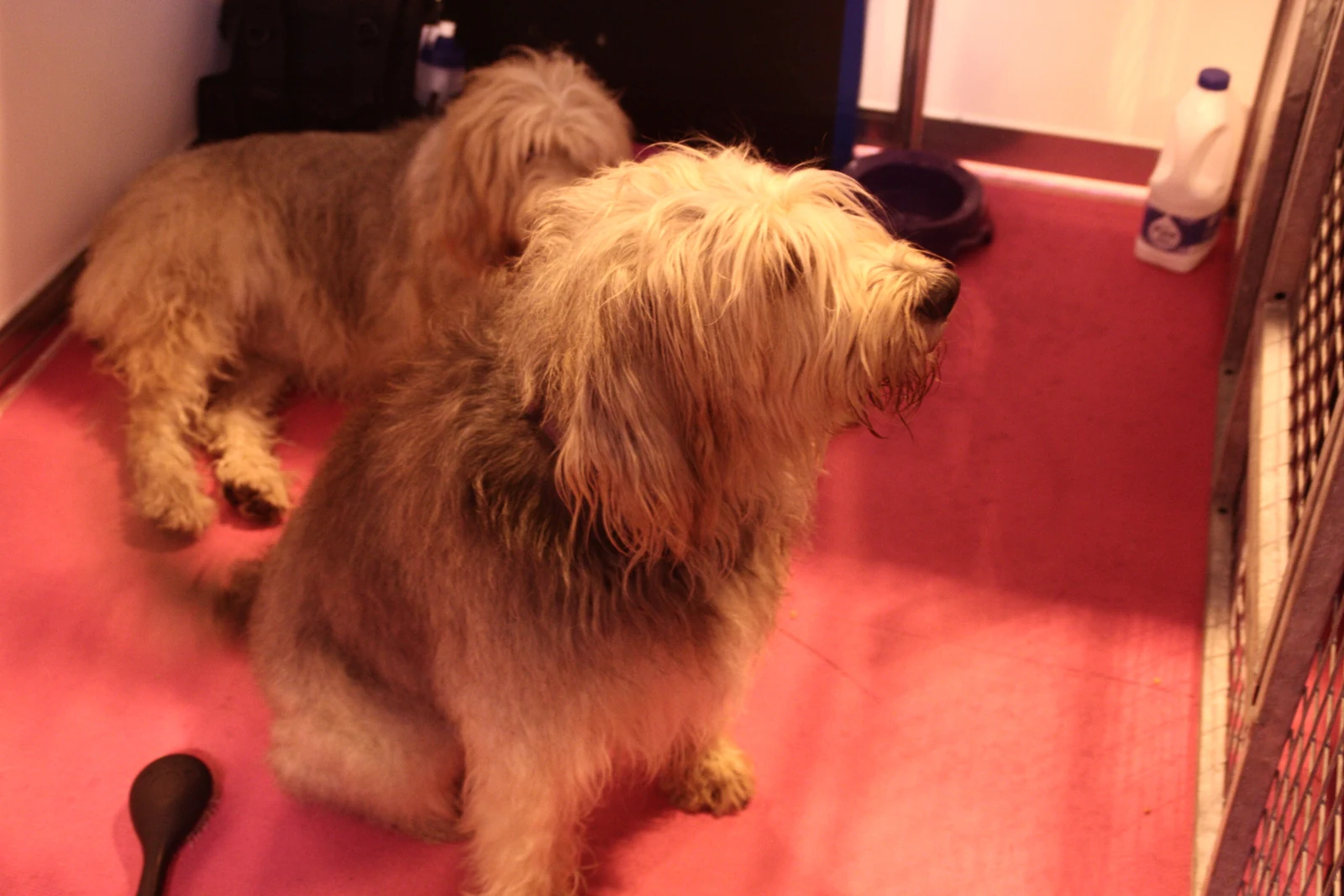
The rough double coat, about 4 to 8 cm long, is water-resistant and should look natural. Brush and comb it thoroughly once or twice a week; the beard and belly collect dirt and plant debris. The beard may stay wet after drinking and can need cleaning.
Long hanging ears dry slowly after swimming. Check for moisture, odour or redness, and have pain or repeated problems assessed by a vet. Check between the broad toes after rough ground, too.
Size and build
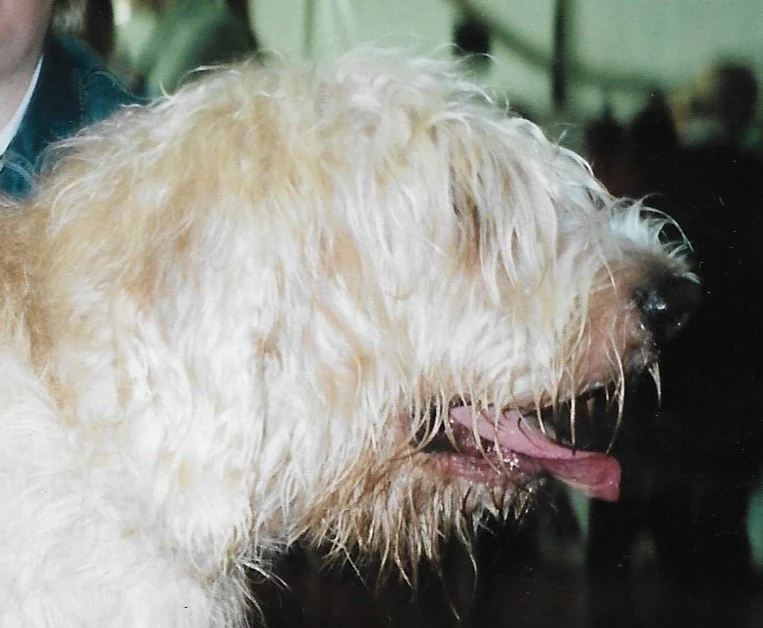
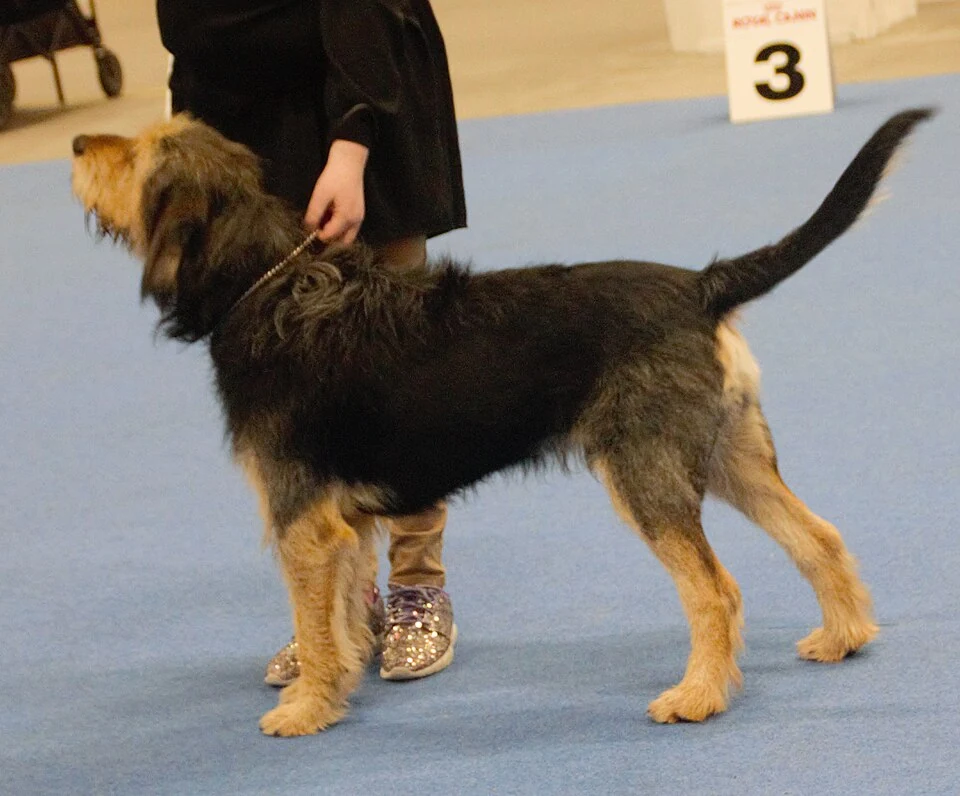
The Otterhound is large, strong and built for endurance. The British standard gives approximate shoulder heights of 69 cm for males and 61 cm for females. The American Kennel Club gives weight guides of about 52 kg for males and 36 kg for females. Judge an individual dog by body condition and ease of movement, not the scale alone. Its body is powerful, its chest deep and its feet broad, with visible webbing between the toes. The coarse double coat has a water-resistant outer layer and dense underfur.
Long ears and a beard give it its distinctive face. More important than an especially heavy head is a free, long stride: this dog should move easily on land and in water.
Health
The Royal Kennel Club recommends hip and elbow grading for breeding dogs. A DNA test is available for Glanzmann thrombasthenia, an inherited platelet disorder that can increase bleeding. Ask for both parents’ documented results and about any seizures in the family; the American breed club also identifies epilepsy as a concern.
Large dogs such as Otterhounds can develop gastric dilatation-volvulus, in which the stomach swells and twists. Repeated unproductive retching, marked restlessness or a swollen abdomen needs immediate veterinary help.
Could this breed fit your life?
Could work well if …
- You have time for long walks and enjoy tracking games.
- You can accommodate wet, muddy fur and a very large dog.
May be more difficult if …
- You want a low-maintenance city dog for short outings.
- Secure exercise and managing a hunting drive are hard to arrange.
Similar needs, different dogs.
Selected by shared size, activity, grooming and training characteristics.
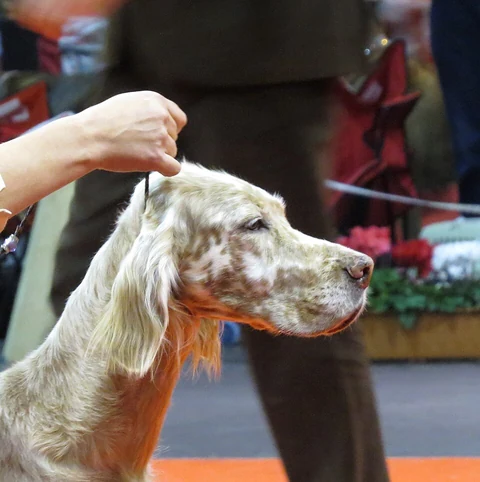
Setter
English Setter
A friendly bird dog in a silky, flecked coat. It ranges widely when searching and needs more activity than its gentle expression suggests.
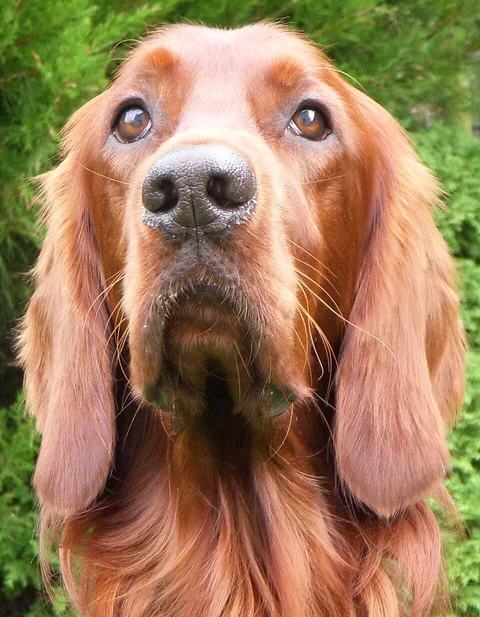
Setter
Irish Setter
The red Irish Setter searches widely for game birds. Family life with one calls for long outings, a practised recall and a chance to settle after an exciting walk.
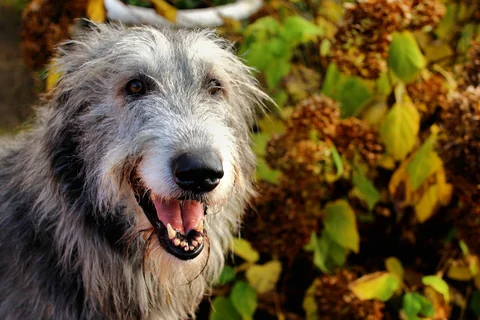
Sighthound
Irish Wolfhound
The Irish Wolfhound is immense and usually gentle. Its size shapes daily life, from a suitable bed to exercise, transport and veterinary costs.
Sources and photograph credit
- Teaching your dog to be left alone
Used in this profile for: Staying home alone
- Otterhound dog breed information
Used in this profile for: Size / Weight, Temperament, Everyday life, Day-to-day care, Size and build, Health, Lifespan, Could this breed fit your life?
- Otterhound, Breeds A to Z
Used in this profile for: Temperament, Everyday life, Size and build, Health, Lifespan, Could this breed fit your life?
- Otterhound breed standard
Used in this profile for: Size / Weight, Temperament, Everyday life, Day-to-day care, Size and build, Lifespan, Could this breed fit your life?
- Glanzmann Thrombasthenia in Otterhounds
Used in this profile for: Health
- GDV (Gastric Dilatation Volvulus) in dogs
Used in this profile for: Health
Portrait · Saukkokoiraotter · Canarian · CC BY 4.0 · Edited

Side view · Otterh1 · Canarian · CC BY 4.0 · Edited

Resting at a dog show · Crufts 2013: Day Two (Toy and Utility): 08-March 2013 · adam w · CC BY 2.0 · Edited
Coat and features · DocFile Saukko · Canarian · CC BY-SA 4.0 · Edited
