 fellfolio
Setter
English Setter
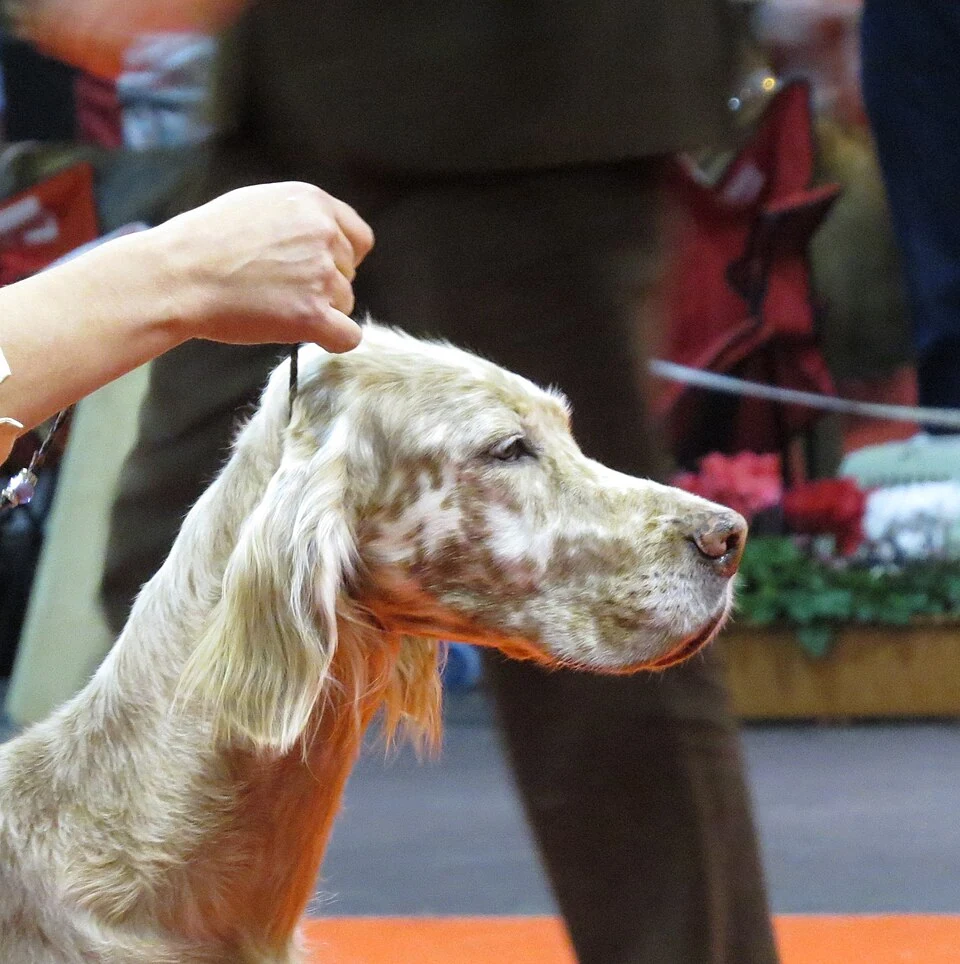
A friendly bird dog in a silky, flecked coat. It ranges widely when searching and needs more activity than its gentle expression suggests.
At a glance
- Size
- Large
- Height at shoulder
- 61 to 69 cm
- Weight
- 20 to 36 kg
- Lifespan
- over 10 yearsUK Royal Kennel Club breed profile
- Activity
- Very high
- Grooming
- Several times weekly
- Training
- Patience & clear guidance
- Owner experience
- First dog with support
Gentle with people, wide-ranging outdoors
The English Setter was bred to find game birds by scent. On locating them, it holds still to indicate their position instead of immediately flushing them out, a behaviour known as pointing. Many Setters are open with people and other dogs, but outdoors they want to search and may cover broad ground.
A young English Setter therefore needs more than pleasant introductions: practise recall around scents and birds. Reward checking in and returning from an early age. Settling at home is easier for many when they have had enough walking and sniffing outside.
Everyday life
The Royal Kennel Club places the breed in its more-than-two-hours-a-day exercise category. Plan long walks with time to sniff and, where it is safe, off-lead running. A search for a hidden toy or a route where the dog can follow scents with you suits its background better than relentless ball throwing.
Birds may suddenly absorb its attention. Build recall in stages and use a long line until responses outdoors are reliable. Active outings should be balanced with water, pauses and a quiet resting place at home.
Staying home alone
Dogs learn to stay home alone in small steps. The RSPCA advises no more than four hours at a time. Puppies and dogs that become unsettled when left alone need shorter absences and gradual practice. Arrange someone to care for your dog when you will be away longer.
Day-to-day care
The medium-length coat is silky and slightly wavy on the body, with longer hair on the ears, legs and tail. Comb these areas several times a week so grass, burrs and tangles do not become embedded. After walks through meadows, look between the toes and under the ears.
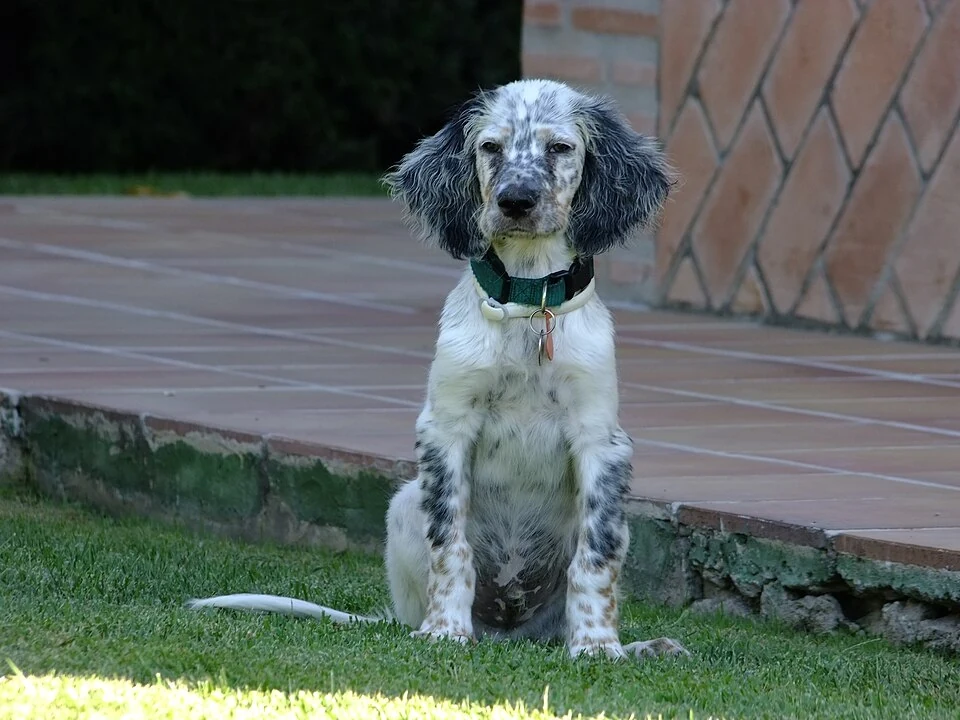
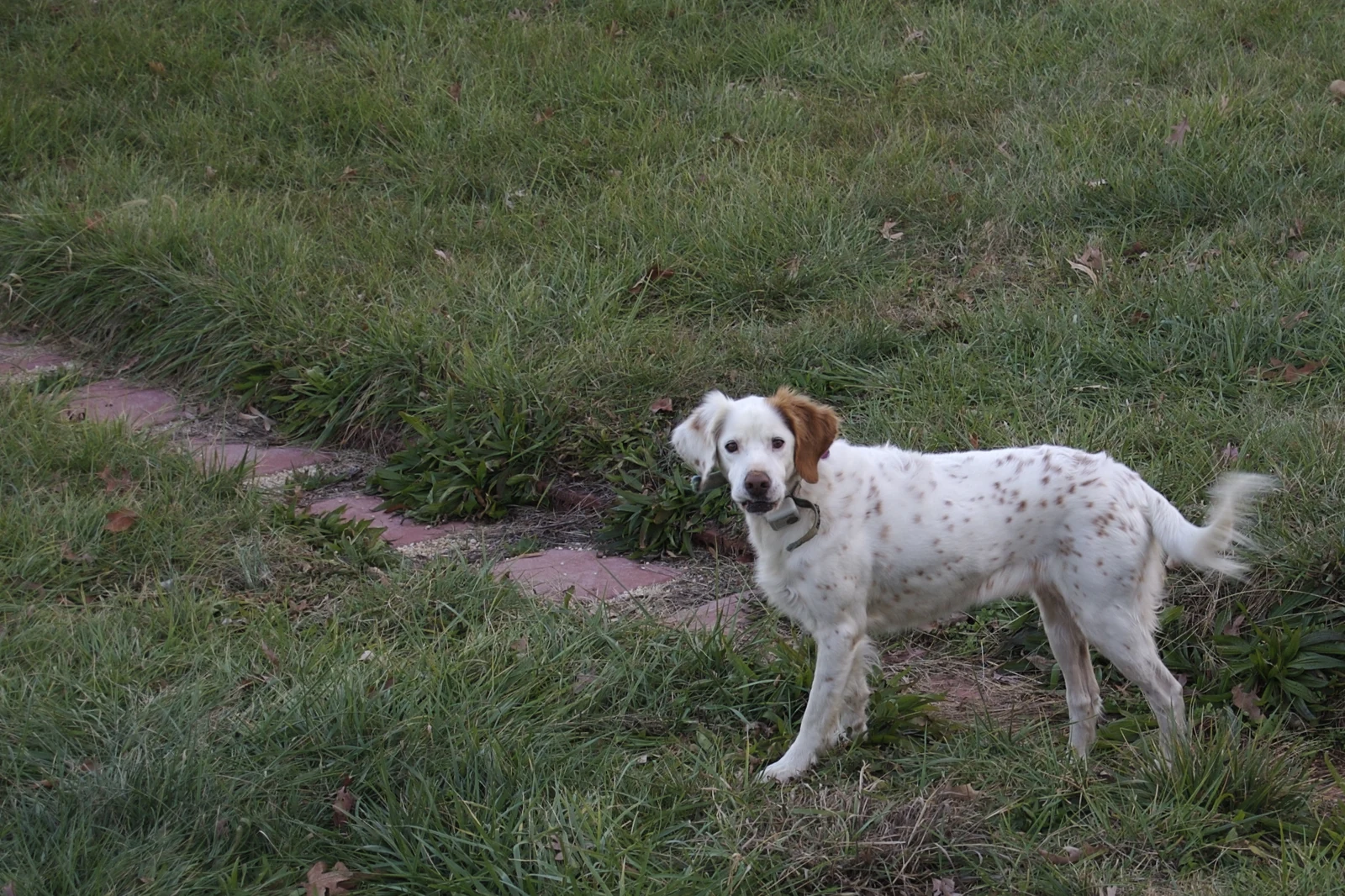
The fine flecking is called “Belton”. It can be black, orange, lemon or liver on white. It is attractive but tells you nothing about health or exercise needs. A well-groomed Setter still sheds.

Size and build
The English Setter is long-legged and athletic without being coarse. It carries its head high, has a deep chest and should move freely with stamina. The British standard gives 65 to 69 cm at the shoulder for males and 61 to 65 cm for females. The American Kennel Club gives adult weight guides of about 30 to 36 kg for males and 20 to 25 kg for females. These are breed guides, not target weights for every dog. The coat is not heavily curled; it lies silky and usually slightly wavy.
Some lines have been selected more for hunting, others for showing. Ask about the parents’ activity, interest in birds and behaviour. Coat length and colour tell you little about those traits.
Health
The Royal Kennel Club recommends hip and elbow grading for breeding dogs. A BAER hearing test is also relevant for puppies because congenital deafness can occur. Small electrodes measure whether sound signals reach the brain, checking each ear separately. Ask to see the litter’s hearing results and the parents’ joint assessments. A dog that fails to answer a call does not necessarily need more training: first check its hearing.
Ears and skin deserve attention too, especially after wet grass. Repeated head shaking, odour or redness should be checked by a vet.
Could this breed fit your life?
Could work well if …
- You enjoy long outings and can include search games and recall practice.
- You want a sociable dog and have time for regular coat care.
May be more difficult if …
- You need a dog for brief walks and little training.
- Your only off-lead space is open country rich in wildlife.
Similar needs, different dogs.
Selected by shared size, activity, grooming and training characteristics.
Setter
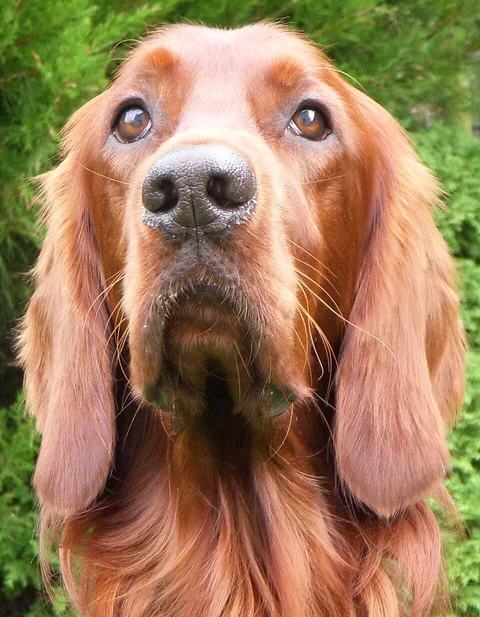
Irish Setter
The red Irish Setter searches widely for game birds. Family life with one calls for long outings, a practised recall and a chance to settle after an exciting walk.

Sighthound
Irish Wolfhound
The Irish Wolfhound is immense and usually gentle. Its size shapes daily life, from a suitable bed to exercise, transport and veterinary costs.
Scent hound
Otterhound
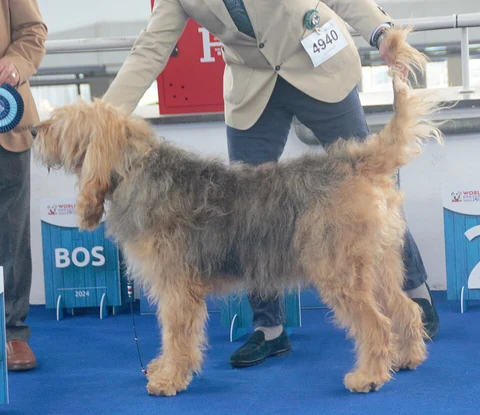
The rare Otterhound follows scents with persistence and often enjoys swimming. It needs long sniffing walks, secure boundaries and care for its dense coat and long ears.
Sources and photograph credit
- Deafness in Dogs: Signs, Symptoms, and Treatment
Used in this profile for: Health
- Teaching your dog to be left alone
Used in this profile for: Staying home alone
- English Setter dog breed information
Used in this profile for: Size / Weight, Everyday life, Day-to-day care, Size and build, Lifespan, Could this breed fit your life?
- English Setter, Breeds A to Z
Used in this profile for: Temperament, Everyday life, Day-to-day care, Size and build, Health, Lifespan, Could this breed fit your life?
- English Setter breed standard
Used in this profile for: Size / Weight, Temperament, Everyday life, Day-to-day care, Size and build, Lifespan, Could this breed fit your life?
- Congenital Deafness and BAER Testing
Used in this profile for: Health
Portrait · Eng Setter Head in Riga · Томасина · CC BY-SA 3.0 · Edited

Side view · Thanksgiving 2008 · Scott Dexter · CC BY-SA 2.0 · Edited
Puppy · English Setter Spain · Immotilla · CC BY-SA 4.0 · Edited

Coat and features · Rosemary drowsy in the light · philhearing · CC BY 2.0 · Edited