 fellfolio
Calm Italian guardian with a heavy build and distinctive skin folds
Neapolitan Mastiff
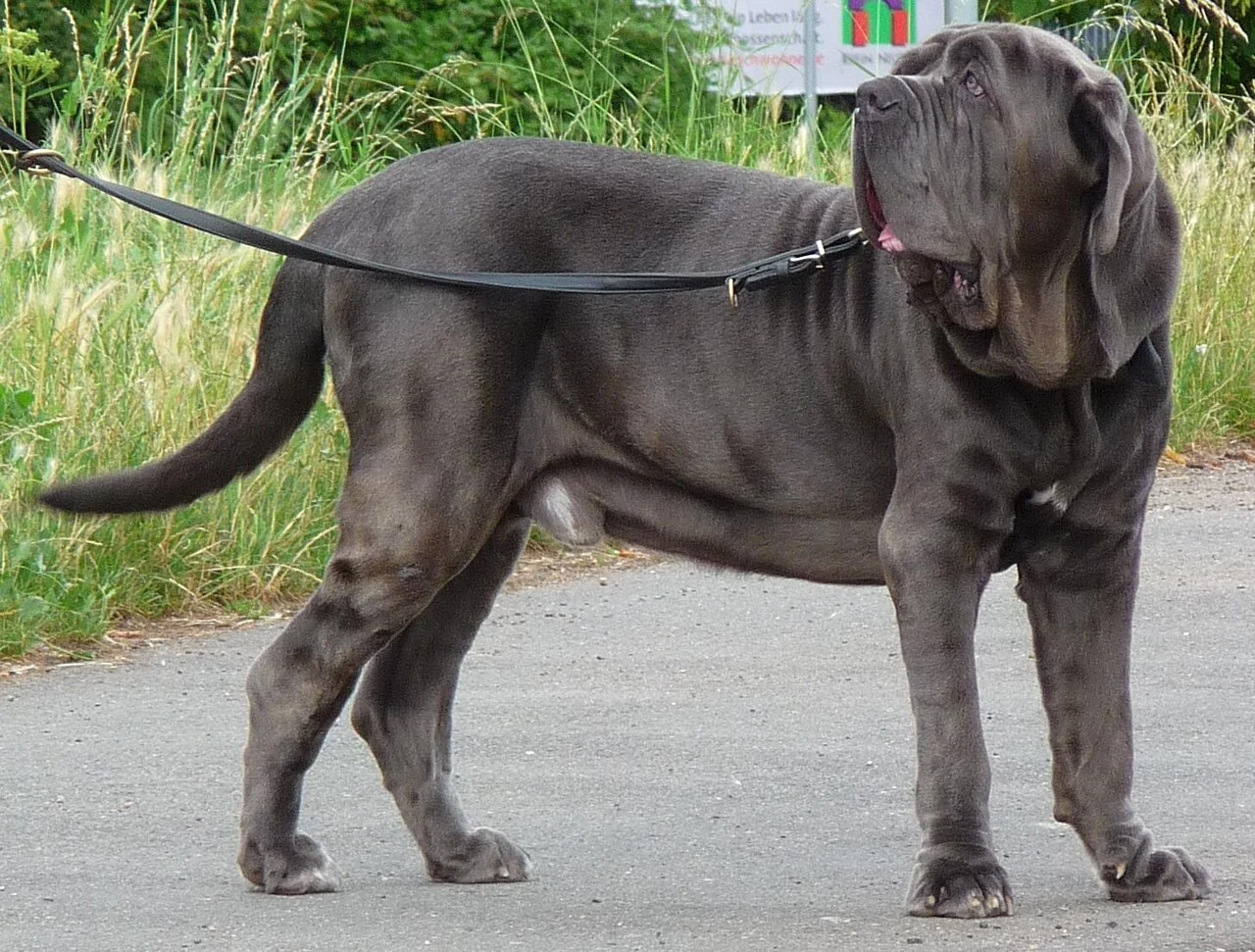
The Neapolitan Mastiff is unmistakable, with a broad head, prominent folds and a very substantial body. This southern Italian guardian forms close family bonds and is often calm as an adult. When choosing a dog, free movement and healthy eyes and skin deserve particular attention.
At a glance
- Size
- Large
- Height at shoulder
- 60 to 75 cm
- Weight
- 50 to 70 kg
- Lifespan
- 7 to 9 years
- Activity
- Moderate
- Grooming
- Several times weekly
- Training
- Patience & clear guidance
- Owner experience
- Experience recommended
A traditional guardian from southern Italy
The modern breed developed from heavy guardian dogs around Naples and Mount Vesuvius. Deliberate selection of the Neapolitan Mastiff began after the Second World War. The international canine organisation FCI describes a loyal, steady and watchful dog with close family bonds.
An adult is often relaxed in familiar surroundings. New people should initially allow some distance. A practised welcome and a familiar resting place are helpful when tradespeople or visitors arrive. Someone who knows the dog’s reactions and can handle them safely should guide these encounters.
An adult should supervise time with children. Weight and broad movements can be overwhelming for a small child even during friendly contact. The bed and feeding area should remain undisturbed places. Before sharing a home with other animals, previous experiences should be discussed and introductions carefully prepared.
Everyday life
Daily walks at a comfortable pace suit a healthy adult. Brief search games and a few rewarded exercises can add variety. Finding a hidden food treat or waiting calmly to be released requires attention without repeated jumping or prolonged running. Young dogs may be considerably livelier than adults.
In warm weather, walks should move to the cooler parts of the day. Shade, water and a comfortable place to rest should be available. Heavier breathing or reluctance to continue should prompt less exertion, with veterinary advice for unusual symptoms.
Wide paths, nonslip floors and a large, well padded bed are helpful at home. Before arrival, there should be a plan for getting the dog into the car and providing help if mobility declines. Loose lead walking, calm waiting and accepting care should be practised early with small rewards. Brief absences should also be introduced gradually so that everyday care remains workable.
Staying home alone
Dogs learn to stay home alone in small steps. The RSPCA advises no more than four hours at a time. Puppies and dogs that become unsettled when left alone need shorter absences and gradual practice. Arrange someone to care for your dog when you will be away longer.
Everyday dog training: recall, a loose lead and clear communication ↗
Day-to-day care
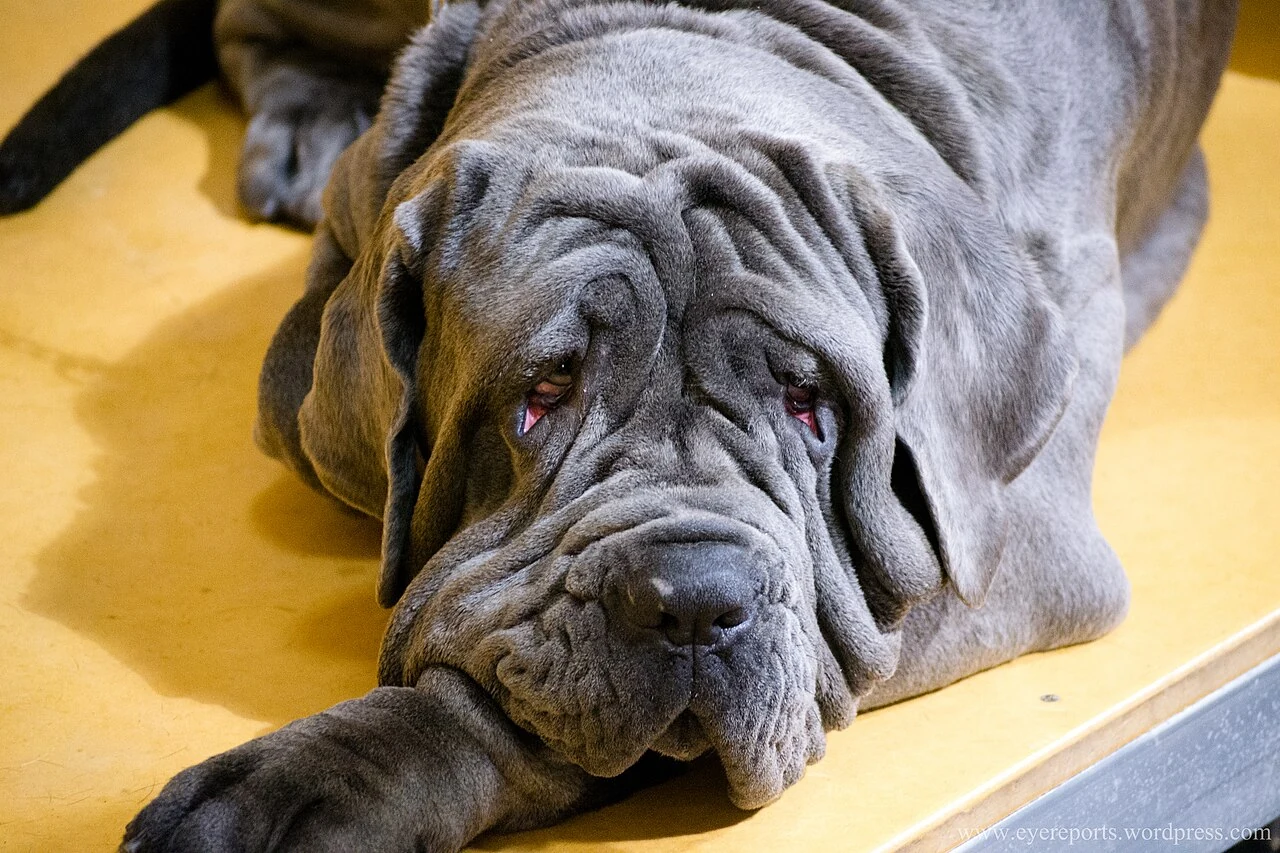
The short coat requires little elaborate brushing. Skin folds, particularly on the face, and the area around the eyes need more attention. Folds should be checked regularly for moisture, redness and odour. When cleaning is needed, an appropriate product should be used and the skin dried carefully afterwards. Bacteria and yeast can multiply in warm, damp folds and cause inflammation.
Eye discharge, frequent squinting or rubbing should be assessed by a vet. Skin and hair should not rub against the eye. Many Neapolitans drool considerably, making soft cloths and washable coverings useful. Nail checks and gradually introduced brushing with dog toothpaste also belong in the care routine.
Size and build
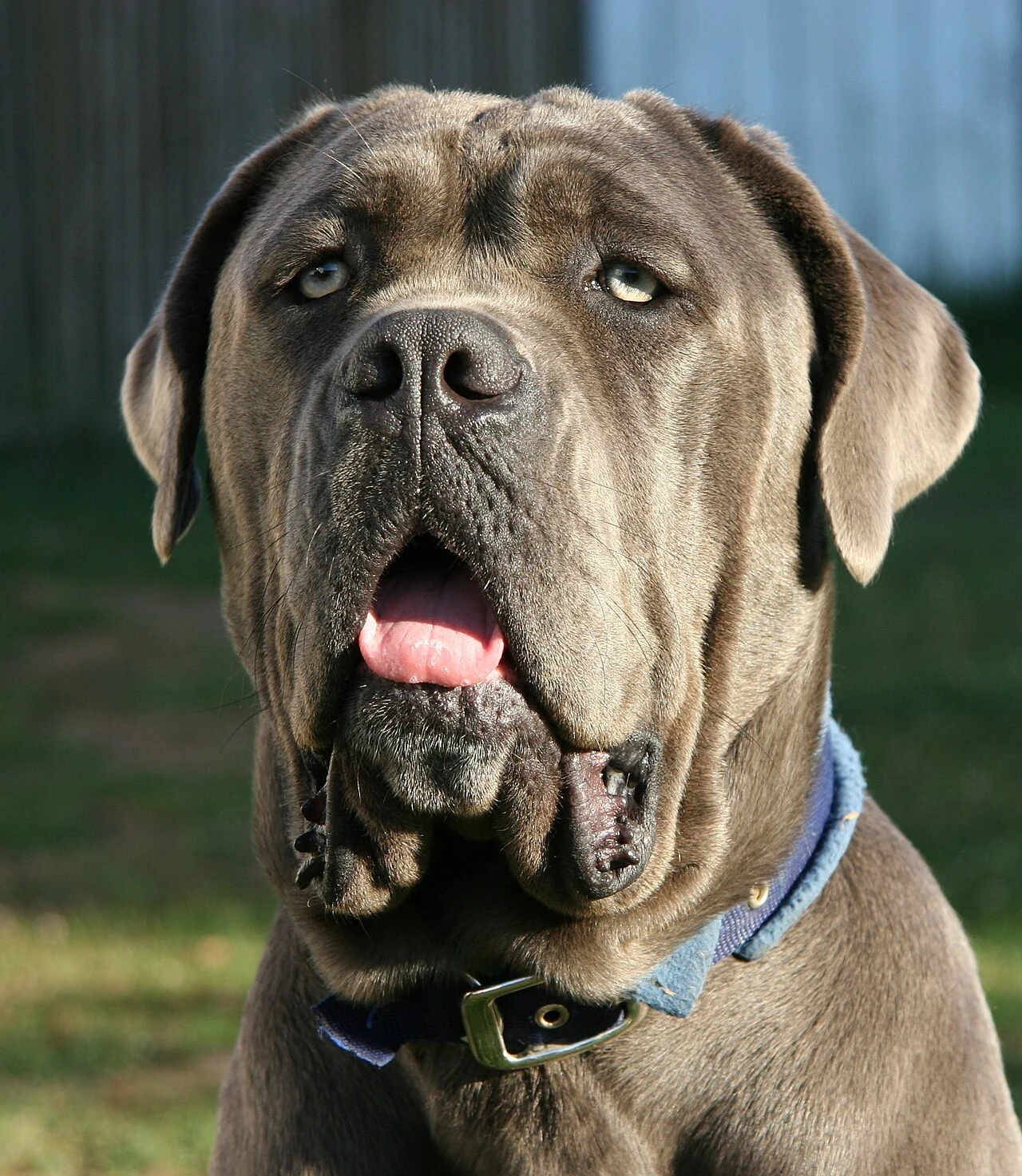
The international standard gives males a shoulder height of 65 to 75 centimetres and a weight of 60 to 70 kilograms. Females are 60 to 68 centimetres and 50 to 60 kilograms. The very short coat may be grey, black, brown or fawn, among other colours. Darker stripes through the base colour are called brindle. Prominent skin folds are characteristic, but should not interfere with health or movement.
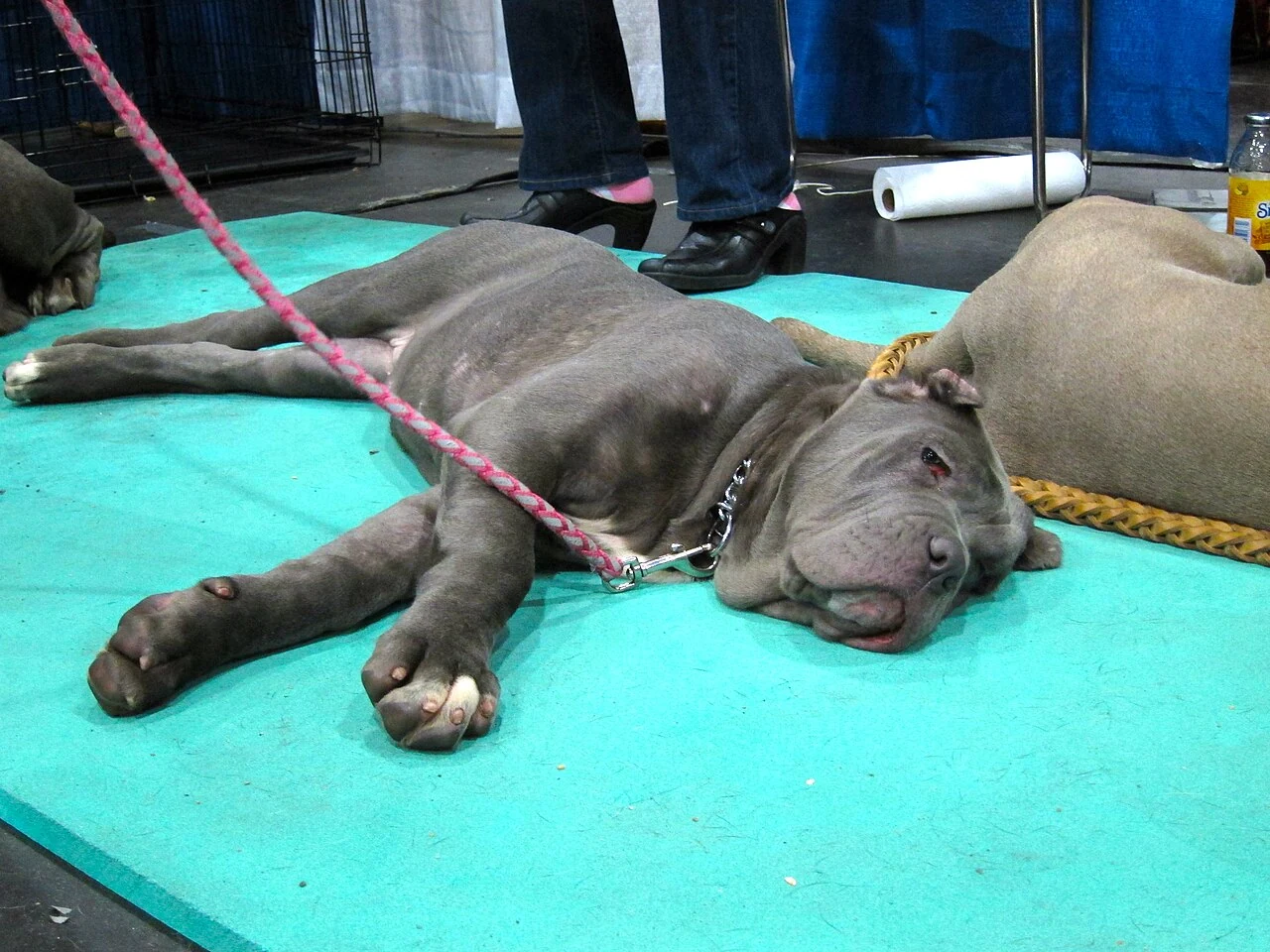
In a puppy, free movement, healthy eyes and functional structure should matter more than the amount of loose skin. Brief walks, self paced play and ample rest suit the growing stage. Long runs and repeated high jumps should be avoided. Food should be suitable for large puppies and support a lean body condition. For older dogs, low entrances, soft beds and several shorter walks can help. New difficulty getting up should be investigated.
From puppy to senior: caring for your dog through every life stage ↗
Health
Before choosing a puppy, the parents’ hip and elbow reports and any available eye assessments should be discussed. Hip dysplasia involves a poor fit between the parts of the joint, which can contribute to wear and pain. Limping, stiff rising or reduced enthusiasm for movement should therefore be investigated.
Cherry eye is also described in the breed. The gland of the third eyelid protrudes and appears as a red swelling at the inner corner of the eye. The third eyelid is an additional protective membrane. Its gland helps produce tears, so preserving it is important and the change should be assessed promptly by a vet. The practice can advise on suitable treatment.
A twisted stomach is another important emergency concern in large dogs. A swollen stomach can rotate and disrupt the blood supply. Unproductive retching, marked restlessness and a tightening abdomen require immediate veterinary help. Transport should be planned in a way that also works when a heavy dog cannot move easily. Fellfolio can keep skin problems, eye findings, weight and changes in movement together over time.
Could this breed fit your life?
Could work well if …
- You can handle a heavy guardian calmly and prepare visits and introductions carefully.
- Your home has enough space, safe floors and easily accessible outdoor areas.
- You have time for regular skin and eye care and a sustainable budget for veterinary treatment and support.
What to consider
- When choosing a dog, skin folds should be checked for irritation and contact with the eyes.
- Heat and strenuous exertion can make care more difficult and should influence daily planning.
- Body weight calls for advance planning around transport, carers and contact with children.
Similar needs, different dogs.
Selected by shared size, activity, grooming and training characteristics.
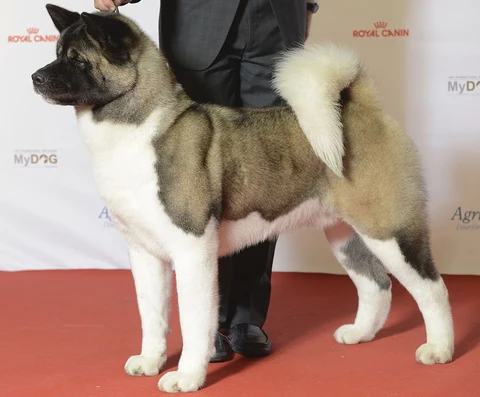
Large companion with Japanese roots
American Akita
The American Akita is a large, powerful dog with a broad head, upright ears and a dense coat. It can be deeply attached to its family while being less comfortable around unfamiliar dogs. Experienced handling and thoughtful arrangements for walks, visitors and temporary care are important.
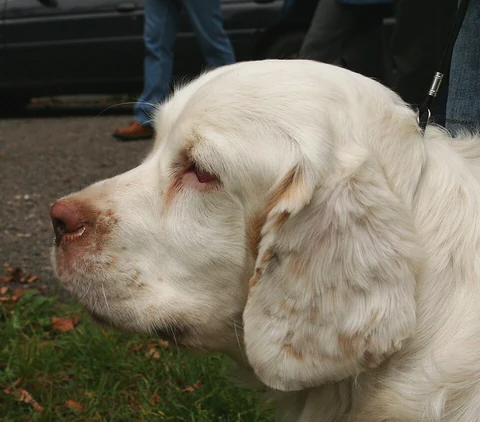
Flushing spaniel
Clumber Spaniel
The Clumber is the heaviest spaniel: low, long and strong, with a white coat and an excellent nose. It often seems relaxed at home yet follows outdoor scents with persistence.
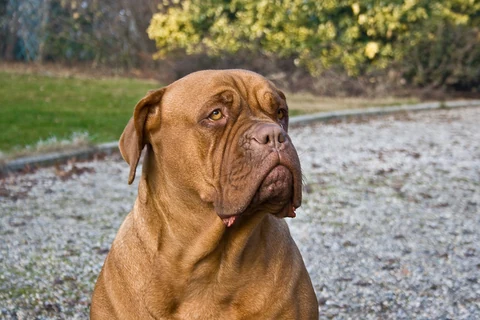
Powerful French companion with a watchful nature
Dogue de Bordeaux
The Dogue de Bordeaux is a powerful French dog with a short coat and broad head. It often seeks close contact with its people and can be a watchful guardian. Its considerable strength and the health burdens associated with its build and short face deserve careful attention before acquiring one.
Sources and photograph credit
- Teaching your dog to be left alone
Used in this profile for: Staying home alone
- Gastric Dilatation Volvulus
Used in this profile for: Health
- Canine Hip Dysplasia
Used in this profile for: Health
- Neapolitan Mastiff Dog Breed Information
Used in this profile for: Temperament, Everyday life, Day-to-day care, Size and build, Health, Lifespan, Could this breed fit your life?
- Mastino Napoletano, FCI Standard 197
Used in this profile for: Size / Weight, Temperament, Size and build
- Neapolitan Mastiff | Breeds A to Z | The Kennel Club
Used in this profile for: Temperament, Everyday life, Health, Lifespan, Could this breed fit your life?
- Grooming and bathing pets
Used in this profile for: Day-to-day care
- Exercising your puppy
Used in this profile for: Size and build
- Skin fold dermatitis in dogs
Used in this profile for: Day-to-day care, Health
- Training Your Dog to Be Left Alone
Used in this profile for: Everyday life, Could this breed fit your life?
- Children and Dogs
Used in this profile for: Temperament, Could this breed fit your life?
- Dog dental care
Used in this profile for: Day-to-day care
- Training your dog
Used in this profile for: Everyday life
- Cherry Eye in Dogs
Used in this profile for: Health
Photo credits
Side view · Mastino Napoletano Rüde clp.JPG · 3268zauber / Anka Friedrich (derivative editor) · CC BY-SA 3.0 · Edited

Coat and features · Neapolitan mastiff (7982300911).jpg · gomagoti · CC BY-SA 2.0 · Edited
.jpg)
Everyday life · Neopolitan mastiff (8109976827).jpg · Pets Adviser · CC BY 2.0 · Edited
.jpg)
Puppy · Larger Lucy.jpg · Tim Dawson · CC BY-SA 2.0 · Edited
