 fellfolio
Small British terrier with a powerful build
Miniature Bull Terrier
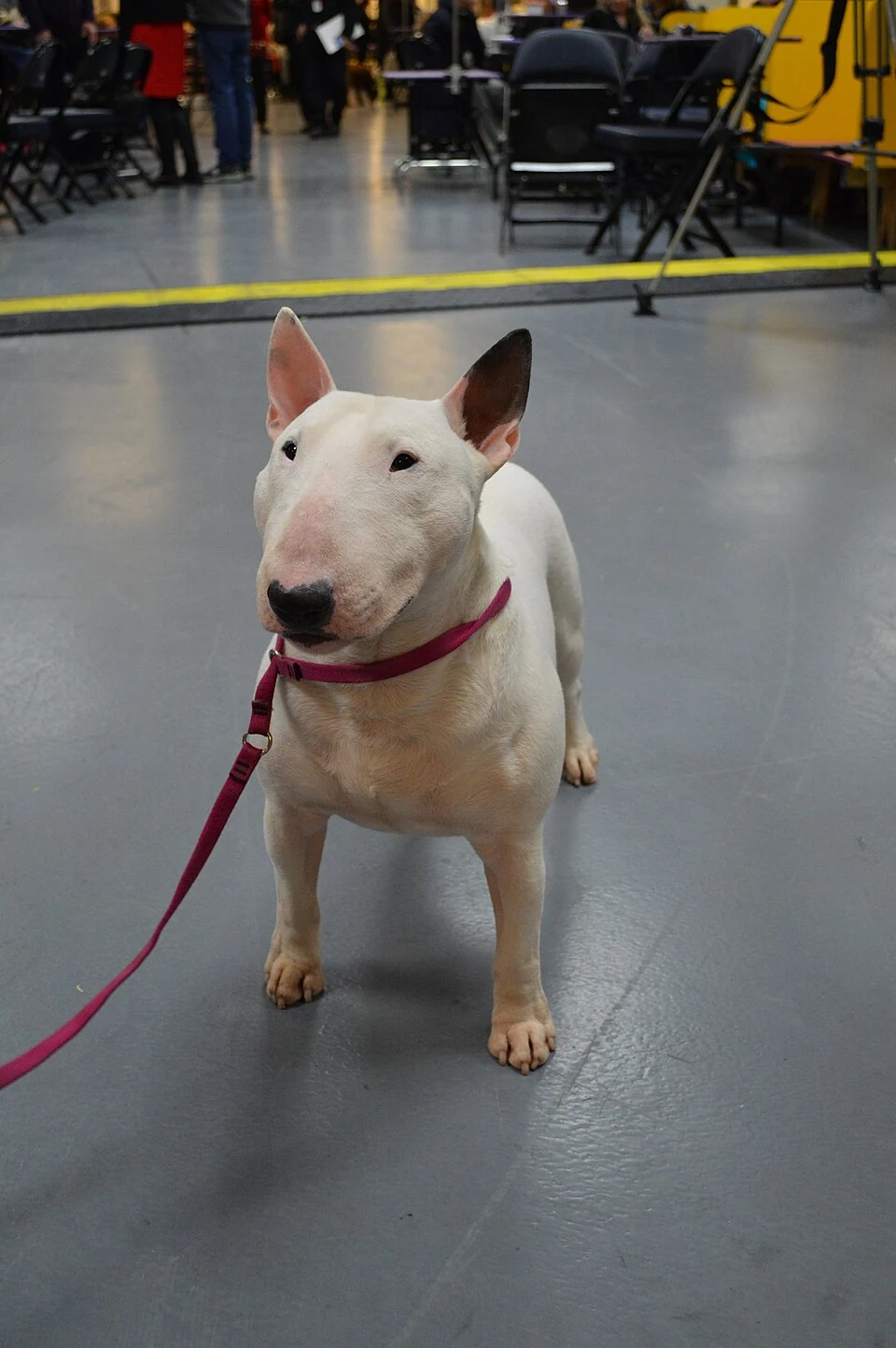
The Miniature Bull Terrier has its larger relative’s distinctive head in a smaller, strong body. This lively companion enjoys playing with its people and can have considerable stamina. Its size makes some arrangements easier, but regular activity and careful health screening remain essential.
At a glance
- Size
- Small
- Lifespan
- Not sufficiently documentedWhy is there no reliable range?
- Activity
- High
- Grooming
- Low
- Training
- Patience & clear guidance
- Owner experience
- First dog with support
A small, strong dog with plenty of playfulness and determination
A Miniature Bull Terrier usually likes to be involved. A shared game, a new task or an outing can capture its full attention. Once something becomes interesting, however, it may be reluctant to move on. Patience and consistent everyday habits suit this determined little terrier.
Its history is part of the development of British Bull Terriers. Smaller dogs were also used for catching rats. The miniature form retained the curved head, muscular body and short coat. The international canine federation FCI now recognises it as a separate breed. Its standard gives a maximum shoulder height of 35.5 centimetres. Weight should be proportionate to the body, with no fixed weight limit in that standard.
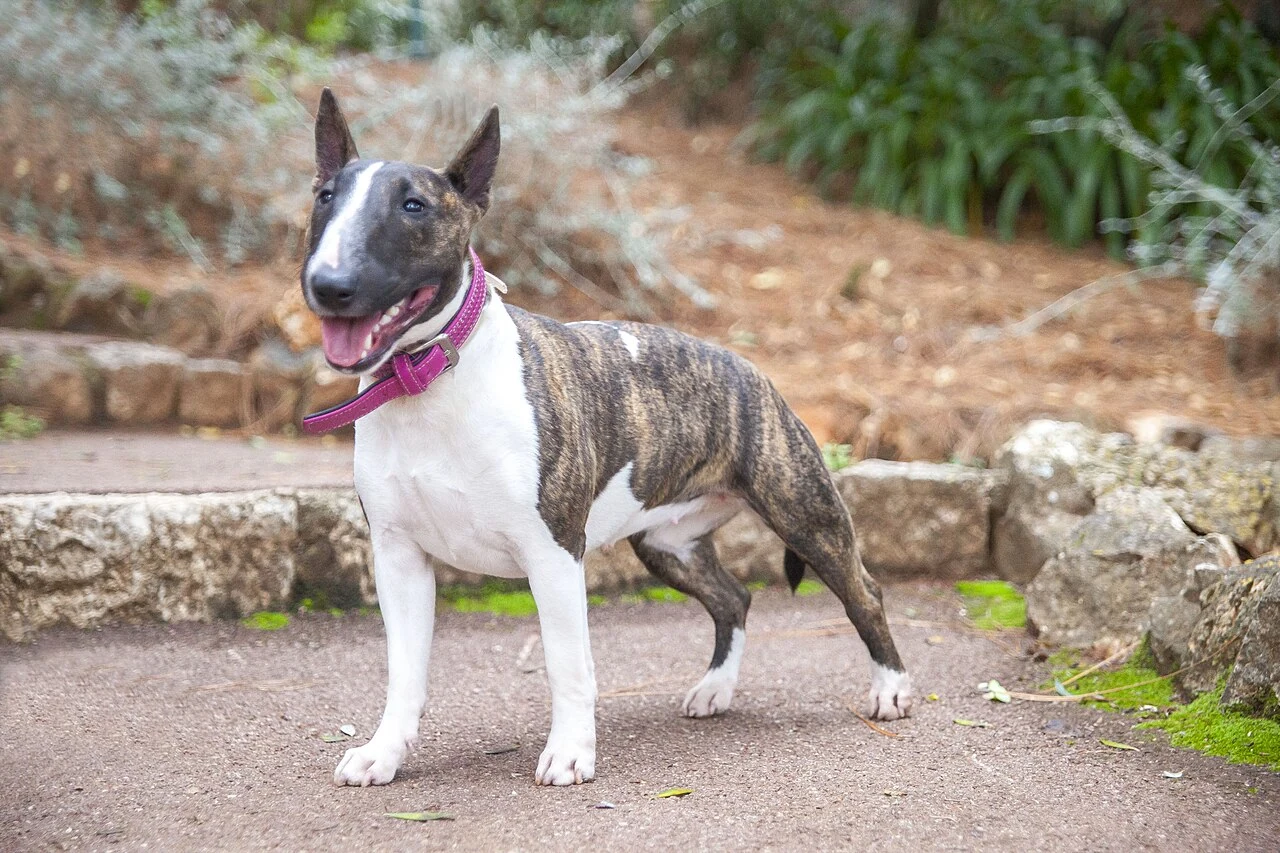
Miniature Bull Terriers can be affectionate and keen to participate in family life. Play is often energetic. An adult should be present with young children and make sure neither child nor dog is overwhelmed. A comfortable resting place where the dog can sleep or chew undisturbed makes daily life easier.
Everyday life
A small body should not obscure this terrier’s need for regular exercise and mental activity. Walks with different scents, shared games and simple searches provide variety. You could start by placing a few pieces of the normal food in plain sight, then gradually choose slightly more challenging hiding places. These portions should come from the usual daily allowance.
Brief, rewarded practice is more useful than long sequences of the same exercise. Coming back when called and exchanging objects can first be practised at home. A second toy can help show that releasing the first one opens up another opportunity to play. More distractions should be added once the dog understands the task.
Compatible play partners and attentive supervision matter when meeting dogs. Being smaller does not determine how a meeting will go. Long working days should be covered by a suitable carer. Time alone is best introduced through very short, comfortable absences. A Fellfolio handover can explain the games the dog knows and its usual arrangements for walking and feeding.
Staying home alone
Dogs learn to stay home alone in small steps. The RSPCA advises no more than four hours at a time. Puppies and dogs that become unsettled when left alone need shorter absences and gradual practice. Arrange someone to care for your dog when you will be away longer.
Everyday dog training: recall, a loose lead and clear communication ↗
Day-to-day care
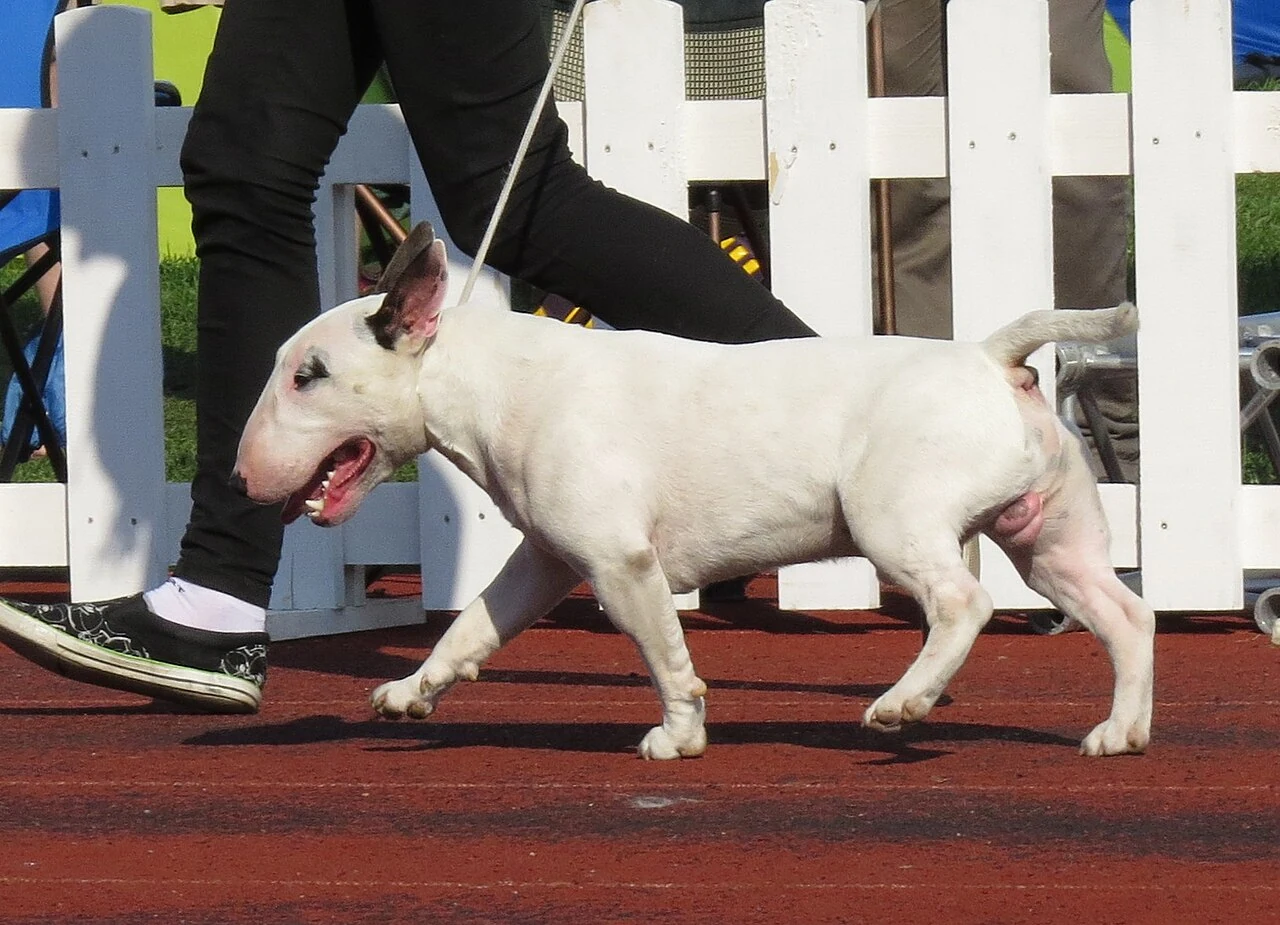
A quick brush removes loose hair and dirt from the smooth coat. More frequent brushing may be useful during shedding. Bathing is mainly needed when dirt cannot easily be removed another way. Paws, nails, ears and skin should also be checked during grooming.
The mouth deserves attention too. Brushing with dog toothpaste should be introduced gradually. In this breed, the lower canine teeth can be angled inwards. A vet should check the bite, particularly as the adult teeth emerge. Toys should be sturdy and large enough not to be swallowed whole. Damaged pieces should be removed.
Size and build
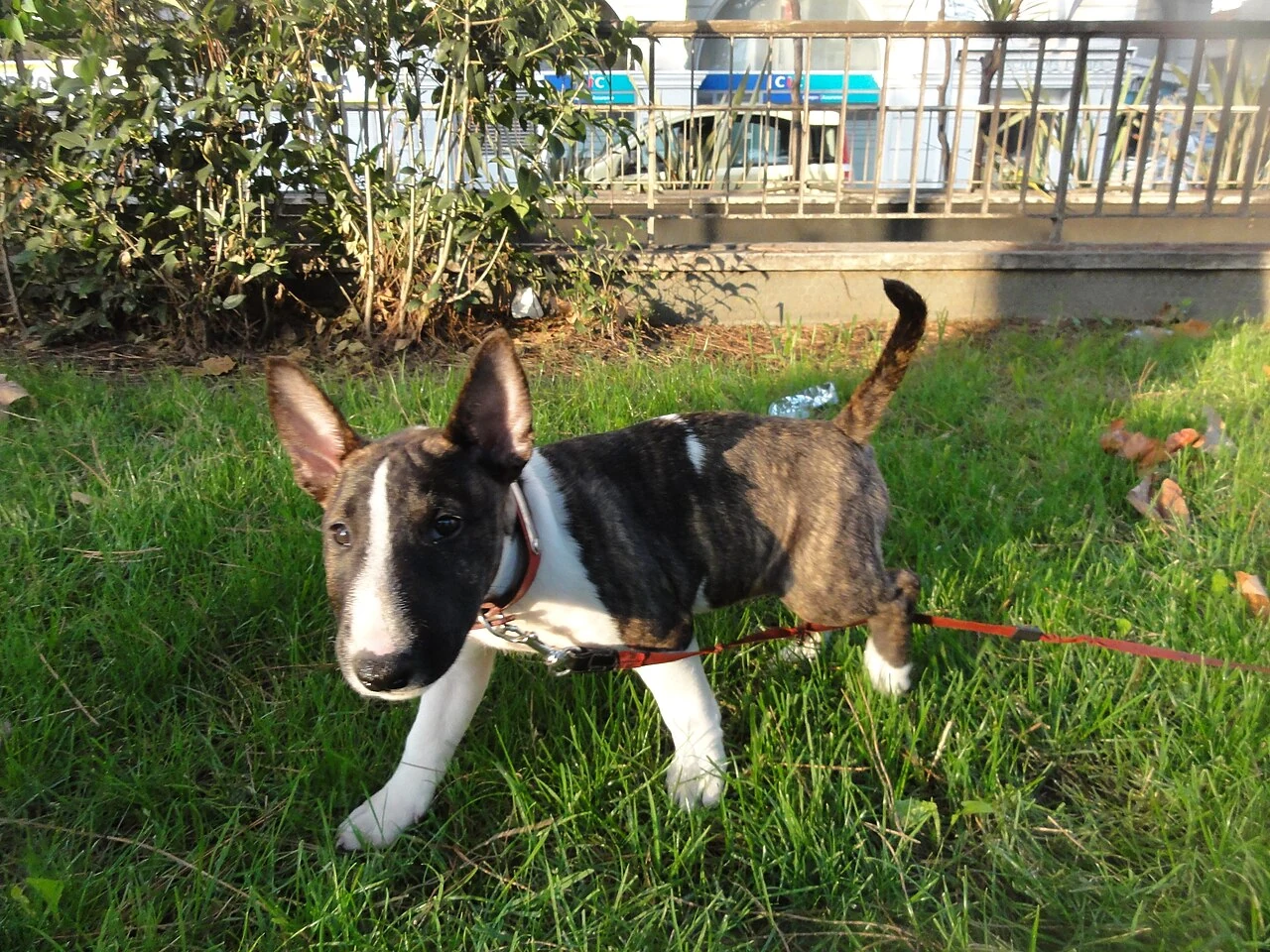
A puppy needs pleasant experiences with people, everyday situations and suitable dogs. A well-run puppy group should take different body sizes and play styles into account. The dog does not need to greet every new individual immediately. Some distance can help it understand what is happening around it before joining in.
Short walks and free movement with rest breaks should be the main activities during growth. Repeated high jumps, abrupt stops while chasing balls and long runs place unsuitable demands on a growing body. Exercise can increase gradually later. For an older dog, searching games can be made easier and walks adapted to its mobility. New breathing noises, lameness or changes in the eyes should be investigated promptly.
From puppy to senior: caring for your dog through every life stage ↗
Health
Primary lens luxation, known as PLL, is a particularly important concern in this breed. The fine fibres holding the lens in place inside the eye can break down, allowing the lens to move. This may cause increased pressure in the eye, pain and loss of vision. Redness, squinting or a sudden change in sight need prompt veterinary help. A DNA test for the recognised inherited variant and clinical eye examinations should be discussed before choosing a puppy.
Laryngeal paralysis can also affect young Miniature Bull Terriers. The larynx, at the entrance to the windpipe, fails to open adequately during breathing. Unusual breathing noises, a changed bark or gagging while eating should be investigated. Breathing distress or collapse needs immediate help. The available DNA test identifies an inherited risk factor. It cannot reliably predict whether an individual dog will develop the disease.
A DNA test is also available for lethal acrodermatitis, or LAD, a severe inherited skin disease. Affected puppies may grow poorly, develop painful skin changes and be particularly susceptible to infection. The American breed club additionally recommends puppy hearing tests and heart ultrasound and kidney screening for breeding dogs. A BAER hearing test measures responses to sound, while urine testing can help identify kidney concerns. The kneecaps should be examined too. With patellar luxation, a kneecap slips out of its normal groove and may cause lameness. Fellfolio can keep examination findings and test results together.
Before bringing the dog home, you should check its legal classification where you live. For travel or buying abroad, a specific enquiry to the relevant authority should clearly identify the dog as a Miniature Bull Terrier.
Lifespan
The American Kennel Club gives 11 to 13 years, while the British breed club gives 10 to 14 years.
Could this breed fit your life?
Could work well if …
- You want a small, strong dog that enjoys shared activities.
- You can train calmly and patiently when the dog is determined.
- You can plan carefully for eye, airway and other health screening.
What to consider
- Small size does not mean little need for activity.
- Energetic play with children or dogs needs supervision.
- Suitable DNA tests and clinical examinations should be discussed before choosing a puppy.
Similar needs, different dogs.
Selected by shared size, activity, grooming and training characteristics.
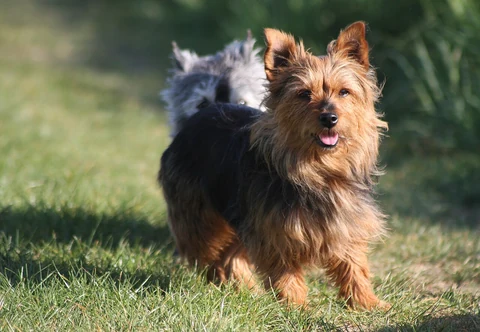
Small Australian wire coated terrier
Australian Terrier
The Australian Terrier is a small, alert dog that enjoys getting out and exploring. Its harsh coat and distinctive neck ruff reflect a working background. At home it often wants to be close to its people, while a scent or a small animal can capture its attention outdoors.
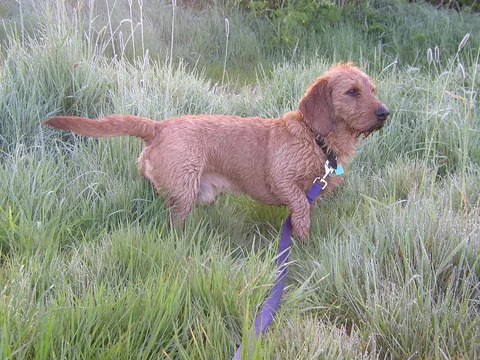
Small scent hound from Brittany
Basset Fauve de Bretagne
The Basset Fauve de Bretagne is a small French scent hound with a rough coat in wheaten to reddish shades. Its short legs can disguise considerable stamina. An outgoing nature, strong hunting interest and a love of exploring make daily outdoor time and patient training essential parts of its care.
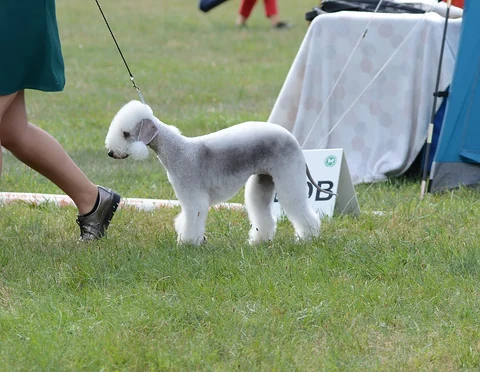
Terrier
Bedlington Terrier
An arched outline and soft, curly coat give the Bedlington Terrier a distinctive appearance. Behind that gentle look is an agile terrier with a hunting history. It can be an attentive companion when shared walks, kind training and thorough grooming are part of everyday life.
Sources and photograph credit
- Teaching your dog to be left alone
Used in this profile for: Staying home alone
- Patellar Luxation
Used in this profile for: Health
- Miniature Bull Terrier
Used in this profile for: Temperament, Everyday life, Day-to-day care, Size and build, Health, Lifespan, Could this breed fit your life?
- Health
Used in this profile for: Day-to-day care, Health
- Miniature Bull Terrier Health Statement October 2023
Used in this profile for: Health
- Miniature Bull Terrier, FCI Standard No.359
Used in this profile for: Size / Weight, Temperament, Everyday life, Day-to-day care, Size and build, Could this breed fit your life?
- Lethal Acrodermatitis
Used in this profile for: Health
- Laryngeal Paralysis
Used in this profile for: Health
- Is this the breed for you?
Used in this profile for: Temperament, Lifespan
- Primary Lens Luxation
Used in this profile for: Health
- Bull Terrier (Miniature)
Used in this profile for: Everyday life, Day-to-day care, Could this breed fit your life?
- Instanding Canines
Used in this profile for: Day-to-day care
- Exercising your puppy
Used in this profile for: Size and build
- Training Your Dog to Be Left Alone
Used in this profile for: Everyday life
- Children and Dogs
Used in this profile for: Temperament, Size and build
- Dog dental care
Used in this profile for: Day-to-day care
- Train Your Dog to Come When Called
Used in this profile for: Everyday life
- Training your dog
Used in this profile for: Everyday life
Photo credits
Portrait · Miniature Bull Terrier - GCH Cambria's Kid N Play 1 (16417656149).jpg · Pets Adviser from Brooklyn, USA · CC BY 2.0 · Edited
.jpg)
Everyday life · Helina-bull-terrier-miniature.jpg · Darmaninjl · CC BY-SA 3.0 · Edited

Puppy · Chiot bull terrier miniature femelle bringé et blanc 2 mois.JPG · Darmaninjl · CC BY-SA 3.0 · Edited

In action · MinBull in Tallinn.JPG · Томасина · CC BY-SA 3.0 · Edited
