 fellfolio
American herding dog
Miniature American Shepherd
The Miniature American Shepherd packs an active herding dog into a compact body. It learns quickly, enjoys movement and often works closely with its people. Shared activities and plenty of opportunities to rest should be part of daily life. If its size is the main attraction, it is also worth meeting the dog and seeing how it responds to movement, unfamiliar people and new situations.
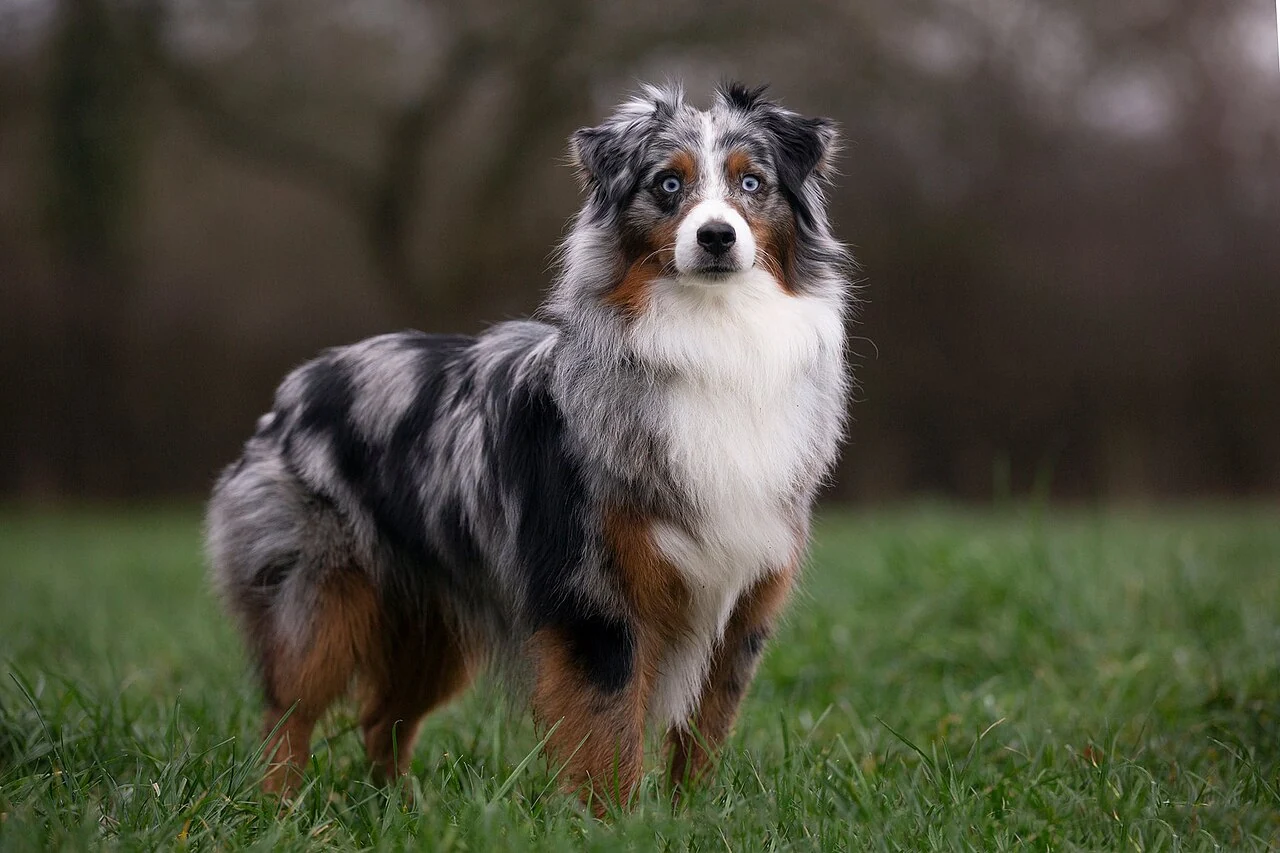
At a glance
- Size
- Medium
- Height at shoulder
- 33 to 46 cm
- Lifespan
- 12 to 13 years
- Activity
- High
- Grooming
- Weekly
- Training
- Patience & clear guidance
- Owner experience
- Experience recommended
A compact herding dog with quick reactions
Many Miniature American Shepherds keep a close eye on what is happening around them. The international breed standard describes an intelligent working dog with herding and guarding instincts. It may be reserved with unfamiliar people at first. During visits, your dog should have time and space to get to know guests. Calm observation can be rewarded without visitors needing to touch it immediately.
Herding involves keeping animals together and directing their movement. In a family home, this impulse can appear as chasing running children or bicycles. Adults should notice this early and respond by creating distance and asking for a familiar behaviour. Repeated nipping or intense chasing calls for professional support. Living with a cat also depends on how the individual animals respond to each other.
An eagerness to learn is a useful starting point for training. Short exercises with rewards the dog enjoys help it understand what you want. A predictable daily routine also gives an active dog opportunities to settle. A quiet bed should be available, particularly when the household is busy.
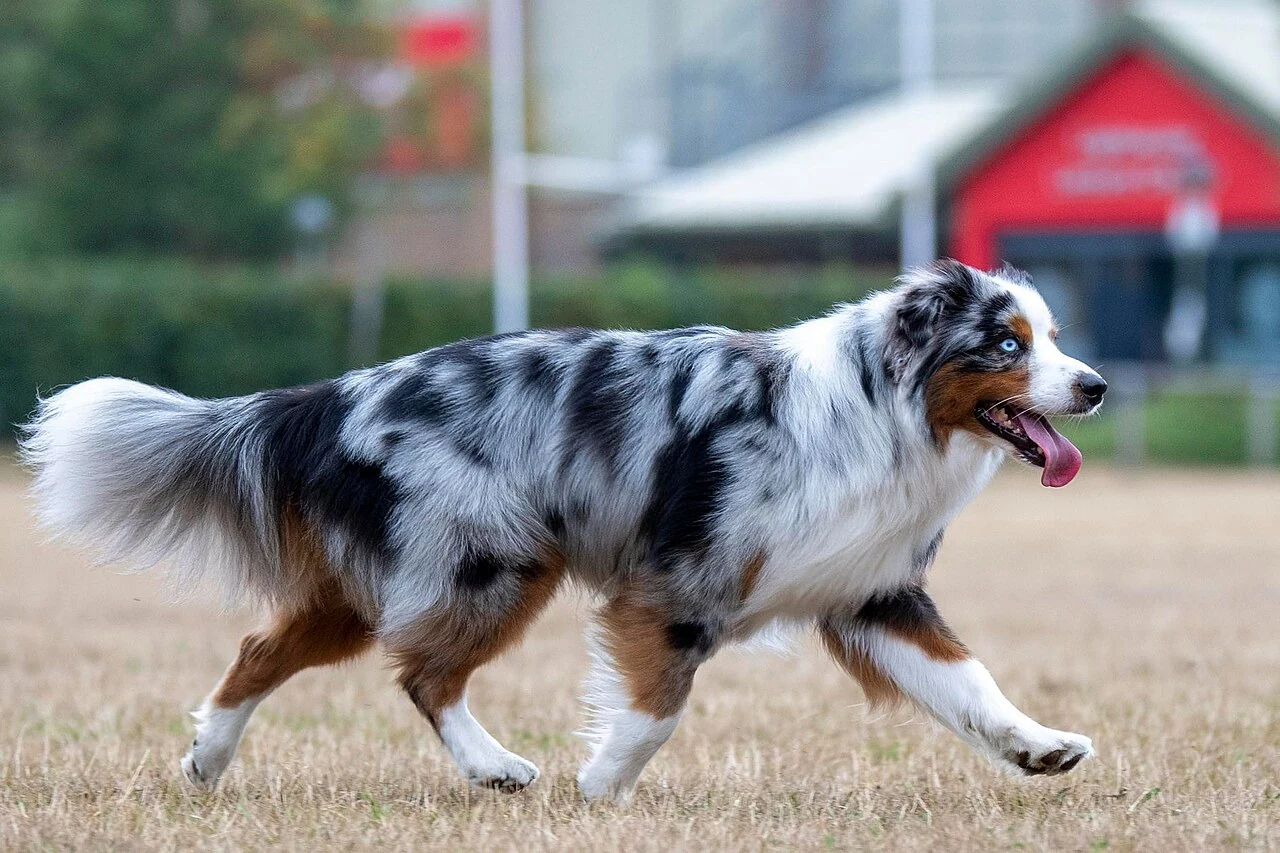
Everyday life
On walks, your dog can sniff, return when called and wait briefly in an open spot as someone passes. These small activities fit naturally into daily outings. Life in a flat is possible when outdoor exercise, engaging activities and enough time with its people are provided.
If you enjoy training, simple tricks are a good place to start, such as touching your hand with its nose or walking around an object. Many dogs of this breed also enjoy agility, an obstacle course with jumps and tunnels. Training should suit the dog's age and health, with guidance from a qualified instructor. A puppy should start with basic skills rather than demanding sequences of jumps.
Time alone should be introduced gradually. Regular longer absences need dependable care arrangements. A short video can show whether your dog rests comfortably or instead paces, whines or barks persistently. These signs should be discussed with a vet and, where needed, a qualified behaviour professional.
Staying home alone
Dogs learn to stay home alone in small steps. The RSPCA advises no more than four hours at a time. Puppies and dogs that become unsettled when left alone need shorter absences and gradual practice. Arrange someone to care for your dog when you will be away longer.
Everyday dog training: recall, a loose lead and clear communication ↗
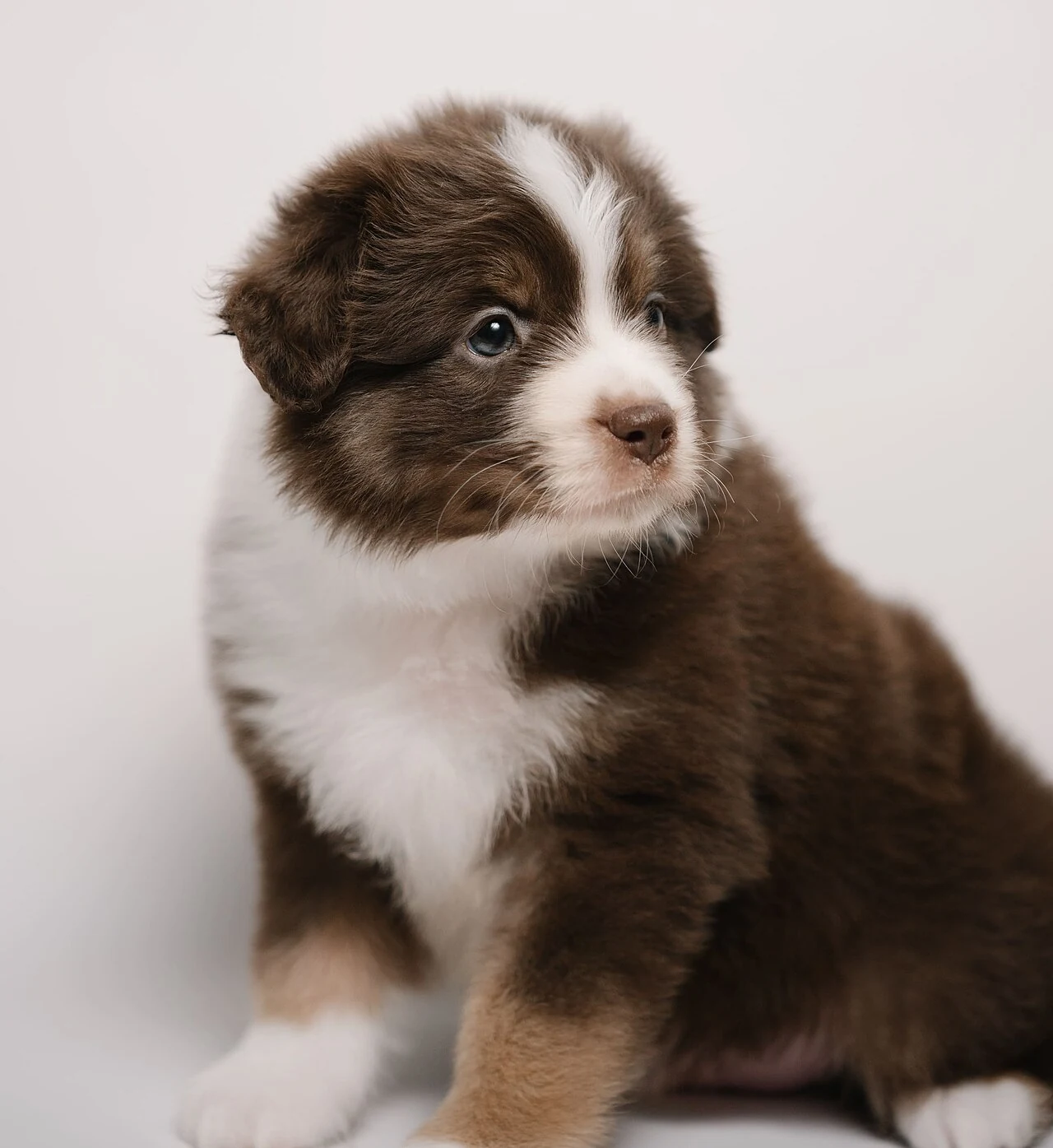
Day-to-day care
A soft, dense undercoat lies beneath the longer outer hair. Regular brushing removes loose hair, with more grooming often needed during moulting. The hair behind the ears and on the legs should also be checked for small tangles before they become mats. A groomer can show you which tools suit your dog's coat.
Grooming is also a chance to check paws, nails and skin. Toothbrushing with dog toothpaste should ideally be a daily habit. Food portions should suit age, activity and body condition, with training treats included in the daily allowance. Beneath a dense coat, checking body shape with your hands is useful alongside looking at your dog.
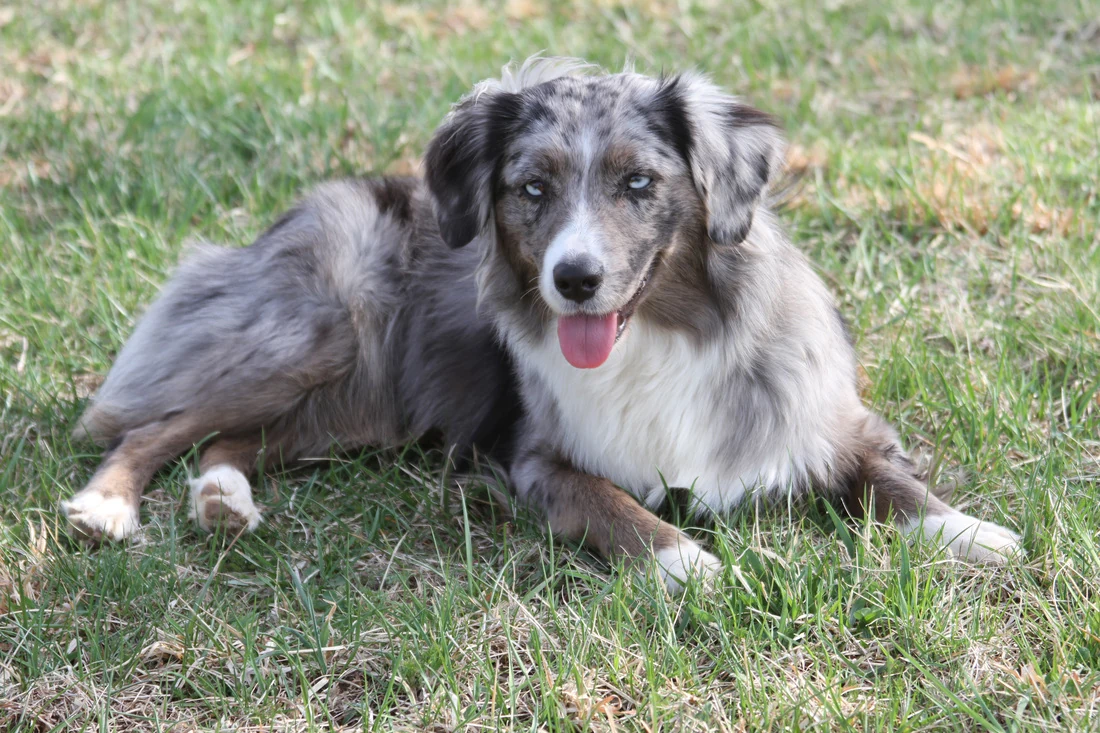
Size and build
The breed developed in California in the late 1960s from small Australian Shepherds. Breeding these dogs led to a distinct breed. The Fédération Cynologique Internationale, or FCI, is an international federation of national kennel organisations. It lists the Miniature American Shepherd in Standard No. 367. At the October 2026 source check, it has provisional recognition there. The name “Mini Aussie” is also used, but when looking for a puppy you should ask which registered breed it refers to.
The FCI standard gives males a height of 35.5 to 46 cm and females 33 to 43.5 cm. Height is measured at the withers, the highest point over the shoulders. Weight should suit size and build, with no fixed weight range in the standard. The body is slightly longer than tall and the ears fold forwards or to the side. Coats can be black or red-brown, as well as merle, where darker and lighter areas form an irregular marbled pattern. White and tan markings may also be present.
From puppy to senior: caring for your dog through every life stage ↗
Health
The Miniature American Shepherd Club of the USA, or MASCUSA, is the US parent club. It recommends documented hip assessments, regular eye examinations and several DNA tests for breeding dogs. You should be able to see both parents' records before choosing a puppy. Hip dysplasia is abnormal development of the hip joint that can cause pain and arthritis. Limping or difficulty getting up should be assessed by a vet.
The MDR1 test checks a genetic variant that alters the transport of certain drugs in the body. Affected dogs can be particularly sensitive to some medicines. Even one copy of the variant can matter. Your vet should know any test result before prescribing or administering medication so that suitable drugs and doses can be chosen.
Recommended eye tests include PRA-prcd and HSF4. The PRA-prcd test checks for a genetic variant associated with an inherited disease of the retina, the light-sensitive layer inside the eye. The disease can first affect vision in low light and then progress. The HSF4 test checks a variant associated with hereditary cataracts, which cloud the lens of the eye. Each DNA test detects particular variants and does not replace an eye examination.
NAD stands for neuroaxonal dystrophy, an inherited disease of nerve cells. In the form described in this breed, the hind legs may gradually weaken and movement become unsteady. A separate DNA test is available. Unusual stumbling or dragging the hind feet should be investigated. The American Kennel Club gives a lifespan of 12 to 13 years. That breed figure cannot predict how long an individual dog will live.
Could this breed fit your life?
Could work well if …
- You want to spend time outdoors with your dog every day and enjoy teaching new activities in clear, manageable steps.
- You can patiently help your dog cope with encounters, movement at home and time to rest.
- You choose for temperament and documented health checks and can arrange dependable care when needed.
What to consider
- Herding behaviour can appear as chasing or nipping at fast movement and should be addressed early.
- A dog that is reserved with strangers should have space and time during visits and everyday encounters.
- Hip, eye and appropriate DNA test records for both parents should be available before choosing a puppy.
Similar needs, different dogs.
Selected by shared size, activity, grooming and training characteristics.
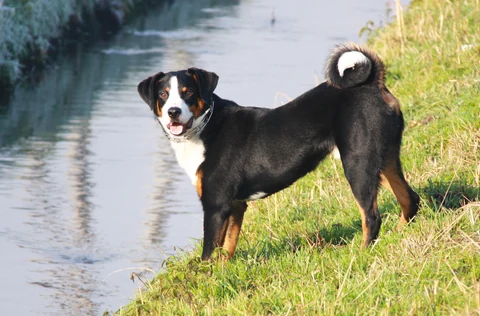
Swiss cattle and watchdog
Appenzeller Mountain Dog
The Appenzeller Mountain Dog is easy to recognise by its tricolour coat and tightly curled tail. Behind that cheerful appearance is an attentive Swiss working dog. It enjoys activity, learns quickly and notices changes around it. This breed suits people who want to spend time outdoors with their dog every day and can help it cope calmly with visitors and events at home.
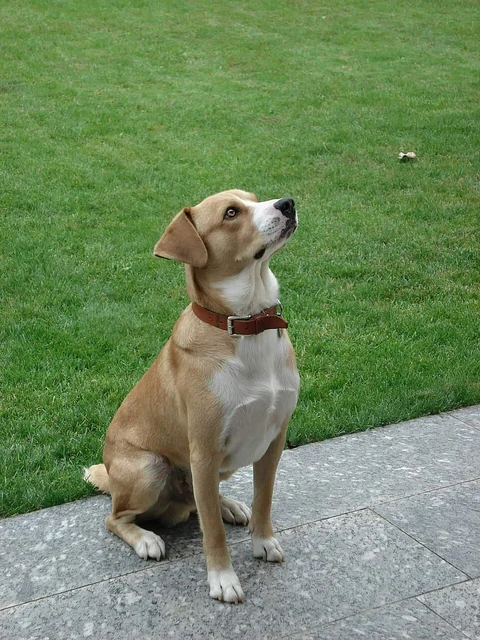
Austrian farm and companion dog
Austrian Pinscher
The Austrian Pinscher is a lively farm dog that enjoys accompanying familiar people and notices visitors attentively. Its short to medium-length coat is relatively straightforward to maintain. Exercise, shared activities and calm guidance of its guarding behaviour require more time. Meeting adult dogs helps show whether its watchfulness and temperament could suit your daily life.
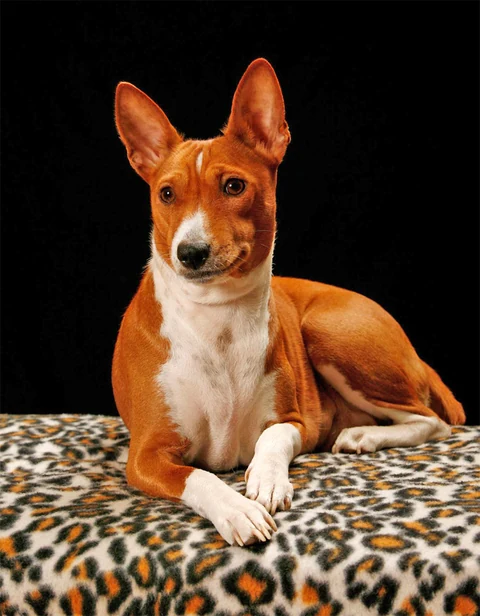
Hound
Basenji
The Basenji rarely barks but can make yodelling sounds. Outside, it may follow a scent or moving animal at speed, so off-lead running calls for secure fencing.
Sources and photograph credit
- Teaching your dog to be left alone
Used in this profile for: Staying home alone
- Canine hip dysplasia (CHD)
Used in this profile for: Health
- Presentation of our organisation
Used in this profile for: Size and build
- Miniature American Shepherd
Used in this profile for: Temperament, Everyday life, Day-to-day care, Lifespan, Could this breed fit your life?
- Miniature American Shepherd, FCI Standard No. 367
Used in this profile for: Size / Weight, Temperament, Day-to-day care, Size and build, Could this breed fit your life?
- Miniature American Shepherd, current FCI nomenclature
Used in this profile for: Size and build
- MASCUSA Parent Club Health Statement
Used in this profile for: Health
- Canine Genetics Laboratory: disease descriptions, NAD-1 section
Used in this profile for: Health
- Dental disease in dogs
Used in this profile for: Day-to-day care
- Grooming and bathing pets
Used in this profile for: Day-to-day care
- Teaching your dog to be left alone
Used in this profile for: Everyday life, Could this breed fit your life?
- Separation-related behaviour
Used in this profile for: Everyday life
- Training your dog
Used in this profile for: Everyday life
- Hereditary Cataracts (Australian Shepherd Type)
Used in this profile for: Health
- Multidrug Sensitivity (MDR1)
Used in this profile for: Health
- Progressive Retinal Atrophy, Progressive Rod-Cone Degeneration (PRA-prcd)
Used in this profile for: Health
Photo credits
Portrait · MAS-Bond.jpg · Laneyclark · CC BY-SA 4.0 · Edited

In action · MAS walking.jpg · Laneyclark · CC BY-SA 4.0 · Edited

Puppy · Щенок мини-аусси.jpg · Кристина Зингис · CC0

Everyday life · Blue Merle Miniature American Shepherd in Grass.jpg · Lextergrace · CC BY-SA 4.0 · Edited
