 fellfolio
Dutch decoy and companion dog
Nederlandse Kooikerhondje
The Kooikerhondje once lured wild ducks into Dutch trapping channels. This small dog is lively and enjoys learning. It may need time with strangers and a well-practised recall outdoors.
At a glance
- Size
- Small
- Height at shoulder
- 35 to 42 cm
- Lifespan
- over 12 yearsUK Royal Kennel Club breed profile
- Activity
- Moderate
- Grooming
- Several times weekly
- Training
- Patience & clear guidance
- Owner experience
- First dog with support
Quiet signals guided its work with ducks
Dutch duck decoys were ponds with narrow, net-covered channels used to catch wild ducks. The Kooikerhondje lured the ducks into these channels. On cue it moved behind reed screens; its white, wagging tail caught the ducks’ interest. It was not meant to chase or bark at them. Such precise work with one person helps explain the breed’s attention to small signals and enjoyment of shared tasks.
The British standard describes a cheerful, alert dog that is not constantly noisy. It may greet familiar people warmly while taking time with strangers. Let a young dog observe at its own pace rather than placing it in every visitor’s lap. A brief recall to you, a quiet resting spot and then a greeting by choice give it a clear routine. Its history as a working dog, including rat control, is worth remembering around small animals.
Everyday life
The Royal Kennel Club gives up to an hour of daily exercise as a guide. A Kooiker is small, but not merely a sofa dog. Walks with sniffing time, a search game in the grass and a few minutes learning a new trick add variety. For example, ask it to wait beside you, put a toy down a few steps away and release it to collect the toy on your cue. That uses the partnership its ancestors were known for.
Many notice movement and noises, so build training in calm stages. Practise recall first on an empty path, then near distant dogs and finally with more distraction. An apartment can suit if the dog gets regular outings and barking at the door does not become an everyday performance. Build time alone gradually, as for other companion dogs.
Staying home alone
Dogs learn to stay home alone in small steps. The RSPCA advises no more than four hours at a time. Puppies and dogs that become unsettled when left alone need shorter absences and gradual practice. Arrange someone to care for your dog when you will be away longer.
Day-to-day care
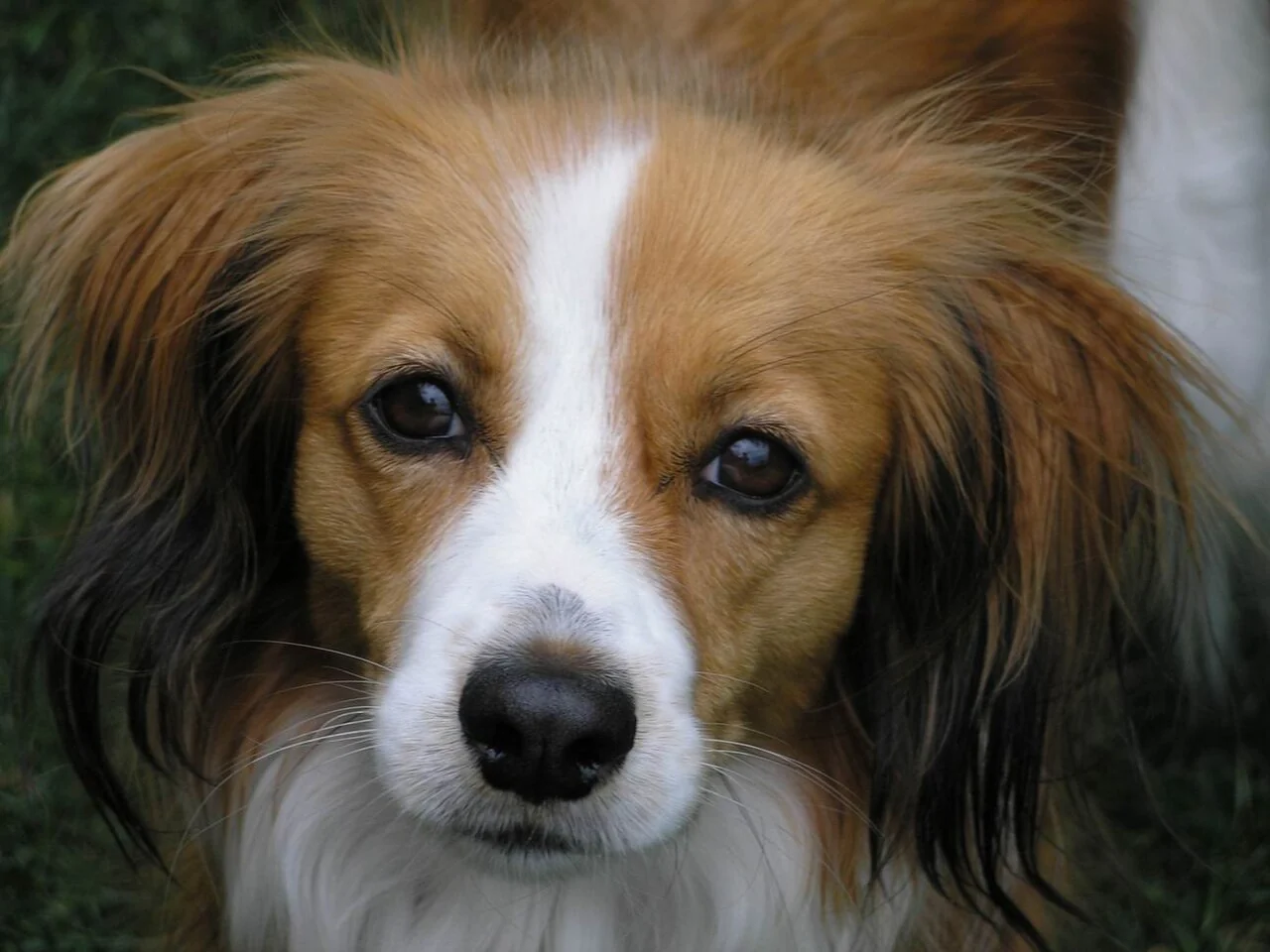
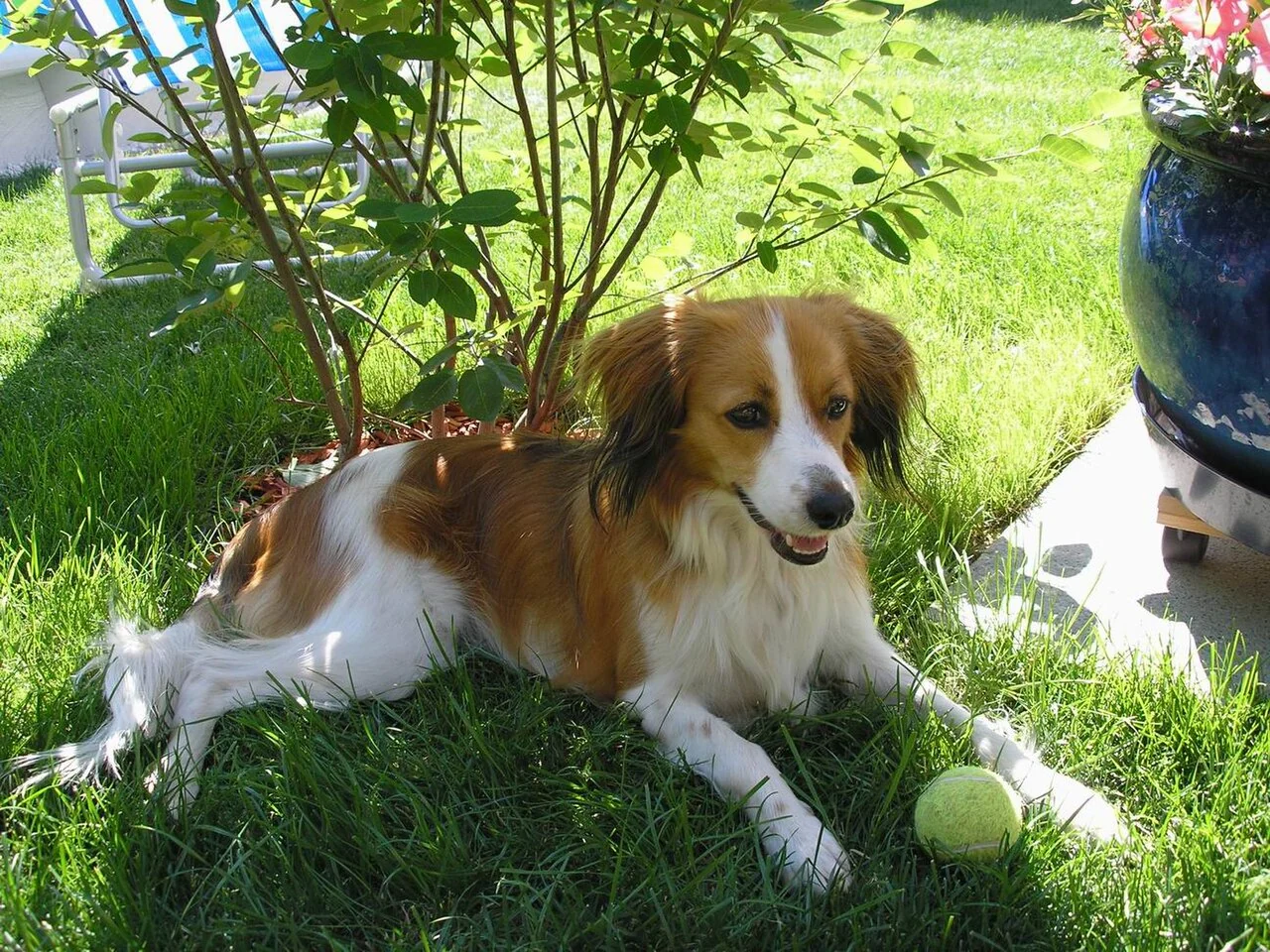
The medium-length coat lies flat or slightly wavy and has an undercoat. White feathering on tail and legs, and dark ear tips, are striking. Brush several times a week and comb carefully behind the ears and through the longer leg hair after outings. Small burrs and grass seeds can lodge there. The American Kennel Club advises at least a weekly grooming session.
The coat should look natural; elaborate clipping is unnecessary. While grooming, check ears and feet, trim long nails and look for red skin. Frequent head-shaking or a bad smell from an ear deserves an examination. Kooikers shed noticeably during a moult.
Size and build
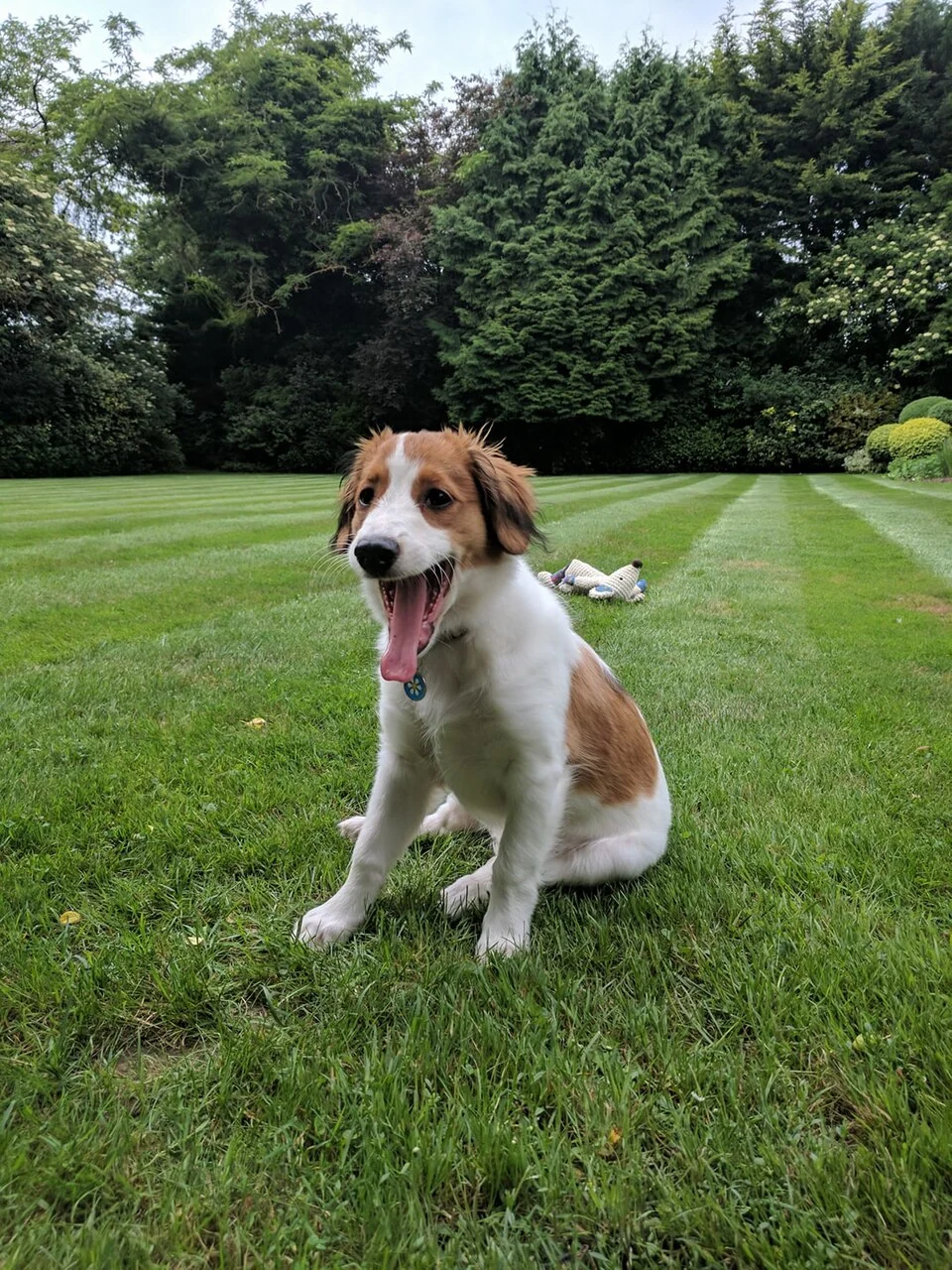
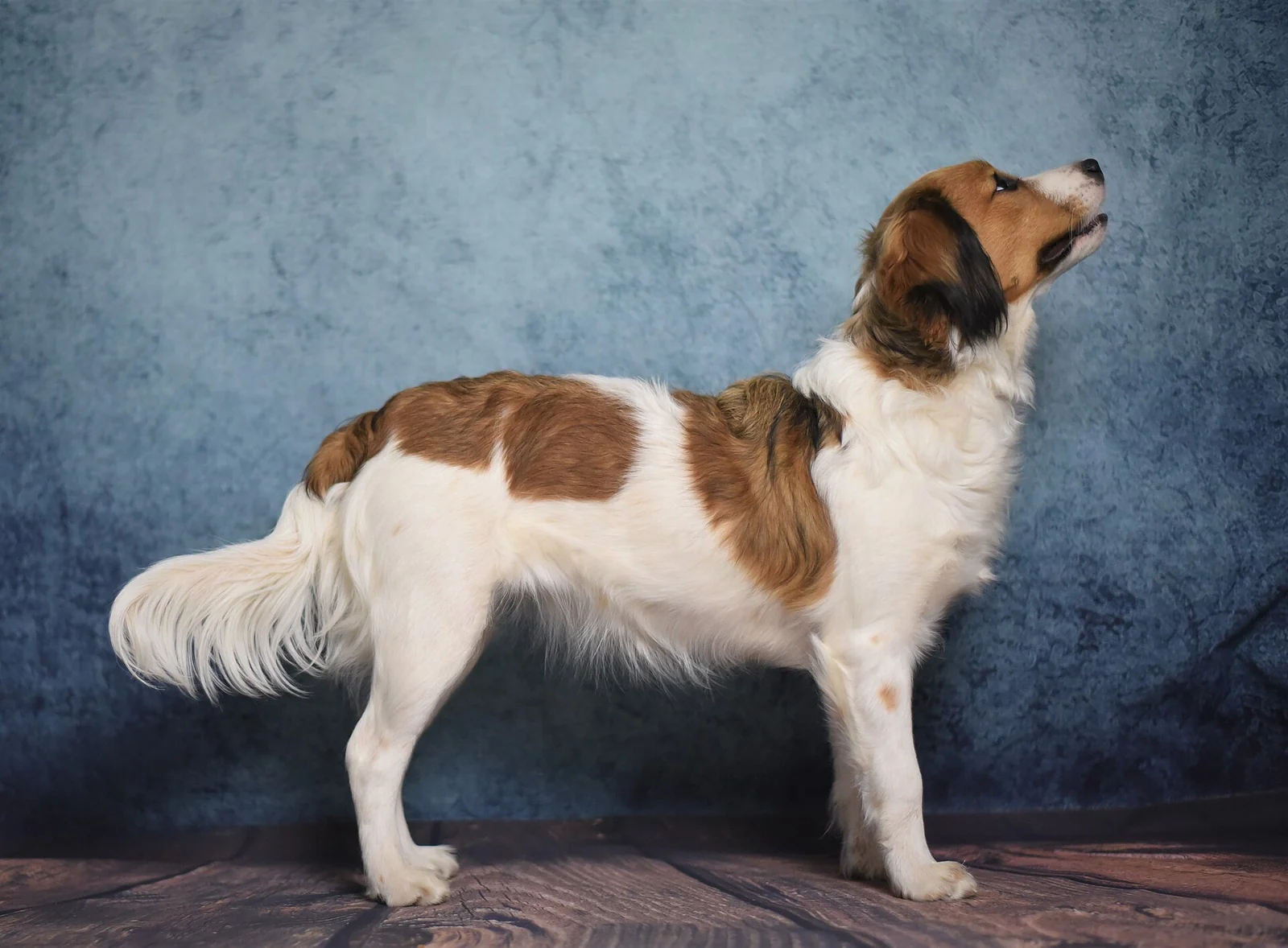
A Kooikerhondje is small, slightly longer than tall and sturdily built. The back is level, the chest reaches the elbows and the legs give a springy gait. Clear orange-red patches mark the white coat. A long, white-feathered tail is carried high but does not curl over the back. The black tips of the ears, known as earrings, often develop over time.
The British standard gives 37 to 42 cm at the shoulder for males and 35 to 40 cm for females. It gives no general kilogram range. In an adult, look for muscle, a visible waist and free movement. The attractive pattern tells you less about condition than an easy stride and attentive, settled expression.
Health
The Kooikerhondje descends from a small founding population. Pedigree and genetic diversity therefore matter alongside individual tests. The Royal Kennel Club recommends DNA testing for hereditary necrotising myelopathy. This inherited spinal cord disease can cause progressively unsteady movement and paralysis in young dogs.
Another test concerns type 3 von Willebrand disease, in which a protein needed to control bleeding is absent. The American parent club also recommends eye, kneecap and hip examinations. Ask to see both parents’ results and have the mating plan explained.
AKC also notes polymyositis, an inflammation of the muscles, as well as kidney disease and epilepsy. Weakness, seizures or marked changes in drinking and urination need veterinary assessment. Seek immediate help for unusually heavy or prolonged bleeding. Genetic tests are not available for every condition, so ask about disease in close relatives too.
Could this breed fit your life?
Could work well if …
- You enjoy a small, lively dog and like practising calmly and precisely with it.
- You can provide regular outings, coat care and relaxed introductions to strangers.
May be more difficult if …
- You want a small dog that rarely goes out or immediately loves every stranger.
- You would take a puppy without clear health records for both parents or an explanation of how closely they are related.
Similar needs, different dogs.
Selected by shared size, activity, grooming and training characteristics.
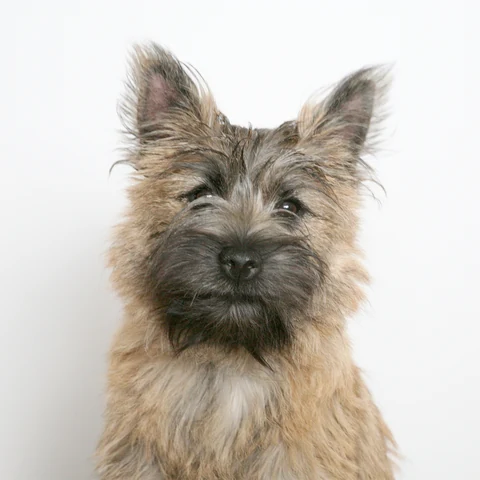
Terrier
Cairn Terrier
The Cairn Terrier once searched Scottish stone piles for small animals. Today it brings the same energy to sniffing, digging and exploring. Recall needs practice despite its small size.
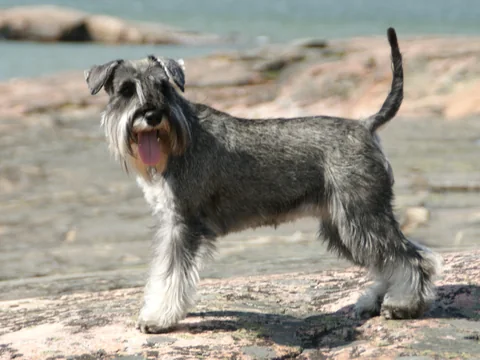
Companion dog
Miniature Schnauzer
A sturdy small dog with a distinctive beard and an alert expression. It enjoys company but needs daily exercise and regular coat care.

Terrier
Norfolk Terrier
The Norfolk Terrier is small, sturdy and curious. Its ancestors pursued small animals on British farms. Today it needs sniffing walks, secure garden fencing and practice settling again after it barks at a noise.
Sources and photograph credit
- Teaching your dog to be left alone
Used in this profile for: Staying home alone
- Canine von Willebrand Disease
Used in this profile for: Health
- Nederlandse Kooikerhondje Dog Breed Information
Used in this profile for: Temperament, Day-to-day care, Health, Could this breed fit your life?
- A novel IBA57 variant is associated with mitochondrial iron–sulfur protein deficiency and necrotizing myelopathy in dogs
Used in this profile for: Health
- Kooikerhondje, Breeds A to Z
Used in this profile for: Temperament, Everyday life, Health, Lifespan, Could this breed fit your life?
- Kooikerhondje breed standard
Used in this profile for: Size / Weight, Temperament, Everyday life, Day-to-day care, Size and build
Portrait · Kooiker 2 Jahre Gesicht · Burner83 / de wikipedia · CC BY 1.0 · Edited

Side view · Ammervill's Julia Juwell's · Hundepfote · CC BY-SA 4.0 · Edited

On the grass · Kooiker 2 Jahre · Burner83 · CC BY 2.5 · Edited

Puppy · KooikerhondjePuppy 02 · Harriet Bedell-Pearce · CC BY-SA 4.0 · Edited
