 fellfolio
Hungarian livestock guardian with a distinctive corded coat and independent watchfulness
Komondor
Beneath the long white cords is a large, powerful dog developed to protect livestock. The Komondor watches its surroundings closely and may decide independently that something needs guarding. Owning one requires more than space and enthusiasm for an unusual coat.
At a glance
- Size
- Large
- Weight
- 40 to 60 kg
- Lifespan
- Not sufficiently documentedWhy is there no reliable range?
- Activity
- Moderate
- Grooming
- Specialist coat care
- Training
- Patience & clear guidance
- Owner experience
- Experience recommended
A livestock guardian from Hungary
The Komondor is one of Hungary’s old livestock guardian breeds. Its job was to remain with the animals and defend them from danger. Unlike a dog moving a flock, it needed to react independently as a guardian. This background helps explain why a family dog may also pay close attention to changes around the house and property.
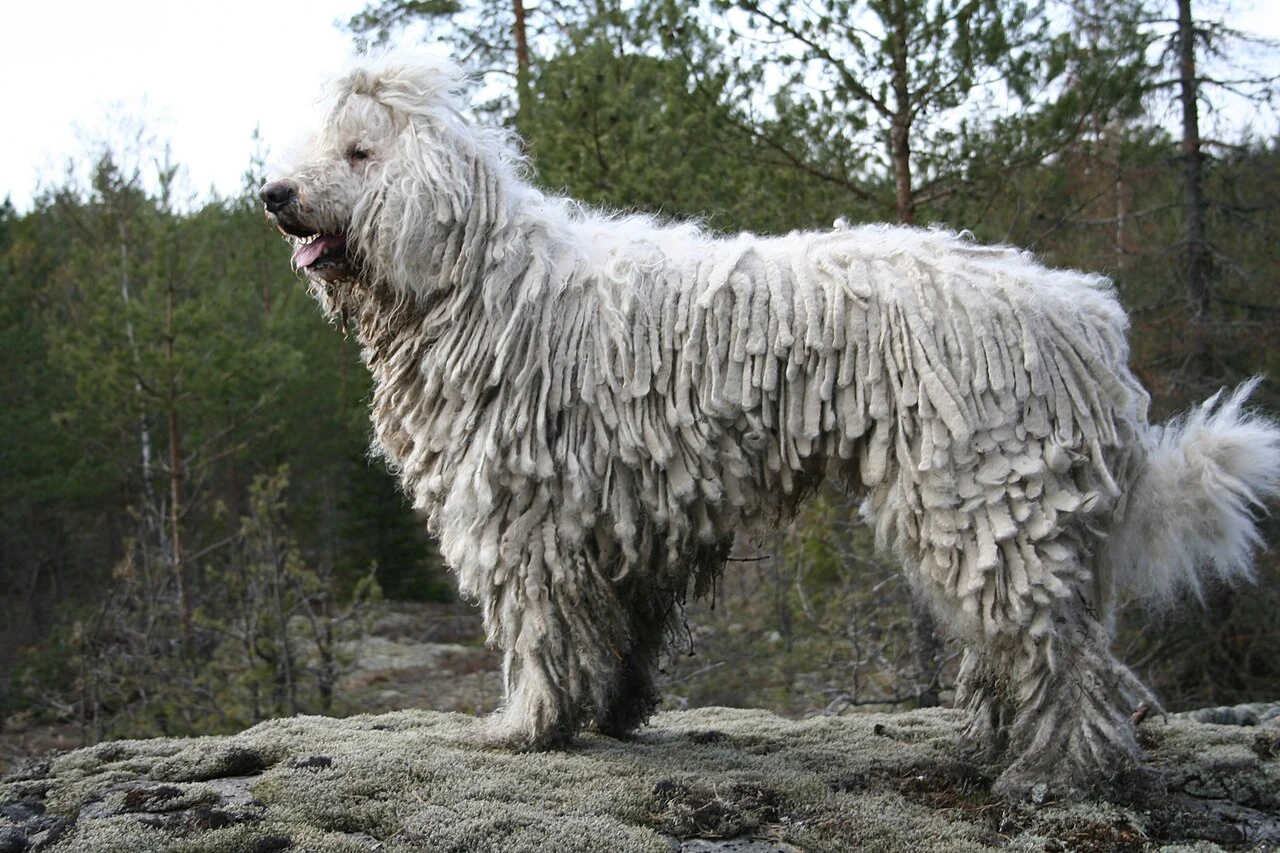
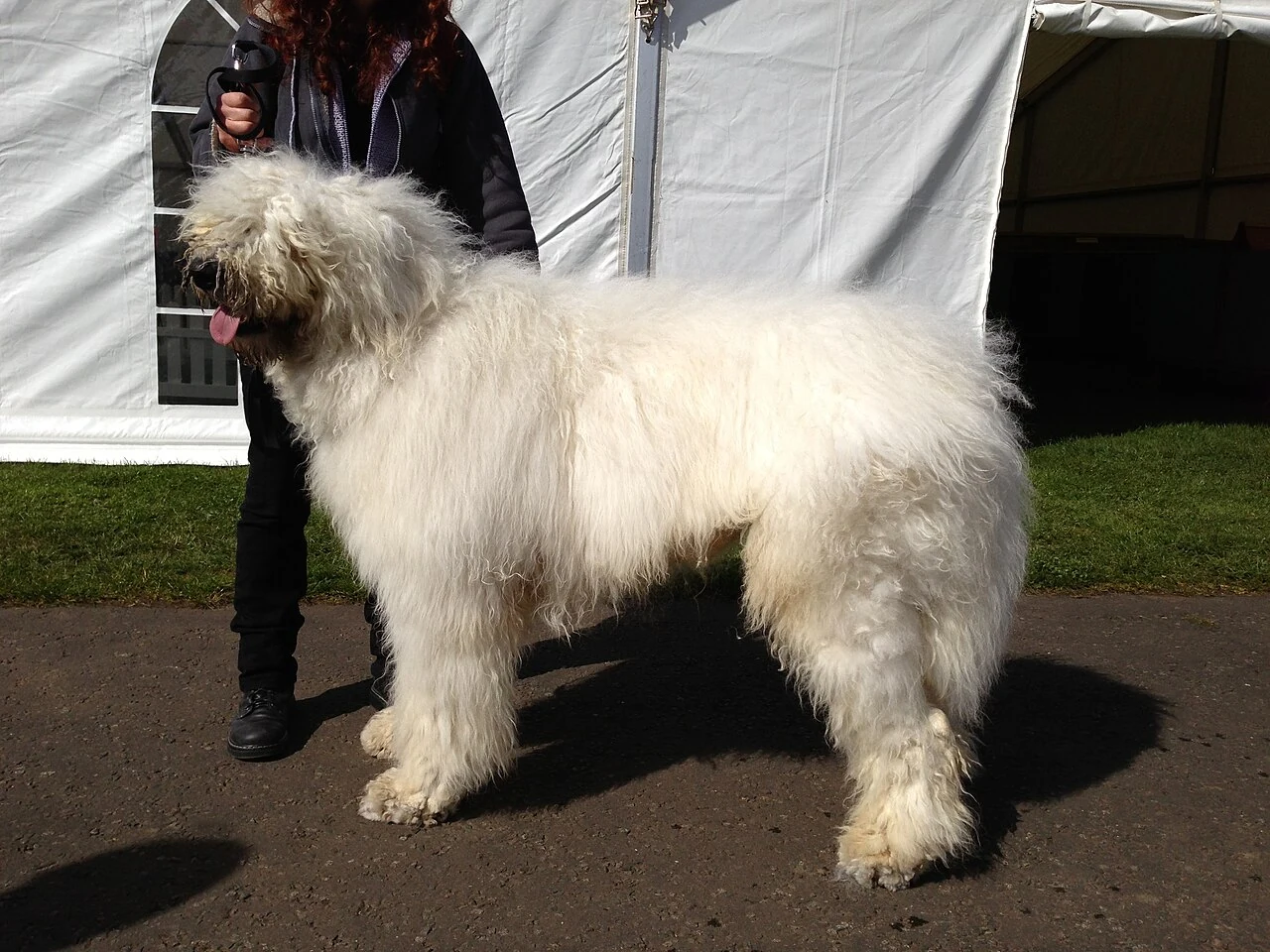
The ivory white coat develops long cords as the dog matures, covering a large, powerful body. The international canine organisation FCI specifies minimum shoulder heights of 70 centimetres for males and 65 for females. Standard weights are 50 to 60 kilograms for males and 40 to 50 for females.
It can be closely attached to its family. Visitors, unfamiliar dogs or lively activity near a boundary may nevertheless engage its guarding behaviour. A home with frequent visitors therefore needs carefully prepared routines. Guests should be able to arrive while the dog initially stays in a familiar quiet place. Subsequent introductions should be supervised and suited to its experience.
An adult should be particularly attentive around children. A watchful dog may interpret loud running or rough play with visiting children differently from the people involved. These situations should therefore be guided calmly. Living with other dogs also needs careful planning rather than relying only on its attachment to its family.
Everyday life
A Komondor needs daily walks, opportunities to move and time with familiar people. It is generally not a dog wanting to retrieve balls endlessly. Calm exploration, brief exercises and shared time in a securely fenced space may suit it better. A garden helps with daily life but should not leave the dog permanently alone to react to every sound and passerby.
Guarding behaviour should be considered from the start. When someone is at the gate, an established routine of moving to a quiet place can help create distance and a manageable situation. This can first be practised without visitors and rewarded. Coming back when called should also be developed in quiet surroundings. An experienced trainer using rewards and familiar with livestock guardians can help establish appropriate steps.
Walking routes with enough space to avoid unfamiliar dogs are useful. A busy dog park often leaves little room for gradual introductions. Care arrangements and time alone should also be prepared. Before choosing the breed, visiting adult Komondors helps reveal what guarding, noise and space needs look like in everyday life.
Staying home alone
Dogs learn to stay home alone in small steps. The RSPCA advises no more than four hours at a time. Puppies and dogs that become unsettled when left alone need shorter absences and gradual practice. Arrange someone to care for your dog when you will be away longer.
Everyday dog training: recall, a loose lead and clear communication ↗
Day-to-day care
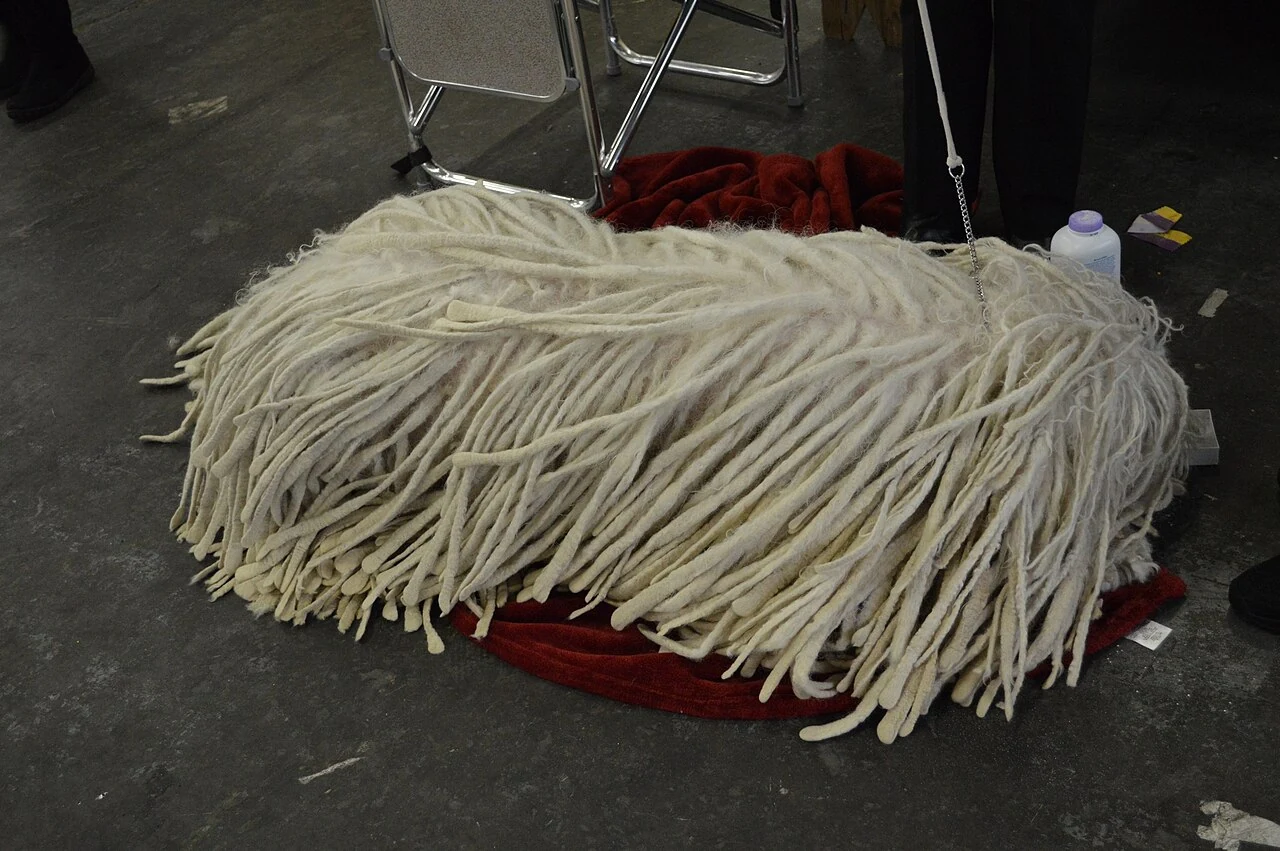
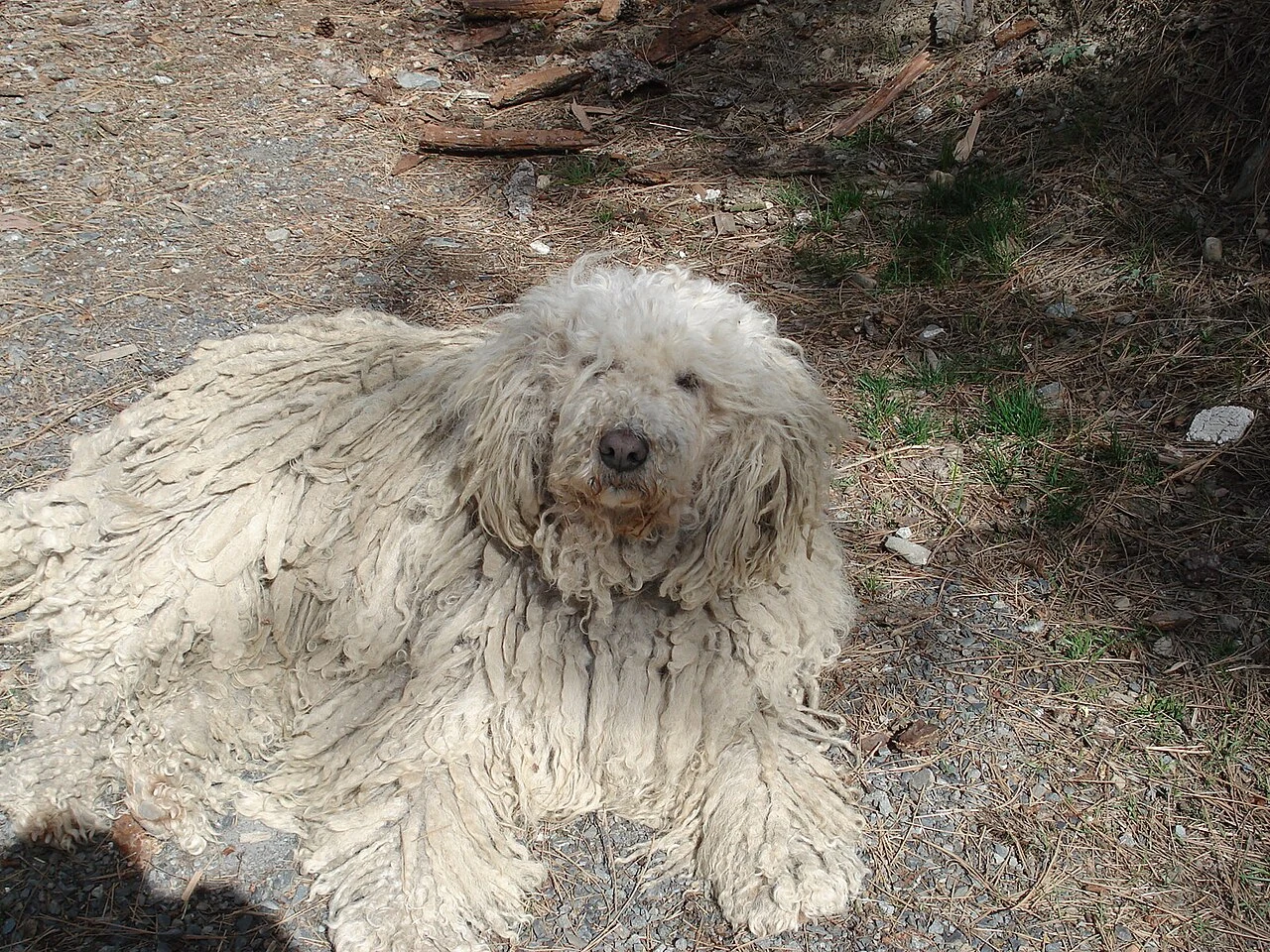
A Komondor puppy initially has a soft, loose coat. Around the first year, fine hair begins to combine with the coarser outer hair, forming the characteristic cords. These need gentle separation to prevent broad, solid mats. An experienced breeder or groomer familiar with corded coats should demonstrate the technique. The adult coat is maintained differently from ordinary long hair and is not normally brushed through.
The spaces between cords should be checked regularly for dirt, plant material and irritated skin. Washing requires thorough rinsing to remove shampoo and dirt. Complete drying through the dense coat is especially important afterwards and can take a great deal of time. Hair that feels dry outside may still be damp within. After heavy rain or swimming, the cords should also be checked to make sure they can dry fully.
Nails, teeth and ear checks also belong in the care plan. Dog toothpaste suits regular brushing. Unusual smell, redness or repeated scratching at one area should be investigated. The time involved, and professional help where needed, should be included in the cost plan.
Size and build
Calm introductions to different people and settings should be a regular part of a young dog’s life. These should provide positive experiences without pressure to make contact. Paw handling, brief skin checks and later separating individual cords can gradually become familiar through rewards. Long marches and repeated high jumps should be avoided while the body is growing.
Guarding may become more noticeable as the dog matures. A puppy that greeted every visitor still needs guided experiences and a well practised visitor routine as an adult. Alongside exercise, settling quietly in a familiar place should remain part of training.
In later life, shorter walks and surfaces with good grip can make movement easier. Regular weighing is useful because the long coat may conceal changes in body condition. Fellfolio can keep weight history, observations about getting up and examination results together.
From puppy to senior: caring for your dog through every life stage ↗
Health
The Komondor Club of America identifies hip assessments, specialist eye examinations and checks of the teeth as important examinations for breeding dogs. Before choosing a puppy, you should see and have the parents’ findings explained. Hip dysplasia means the joint lacks sufficient stability. Pain and joint deterioration can follow. Repeated lameness or difficulty rising should be investigated.
For large dogs with a deep chest, gastric dilatation and volvulus is also an important emergency. This means a swollen stomach can twist and compromise blood circulation. Restlessness, unsuccessful attempts to vomit and an increasingly swollen abdomen can be warning signs. If this is suspected, an emergency veterinary service should be contacted immediately. Waiting or trying home remedies is inappropriate.
Skin and body condition should be checked regularly beneath the dense coat. Otherwise, a sore patch or weight change may be noticed late. Notes about grooming, weight and new concerns help describe the progression more clearly at an appointment.
Lifespan
Kennel clubs give different life expectancy figures. The American Kennel Club lists ten to twelve years, while the Royal Kennel Club lists under ten.
Could this breed fit your life?
Could work well if …
- You have experience with independently watchful dogs and can prepare visitor routines and introductions.
- You can provide adequate space, daily shared exercise and suitable care.
- You want to learn corded coat maintenance and can make lasting time for it.
What to consider
- Visitors and unfamiliar dogs may engage guarding behaviour. Daily arrangements should provide safe distances and quiet retreat areas.
- The corded coat requires specialised care and considerable time to dry fully after washing.
- A large garden does not replace shared time or carefully developed training.
Similar needs, different dogs.
Selected by shared size, activity, grooming and training characteristics.
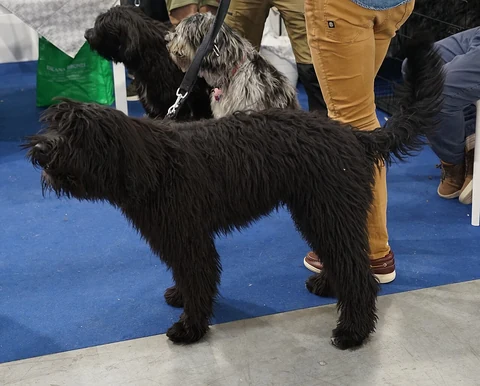
Herding dog
Bergamasco Sheepdog
The Bergamasco Sheepdog comes from the Italian Alps. Its distinctive coat develops broad flocks, or flat strands of interwoven hair. Learning to care for them should be part of preparing for this breed. Shared outings and calm, understandable training also matter when living with an observant herding dog.
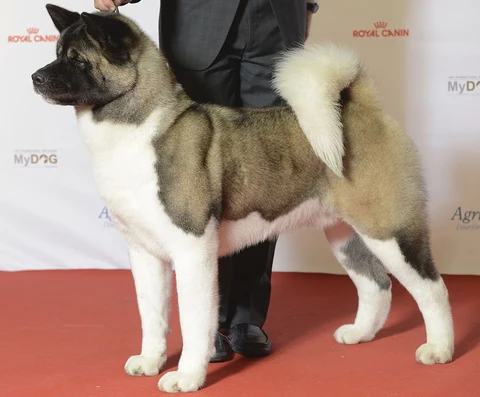
Large companion with Japanese roots
American Akita
The American Akita is a large, powerful dog with a broad head, upright ears and a dense coat. It can be deeply attached to its family while being less comfortable around unfamiliar dogs. Experienced handling and thoughtful arrangements for walks, visitors and temporary care are important.
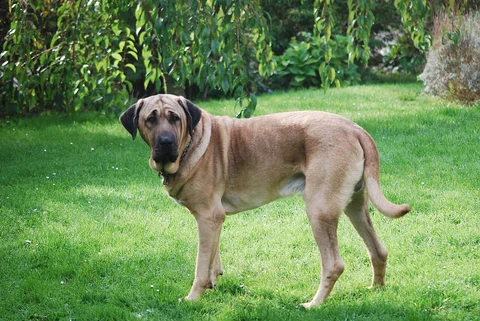
Companion and watchdog
Broholmer
A Broholmer makes an impression through sheer size. This Danish companion and watchdog often enjoys being involved in family life and needs people who can handle its strength safely. Shared walks, calm introductions to visitors and an easily accessible resting place help shape everyday life with this large dog.
Sources and photograph credit
- Teaching your dog to be left alone
Used in this profile for: Staying home alone
- Canine Hip Dysplasia
Used in this profile for: Health
- Position Statements and Humane Dog Training
Used in this profile for: Everyday life
- Komondor
Used in this profile for: Temperament, Everyday life, Day-to-day care, Size and build, Lifespan
- About the Komondor
Used in this profile for: Temperament, Everyday life, Day-to-day care, Size and build, Could this breed fit your life?
- Frequently Asked Questions
Used in this profile for: Temperament, Everyday life, Could this breed fit your life?
- komondor parent club health statement
Used in this profile for: Health
- Komondor FCI international standard
Used in this profile for: Size / Weight, Temperament
- Komondor
Used in this profile for: Lifespan, Could this breed fit your life?
- Dental Disease in Dogs
Used in this profile for: Day-to-day care
- Exercising Your Puppy
Used in this profile for: Size and build
- Training Your Dog to Be Left Alone
Used in this profile for: Everyday life
- Children and Dogs
Used in this profile for: Temperament
- Train Your Dog to Come When Called
Used in this profile for: Everyday life
- Bloat: Gastric Dilatation and Volvulus in Dogs
Used in this profile for: Health
Photo credits
Side view · Komondor IMG 0329.JPG · Kari · CC BY 2.5 · Edited

Puppy · Komondor male 01.jpg · Sagaciousphil · CC BY-SA 3.0 · Edited

Coat and features · Komondor lying.jpg · David Blaine from Spokane, USA · CC BY 2.0 · Edited

Everyday life · Komondor - GCH Quintessential Chauncey7 (15982607623).jpg · Pets Adviser from Brooklyn, USA · CC BY 2.0 · Edited
.jpg)