 fellfolio
Irish bird dog with a red and white coat and considerable stamina
Irish Red and White Setter
The Irish Red and White Setter is a powerful, enduring bird dog with white and vivid red patches. It can be an affectionate family companion, but needs plenty of exercise and varied activities with its people. Its history reaches further back than that of the solid red Irish Setter.
At a glance
- Size
- Large
- Height at shoulder
- 57 to 66 cm
- Lifespan
- 11 to 15 years
- Activity
- High
- Grooming
- Several times weekly
- Training
- Patience & clear guidance
- Owner experience
- Experience recommended
Red and white with a long working history
Red and white setters were established in Ireland before the solid red type became widespread. Their job was to locate game birds and indicate their position. The name setter comes from the dog’s “setting” behaviour. Early dogs crouched so hunters could cast nets over the birds. Hunting methods changed, while locating and indicating birds remained central skills.
The red setter became increasingly fashionable at dog shows in the late nineteenth century, and the red and white type almost disappeared. Dedicated breeders began rebuilding its numbers during the 1920s. Today the Irish Red and White Setter is recognised as a separate breed.
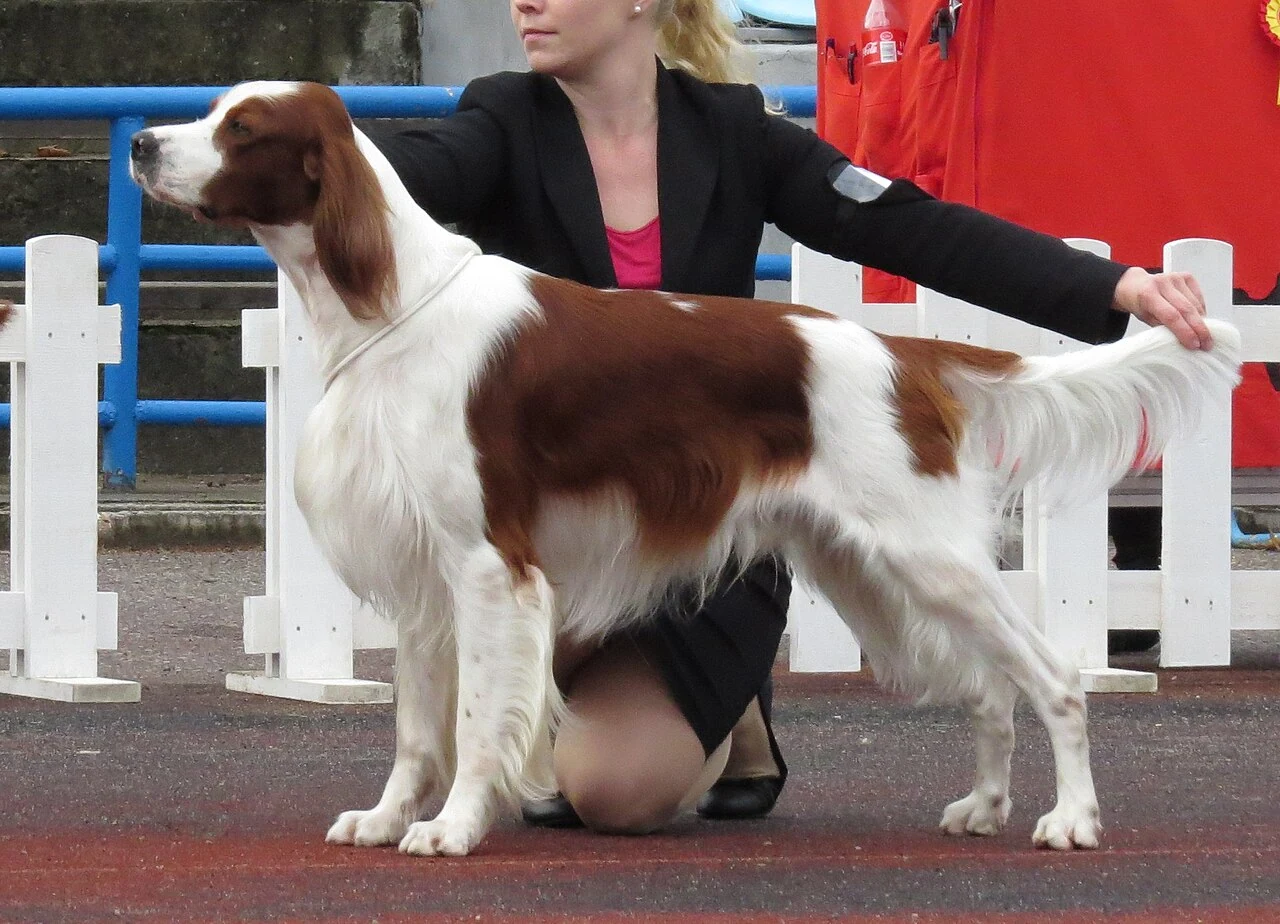
The coat has a white base with distinct red patches and longer, fine hair on the ears, chest, legs and tail. The international canine organisation FCI gives desirable shoulder heights of 62 to 66 centimetres for males and 57 to 61 centimetres for females. The strong body is built for sustained activity.
Many of these setters are friendly and lively with familiar people. Brief, varied lessons can help hold their attention. A bird taking flight from the grass may, however, be more compelling than a familiar cue. An adult should guide play with children. With other household pets, the individual dog’s previous experiences matter. Rabbits and guinea pigs should live in areas the dog cannot access, because chasing or grabbing them could cause serious injury.
Everyday life
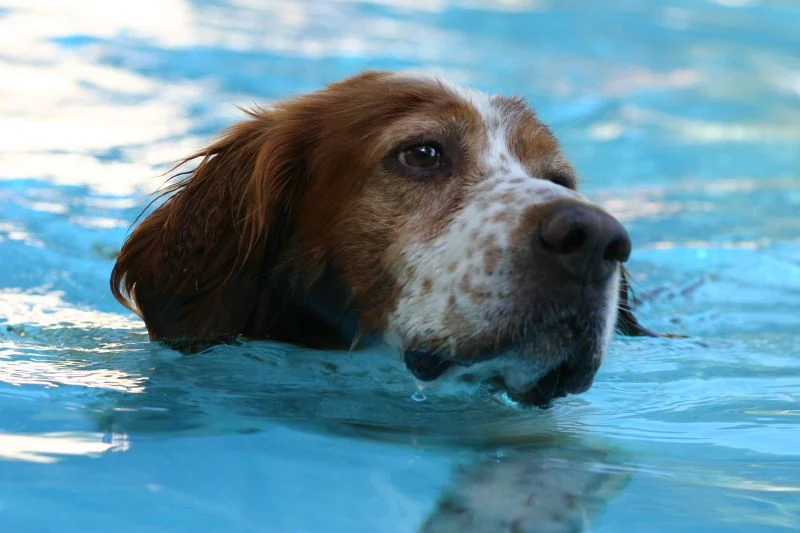
Anyone considering an Irish Red and White Setter should enjoy regular time outdoors. A healthy adult needs substantial daily exercise. Longer walks, suitable hikes and scent activities can draw on its stamina and interest in smells. A dog used to short outings should have time to build fitness gradually.
Coming back when called should first be practised with few distractions. A long lead on a harness can be useful on routes with wildlife scents or birds. A securely fenced space provides somewhere to run freely. A garden alone offers too little variety and shared activity.
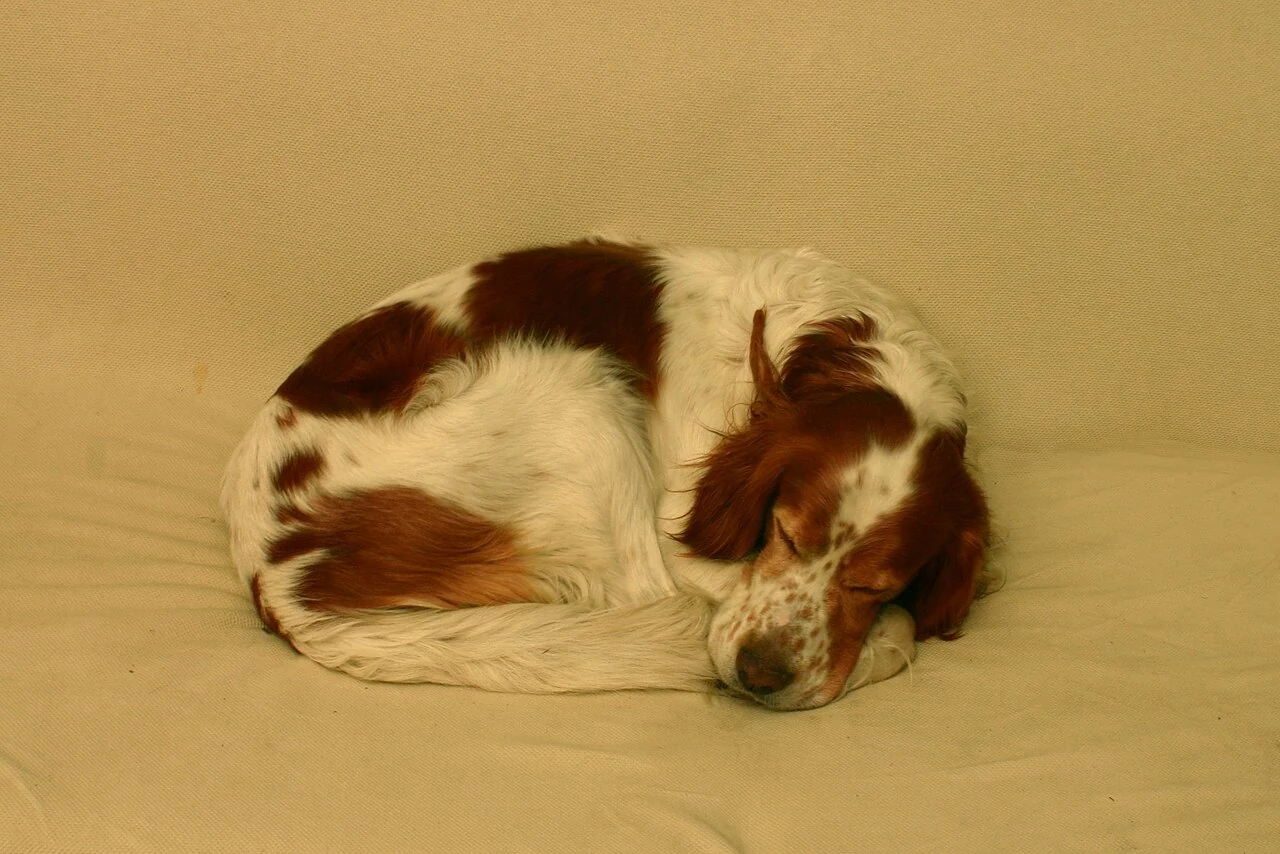
Searching or finding and retrieving a training object adds more to the day than covering distance alone. A simple exercise could involve the dog waiting while a familiar object is placed a few steps away, before being released to find it. The task should match its stage of learning. At home, quiet rest and family company matter too. Learning to be left alone should start with short, relaxed separations.
Staying home alone
Dogs learn to stay home alone in small steps. The RSPCA advises no more than four hours at a time. Puppies and dogs that become unsettled when left alone need shorter absences and gradual practice. Arrange someone to care for your dog when you will be away longer.
Everyday dog training: recall, a loose lead and clear communication ↗
Day-to-day care
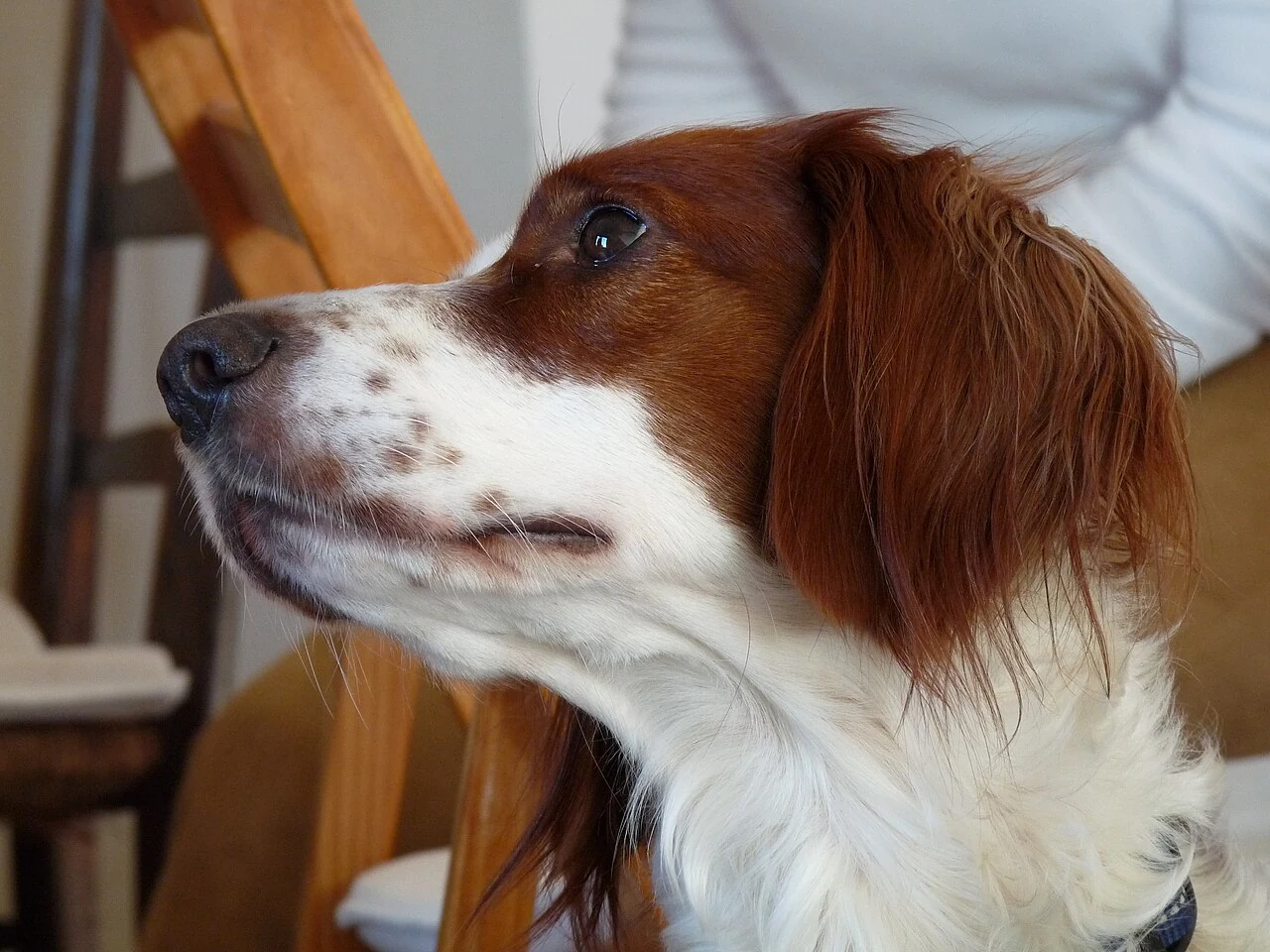
The longer hair around the ears, legs and chest should be brushed and gently combed several times a week. Tangles can develop behind the ears and on the inner legs. Small knots are easier to work through before they become dense mats against the skin.
After walks, you should check for plant material and other small objects, including between the toes. Regular ear checks are useful as well. Redness, unusual odour or repeated head shaking suggests discomfort that should be investigated. Your veterinary practice should advise on suitable cleaning products.
Appropriately trimmed nails and clean teeth also contribute to routine care. Toothbrushing with dog toothpaste can be introduced in small steps. Food and training treats should reflect actual exercise, helping this athletic dog remain lean and mobile.
Size and build
A setter puppy often wants to explore more than its growing body can sustain. Brief outings, simple learning activities and free movement in a safe space are a good start. Long jogging routes or runs beside a bicycle should wait until physical maturity. Friendly introductions and a well run puppy class can help it learn to respond amid exciting distractions.
An adult’s pace and duration of exercise should suit its fitness. In later life, shorter walks with plenty of sniffing and familiar search games can remain enjoyable. Changes in getting up, walking or recovering after exercise should be investigated. The American Kennel Club lists a life expectancy of eleven to fifteen years.
From puppy to senior: caring for your dog through every life stage ↗
Health
Britain’s Royal Kennel Club recommends hip and eye screening for breeding dogs, alongside a DNA test for CLAD, canine leukocyte adhesion deficiency. This inherited disorder affects white blood cells, which play an important part in fighting infections. Affected dogs can develop repeated serious infections, and the condition can be fatal even in young dogs.
The test distinguishes dogs without the tested variant, healthy carriers of one copy and affected dogs with two copies. A carrier is therefore not automatically ill. For breeding, the combination of both parents matters, because pairing two carriers can produce affected puppies. Before choosing a puppy, you should have both parents’ results and the resulting breeding decision explained.
Hip dysplasia involves instability of the hip joint, which can cause pain and later joint deterioration. A CLAD DNA test therefore does not replace hip screening or a specialist eye examination. For your own dog, repeated lameness, eye changes or unusually frequent infections should prompt a veterinary appointment. Fellfolio can keep findings and observations together so the previous course is available at later visits.
Could this breed fit your life?
Could work well if …
- You want an active companion for longer outings and shared learning activities.
- You can respond to its interest in birds and wildlife scents with safe training and suitable spaces.
- You can plan time for regular grooming, family companionship and checking health results.
What to consider
- Its stamina needs suitable daily activities and enough recovery time.
- Where hunting distractions are strong, a secure space or long lead should prevent a chase.
- Both parents’ CLAD results should be explained clearly when choosing a puppy.
Similar needs, different dogs.
Selected by shared size, activity, grooming and training characteristics.
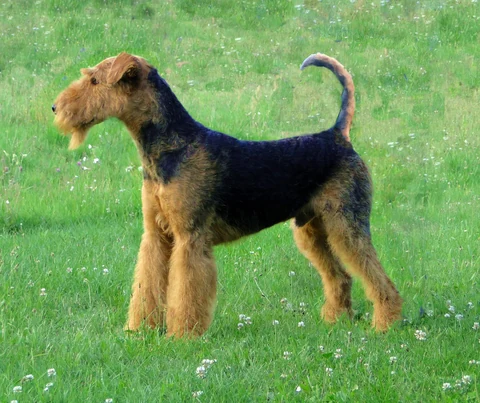
Large terrier from Yorkshire
Airedale Terrier
With its wiry coat, long head and distinctive beard, the Airedale is hard to miss. It is the largest terrier and shares much of the curiosity and independence of its smaller relatives. The breed originated along Yorkshire’s rivers, where dogs were needed for hunting on the banks. Today it suits people who enjoy being out with their dog, train patiently and make time for regular coat care.

Japanese spitz with a dense undercoat
Akita
The Japanese Akita is a large dog with a dense undercoat, upright ears and a curled tail. It can form close bonds with familiar people while remaining more reserved with strangers. Its independence and hunting instincts suit people willing to guide encounters calmly and work with it regularly.
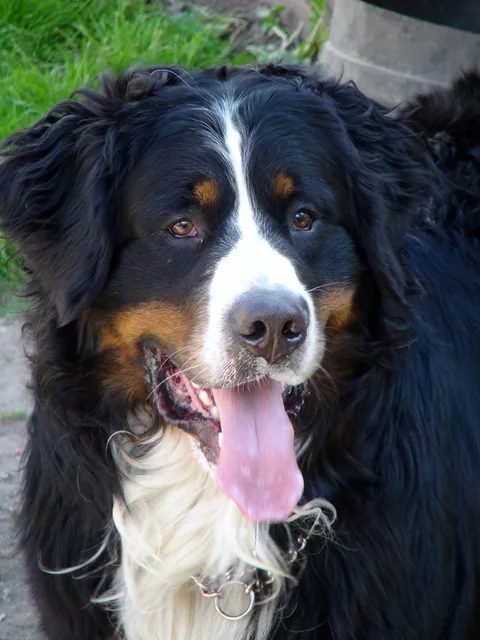
Swiss mountain dog
Bernese Mountain Dog
This large Swiss farm dog likes being close to its people. Start lead training early, groom its thick coat regularly and plan summer walks for the cooler parts of the day.
Sources and photograph credit
- Teaching your dog to be left alone
Used in this profile for: Staying home alone
- Canine Hip Dysplasia
Used in this profile for: Health
- Position Statements and Humane Dog Training
Used in this profile for: Everyday life
- Ear problems in pets
Used in this profile for: Day-to-day care
- Exercising Your Puppy
Used in this profile for: Size and build
- Training Your Dog to Be Left Alone
Used in this profile for: Everyday life
- Children and Dogs
Used in this profile for: Temperament
- Caring for Your Dog’s Teeth
Used in this profile for: Day-to-day care
- Keeping rabbits indoors
Used in this profile for: Temperament
- Train Your Dog to Come When Called
Used in this profile for: Everyday life
- Irish Red and White Setter
Used in this profile for: Temperament, Everyday life, Day-to-day care, Size and build, Lifespan, Could this breed fit your life?
- setter parent club health statement
Used in this profile for: Health
- Irish Red and White Setter FCI330
Used in this profile for: Size / Weight, Temperament, Day-to-day care
- Irish Red and White Setter
Used in this profile for: Temperament, Everyday life, Day-to-day care, Health, Could this breed fit your life?
- Canine Leukocyte Adhesion Deficiency in Irish Setters
Used in this profile for: Health
Photo credits
Side view · Irish Red And White Setter in Tallinn 5.JPG · Томасина · CC BY-SA 3.0 · Edited

Coat and features · Irws fem.jpg · Louis Bafrance · CC BY 3.0 · Edited

Everyday life · Sleeping Irish Red and White Setter.jpg · Ordinary Guy · CC BY 2.0 · Edited

In action · Dog in the swimming-pool (50252434).jpg · O. G. · CC BY 2.0 · Edited
.jpg)