 fellfolio
Mountain dog
Greater Swiss Mountain Dog
The Greater Swiss Mountain Dog is a powerful farm dog with a short, dense coat. It needs space, family contact and handling suited to its considerable strength.
At a glance
- Size
- Large
- Height at shoulder
- 60 to 72 cm
- Weight
- 39 to 64 kg
- Lifespan
- over 10 yearsUK Royal Kennel Club breed profile
- Activity
- Moderate
- Grooming
- Weekly
- Training
- Patience & clear guidance
- Owner experience
- First dog with support
A farm dog built for real work
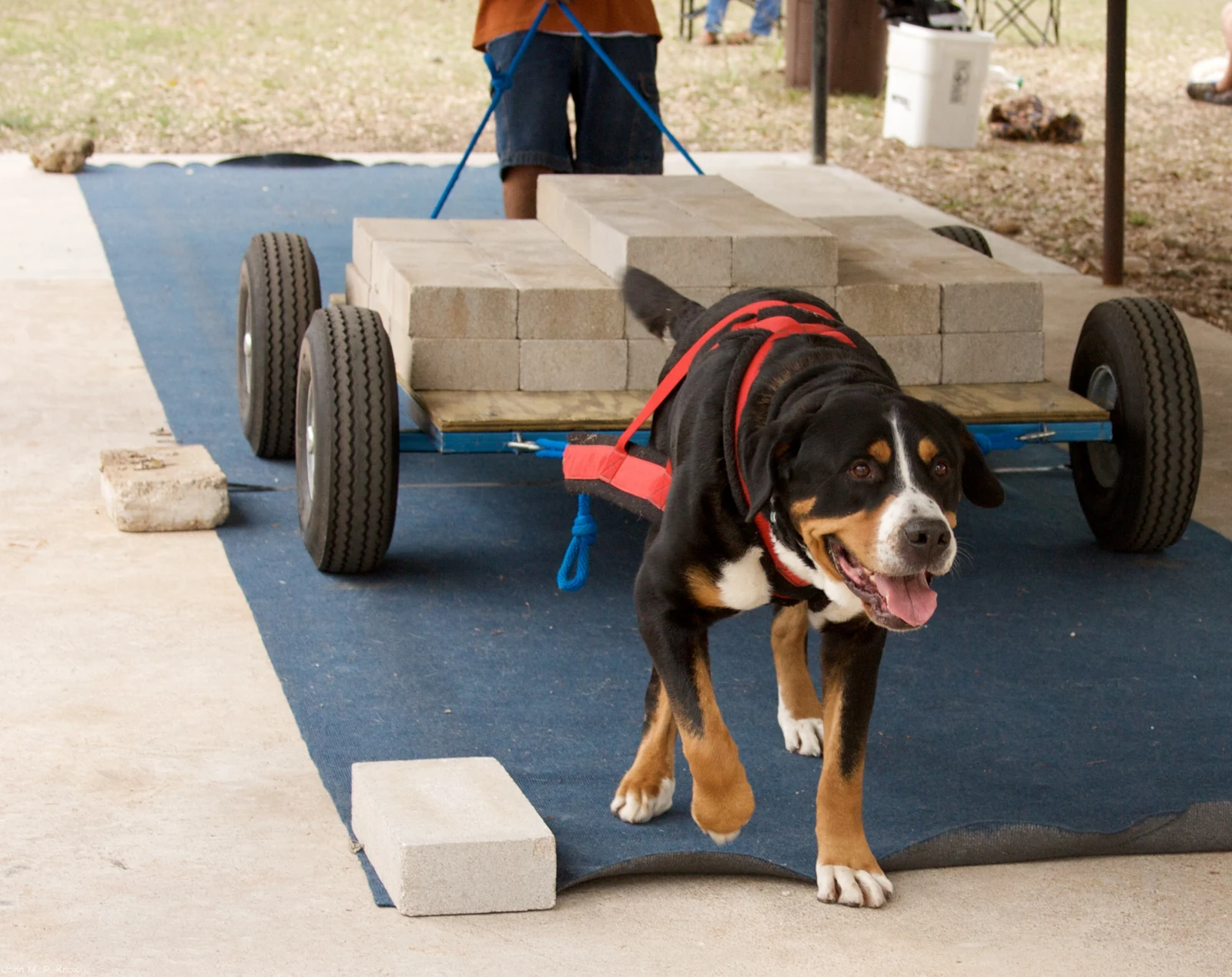
In Switzerland the breed moved cattle, watched farms and pulled carts carrying milk or cheese. Many Greater Swiss Mountain Dogs are friendly with familiar people and alert to new arrivals. Their strength shows even in adolescence: a dog that pulls on lead or greets a visitor at full speed is not easy to hold.
Practise waiting at doors, loose-lead walking and brief, calm greetings from the start. Do not leave children and a Swissy to wrestle unsupervised; an accidental bump is enough at this size. It needs a place in family life, not an isolated role as a garden guard.
Everyday life
The Royal Kennel Club offers up to an hour of daily exercise as a broad breed category. Regular walks and tasks completed with you suit a healthy adult. Pulling a small cart or carrying equipment may appeal later, but loaded work belongs in a plan only after the dog has matured and been assessed physically.
While growing, choose steady walks and pleasant learning over forced distance running. Heat is difficult for many heavy dogs. Move summer activity to cooler hours and provide water, shade and a cool place indoors.
Staying home alone
Dogs learn to stay home alone in small steps. The RSPCA advises no more than four hours at a time. Puppies and dogs that become unsettled when left alone need shorter absences and gradual practice. Arrange someone to care for your dog when you will be away longer.
Day-to-day care
The close, dense double coat usually needs a thorough weekly brush. Much more undercoat comes loose during seasonal shedding. The hair may be short, but there can still be a great deal of it around the house. Check nails and pads because the feet carry substantial weight.
Hanging ears should stay dry and free of odour; recurring head shaking or redness needs checking. Teach a puppy to cooperate with foot and dental care. A relaxed, cooperative giant is far easier to groom and examine as an adult.
Size and build
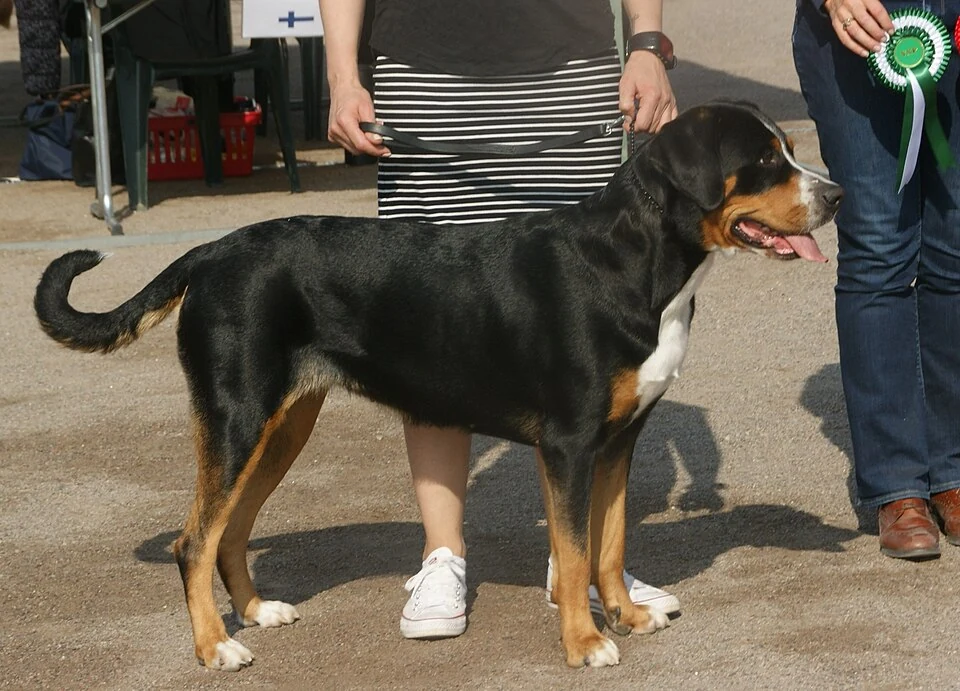
The Greater Swiss Mountain Dog is the heaviest of the Swiss mountain dogs. The British standard gives 65 to 72 cm at the shoulder for males and 60 to 68 cm for females. The American parent club offers broad adult weight guides of about 52 to 64 kg for males and 39 to 50 kg for females. These are not target weights. The body is slightly longer than tall, with a deep chest and strong legs.
Black with tan and white markings is characteristic. Unlike the Bernese Mountain Dog, this breed has a much shorter coat. Free, enduring movement and sound body condition matter more than sheer bulk.
Health
The Royal Kennel Club recommends hip and elbow grading. The American parent club adds shoulder and eye checks and identifies joint problems, epilepsy, bloat and splenic torsion among health concerns. Epilepsy causes recurrent seizures. Splenic torsion means that the spleen twists, potentially disrupting its blood supply. Ask for the parents’ actual results and about illness in close relatives.
Repeated limping, trouble rising or sudden abdominal pain needs assessment. Unproductive retching, marked restlessness and a rapidly swollen abdomen may indicate gastric dilatation-volvulus and require immediate emergency care.
Could this breed fit your life?
Could work well if …
- You have space, time and a budget for a very large dog.
- You can teach calm lead walking and greetings early and consistently.
May be more difficult if …
- A heavy dog would be difficult to manage in your home, car or stairwell.
- You want a companion for long runs in summer heat.
Similar needs, different dogs.
Selected by shared size, activity, grooming and training characteristics.
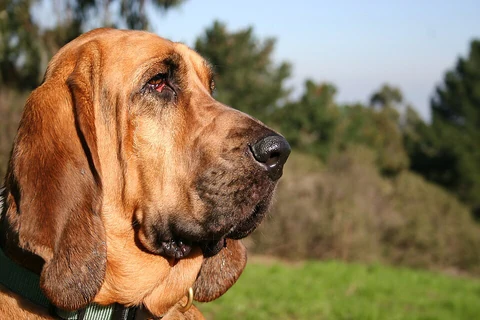
Scent hound
Bloodhound
The Bloodhound follows scent with remarkable persistence. Often friendly and calm at home, it needs time to sniff and safe handling outdoors.
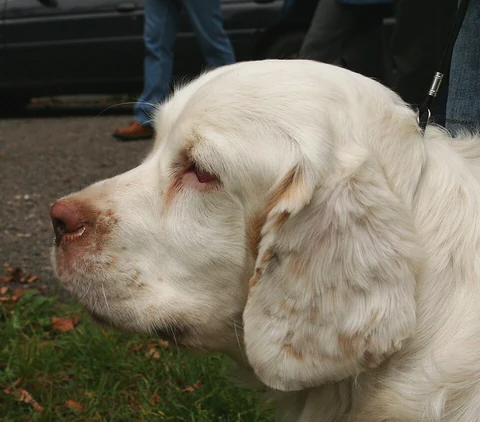
Flushing spaniel
Clumber Spaniel
The Clumber is the heaviest spaniel: low, long and strong, with a white coat and an excellent nose. It often seems relaxed at home yet follows outdoor scents with persistence.
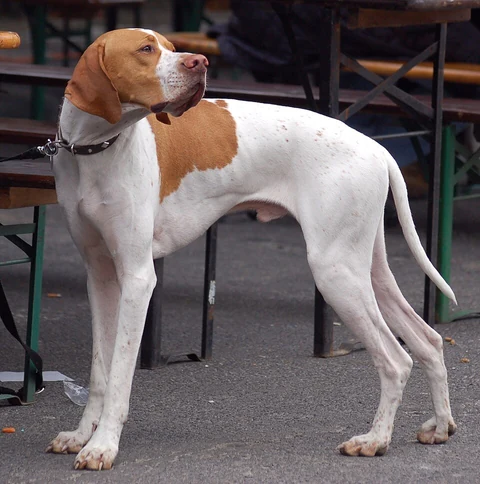
Pointer
Pointer
The Pointer ranges widely to find gamebirds, then stands still to show where they are. Its short coat is easy to care for, but it needs plenty of daily exercise.
Sources and photograph credit
- Teaching your dog to be left alone
Used in this profile for: Staying home alone
- GDV (Gastric Dilatation Volvulus) in dogs
Used in this profile for: Health
- Congratulations on your Greater Swiss Mountain Dog
Used in this profile for: Size / Weight, Temperament, Everyday life, Day-to-day care, Size and build, Lifespan, Could this breed fit your life?
- Health Concerns
Used in this profile for: Health
- Greater Swiss Mountain Dog Club of America health statement
Used in this profile for: Temperament, Everyday life, Size and build, Health, Lifespan, Could this breed fit your life?
- Great Swiss Mountain Dog, Breeds A to Z
Used in this profile for: Temperament, Everyday life, Day-to-day care, Size and build, Health, Lifespan, Could this breed fit your life?
- Great Swiss Mountain Dog breed standard
Used in this profile for: Size / Weight, Temperament, Everyday life, Size and build, Lifespan, Could this breed fit your life?
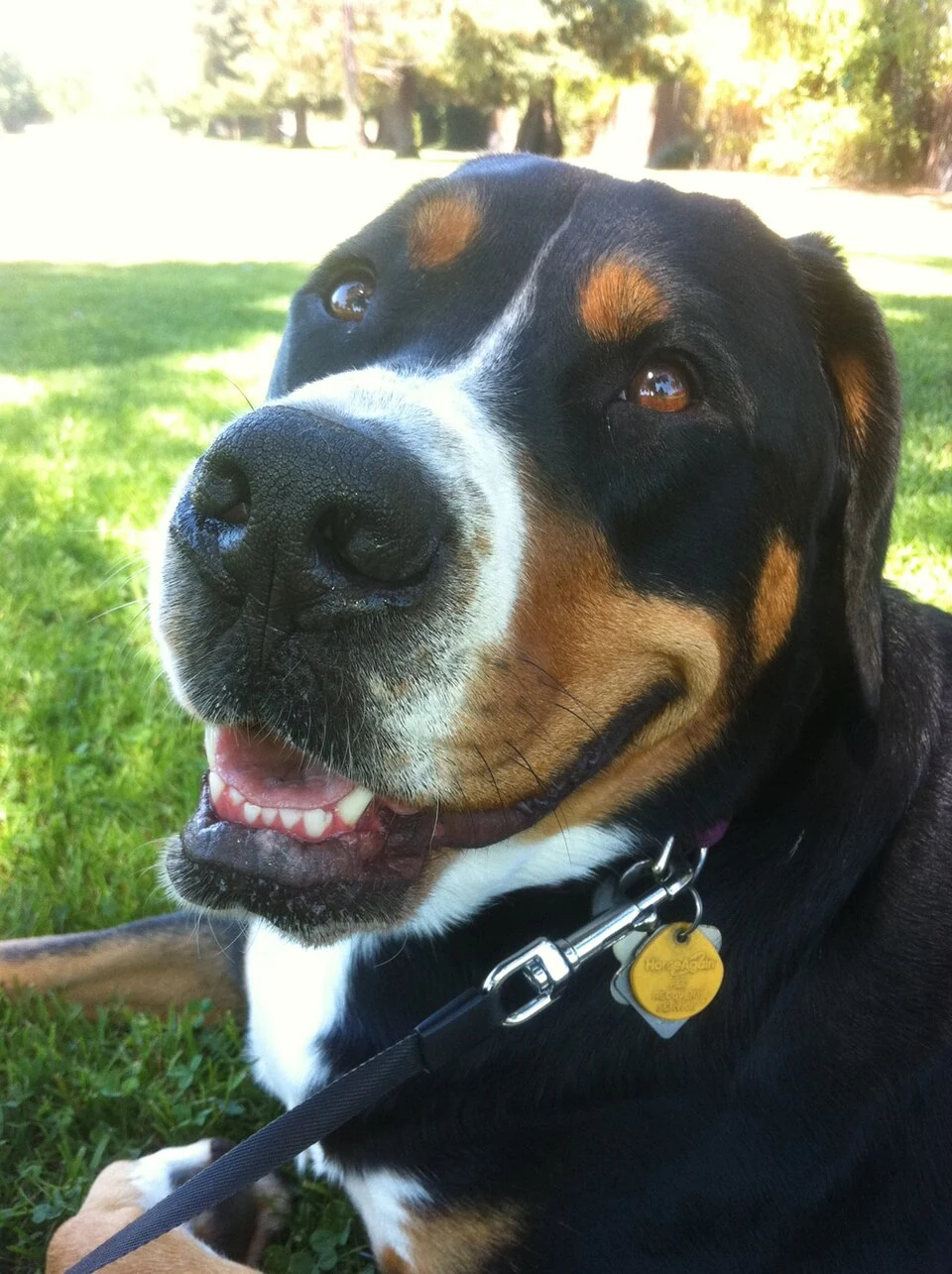
Portrait · Greater Swiss Mountain Dog - Face · Ayputs · CC BY-SA 3.0 · Edited

Side view · Greater Swiss Mountain Dog 2018 · Canarian · CC BY-SA 4.0 · Edited

In action · Eiger Pulls · John M. P. Knox · CC BY-SA 2.0 · Edited
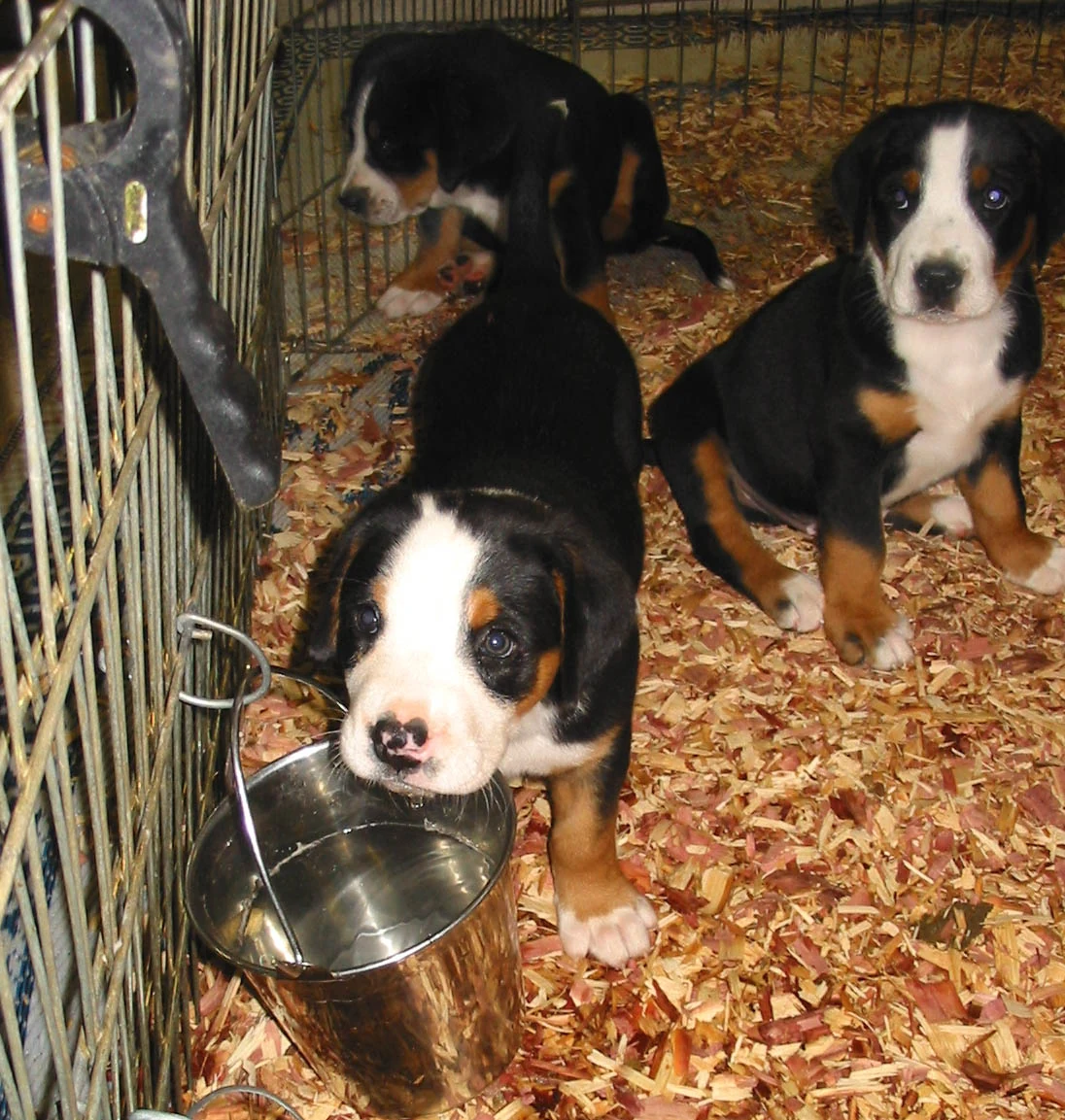
Puppy · GSMD Puppies 6Weeks · Swissy · CC BY-SA 3.0 · Edited
