 fellfolio
Retrieving gundog
Curly Coated Retriever
The Curly Coated Retriever is a large British retrieving dog with close, tight curls. It was developed to find and bring back game. Shared searching and retrieving tasks can still provide a rewarding basis for everyday life with this independently minded worker.
At a glance
- Size
- Large
- Lifespan
- over 10 years
- Activity
- High
- Grooming
- Several times weekly
- Training
- Patience & clear guidance
- Owner experience
- Experience recommended
A retriever with ideas of its own
Retrieving means picking up an object and bringing it back to a person. For the Curly, that task comes from its history as a gundog that also worked in water. The standard describes a confident, even-tempered, independent dog that may initially be reserved with strangers. When meeting new people, it should have time to approach them by choice.
Training can make good use of that independence. In a small search for a dummy, a soft object used for retrieving practice, your dog can find the answer with its nose. You can arrange the task to make success likely: start with the object visible and nearby, then move to a slightly less obvious spot. Rewards for finding, carrying and delivering make the separate parts understandable.
Brief, varied exercises give you chances to learn about each other. One task might involve waiting calmly, another finding a placed object, and another walking calmly together. The British breed club explicitly supports training without harsh handling or punitive correction. Watching your dog's responses and rewarding successful attempts makes the task you are practising together clearer.
Everyday life
A Curly needs regular exercise and opportunities to think. Retrieving practice and scent searches can provide those alongside walks. Working tests assess retriever tasks without the actual hunt. If the sport interests you, a retriever club can help you find suitable training, beginning with straightforward exercises using a practice dummy.
One example is a single object placed on a clear piece of ground. Your dog can watch where you take it, go to collect it on a familiar cue and bring it back. If delivery is still difficult, practise that short step separately with a fair exchange. This gives the exercise a clear sequence without asking your dog to cope with several hidden objects at once.
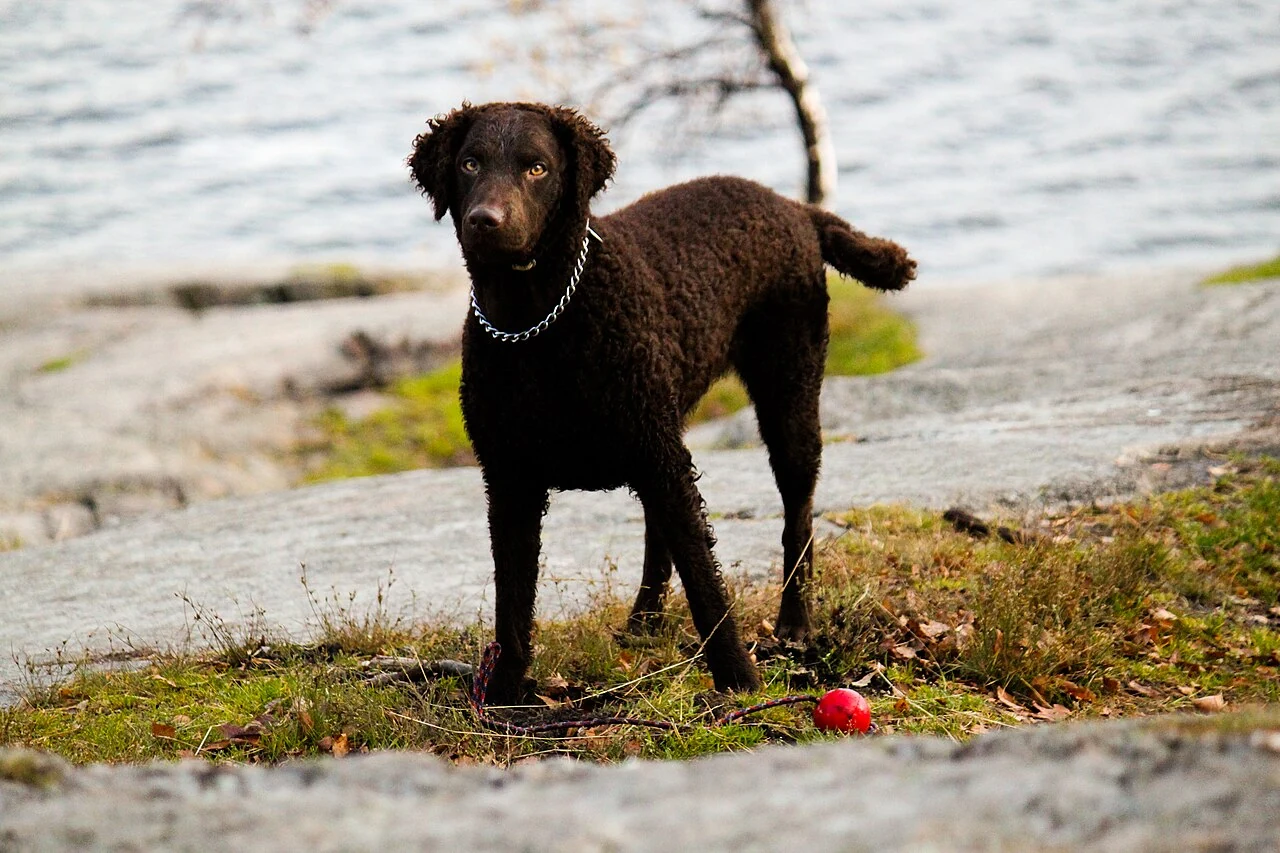
At water, you should choose a permitted, safe access point with an easy way out and introduce it gradually. Watch whether your dog shows interest and give it time to explore a shallow edge at first. Practise recall and waiting in interesting places too. Where wildlife or other hazards may be present, your dog should remain secured until those skills work dependably there.
After activities together, an undisturbed sleeping place matters. Children should leave the dog alone there and while it eats, with adults supervising contact. Long working days require reliable care arrangements. Introduce time alone through short, calm practice before planning longer absences.
Staying home alone
Dogs learn to stay home alone in small steps. The RSPCA advises no more than four hours at a time. Puppies and dogs that become unsettled when left alone need shorter absences and gradual practice. Arrange someone to care for your dog when you will be away longer.
Everyday dog training: recall, a loose lead and clear communication ↗
Day-to-day care
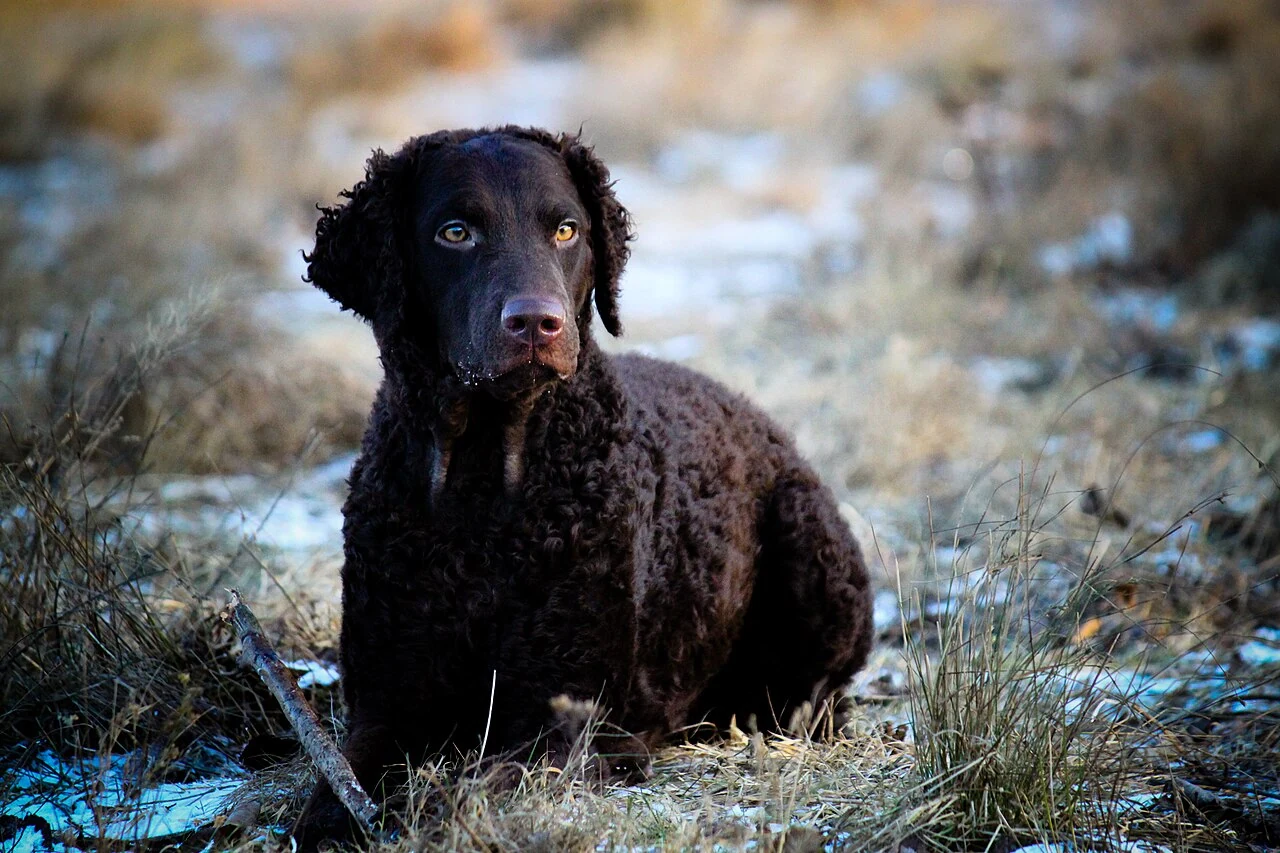
Small, close curls cover the body, while the face and front of the legs have short, smooth hair. The standard specifies no undercoat, the finer layer of hair found beneath the outer coat in many other dogs. A Curly still sheds, however, and loose hair can collect among the curls. Care should follow the actual condition of the coat, particularly during a moult.
The British breed club describes wetting the coat and gently working through it with the fingers as typical care. Suitable tools can also help where loose hair or small tangles collect. Ask an experienced groomer or breeder to demonstrate techniques for your particular dog, and avoid tugging at the coat. Grooming should also include checking the skin between the curls, particularly where tight knots have formed.
After an outing, check the paws and ears too. Grass awns are pointed plant parts that can lodge there. New bald patches, irritated skin or unusual itching should be assessed by a vet, rather than assumed to be a normal moult. Regular tooth brushing and gently practised handling checks are also part of care.
Size and build
The Curly developed in Britain as a hunting and retrieving dog. The breed club records 1860 as its first appearance at a dog show. The precise early dogs involved in its ancestry are not fully documented. Today's breed has been developed over many generations as a retriever in its own right.
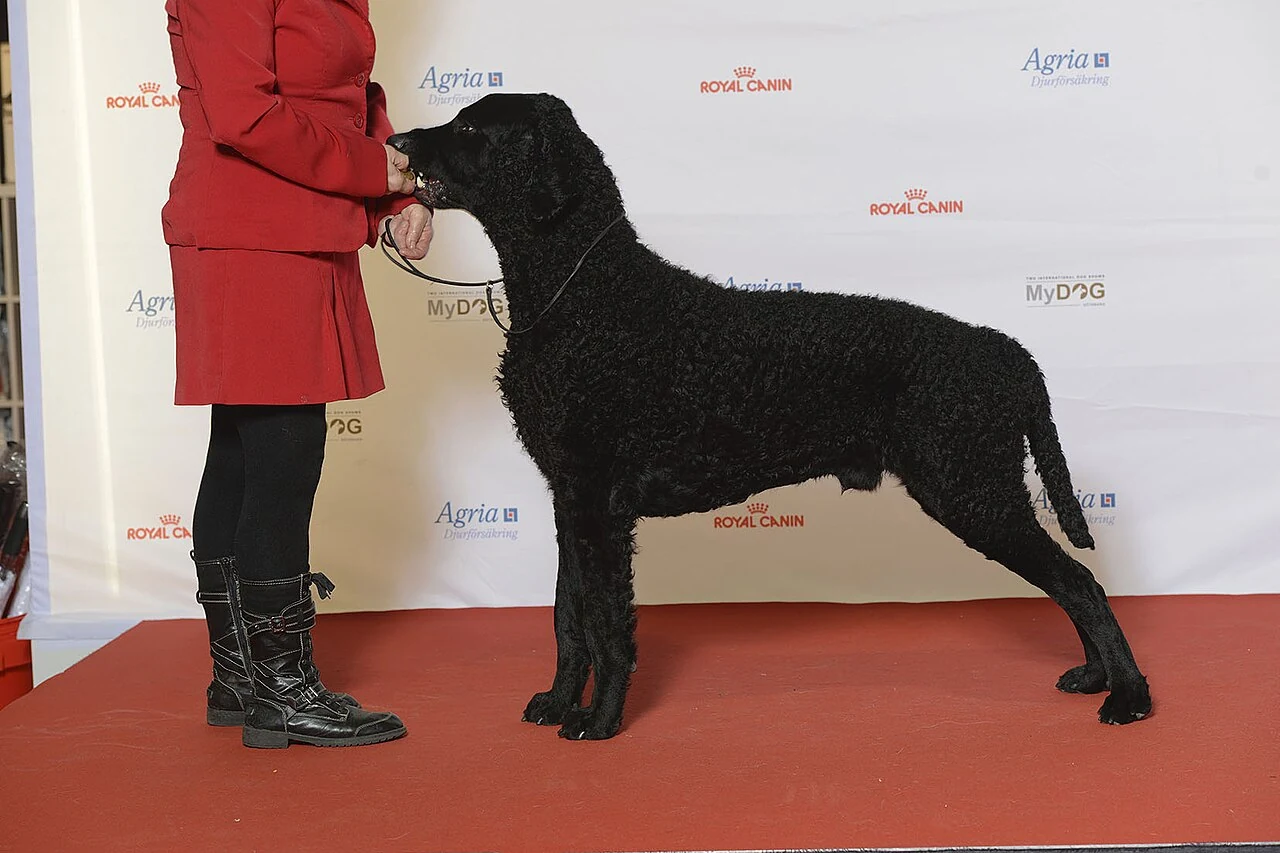
The international breed standard issued by the Fédération Cynologique Internationale (FCI) gives ideal shoulder heights of 69 cm for males and 64 cm for females. These are ideal measurements, rather than a height interval. It does not specify a mandatory weight. Accepted coat colours are black and dark brown, termed liver in the English standard.
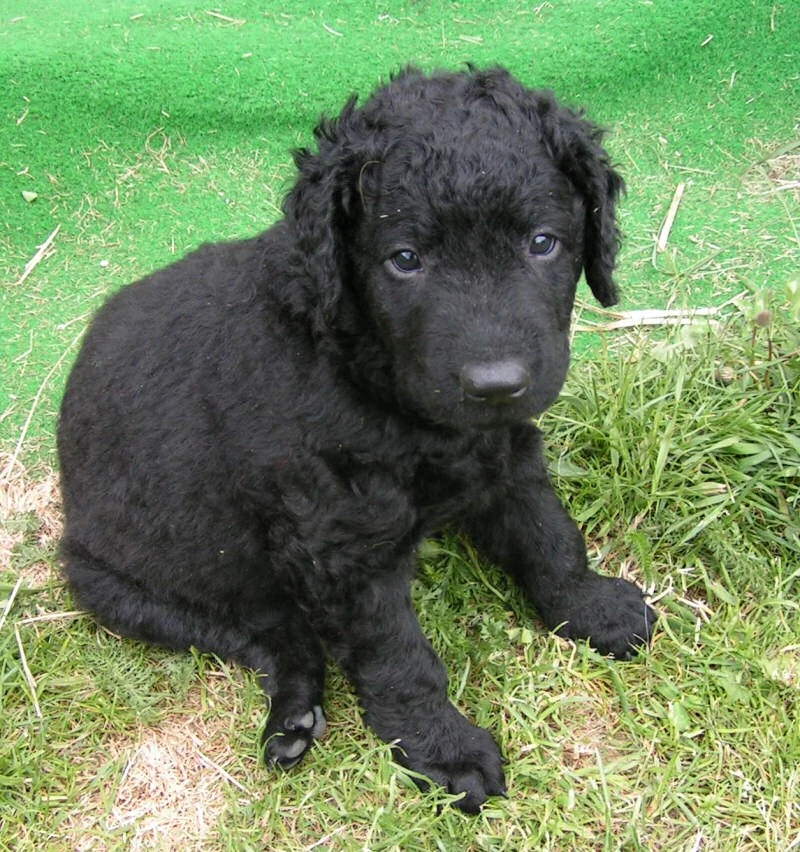
Young dogs should meet new tasks in small steps. An easy-to-reach object is enough for a first search, and a brief familiar journey can introduce settling in the car. Physical demands should suit growth. Planned opportunities to sleep help a youngster settle between new experiences.
From puppy to senior: caring for your dog through every life stage ↗
Health
Choosing a puppy should include checking clearly documented health records. The Royal Kennel Club, the British canine organisation, recommends hip and elbow screening and lists a DNA test for exercise-induced collapse (EIC), a collapse associated with exertion, among its further recommendations. The British breed club also mentions eye examinations and further DNA tests. These programmes have different priorities. Ask what has been carried out under the relevant club's current rules and which dogs the results identify.
EIC is associated with an inherited disorder of nerve and muscle function. Two copies of the tested variant can increase risk, without every affected Curly showing the same symptoms. Other tests named by the breed club include PRA. This means progressive retinal atrophy, a gradual deterioration of the retina at the back of the eye. GSD IIIa is glycogen storage disease, in which the breakdown of glycogen, the body's stored form of sugar, does not work properly. DNA tests identify particular variants and do not replace a clinical examination.
Collapse, unusual weakness or breathing difficulty need immediate veterinary help. For large dogs with a deep chest, stomach torsion is another important emergency: the stomach can swell and twist. Unproductive retching, severe restlessness and an enlarging abdomen need immediate assessment at a veterinary hospital. Fellfolio can organise reports, medication and your observations, giving the treating team access to earlier changes as well.
Could this breed fit your life?
Could work well if …
- You enjoy regular searching and retrieving with a large dog and are happy to train patiently.
- You can combine varied exercise, restful downtime and reliable care in everyday life.
- You want to learn how to care for the curls and check a breeder’s health records carefully.
What to consider
- Take the independent working style and possible reserve with strangers into account when planning introductions.
- A curly coat still sheds, and not every skin change is part of a normal moult.
- DNA tests examine particular variants. Consider the parents’ actual results alongside their clinical findings.
Similar needs, different dogs.
Selected by shared size, activity, grooming and training characteristics.
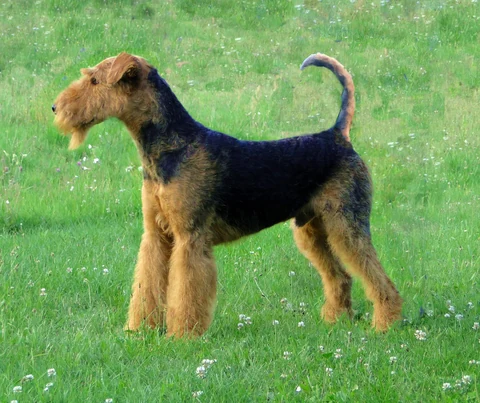
Large terrier from Yorkshire
Airedale Terrier
With its wiry coat, long head and distinctive beard, the Airedale is hard to miss. It is the largest terrier and shares much of the curiosity and independence of its smaller relatives. The breed originated along Yorkshire’s rivers, where dogs were needed for hunting on the banks. Today it suits people who enjoy being out with their dog, train patiently and make time for regular coat care.
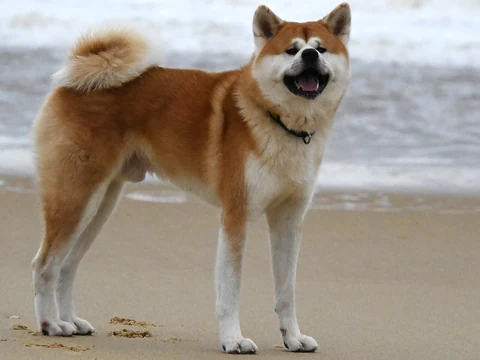
Japanese spitz with a dense undercoat
Akita
The Japanese Akita is a large dog with a dense undercoat, upright ears and a curled tail. It can form close bonds with familiar people while remaining more reserved with strangers. Its independence and hunting instincts suit people willing to guide encounters calmly and work with it regularly.
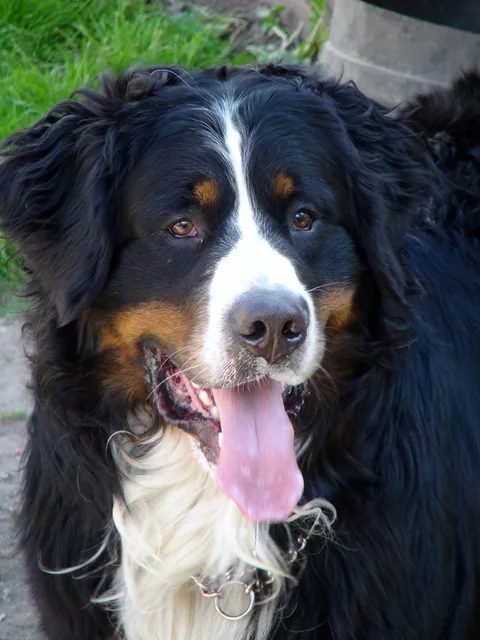
Swiss mountain dog
Bernese Mountain Dog
This large Swiss farm dog likes being close to its people. Start lead training early, groom its thick coat regularly and plan summer walks for the cooler parts of the day.
Sources and photograph credit
- Teaching your dog to be left alone
Used in this profile for: Staying home alone
- Gastric Dilatation-Volvulus
Used in this profile for: Health
- Position Statements and Humane Dog Training
Used in this profile for: Temperament
- Curly Coat
Used in this profile for: Day-to-day care, Could this breed fit your life?
- Curly Health
Used in this profile for: Day-to-day care, Health
- History of the Curly Coated Retriever
Used in this profile for: Size and build
- Retriever (Curly Coated)
Used in this profile for: Health, Lifespan
- FCI Standard No. 110: Curly Coated Retriever
Used in this profile for: Size / Weight, Temperament, Day-to-day care, Size and build, Could this breed fit your life?
- Gundog Work
Used in this profile for: Temperament, Everyday life
- Working Tests
Used in this profile for: Everyday life, Could this breed fit your life?
- Glycogen Storage Disease Type IIIa
Used in this profile for: Health
- Grass Seeds in Dogs
Used in this profile for: Day-to-day care
- Exercising Your Puppy
Used in this profile for: Size and build
- Training Your Dog to Be Left Alone
Used in this profile for: Everyday life
- Understanding Your Dog’s Behaviour
Used in this profile for: Temperament
- Children and Dogs
Used in this profile for: Everyday life, Could this breed fit your life?
- Caring for Your Dog’s Teeth
Used in this profile for: Day-to-day care
- Train Your Dog to Come When Called
Used in this profile for: Everyday life
- Exercise-Induced Collapse (EIC)
Used in this profile for: Health
Photo credits
Portrait · Curly coated retriever 1.jpg · Mattias Agar · CC BY-SA 2.0 · Edited

Side view · BIR Grupp 8- CURLY COATED RETRIVER, Gladrags Secret Agent (24126158162).jpg · Svenska Mässan · CC BY 2.0 · Edited
.jpg)
Everyday life · Curley coated retriever5.jpg · Mattias Agar · CC BY-SA 2.0 · Edited

Puppy · Curly Welpe - 001.jpg · Martin Steiger · CC0
