 fellfolio
Scent hound
Bloodhound
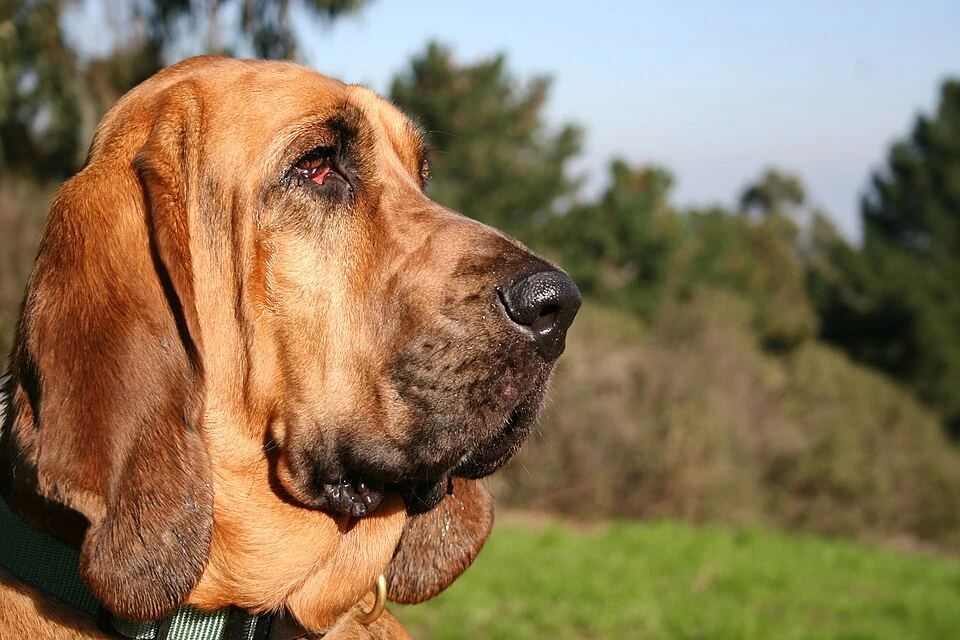
The Bloodhound follows scent with remarkable persistence. Often friendly and calm at home, it needs time to sniff and safe handling outdoors.
At a glance
- Size
- Large
- Height at shoulder
- 58 to 69 cm
- Weight
- 36 to 50 kg
- Lifespan
- under 10 yearsUK Royal Kennel Club breed profile
- Activity
- Very high
- Grooming
- Weekly
- Training
- Patience & clear guidance
- Owner experience
- Experience recommended
A scent trail can direct the whole walk
Bloodhounds have followed game and human trails for centuries. On walks they often stop to investigate a scent. Allow plenty of time for these sniffing breaks. Many are gentle and sociable indoors, yet a hound on a trail may not answer a spoken cue at once.
Reward returning in easy places before adding distractions. Clear, kind practice suits this sensitive dog better than pressure. Its size means supervising time with children. Smaller animals can be especially interesting to a dog bred to track.
Everyday life
The UK veterinary charity PDSA advises at least two hours of exercise a day, spread over several walks. Choose routes with plenty of time for sniffing. A simple trail leading to a hidden toy or familiar person gives the dog a fitting task. Off-lead running belongs in a secure enclosure: a Bloodhound may follow scent far and can find unexpectedly small gaps in fencing.
A harness and long line let it investigate while you retain control. Start loose-lead practice early; an adult Bloodhound can pull with considerable force.
Staying home alone
Dogs learn to stay home alone in small steps. The RSPCA advises no more than four hours at a time. Puppies and dogs that become unsettled when left alone need shorter absences and gradual practice. Arrange someone to care for your dog when you will be away longer.
Day-to-day care
The short coat usually needs only a weekly brush. Skin folds and long hanging ears need more attention. Keep folds clean and dry, and check the ears for redness, odour or pain. Moisture and poor airflow can make infection more likely.
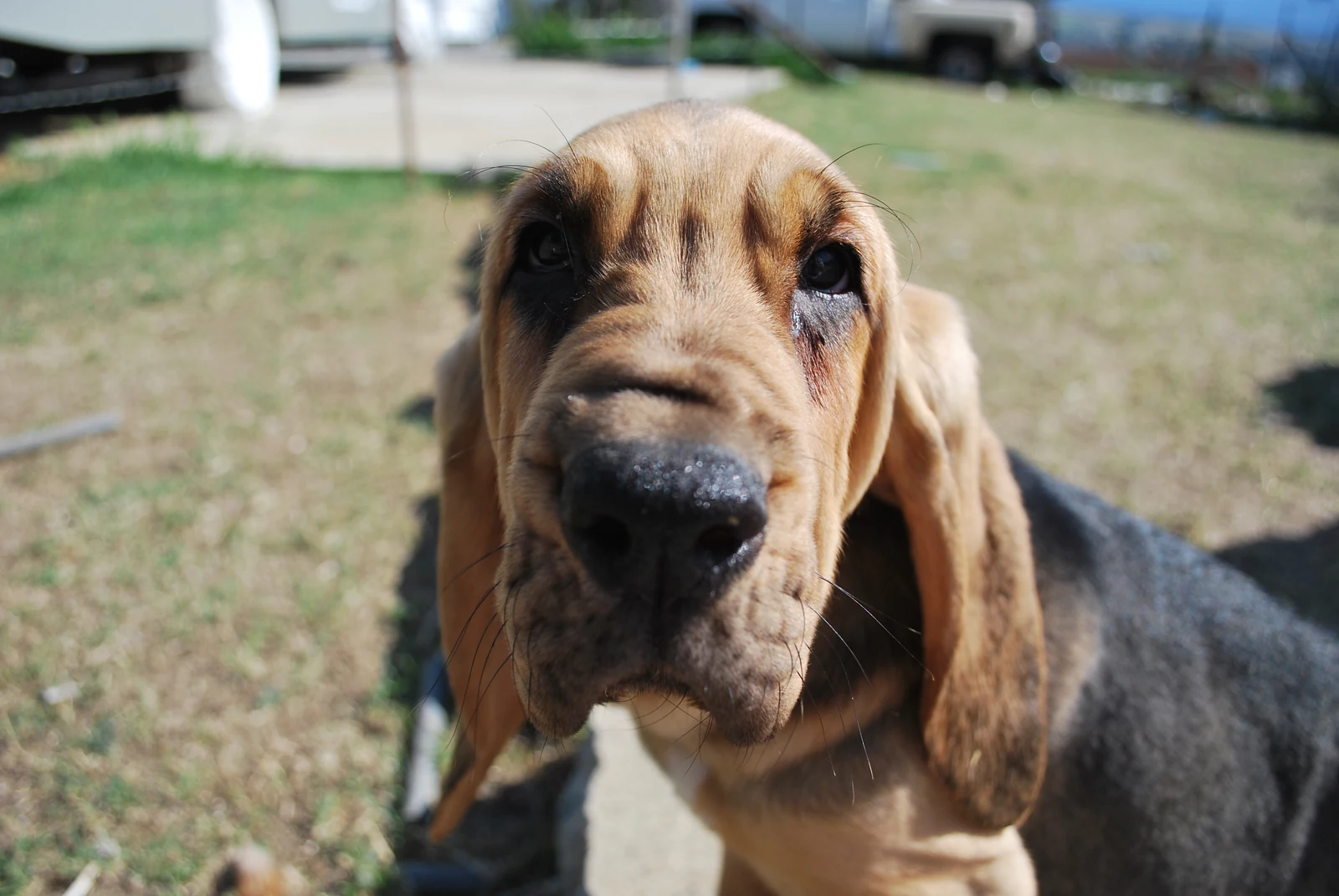
Loose skin around the eyes is more than a photographic feature. Check that the lids sit comfortably against the eyes and that the dog keeps them open without rubbing. Watering, redness or eye pain calls for a vet assessment.
Size and build
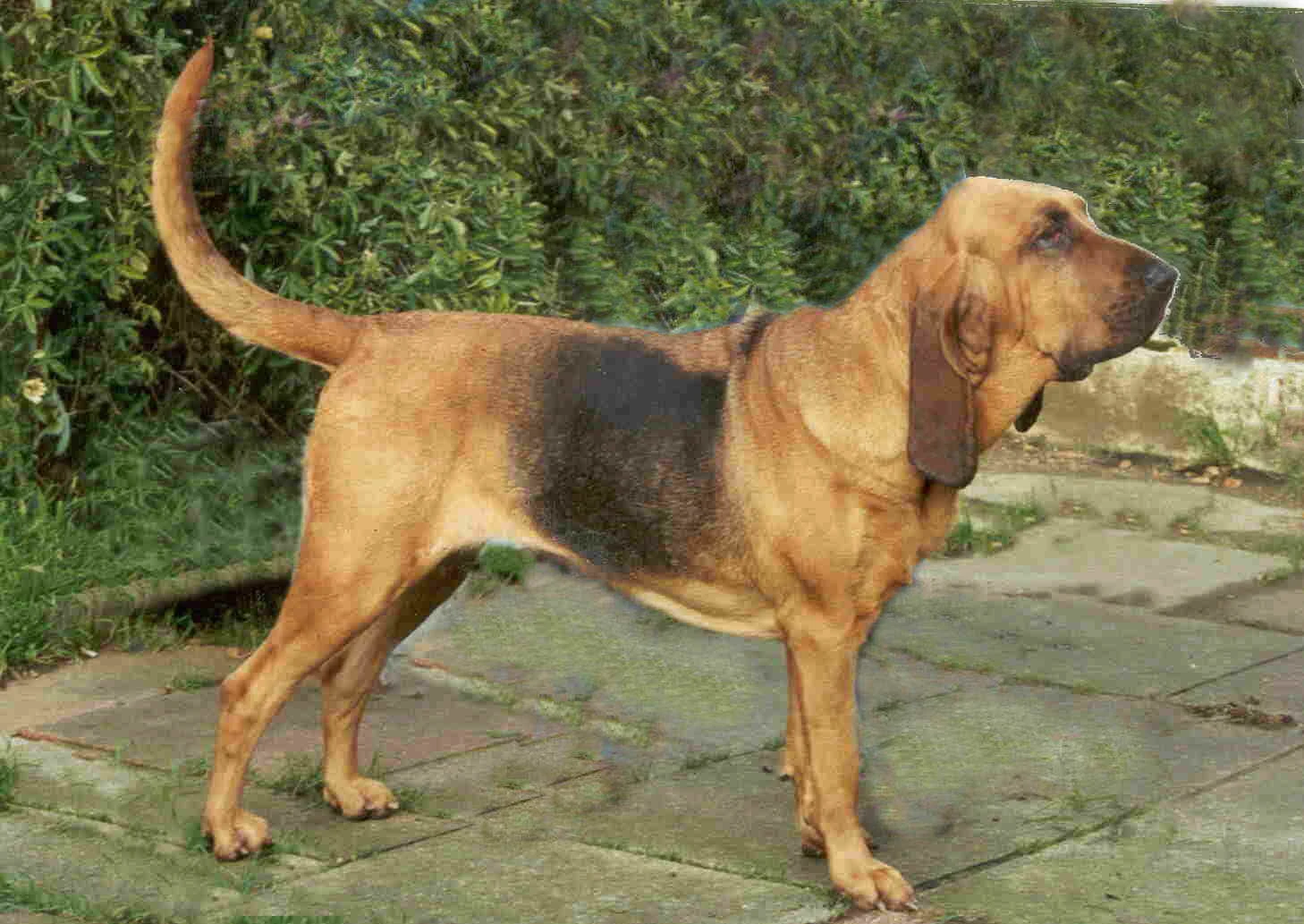
The Bloodhound is large and powerful, with a long head, deep chest and long ears. The British standard puts most adult males at 63 to 69 cm at the shoulder and females at 58 to 63 cm. The standard gives average weights of 41 kg for males and 36 kg for females, with upper figures of around 50 and 45.5 kg respectively. PDSA gives the narrower guide of 45 to 50 kg. These are reference figures, not a target weight for every dog. The short coat can be black and tan, liver and tan, or red.
Loose skin should not obstruct the dog. Clear eyes and elastic movement matter more than dramatic folds. Heavily drooping lids or deep folds that stay damp are not signs of quality.
Health
Hip and elbow dysplasia can cause pain and later joint wear. The Royal Kennel Club recommends X-ray grading of both joints and eye assessment for breeding dogs. PDSA also lists outward- or inward-turning eyelids, corneal ulcers, skin problems and ear infections. Ask for the parents’ results and notice whether a dog can open its eyes without irritation.
The deep chest also brings a risk of gastric dilatation-volvulus, in which the stomach swells and twists. Repeated retching without vomiting, restlessness and a hard or swollen abdomen warrant an immediate call to an emergency vet.
Could this breed fit your life?
Could work well if …
- You enjoy long, scent-rich walks and can safely handle a powerful dog.
- You are interested in tracking and regular care of ears, eyes and skin.
May be more difficult if …
- You want quick walks rather than time for sniffing.
- Secure exercise and long-line handling are difficult to arrange.
Similar needs, different dogs.
Selected by shared size, activity, grooming and training characteristics.
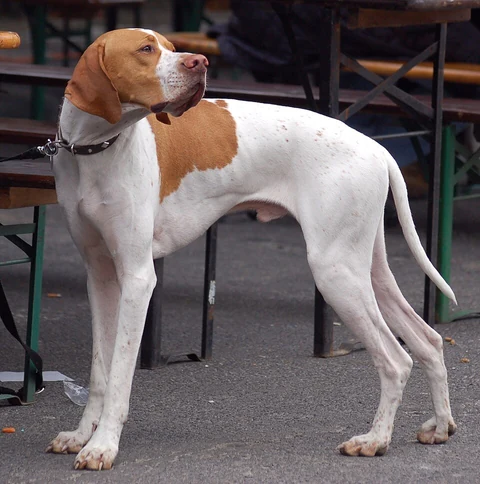
Pointer
Pointer
The Pointer ranges widely to find gamebirds, then stands still to show where they are. Its short coat is easy to care for, but it needs plenty of daily exercise.
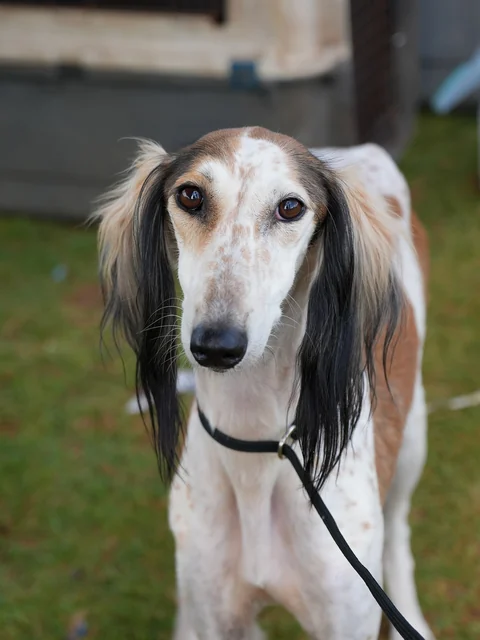
Sighthound
Saluki
A light, enduring sighthound from the Middle East. Often gentle indoors, it becomes fast and alert to movement outside.
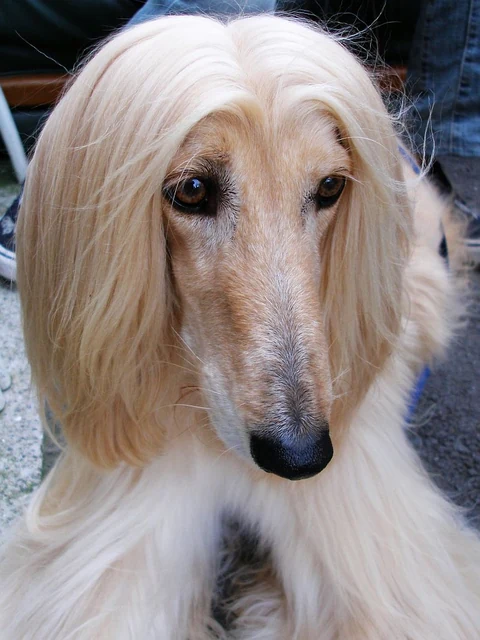
Sighthound
Afghan Hound
There is a fast hunting dog beneath the long silk coat. An Afghan Hound needs secure places to run and a substantial commitment to coat care.
Sources and photograph credit
- Teaching your dog to be left alone
Used in this profile for: Staying home alone
- Bloodhound breed information
Used in this profile for: Size / Weight, Temperament, Everyday life, Day-to-day care, Size and build, Health, Lifespan, Could this breed fit your life?
- Bloodhound, Breeds A to Z
Used in this profile for: Temperament, Day-to-day care, Size and build, Health, Lifespan, Could this breed fit your life?
- Bloodhound breed standard
Used in this profile for: Size / Weight, Temperament, Day-to-day care, Size and build, Lifespan, Could this breed fit your life?
Portrait · Bloodhound portrait · Flickr user SuperFantastic · CC BY 2.0 · Edited

Side view · Bloodhound black and tan · Cleanboot · Public domain

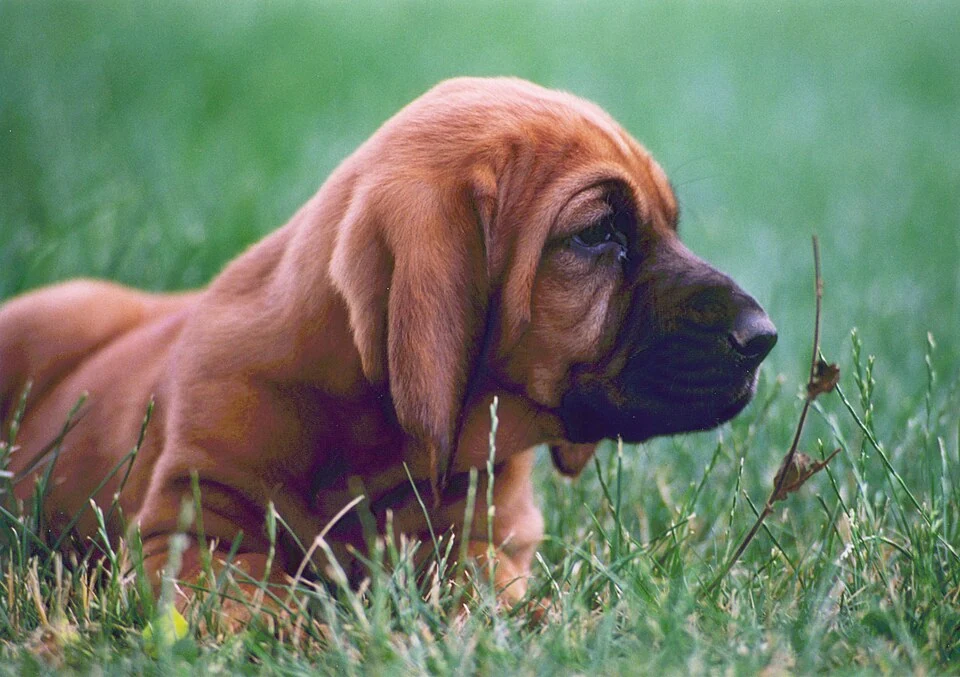
At five and a half weeks · Beulah at Five & A Half Weeks on Jan Coffman's Farm, Walkerville, MD June 1999 by Asilverstein · Asilverstein · CC BY-SA 3.0 · Edited

Bo as a young dog · Bo close up · Doreeno · CC BY-SA 2.0 · Edited