 fellfolio
Czech herding and watchdog
Bohemian Shepherd
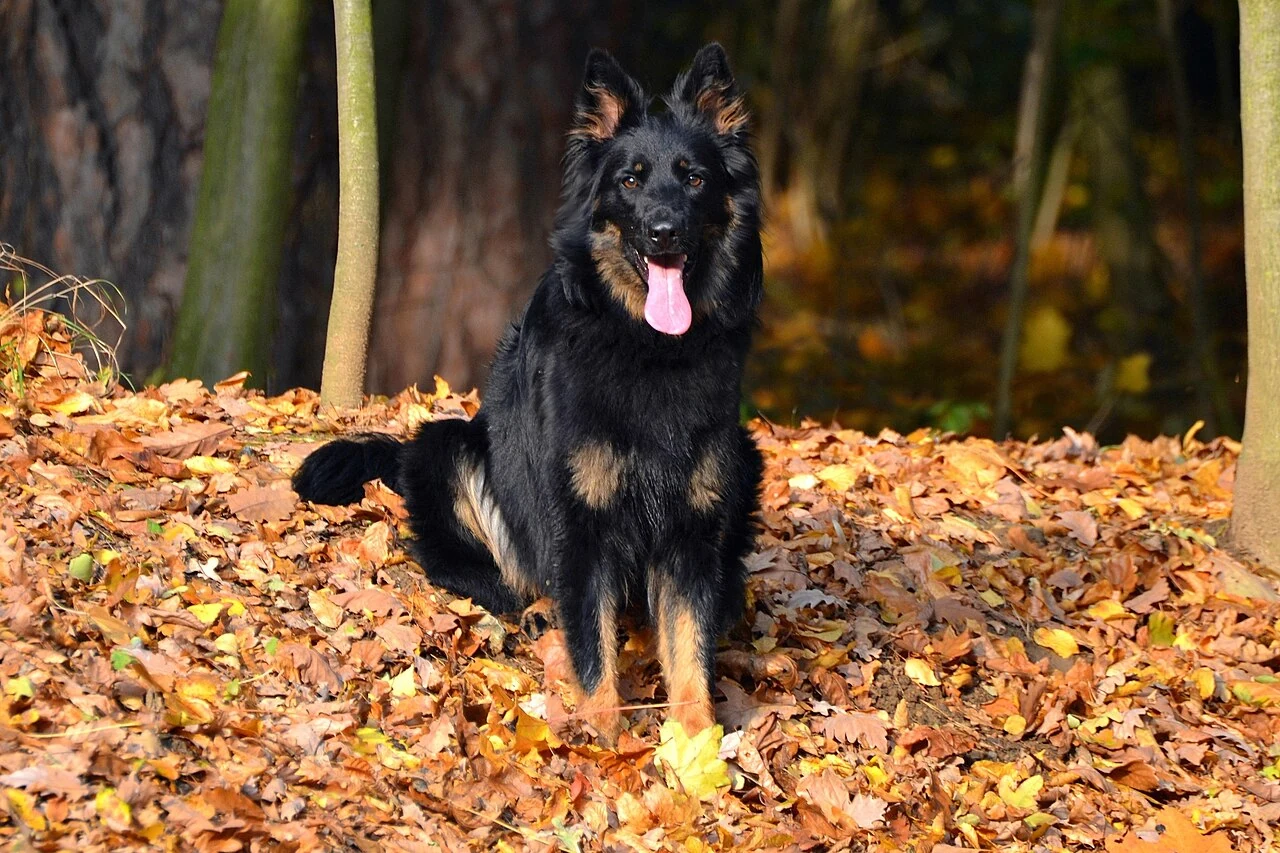
The Bohemian Shepherd, known as Chodský pes in Czech, is an agile dog with a black and tan coat and small upright ears. It often wants to be close to its people and enjoys shared activities. It could appeal to someone who enjoys long walks, scent work or dog sports and has time to involve a dog in family life.
At a glance
- Size
- Medium
- Height at shoulder
- 49 to 55 cm
- Weight
- 17 to 27 kg
- Lifespan
- 12 to 15 years
- Activity
- High
- Grooming
- Weekly
- Training
- Patience & clear guidance
- Owner experience
- Experience recommended
People-oriented, watchful and versatile
The Klub přátel chodského psa, the breed’s Czech parent club, describes a lively, attentive dog that enjoys working with people. Many Bohemian Shepherds respond enthusiastically to a shared game. A toy can be as useful a training reward as a piece of food. Friendly, clear exercises suit this often sensitive dog better than shouting or endless repetition.
Watchfulness can appear as barking when someone arrives at the house. During visits, your dog should have somewhere to observe with a little distance. A behaviour you want, such as waiting calmly, should first be practised and rewarded without guests present. How readily the dog welcomes strangers also depends on its previous experiences.
As a herding dog, it may try to keep a group together when people spread out. Adults should watch for chasing or crowding when children run around. The dog should always have somewhere quiet to retreat. Introductions to another dog or a cat should be prepared carefully. Although the breed is often described as friendly, living together depends on the individual animals' experiences and responses.
Everyday life
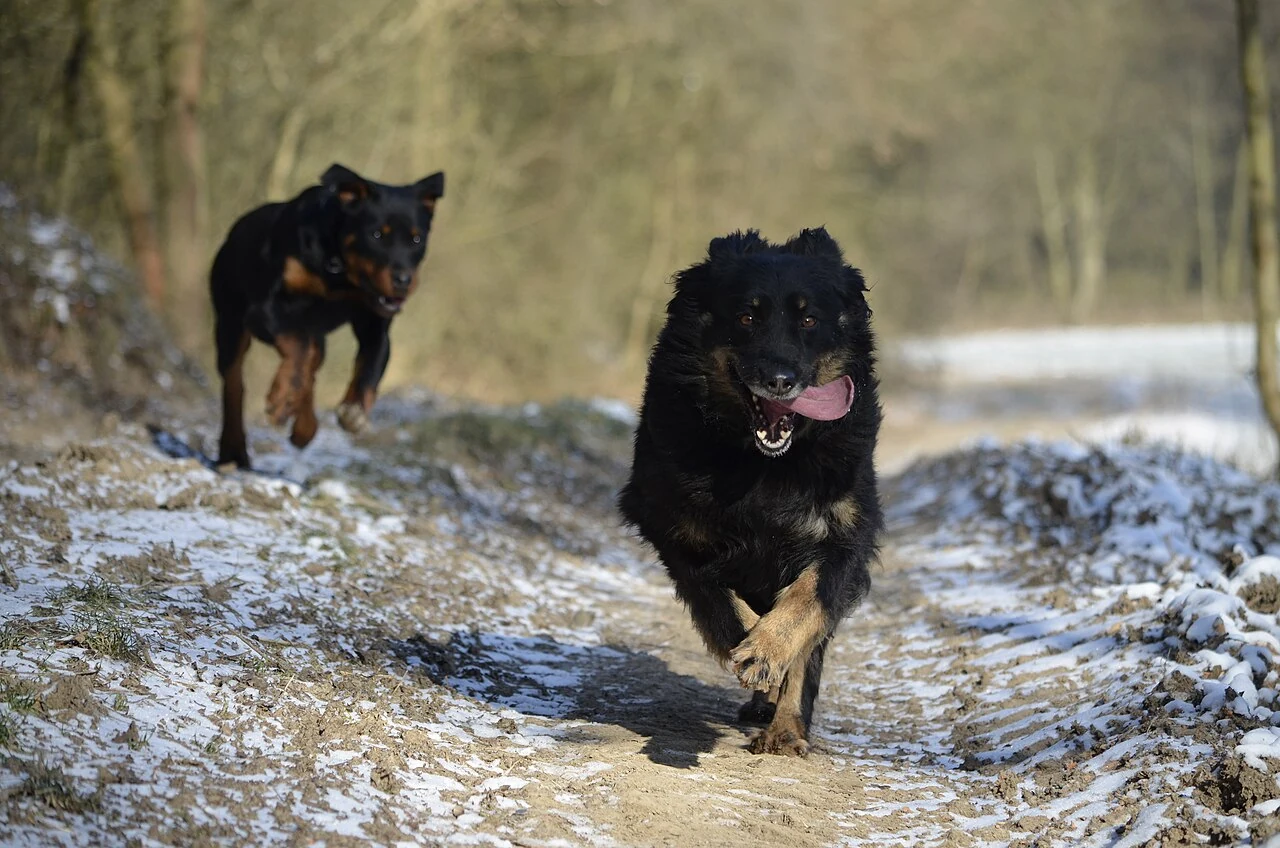
Outings together, small learning tasks and activities using its nose offer this dog plenty of variety. At home, a familiar toy can first be left in sight and later hidden behind an easily accessible object. Your dog can search for it and bring it back. Hiding places and difficulty should give it a reasonable chance of success.
The breed club also describes mantrailing. This teaches a dog to follow the individual scent trail of a particular person. With expert guidance, the dog can gradually learn to follow longer and more challenging trails. Other options include agility, an obstacle course, or learning small movements and tricks together. Suitable activities depend on the dog's interests, age and health.
A Bohemian Shepherd can live in a flat when daily outdoor activity is part of the routine. Contact with its family is particularly important. A cool resting place should be available on hot days, with longer or strenuous outings planned for cooler times. Dependable care arrangements and gradually introduced time alone also need planning. Persistent barking or pacing when you leave warrants advice from a vet and, where needed, behavioural support.
Staying home alone
Dogs learn to stay home alone in small steps. The RSPCA advises no more than four hours at a time. Puppies and dogs that become unsettled when left alone need shorter absences and gradual practice. Arrange someone to care for your dog when you will be away longer.
Everyday dog training: recall, a loose lead and clear communication ↗
Day-to-day care
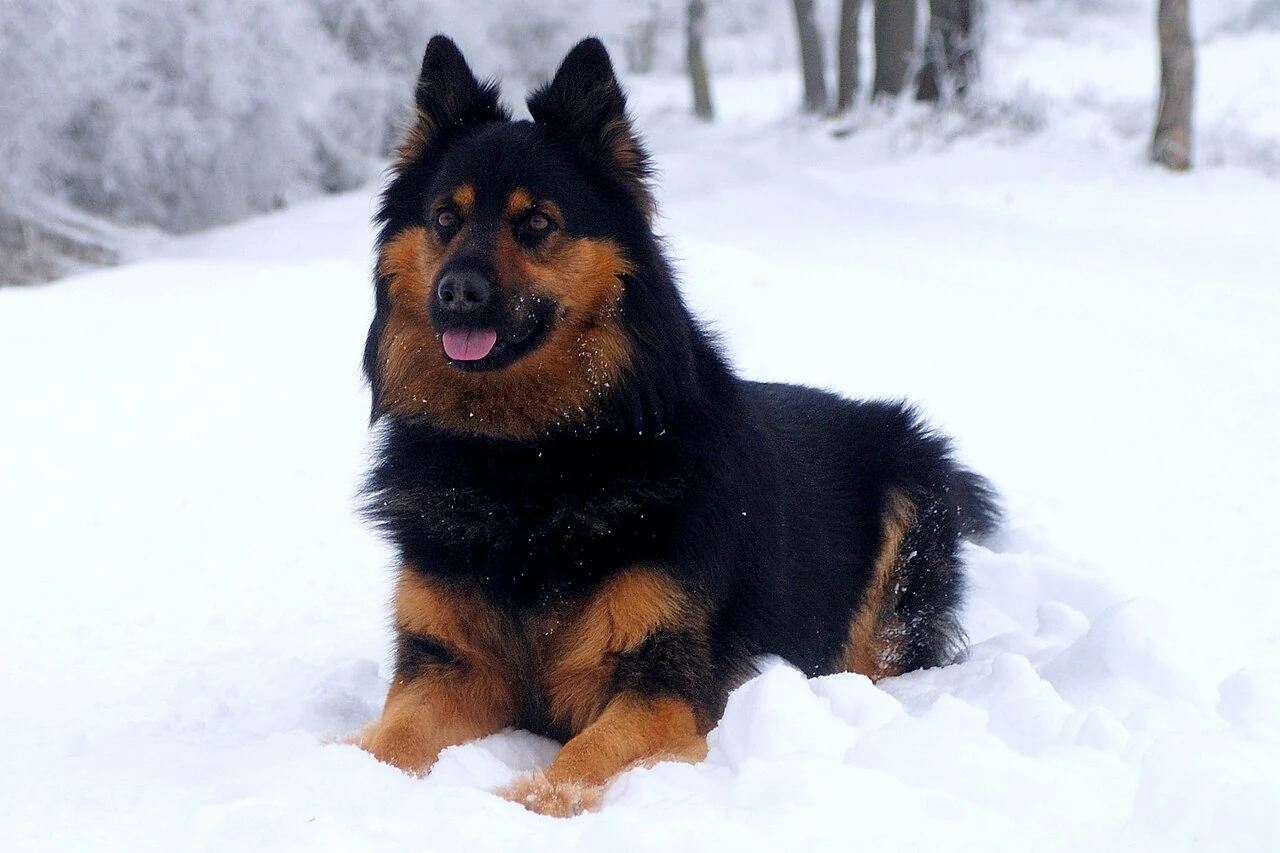
The longer outer coat and dense undercoat, an additional layer of hair underneath, should be brushed regularly. There can be considerably more hair to deal with during moulting. Behind the ears and in thickly coated areas, it is worth checking carefully for tangles and skin changes. Small twigs and other debris can be removed after walks through undergrowth.
Nails and paws need regular checks. Toothbrushing with dog toothpaste should ideally be a daily habit and introduced gradually. Food portions should reflect actual activity and body condition. Beneath the long coat, checking body shape with your hands can help you notice weight gain early.
Size and build
The Bohemian Shepherd is associated with dogs from the Chodsko region of western Bohemia. Historical depictions show a similar dog type, but do not prove uninterrupted ancestry for today's breed. The modern breeding programme was initiated in 1984 by Jan Findejs and Vilém Kurz. The first litter followed in 1985, and the Czech breed club was founded in 1991.
The Fédération Cynologique Internationale, or FCI, is an international federation of national kennel organisations. The FCI lists the Bohemian Shepherd as a distinct breed in Standard No. 364. At the October 2026 source check, it has provisional recognition there. Males should stand 52 to 55 cm and weigh 19 to 27 kg, females 49 to 52 cm and 17 to 24 kg. Height is measured at the withers, the highest point over the shoulders.
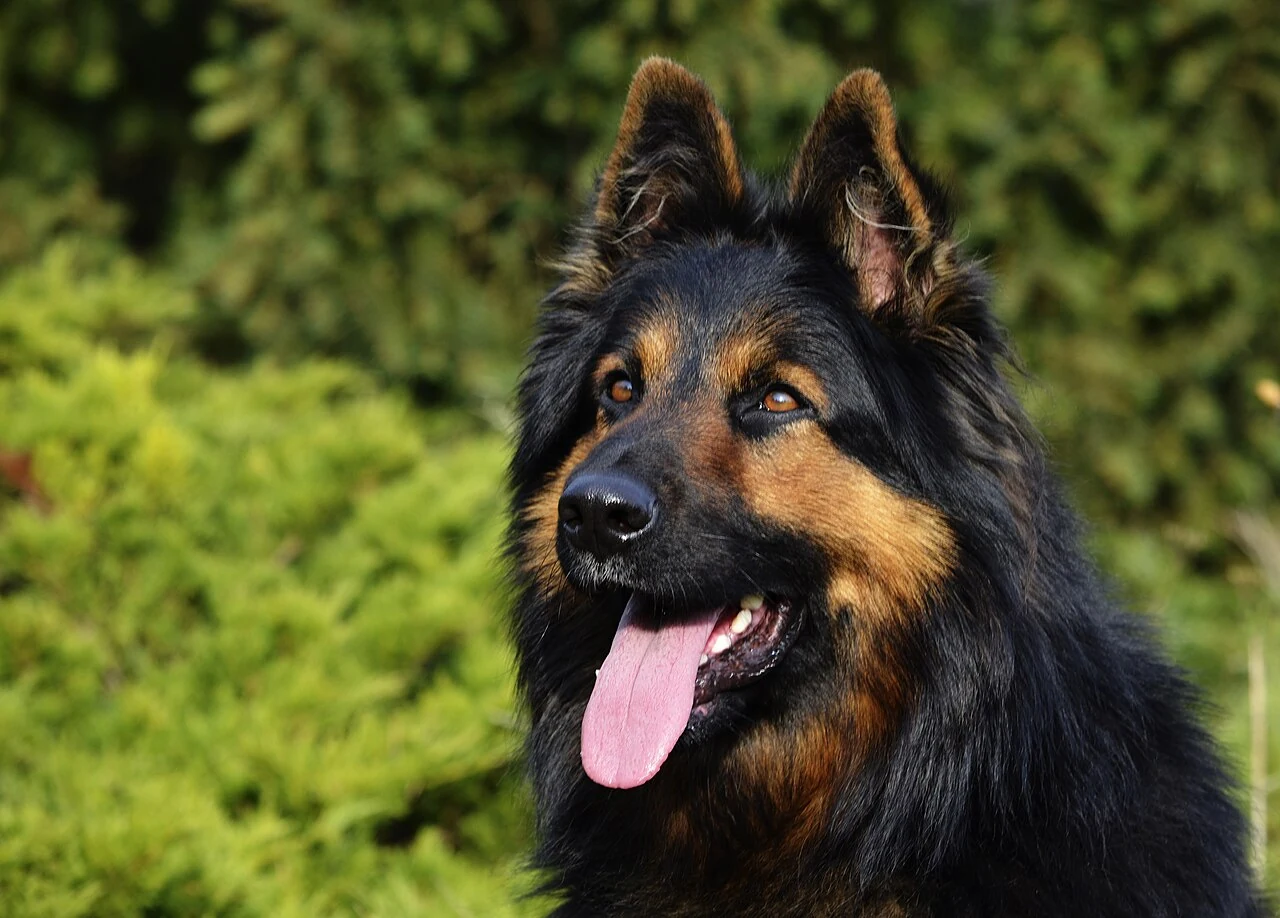
Typical features are a black coat with clearly defined tan markings, small-looking upright ears with longer hair and a body slightly longer than tall. The tail is long. The Bohemian Shepherd is a distinct Czech breed rather than a smaller variety of German Shepherd.
From puppy to senior: caring for your dog through every life stage ↗
Health
You should be able to see both parents' health records before choosing a puppy. For breeding, the Czech parent club requires an assessed hip X-ray and a DNA test for degenerative myelopathy, or DM, a progressive disease of the spinal cord. It is also worth asking about other illnesses in related dogs. Clear records are more helpful than a general assurance that a line is healthy.
Hip dysplasia means that the hip joint develops incorrectly and is too loose. This can lead to pain and arthritis. Repeated limping, stiffness or difficulty getting up should be investigated. Appropriate feeding and a lean body condition matter for an athletic dog too.
DM can affect movement in the hind legs. The DNA test checks an associated risk variant. It does not establish a diagnosis, and not every dog with two copies of the variant develops the disease. New weakness or unsteady walking should be assessed by a vet, as other conditions can cause similar signs. The American Kennel Club gives a lifespan of 12 to 15 years. This breed figure cannot predict how long your dog will live.
Could this breed fit your life?
Could work well if …
- You want your dog involved in family life and can make daily time for walks, play or training.
- You are interested in search activities or dog sports and enjoy patient, friendly training.
- You can help your dog settle during visits and provide a cool resting place on warm days.
What to consider
- Watchfulness and barking deserve consideration both at home and when visitors arrive.
- A herding dog may crowd running children or animals. Adults should respond to these situations early.
- Hip assessments and DM test results for both parents should be documented. A DNA result does not replace an examination when symptoms appear.
Similar needs, different dogs.
Selected by shared size, activity, grooming and training characteristics.
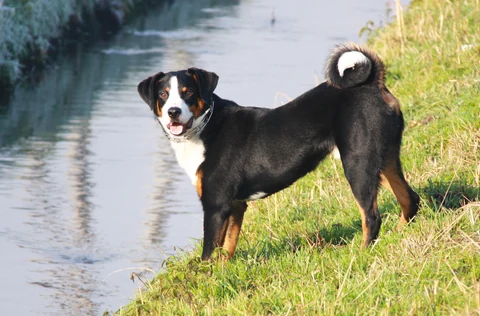
Swiss cattle and watchdog
Appenzeller Mountain Dog
The Appenzeller Mountain Dog is easy to recognise by its tricolour coat and tightly curled tail. Behind that cheerful appearance is an attentive Swiss working dog. It enjoys activity, learns quickly and notices changes around it. This breed suits people who want to spend time outdoors with their dog every day and can help it cope calmly with visitors and events at home.
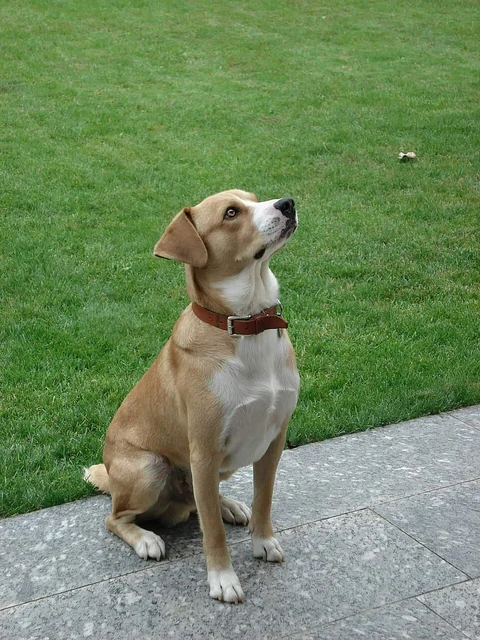
Austrian farm and companion dog
Austrian Pinscher
The Austrian Pinscher is a lively farm dog that enjoys accompanying familiar people and notices visitors attentively. Its short to medium-length coat is relatively straightforward to maintain. Exercise, shared activities and calm guidance of its guarding behaviour require more time. Meeting adult dogs helps show whether its watchfulness and temperament could suit your daily life.
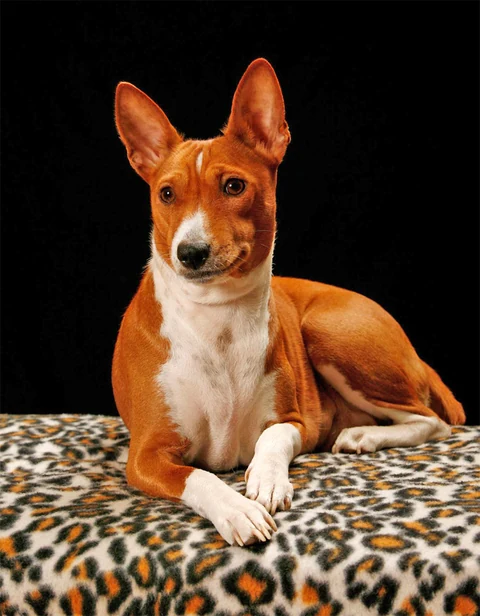
Hound
Basenji
The Basenji rarely barks but can make yodelling sounds. Outside, it may follow a scent or moving animal at speed, so off-lead running calls for secure fencing.
Sources and photograph credit
- Teaching your dog to be left alone
Used in this profile for: Staying home alone
- Bohemian Shepherd
Used in this profile for: Temperament, Day-to-day care, Lifespan
- Podmínky pro zařazení do chovu
Used in this profile for: Health
- Povaha Chodského psa
Used in this profile for: Temperament, Everyday life, Could this breed fit your life?
- Zdraví Chodského psa
Used in this profile for: Day-to-day care, Health
- Z historie vzniku Chodského psa
Used in this profile for: Size and build
- Využití Chodského psa
Used in this profile for: Everyday life, Could this breed fit your life?
- Bohemian Shepherd Dog, FCI Standard No. 364
Used in this profile for: Size / Weight, Temperament, Day-to-day care, Size and build
- Bohemian Shepherd Dog, current FCI nomenclature
Used in this profile for: Size and build
- Canine hip dysplasia (CHD)
Used in this profile for: Health
- Presentation of our organisation
Used in this profile for: Size and build
- Dental disease in dogs
Used in this profile for: Day-to-day care
- Grooming and bathing pets
Used in this profile for: Day-to-day care
- Teaching your dog to be left alone
Used in this profile for: Everyday life, Could this breed fit your life?
- Separation-related behaviour
Used in this profile for: Everyday life
- Training your dog
Used in this profile for: Everyday life
- Degenerative Myelopathy (DM)
Used in this profile for: Health
Photo credits
Portrait · Caroline Fidelis et Fortis.jpg · Olga Trnková · CC BY-SA 3.0 · Edited

Coat and features · Caezare Chucky od Malého Kosíře (1).JPG · Krosandra · CC BY-SA 3.0 · Edited
.JPG)
Everyday life · Caesar Chodský drahokam.jpg · MartinaM84 · CC BY-SA 4.0 · Edited

In action · CHAKY KROSANDRA.JPG · Krosandra · CC BY-SA 3.0 · Edited
