 fellfolio
Shorthair cat · Russia
Russian Blue
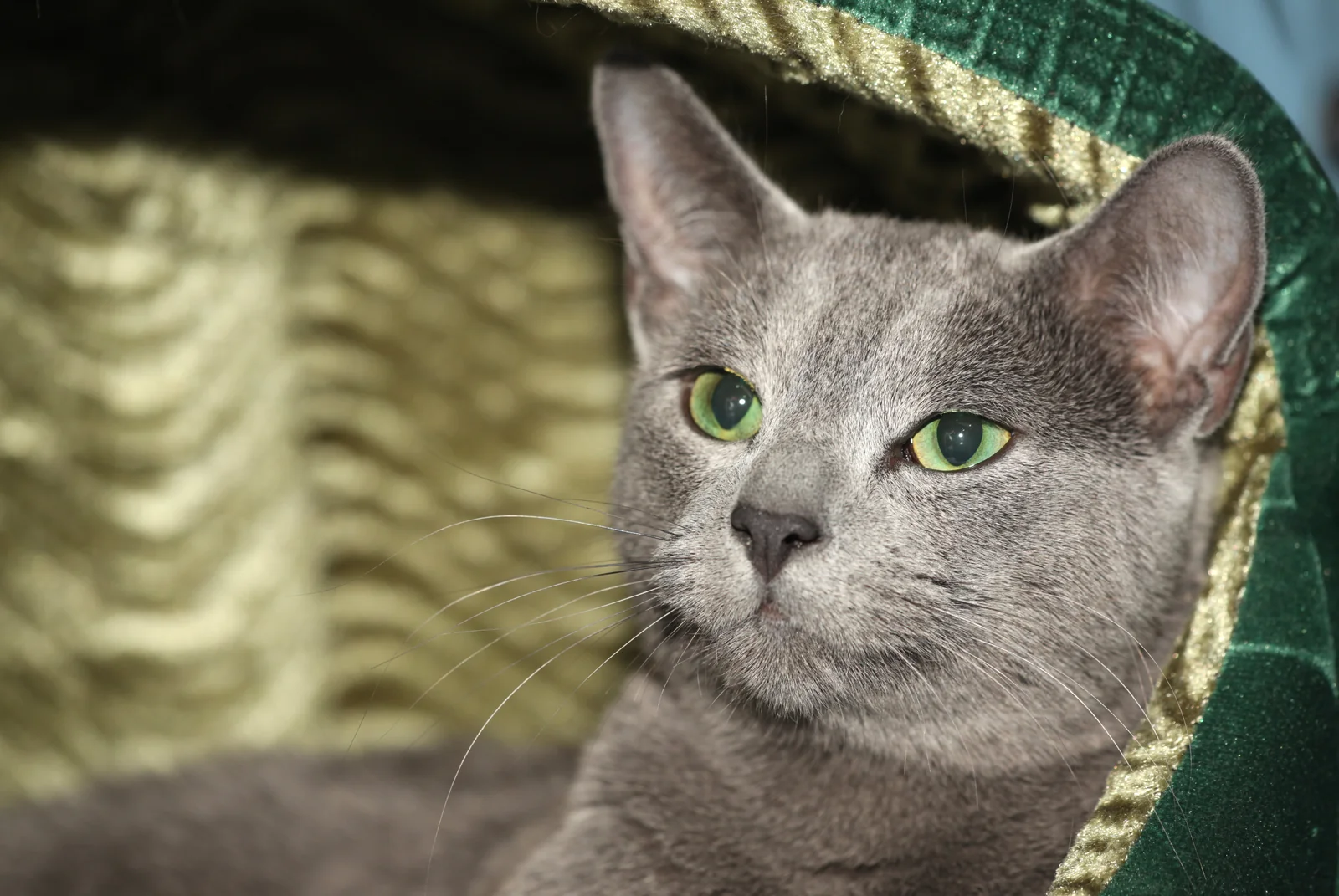
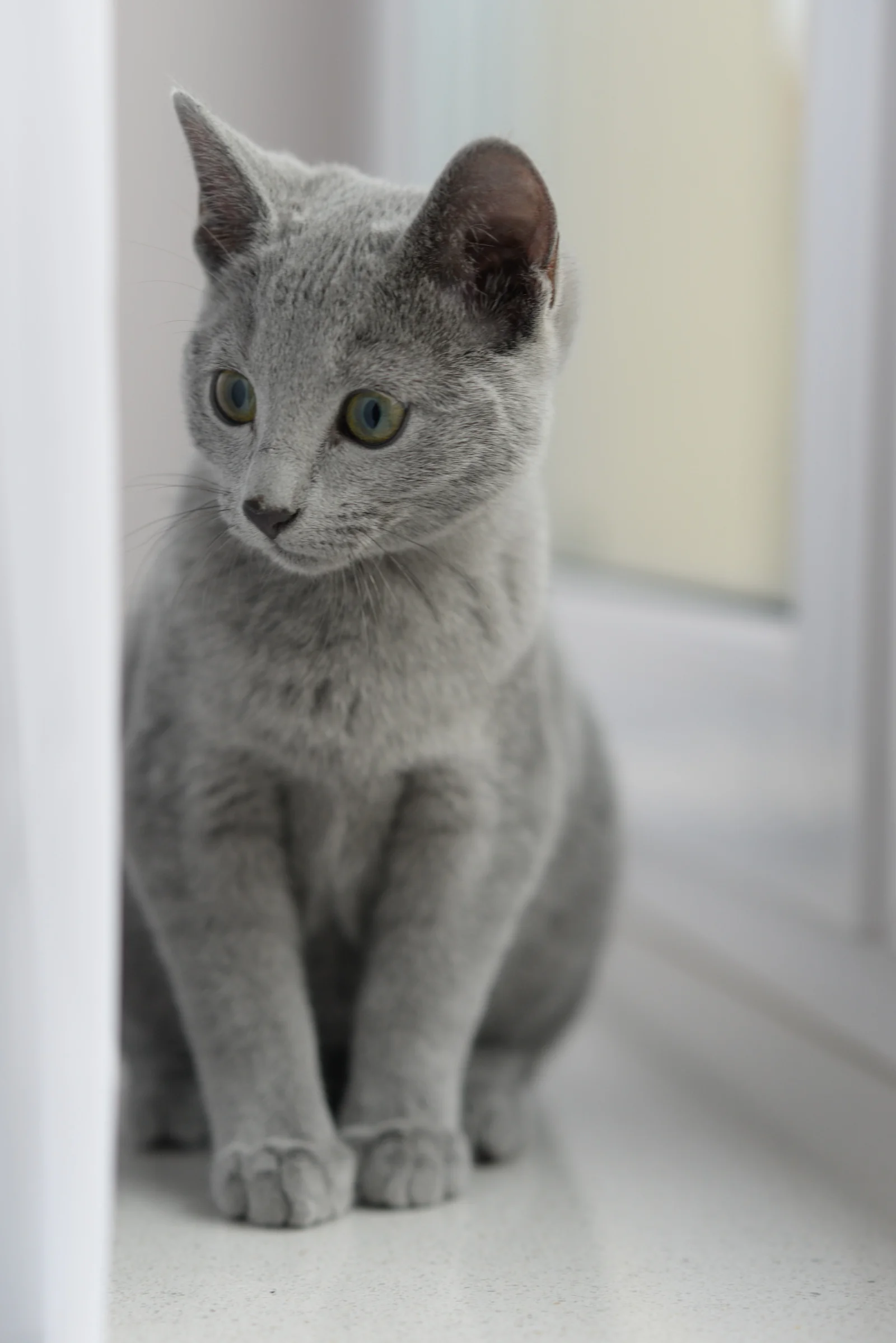
A silver-sheened blue-grey coat and green eyes distinguish the Russian Blue. It enjoys play, but often watches something new from a safe distance first.
At a glance
- Size
- Medium
- Lifespan
- 10 to 20 yearsTICA cat breed profile
- Activity
- Moderate
- Care needs
- Low
- Enrichment
- Enjoys learning together
- Owner experience
- First cat with preparation
Watch first, join in later
A Russian Blue may not be first to greet a visitor at the door. Many prefer to assess new people and situations from a distance, then come closer in their own time. With familiar people, they can be attentive, affectionate and talkative. Guests should not pull the cat out of hiding. Given time, it is more likely to approach on its own.
Lookouts, retreats and play
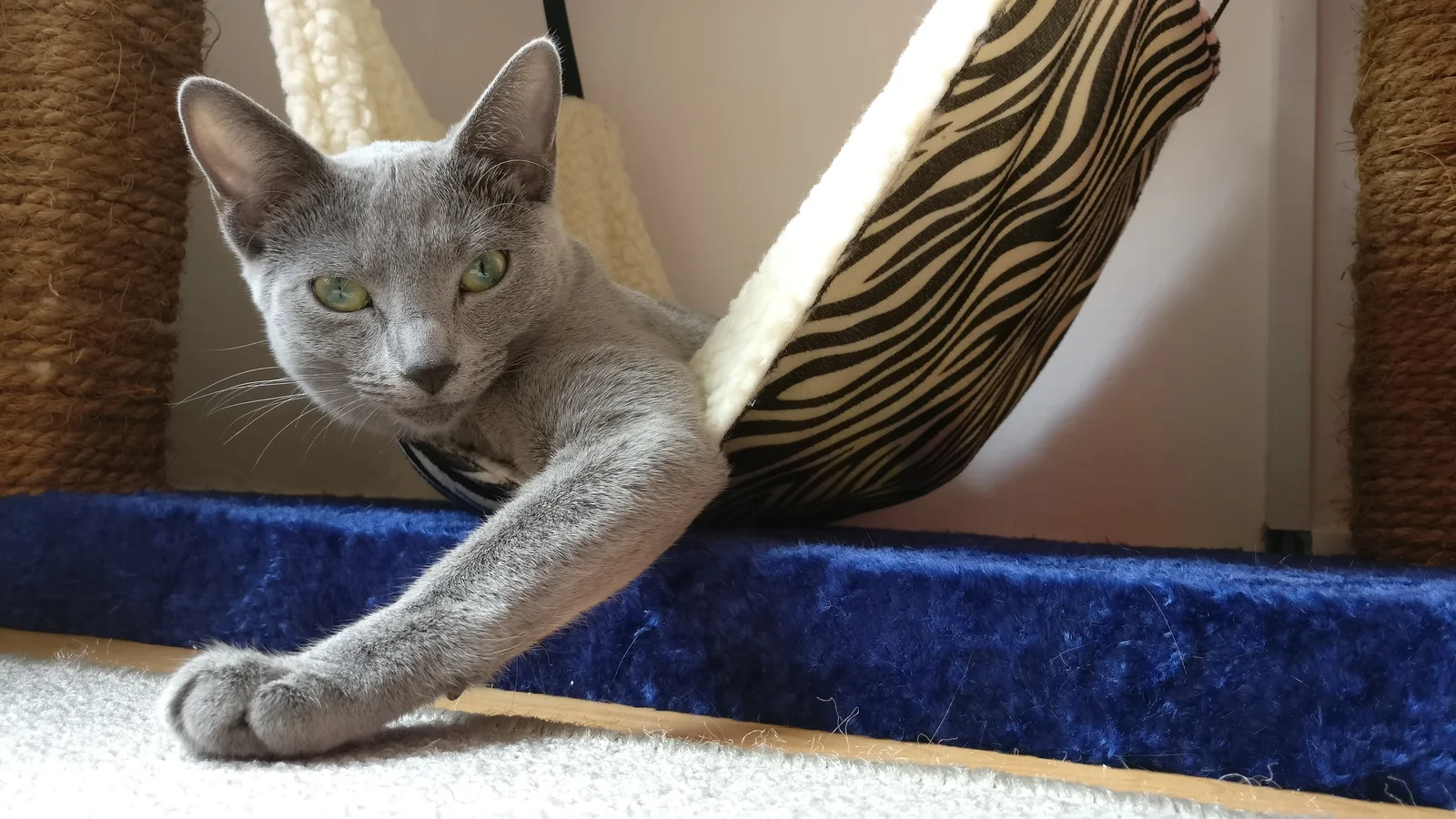
Russian Blues like a view from above. A stable lookout near a window and a quiet retreat give the cat a choice. Between rests it may play energetically: try a small ball to retrieve, a small toy attached to a rod by a cord for the cat to chase or a food puzzle with small openings to investigate. Put a little food within easy reach at first. Make the task harder only after the cat has worked it out.
For practical play, food searches and quiet retreats, read Indoor Cat Enrichment: Play, Food Puzzles and Safe Retreats ↗
Dense coat, simple grooming
The short coat has two dense layers: an undercoat and an outer coat. Brush gently once or twice a week to remove loose hair. Weigh your cat regularly under similar conditions, such as before feeding, so gradual changes are easier to notice. The International Cat Association (TICA) describes Russian Blues as having a healthy appetite. Subtract food used in games and as rewards from the measured daily ration.
Fine frame and silver-blue coat
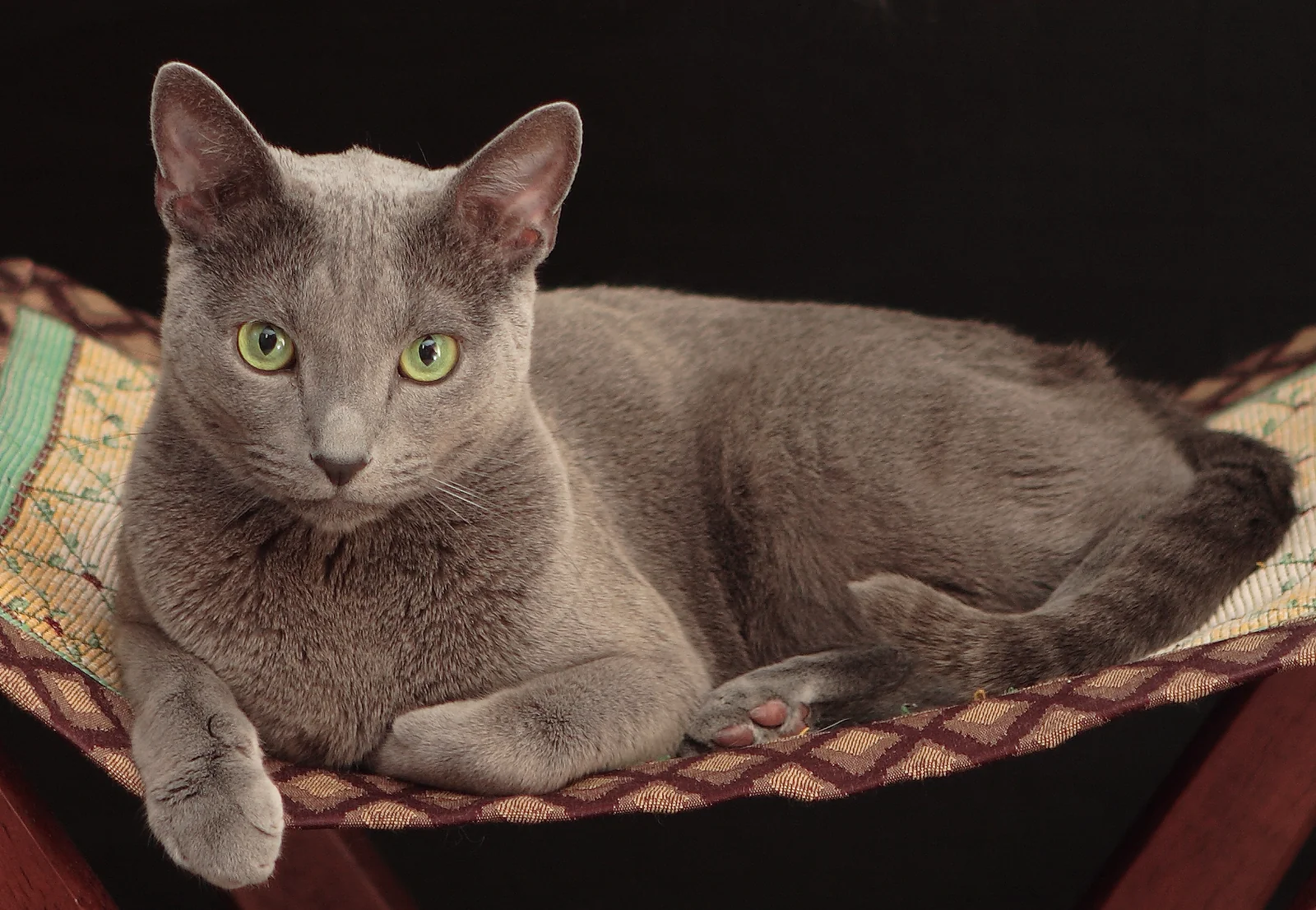
The body is medium-sized and fine-boned yet firmly muscled. A wedge-shaped face, large ears and bright green eyes are part of the breed's look. The short coat is blue-grey, called blue in breed descriptions. Silver hair tips make it look lighter in some light. This is different from the rounder, heavier British Shorthair, which may also have blue fur. Colour alone cannot identify a Russian Blue.
Watch weight and teeth
TICA describes Russian Blues as generally healthy and does not name a particular breed-specific inherited illness. This does not mean that an individual cat cannot become ill. For a kitten, look at the actual veterinary records and the parents’ health. Routine examinations and dental care matter as the cat grows older. Introduce brief mouth checks gently and ask your vet how to brush its teeth. If the cat suddenly eats more slowly, chews on one side or develops bad breath, have its teeth checked. Record weight and appetite as well, so changes are easier to notice.
Could this breed fit your life?
Could work well if …
- You give a cautious cat time to approach people on its own.
- You enjoy playing together and can keep an eye on portions and weight.
May be more difficult if …
- You expect the cat to greet every guest and welcome being touched immediately.
- There are no quiet places to retreat in your home.
Meet other cat breeds.
Selected by size, activity, care and play needs.
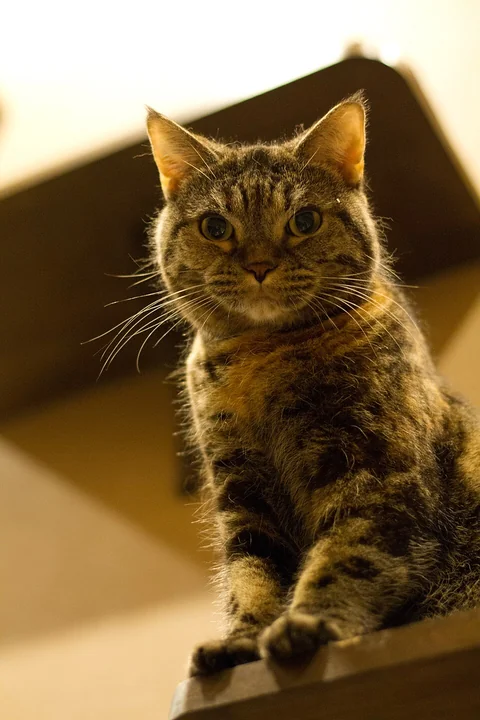
Shorthair cat · United States
American Shorthair
Sturdy, even-tempered and playful, the American Shorthair enjoys shared games while keeping a measure of independence.
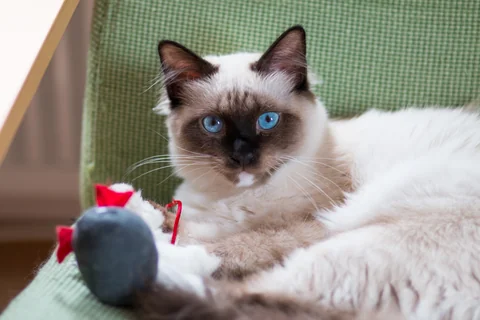
Semi-longhair · France
Birman
The Birman combines blue eyes, pale silky fur and white paws with a gentle, people-oriented nature. Many seek company and enjoy short play sessions.
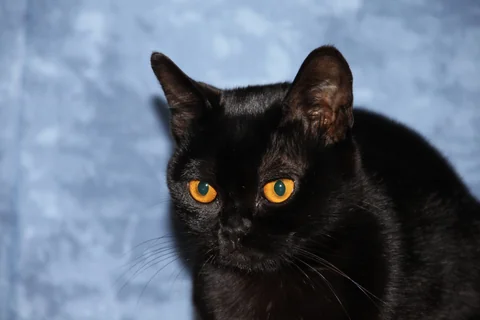
Shorthair · United States
Bombay
The Bombay has glossy black fur and copper eyes. Muscular and sociable, it enjoys playing with its people.
Sources and photograph credit
- Cat dental care
Used in this profile for: Health
- Cat obesity
Used in this profile for: Health
- Feline Dental Disease
Used in this profile for: Health
- Obesity
Used in this profile for: Health
- How to Feed a Cat: Addressing Behavioral Needs
Used in this profile for: Everyday life
- Russian Blue
Used in this profile for: Temperament, Everyday life, Day-to-day care, Size and build, Health, Lifespan, Could this breed fit your life?
Portrait · RUS Smallville Silver Snow Katown (4189910521) · Nickolas Titkov · CC BY-SA 2.0 · Edited
.jpg)
In a cat bed · Sacha · Doug Miller · CC BY 2.0 · Edited

Coat and features · VANESSA-VAMIRON-CZ-Russisch-Blau-Katze · VAMIRON cattery, Prague · CC BY-SA 4.0 · Edited

Kitten · Kotka rosyjska niebieska - 4 miesiące · Kakej · CC BY-SA 4.0 · Edited
