 fellfolio
Tibetan herding and companion dog
Tibetan Terrier
An agile dog from Tibet with strikingly large feet and a long double coat. Despite its name, it is not a terrier. It enjoys being near its people but also wants walks, play and room to explore.
At a glance
- Size
- Medium
- Height at shoulder
- 36 to 43 cm
- Weight
- 8 to 14 kg
- Lifespan
- over 12 yearsUK Royal Kennel Club breed profile
- Activity
- Moderate
- Grooming
- Daily
- Training
- Often cooperative
- Owner experience
- First dog with support
A companion with a mind of its own
The Tibetan Terrier has a misleading name. It originated in Tibet, where it was also used to move sheep, but it does not belong to the hunting-terrier group. That background shows in daily life: it enjoys working with familiar people yet may watch strangers before warming to them. The British standard describes a lively, good-natured dog that does not immediately lavish affection on everyone.
Let a visitor give the dog space instead of reaching for it at once. Keep training short and varied. Ask it to find a toy, practise a recall in the park, or reward quiet waiting while you open the front door. The American Kennel Club describes a quick learner that has little taste for relentless repetition or harsh handling. Friendly, clear practice brings out an attentive partner; simply trying to overpower its independence tends to bring more of it to the surface.
Everyday life
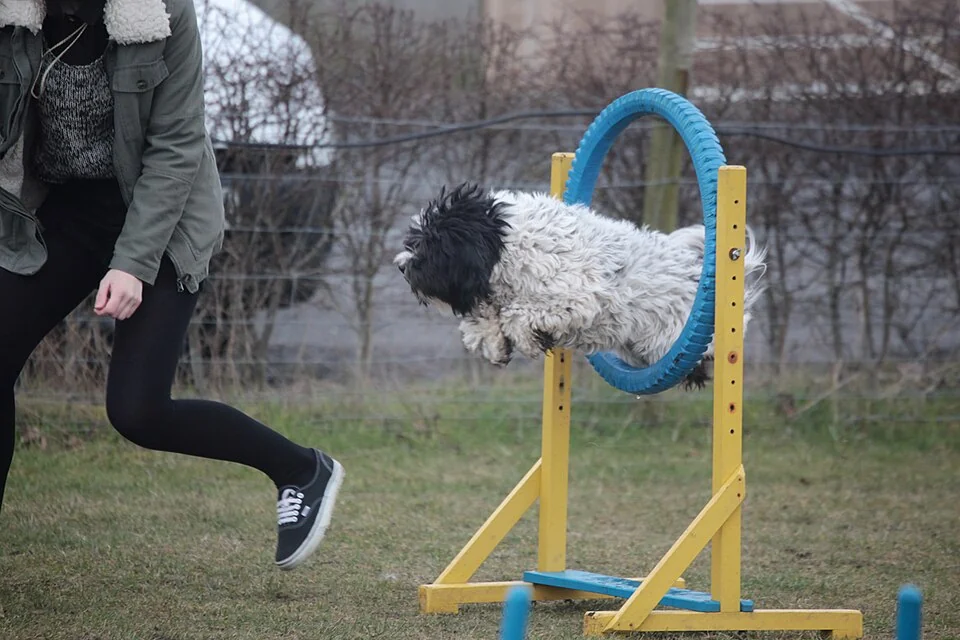
The Royal Kennel Club lists up to an hour of exercise a day. That is a guide for adults, not a timetable for every individual. A Tibetan Terrier enjoys varied walks with plenty to sniff. Add short searching games, or let it balance and climb for a few minutes on a safe surface. In agility, a person guides the dog around an obstacle course. Exercises need to suit its age and fitness and be introduced gradually.
At home it likes to be close to its people. The AKC notes that many Tibetan Terriers enjoy a window seat to watch what is happening outside. That can be endearing, but a busy street may prompt repeated barking. A quiet resting spot away from the window and a practised cue to turn back to you work better than scolding. Life in a smaller home can suit this breed when there is time for walks, shared activities and substantial coat care.
Staying home alone
Dogs learn to stay home alone in small steps. The RSPCA advises no more than four hours at a time. Puppies and dogs that become unsettled when left alone need shorter absences and gradual practice. Arrange someone to care for your dog when you will be away longer.
Day-to-day care
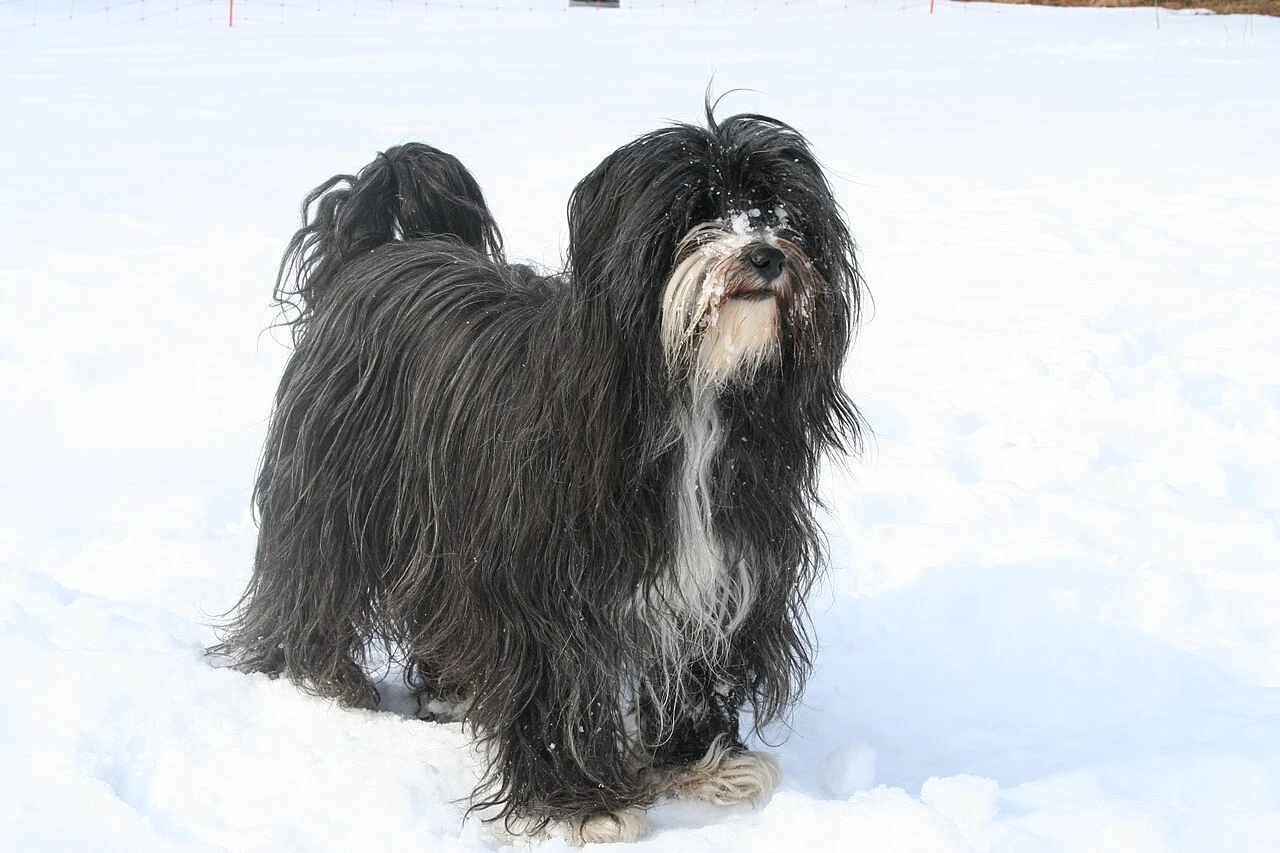
A fine woolly undercoat sits beneath long hair that can be straight or wavy. Together they protect the dog, but they also form tight mats if neglected. Work through the coat every day in sections with a brush and comb right down to the skin, especially behind the ears, under the forelegs and where a harness rubs. Smoothing the top layer is not enough; the undercoat can already be tangled. After wet or snowy walks, dry the belly, feet and hair between the toes thoroughly.
A shorter trim may make outdoor life easier to manage. Even then the coat still needs combing, washing and complete drying. Hair over the eyes must not block vision. Grooming is also a good time to check skin, ears and paws. Thick hair can hide a small wound that might otherwise go unnoticed.
Size and build
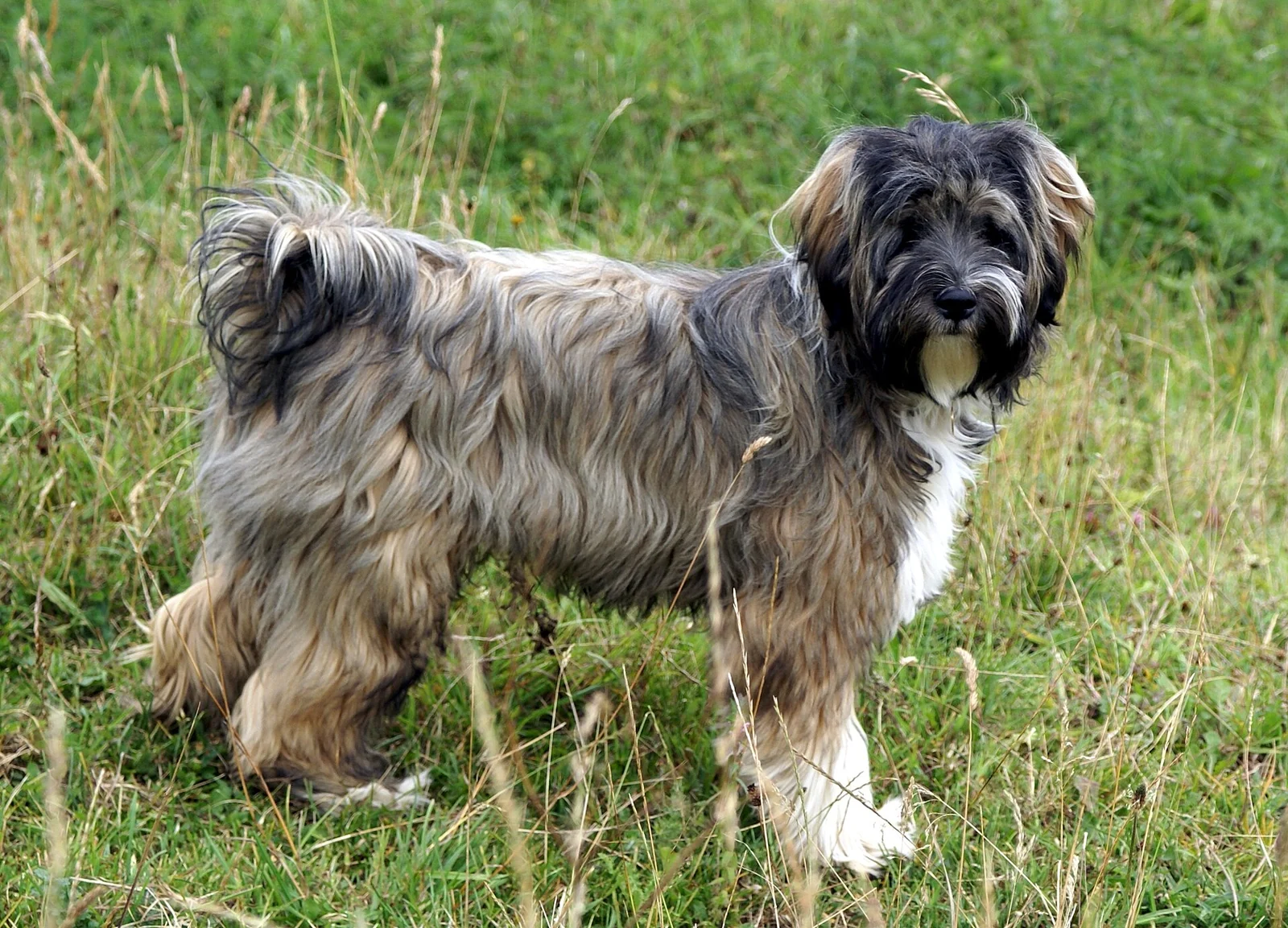
The British standard gives 36 to 41 cm at the shoulder for males, with females slightly smaller. The American Kennel Club gives a broader guide of about 36 to 43 cm and 8 to 14 kg. The Tibetan Terrier is medium-sized and strong, with an almost square outline: the distance from shoulder to tail is close to its height at the shoulder. It has a firm back and loin, a tail carried over the back, straight front legs and well-muscled hind legs beneath the coat. Its movement should be free and effortless.
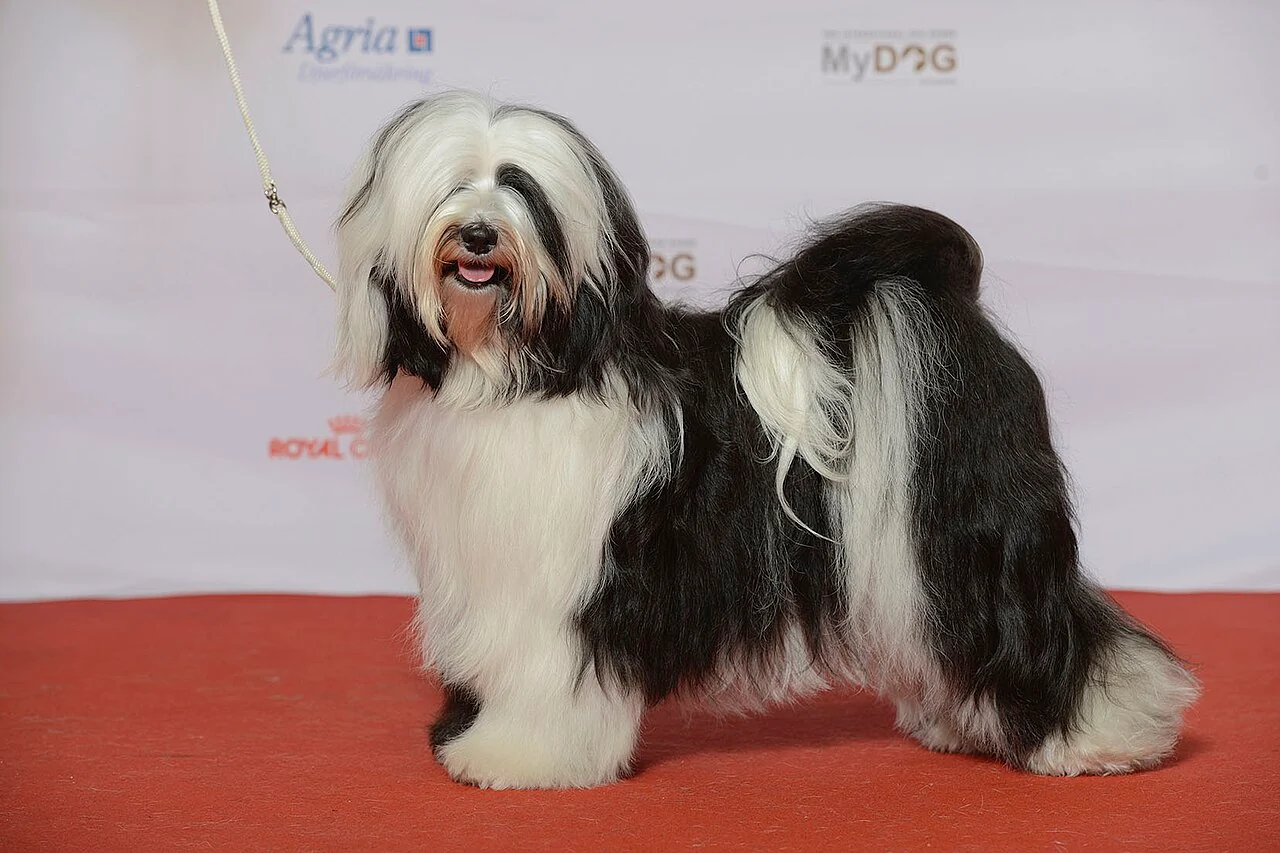
Large, round feet with hair between the toes and pads are especially distinctive. They do not replace sound footing or properly kept nails. Long head hair is acceptable only while the dog can see. The standard permits many coat colours. For a young dog, easy movement, clear vision and an engaged, curious temperament matter more than a striking shade.
Health
The Royal Kennel Club recommends several specific DNA tests for Tibetan Terriers. One is for NCL12, an inherited storage disease that damages nerve cells and may first become apparent in adulthood. Others cover primary lens luxation, where the eye lens moves out of place, and forms of progressive retinal atrophy. Hip screening is also listed; the AKC adds kneecap and general eye evaluations. Ask to see results for both parents and find out exactly which genetic variants were tested. One generic “eye test” does not cover all these different risks.
A displaced eye lens can be painful and needs prompt veterinary attention. Sudden squinting, cloudiness or persistent rubbing should not be left until tomorrow. Changes in vision, an unsteady gait or repeatedly lifting a hind leg while walking also warrant a veterinary examination.
Could this breed fit your life?
Could work well if …
- You want a medium-sized companion that enjoys being outdoors with you and staying close at home.
- You can comb a long double coat thoroughly to the skin every day, or arrange a manageable trim and regular grooming.
May be more difficult if …
- You expect a long coat to stay tidy with very little work.
- You expect every friendly dog to welcome every visitor immediately.
Similar needs, different dogs.
Selected by shared size, activity, grooming and training characteristics.
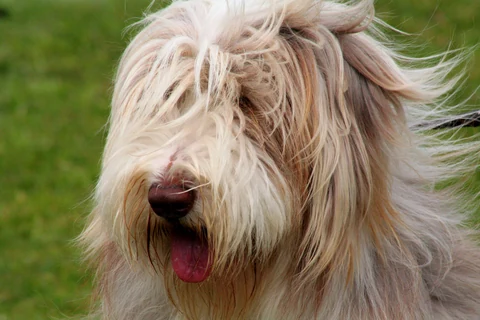
Herding dog
Bearded Collie
The Bearded Collie is a cheerful, agile herder with a long coat. It enjoys walks with its people, and its dense coat needs thorough combing every day.
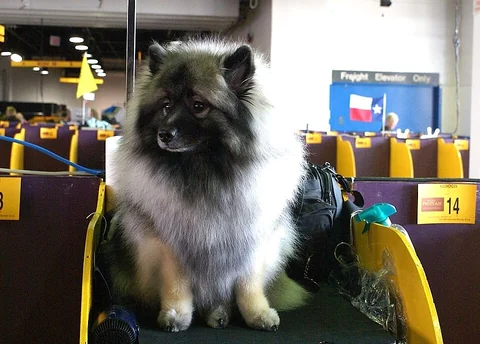
Spitz and companion dog
Keeshond
A medium-sized, silver-grey spitz with an alert expression and a great deal of coat. The Keeshond likes staying close to its people and often announces visitors aloud. Its dense undercoat needs daily attention.
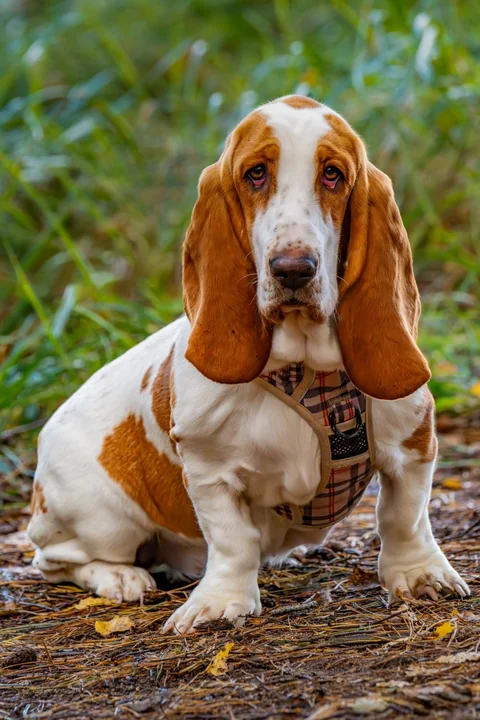
Scent hound
Basset Hound
Easy-going with people and tireless on a trail, the Basset Hound is a sociable hunting dog with a substantial body and a nose that can set the pace outdoors.
Sources and photograph credit
- Teaching your dog to be left alone
Used in this profile for: Staying home alone
- Primary lens luxation
Used in this profile for: Health
- A One Base Pair Deletion in the Canine ATP13A2 Gene Causes Exon Skipping and Late-Onset Neuronal Ceroid Lipofuscinosis in the Tibetan Terrier
Used in this profile for: Health
- Tibetan Terrier dog breed information
Used in this profile for: Size / Weight, Temperament, Everyday life, Day-to-day care, Health, Could this breed fit your life?
- About the Tibetan Terrier: height and weight guide
Used in this profile for: Size / Weight
- Tibetan Terrier, Breeds A to Z
Used in this profile for: Temperament, Everyday life, Day-to-day care, Health, Lifespan, Could this breed fit your life?
- Tibetan Terrier breed standard
Used in this profile for: Size / Weight, Temperament, Day-to-day care, Size and build, Could this breed fit your life?
Portrait · Tibet Terrier Bennie · Mr407SW · Public domain


Side view · TIBETANSK TERRIER, C.I.B. DK V-12 JWW-12 NORD UCH NORD V-12 Kuai Le Gou’s Smash Hit · Johan Frick-Meijer / Svenska Mässan · CC BY 2.0 · Edited

In action · Tibetan Terrier flying through a hoop · Ian Wilson / Ian McFegan · CC BY 2.0 · Edited

Young dog · Tibetan terrier · PateraIncus · CC BY-SA 3.0 · Edited
