 fellfolio
Spitz and companion dog
Keeshond
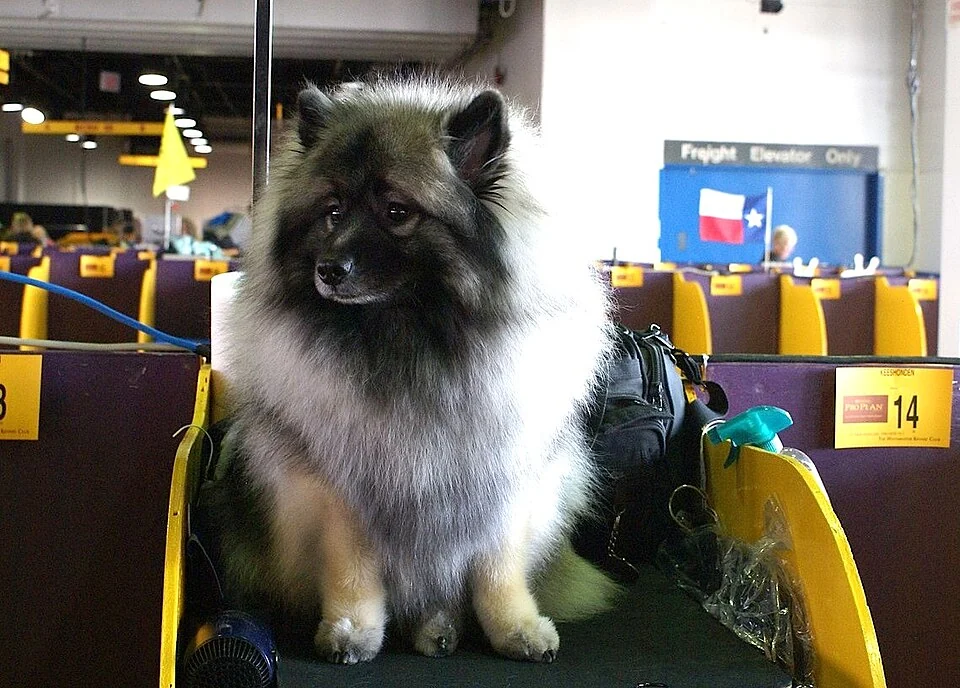
A medium-sized, silver-grey spitz with an alert expression and a great deal of coat. The Keeshond likes staying close to its people and often announces visitors aloud. Its dense undercoat needs daily attention.
At a glance
- Size
- Medium
- Height at shoulder
- 43 to 46 cm
- Weight
- 16 to 20 kg
- Lifespan
- over 10 yearsUK Royal Kennel Club breed profile
- Activity
- Moderate
- Grooming
- Daily
- Training
- Often cooperative
- Owner experience
- First dog with support
A barge dog that notices visitors
Keeshonds once accompanied boatmen on Dutch barges. They provided company and noticed when someone came aboard. That history helps explain why many still react to the doorbell, voices and movement outside. The Royal Kennel Club standard describes a friendly, alert dog. If you need near silence in an apartment with thin walls, take that tendency seriously.
Practise greeting visitors before barking becomes a fixed routine. Keep the sequence simple: let the dog alert you briefly, call it back, reward it for coming and guide it to a familiar mat. Open the door once it can wait there calmly. That gives it a clear job instead of a drawn-out confrontation at the entrance. A Keeshond also wants to be part of family life. Spending most days alone in the garden would deprive it of the close companionship for which the breed is known.
Everyday life
About an hour of activity a day is a useful guide for a healthy adult Keeshond. Two walks with time to sniff, plus a short search game indoors, often fit better than a single frantic run. Many enjoy learning small cues. Hide a toy in a room, ask the dog to wait, then send it to find the toy. This also teaches a rhythm of excitement followed by rest.
A garden is not essential, but apartment living takes thought if your dog responds noisily to people outside. Teach it to settle while normal street sounds continue. In summer, choose shaded morning or evening walks over midday exercise. Dense underfur lies beneath the outer coat. Watch for slowing down, heavy panting or a search for shade, and stop the activity when the dog is getting too warm.
Staying home alone
Dogs learn to stay home alone in small steps. The RSPCA advises no more than four hours at a time. Puppies and dogs that become unsettled when left alone need shorter absences and gradual practice. Arrange someone to care for your dog when you will be away longer.
Day-to-day care
Dense, pale underfur sits beneath longer guard hairs, and tangles can form behind the ears, in the neck ruff and around the longer hair on the legs. The UK veterinary charity PDSA advises daily brushing. Part the coat with your hand and comb it section by section down towards the skin, without tugging. Short sessions and a reward make this easier for both of you.
A great deal of undercoat comes loose during a moult. Brush and comb out the loose hair rather than routinely shaving off the double coat. Use the session to check the skin, because red or damp patches can hide under thick fur. Dry the paws after wet walks and look at the nails regularly. Despite all that coat, a well-kept Keeshond should move freely and comfortably.
Size and build
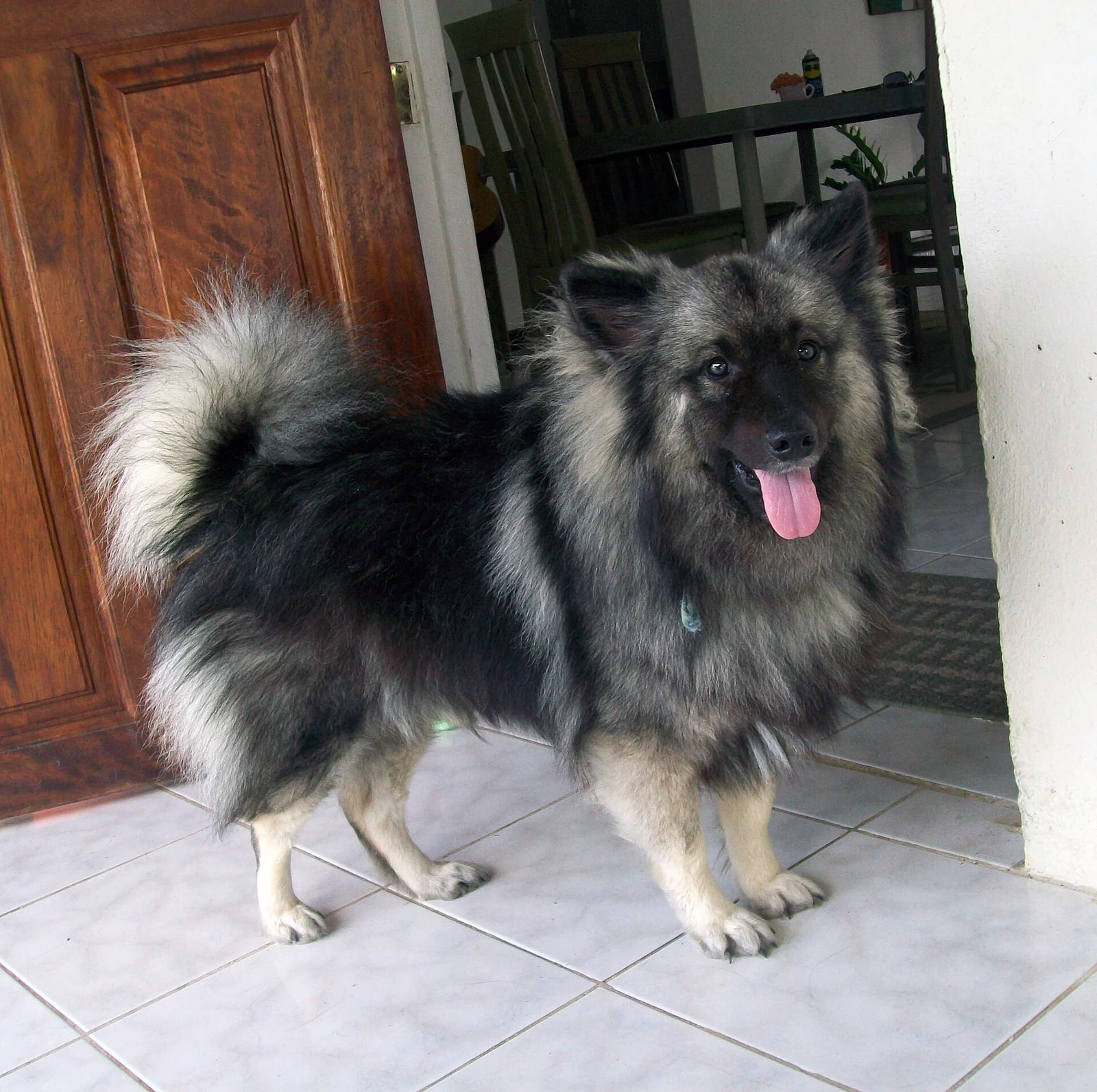
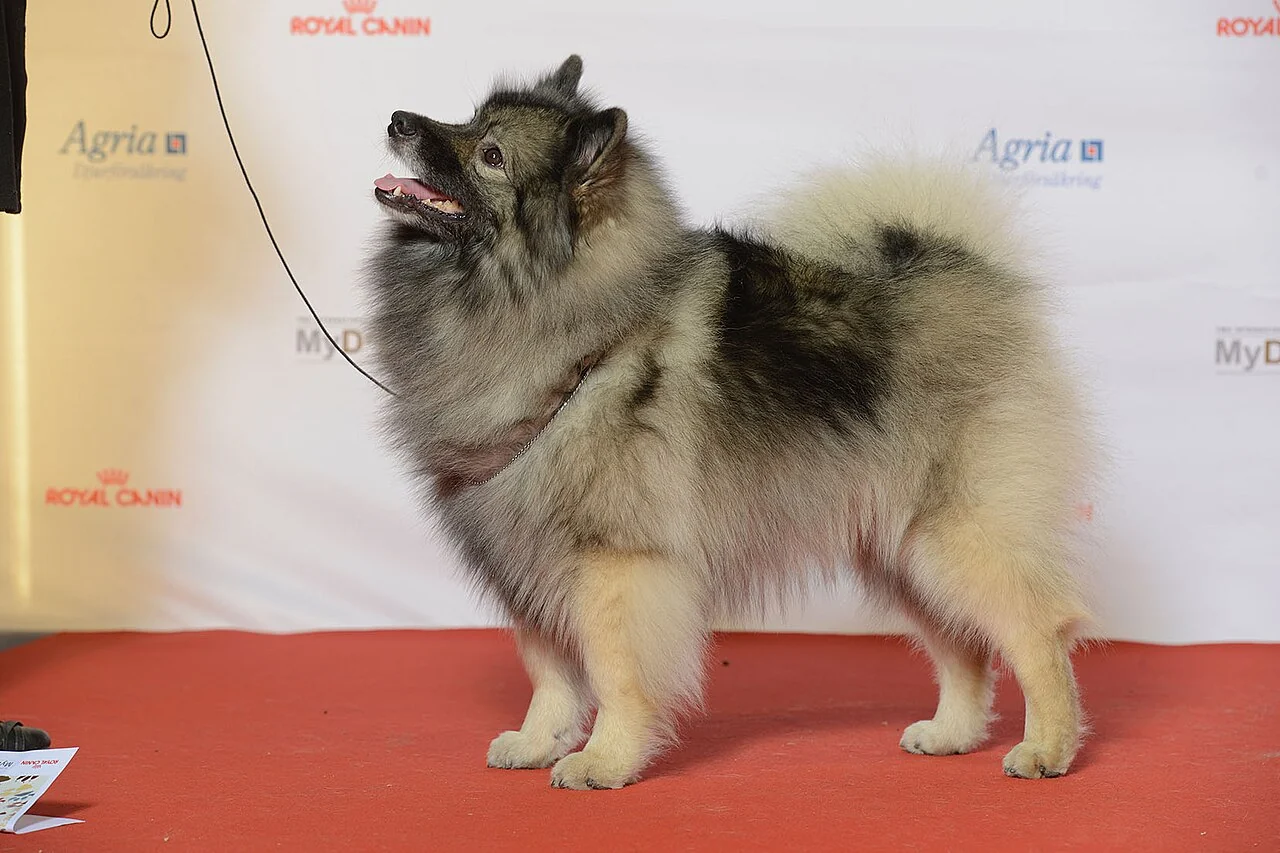
The Keeshond is compact and almost square in outline, rather than long and low. Pointed upright ears and a wedge-shaped head give it the familiar spitz expression. Dark lines around the eyes form its striking “spectacles”. The coat is grey with black-tipped hairs, paler underfur and a generous ruff. A bushy tail curls over the back. In motion the dog should move lightly and evenly, rather than appearing weighed down by its coat.
The British standard gives ideal shoulder heights of about 46 cm for males and 43 cm for females. PDSA lists a weight of around 16 to 20 kg. These figures give a sense of size. Body condition matters more: you should be able to feel the ribs and see a waist from above. If you visit a litter, watch the adult parents move as well as stand still; their stride should look easy beneath the thick coat.
Health
The Royal Kennel Club recommends hip, elbow and eye examinations for breeding dogs. There is also an approved DNA test for primary hyperparathyroidism, or PHPT, in Keeshonds. This inherited condition disrupts control of blood calcium. Ask for the actual results for both parents and an explanation of what the DNA findings mean for the proposed litter. “Health tested” alone does not answer that question.
PDSA also lists luxating patellas, where a kneecap slips out of place, and epilepsy among potential concerns. Repeatedly lifting a back leg for a few steps or walking unsteadily warrants a veterinary check. Seizures or markedly increased thirst need medical attention too.
Could this breed fit your life?
Could work well if …
- You enjoy a close companion that likes being with people and learning small tasks.
- You can make daily time for walks, coat care and calm practice at the front door.
May be more difficult if …
- You need a dog that hardly ever barks at a bell or outside noises.
- You only want to brush a dense coat occasionally and at the surface.
Similar needs, different dogs.
Selected by shared size, activity, grooming and training characteristics.
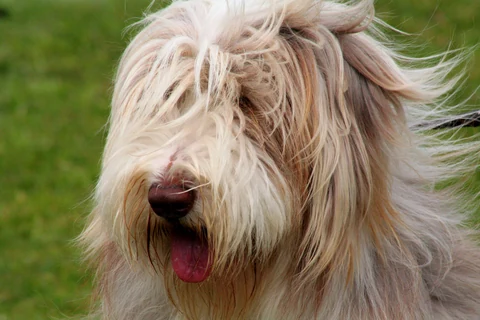
Herding dog
Bearded Collie
The Bearded Collie is a cheerful, agile herder with a long coat. It enjoys walks with its people, and its dense coat needs thorough combing every day.

Tibetan herding and companion dog
Tibetan Terrier
An agile dog from Tibet with strikingly large feet and a long double coat. Despite its name, it is not a terrier. It enjoys being near its people but also wants walks, play and room to explore.
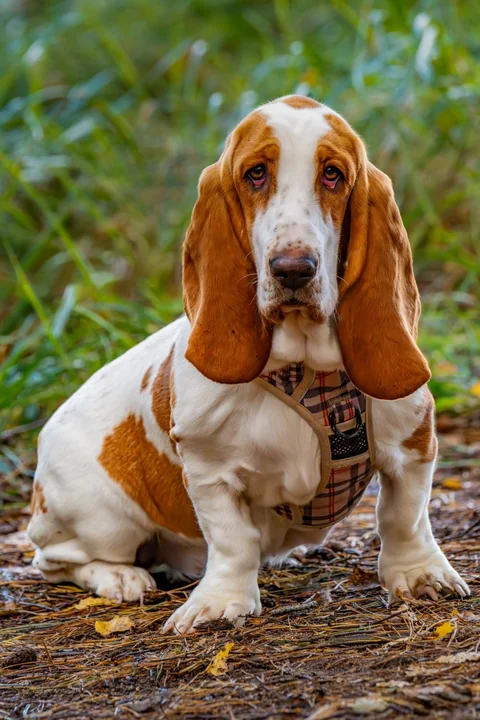
Scent hound
Basset Hound
Easy-going with people and tireless on a trail, the Basset Hound is a sociable hunting dog with a substantial body and a nose that can set the pace outdoors.
Sources and photograph credit
- Teaching your dog to be left alone
Used in this profile for: Staying home alone
- New DNA testing scheme for the Keeshond
Used in this profile for: Health
- Keeshond, Breeds A to Z
Used in this profile for: Temperament, Everyday life, Day-to-day care, Health, Lifespan, Could this breed fit your life?
- Keeshond breed standard
Used in this profile for: Size / Weight, Temperament, Size and build
- Keeshond breed information
Used in this profile for: Size / Weight, Everyday life, Day-to-day care, Size and build, Health, Lifespan, Could this breed fit your life?
Portrait · 2014 Westminster Kennel Club Dog Show · Pets Adviser from Brooklyn, USA · CC BY 2.0 · Edited

Side view · BIR Grupp 5: KEESHOND, Bergareds Heather Heavenly · Johan Frick-Meijer / Svenska Mässan · CC BY 2.0 · Edited

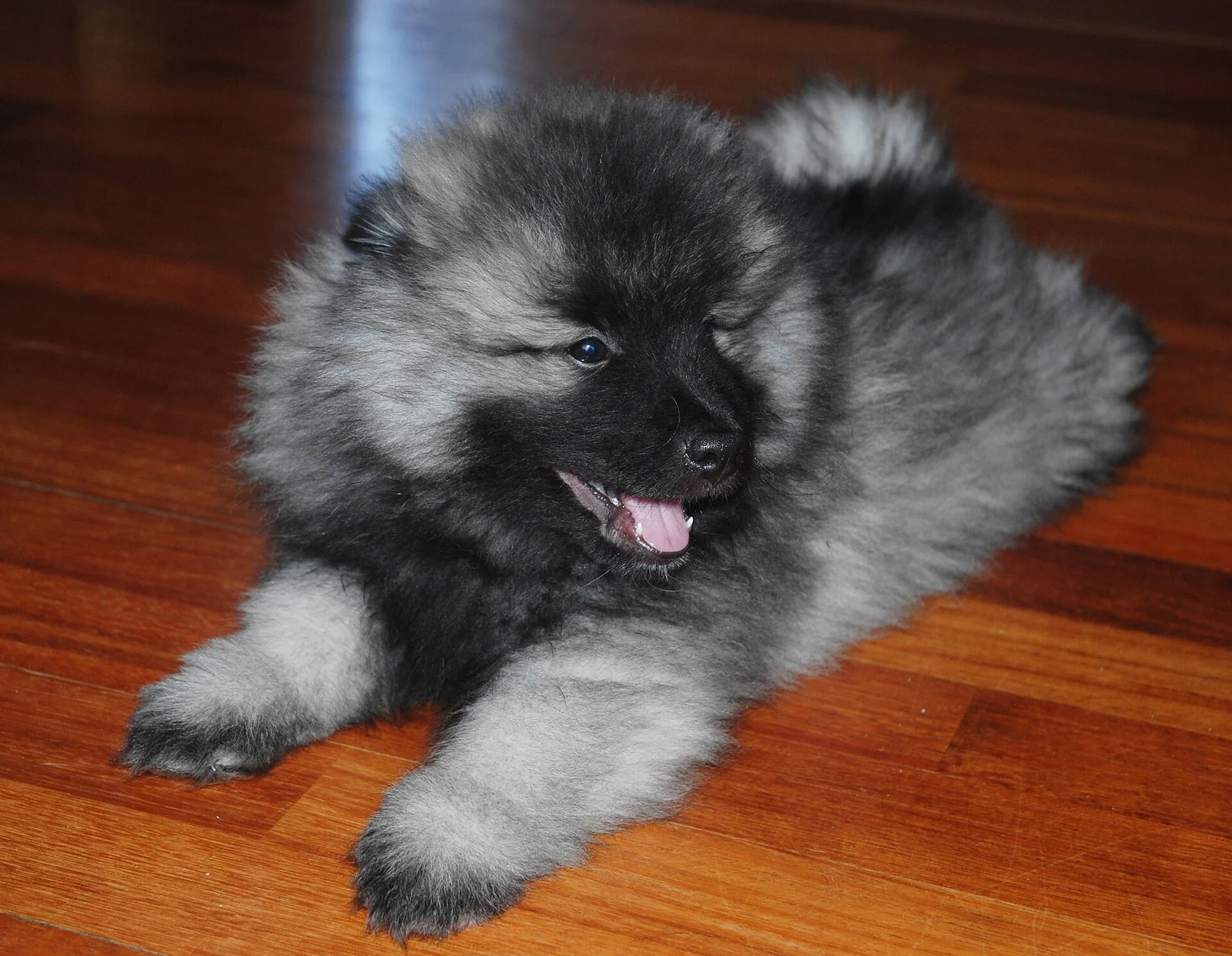
Puppy · Keeshond puppy 7weeks · Noraraa · CC BY-SA 3.0 · Edited

Coat and features · Cooper -keeshond · Kafkacell · Public domain

