 fellfolio
Large Russian guardian and working dog with a coarse coat
Russian Black Terrier
The Russian Black Terrier is a large, powerful guardian and working dog with a dense black coat and prominent beard. It enjoys learning alongside its people but may be distinctly reserved with strangers. Its strength, protective behaviour and substantial grooming needs call for experience and careful planning.
At a glance
- Size
- Large
- Weight
- 45 to 60 kg
- Lifespan
- 10 to 12 years
- Activity
- High
- Grooming
- Daily
- Training
- Patience & clear guidance
- Owner experience
- Experience recommended
A substantial working dog with a watchful approach
The breed was developed in Soviet military kennels after the Second World War. The aim was a robust service dog able to perform different tasks in challenging climates. Giant Schnauzers, Rottweilers, Airedale Terriers and Newfoundlands were among the breeds involved. Its name reflects only part of that ancestry. In everyday life, it is a large guardian with considerable strength.
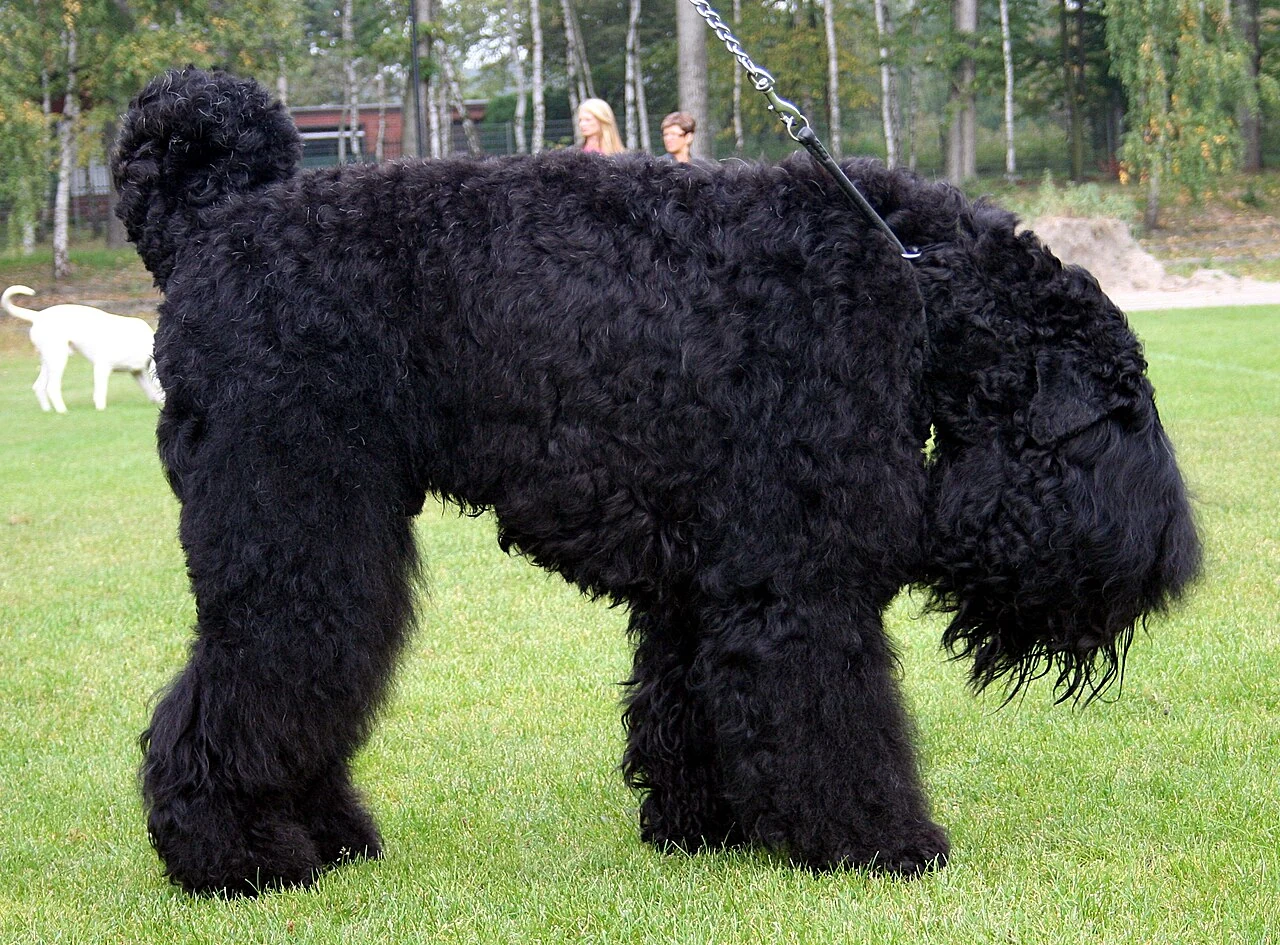
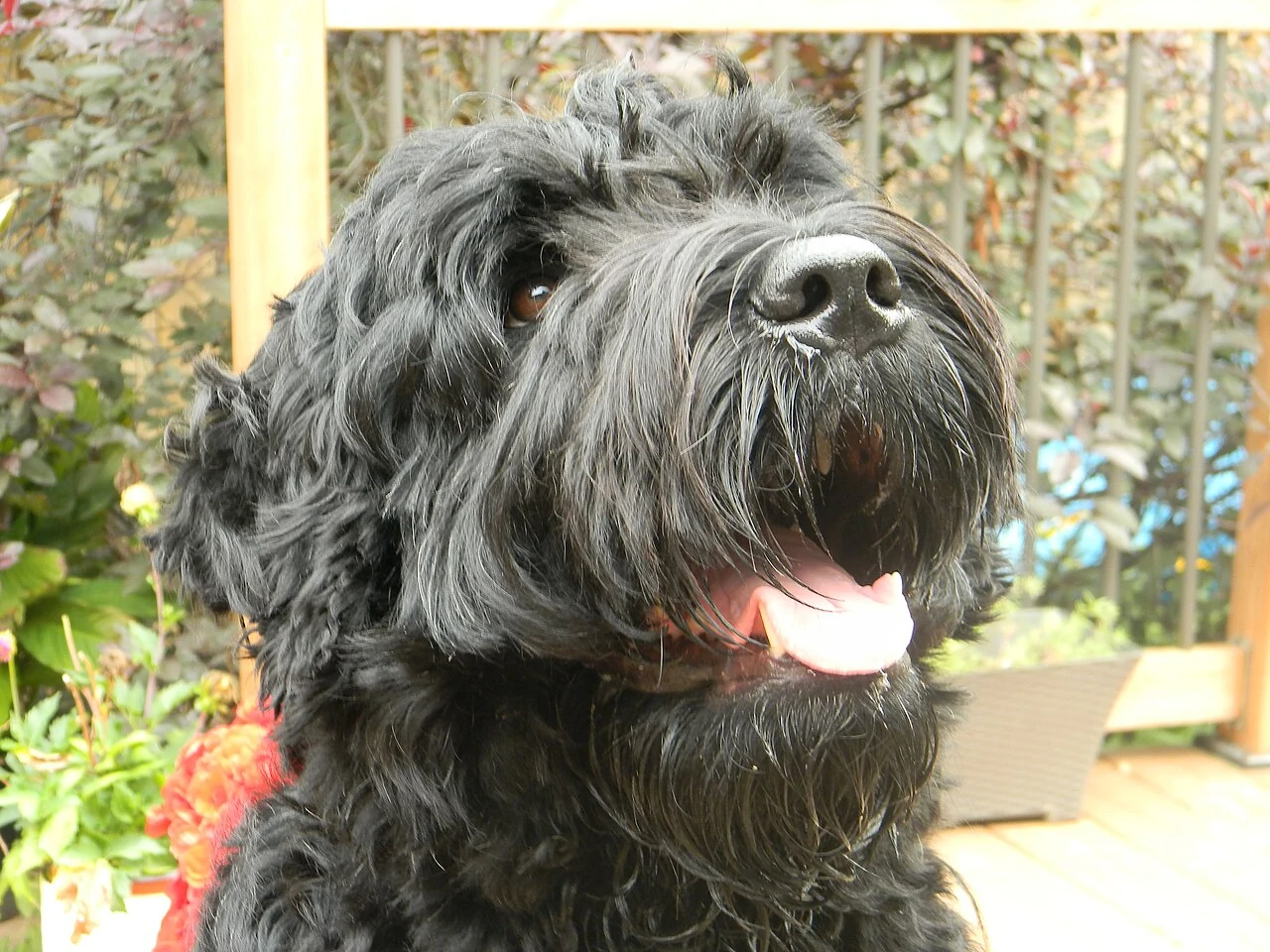
The coarse black outer hair covers a dense, softer undercoat. A beard and eyebrows emphasise the powerful head. The international canine federation FCI gives a desired shoulder height of 72 to 76 centimetres for males and 68 to 72 centimetres for females. Standard weights are 50 to 60 kilograms for males and 45 to 50 kilograms for females. A comfortable bed, suitable transport and enough space for grooming should be ready before the dog arrives.
It can be very affectionate with familiar people. Around strangers, it often watches attentively before seeking contact. Visitors should therefore arrive in a calm, prepared situation. Even a friendly dog can knock a child over with its weight. Adults should supervise shared activities and prevent the dog from being disturbed while eating or sleeping.
Everyday life
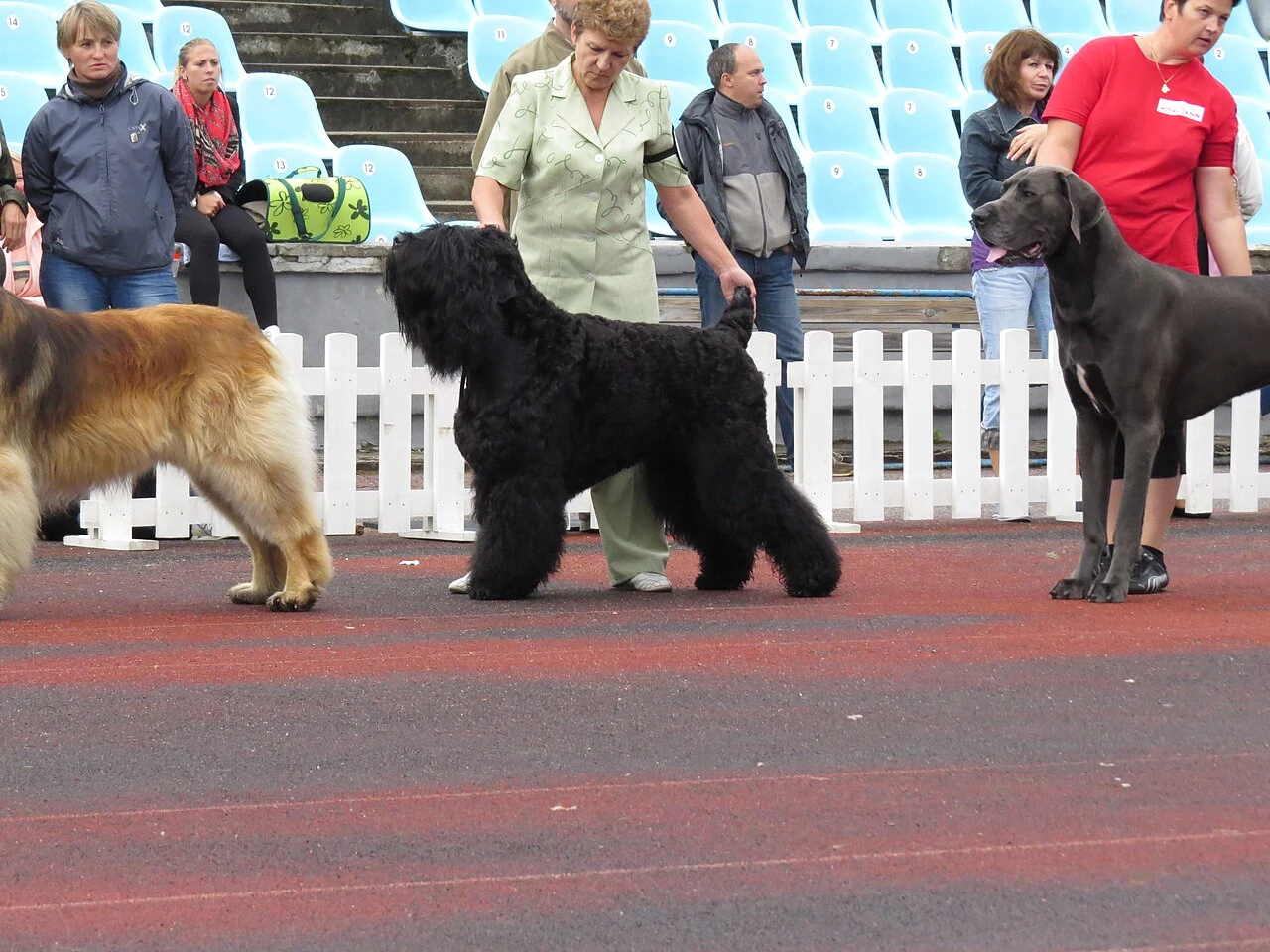
A Russian Black Terrier needs daily exercise and activities that involve working with its people. Substantial walks, searches and calm training can complement each other. The demands should suit its fitness and health. In warm weather, cooler parts of the day and shaded breaks are useful, particularly if the dog heats up quickly beneath its dense coat.
Teaching loose lead walking early is especially valuable at this size. Coming back when called and waiting in a familiar place also make everyday life easier. Rewards and short, understandable exercises support learning. Harshness and physical pressure can damage trust. If the dog guards visitors or encounters become difficult to manage, experienced help should be sought early.
It needs to be closely involved in its people’s lives, with contact and care throughout the day. Time alone should be prepared gradually. Longer absences need a familiar carer able to manage its strength. A Fellfolio handover can record exercises, walking routes and useful distances during encounters for that person.
Staying home alone
Dogs learn to stay home alone in small steps. The RSPCA advises no more than four hours at a time. Puppies and dogs that become unsettled when left alone need shorter absences and gradual practice. Arrange someone to care for your dog when you will be away longer.
Everyday dog training: recall, a loose lead and clear communication ↗
Day-to-day care
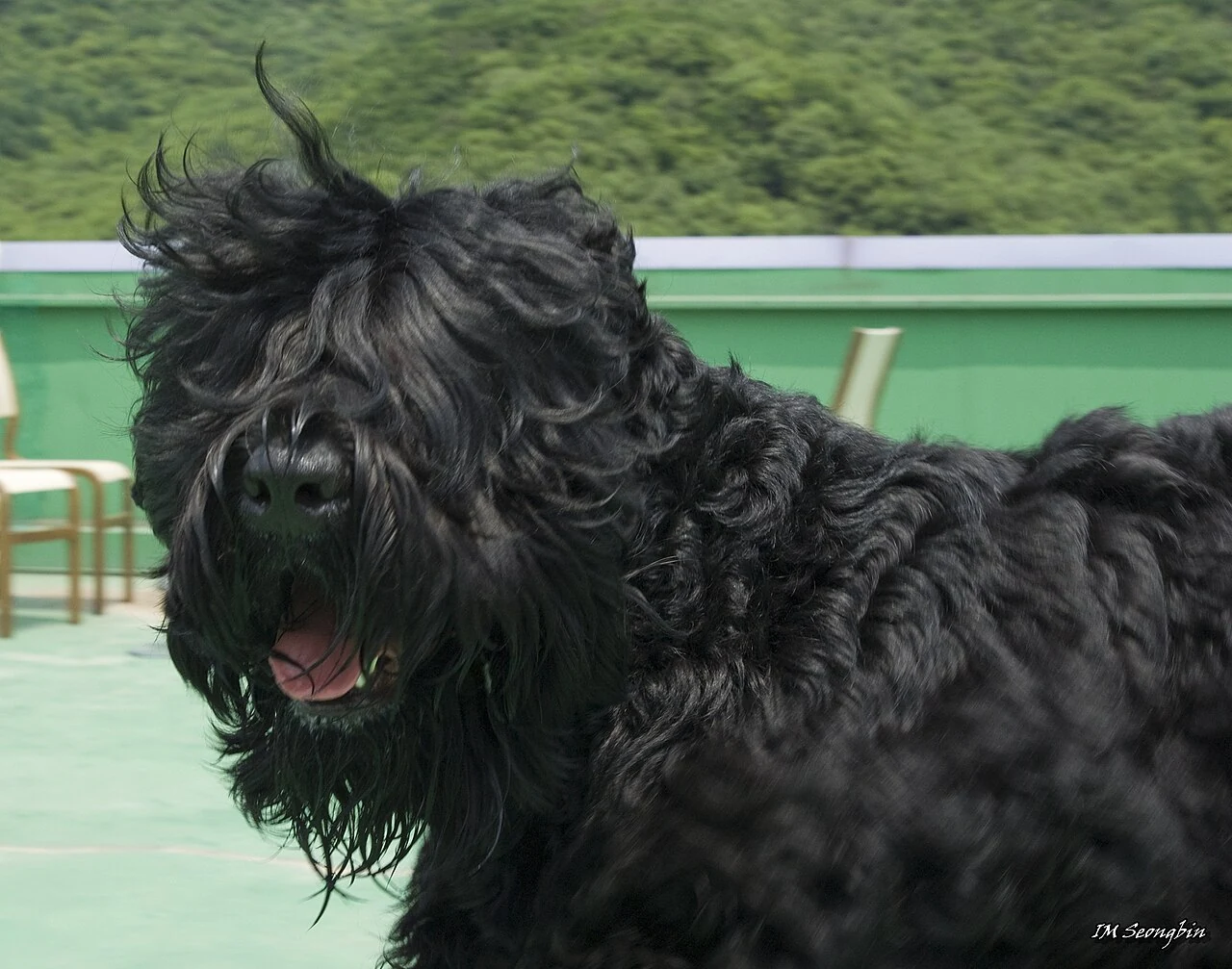
The dense double coat needs thorough maintenance. Several times a week, it should be brushed through to the undercoat and checked with a suitable comb. Brief daily checks help find new knots. Areas where a harness rubs, and the beard when it stays damp after drinking, deserve particular attention.
Regular skilled trimming is needed. Around the eyes and beard, an experienced groomer is useful until an owner has learned safe handling techniques. Damp or dirty beard hair should be cleaned and dried. Nail checks, attention to the ears and regular brushing with dog toothpaste also belong in the routine. Grooming time and professional costs should be considered before acquiring the dog and can be included in Fellfolio’s cost planner.
Size and build
A young Russian Black Terrier should meet different people and experience new places in calm, supported situations. These encounters should allow it to build positive experiences. A short visit with space and rewards may be more useful than an afternoon of unfamiliar hands. Familiarisation should continue as the protective behaviour of the adult dog becomes more apparent.
During growth, play, short explorations and training with breaks are appropriate. Long runs alongside a bicycle and repeated high jumps should wait until it is physically ready. Later in life, shorter routes, secure footing and easier access to the car may help. New weakness, stumbling or marked changes in stamina need investigation. Videos and brief observations in Fellfolio can show the veterinary team when these changes occur and what the dog is doing at the time.
From puppy to senior: caring for your dog through every life stage ↗
Health
Before choosing a puppy, you should ask for both parents’ hip and elbow examination results. Both joints can develop abnormally, causing pain and later joint damage. Britain’s Royal Kennel Club also recommends several DNA tests. Since 2025, these include testing for an inherited form of progressive retinal atrophy, known as prcd-PRA. The retina detects light at the back of the eye. Affected dogs gradually lose their sight.
Another inherited condition can cause unusually high levels of uric acid in the urine. This is called hyperuricosuria, or HUU, and it can lead to urinary stones. A DNA test identifies the known variant. Some genetically affected dogs develop stones, while others do not, but abnormal urination needs assessment. A dog repeatedly trying to urinate without producing urine needs immediate veterinary help.
Testing for JLPP is also important in breeding. The abbreviation refers to an inherited nerve disease that begins early in life. It can paralyse the voice box, preventing the entrance to the airway from opening properly. Affected young dogs can develop breathing and swallowing difficulties with increasing weakness. This severe condition currently has no effective treatment. Testing helps breeders choose appropriate pairings because outwardly healthy dogs may carry one copy of the variant.
Results should be discussed with the vet so that inherited risks and current symptoms can be considered together. The American Kennel Club also lists heart and eye examinations. Fellfolio can keep test results, treatment records and observations organised, including when another person takes over care.
Could this breed fit your life?
Could work well if …
- You can manage a heavy, powerful dog reliably and have experience with guardians.
- You can provide daily shared exercise and continuing training.
- Thorough grooming, professional appointments and suitable care can be arranged.
What to consider
- Guarding and reserve towards strangers need early, knowledgeable guidance.
- The dense coat requires regular thorough grooming and skilled trimming.
- Joint examination results and relevant inherited conditions should be discussed when choosing a dog.
Similar needs, different dogs.
Selected by shared size, activity, grooming and training characteristics.
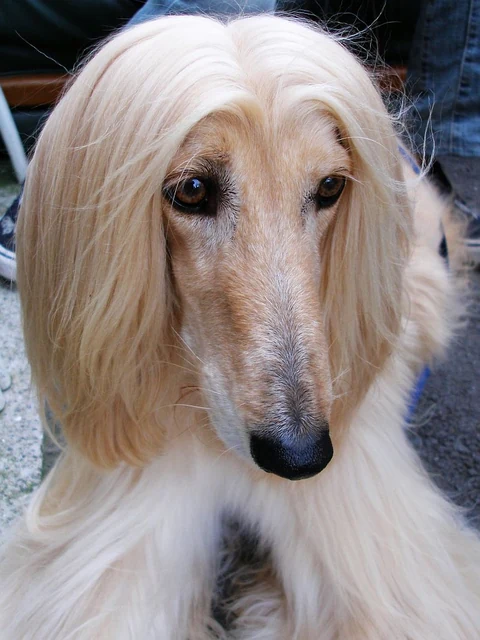
Sighthound
Afghan Hound
There is a fast hunting dog beneath the long silk coat. An Afghan Hound needs secure places to run and a substantial commitment to coat care.
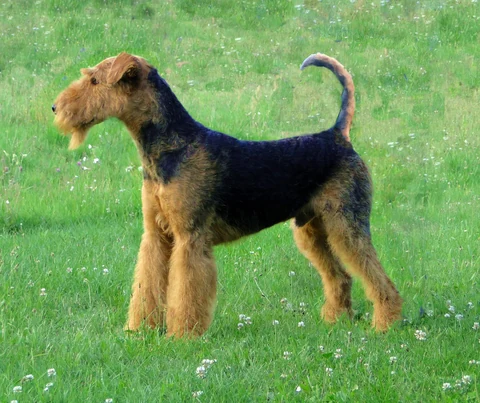
Large terrier from Yorkshire
Airedale Terrier
With its wiry coat, long head and distinctive beard, the Airedale is hard to miss. It is the largest terrier and shares much of the curiosity and independence of its smaller relatives. The breed originated along Yorkshire’s rivers, where dogs were needed for hunting on the banks. Today it suits people who enjoy being out with their dog, train patiently and make time for regular coat care.
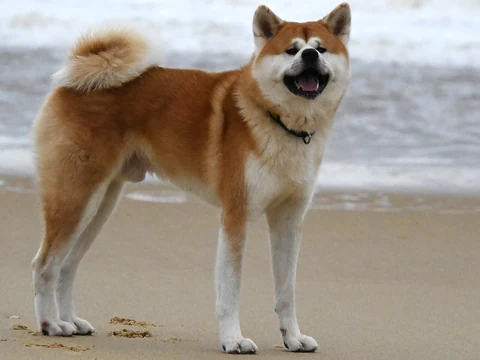
Japanese spitz with a dense undercoat
Akita
The Japanese Akita is a large dog with a dense undercoat, upright ears and a curled tail. It can form close bonds with familiar people while remaining more reserved with strangers. Its independence and hunting instincts suit people willing to guide encounters calmly and work with it regularly.
Sources and photograph credit
- Teaching your dog to be left alone
Used in this profile for: Staying home alone
- Urinary Obstruction in Dogs
Used in this profile for: Health
- JLPP, Juvenile Laryngeal Paralysis and Polyneuropathy
Used in this profile for: Health
- Juvenile Laryngeal Paralysis & Polyneuropathy
Used in this profile for: Health
- Exercising your puppy
Used in this profile for: Size and build
- Training Your Dog to Be Left Alone
Used in this profile for: Everyday life
- Children and Dogs
Used in this profile for: Temperament
- Dog dental care
Used in this profile for: Day-to-day care
- Train Your Dog to Come When Called
Used in this profile for: Everyday life
- Training your dog
Used in this profile for: Everyday life
- Black Russian Terrier
Used in this profile for: Temperament, Everyday life, Day-to-day care, Size and build, Health, Lifespan, Could this breed fit your life?
- Russian Black Terrier, FCI Standard No.327
Used in this profile for: Size / Weight, Temperament, Size and build
- Russian Black Terrier
Used in this profile for: Temperament, Everyday life, Day-to-day care, Health, Could this breed fit your life?
- New DNA testing scheme for the Russian Black Terrier
Used in this profile for: Health
- Hyperuricosuria (HUU)
Used in this profile for: Health
Photo credits
Side view · Wystawa Rybnik 02.10.2011 czarny terier rosyjski 1pl.jpg · Pleple2000 · CC BY-SA 3.0 · Edited

Coat and features · Black Russian Terrier (블랙 러시안 테리어).jpg · Seongbin Im · CC BY-SA 2.0 · Edited
.jpg)
Portrait · 6Tchiorny Terrier.JPG · Laslovarga · CC BY-SA 4.0 · Edited

Everyday life · BRT (full).JPG · Томасина · CC BY-SA 3.0 · Edited
.JPG)