 fellfolio
Companion dog
Eurasier
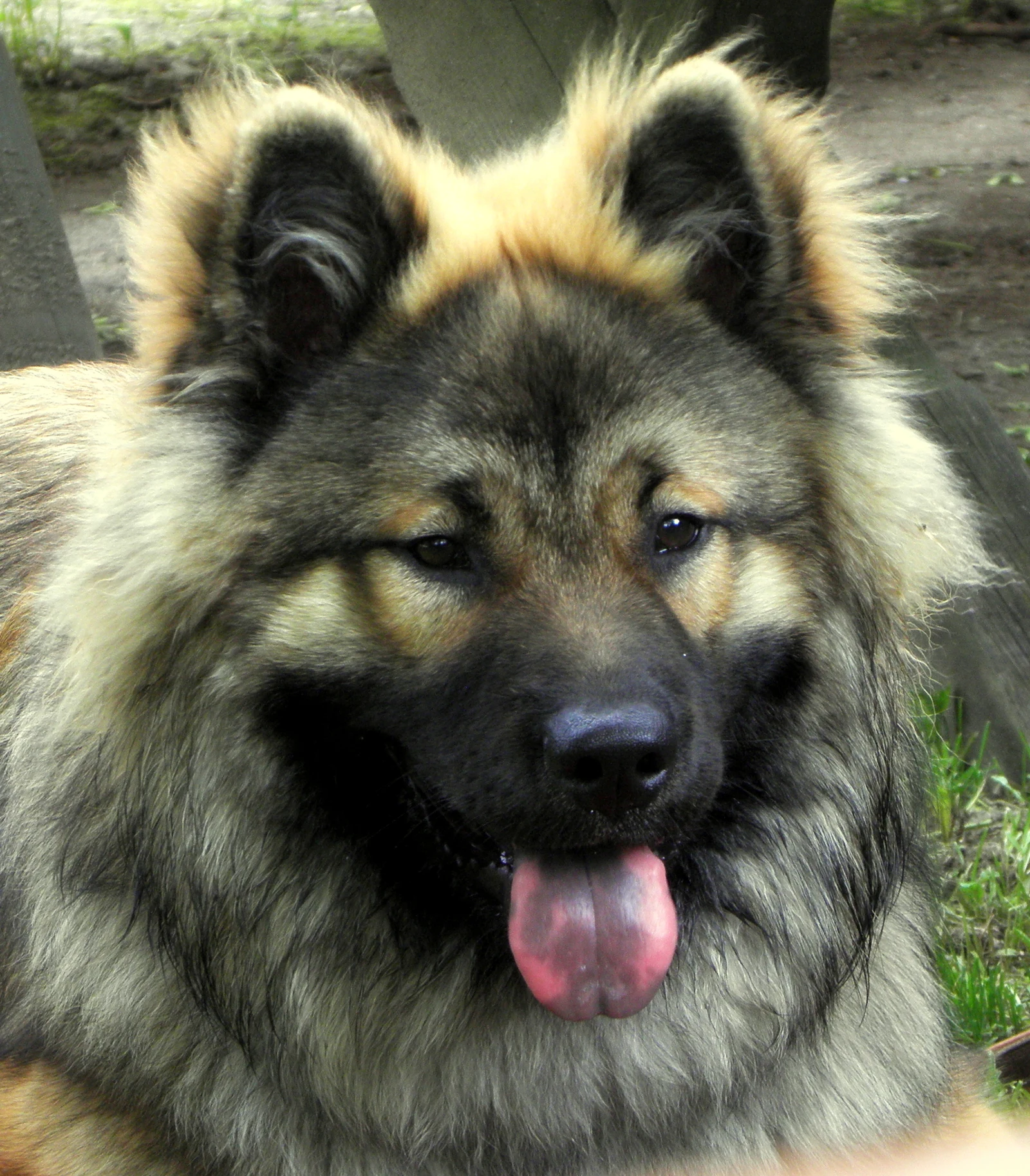
The Eurasier was developed as a close family companion. It is often calm indoors, happy to join outdoor life and initially reserved with unfamiliar people.
At a glance
- Size
- Medium
- Height at shoulder
- 48 to 60 cm
- Weight
- 18 to 32 kg
- Lifespan
- over 10 yearsUK Royal Kennel Club breed profile
- Activity
- Moderate
- Grooming
- Weekly
- Training
- Patience & clear guidance
- Owner experience
- First dog with support
Close to family, reserved with strangers
The Eurasier was developed in Germany from Wolfspitz, Chow Chow and later Samoyed stock. The aim was an even-tempered companion, not a specialist hunter or livestock guardian. Many seek close contact with familiar people while observing strangers from a distance at first. Visitors should respect that. A dog need not accept immediate touch to be well socialised.
Practise meetings kindly and without hurry. A resting place a little way from visitors lets the dog observe first and approach later if it wishes. Eurasiers often like to be part of family life without needing constant games. Long, routine absences are nevertheless a poor match for that close attachment.
Everyday life
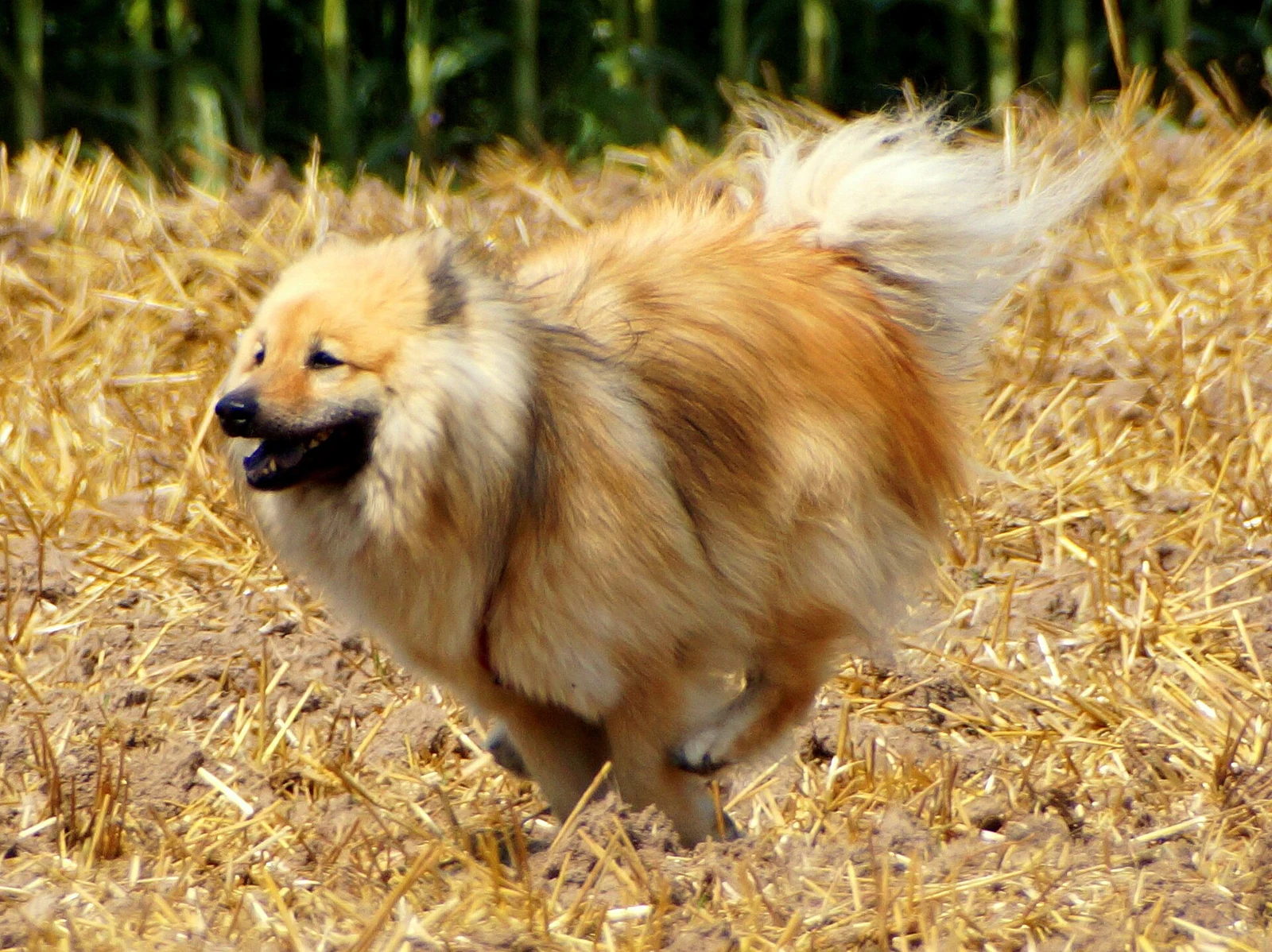
The Royal Kennel Club puts Eurasiers in an up-to-one-hour-a-day exercise category. Several walks, safe opportunities to move freely and brief games offer a good framework. Some enjoy scent searches; others prefer simply going along. Endless repetition of one exercise can bore a dog that likes to think for itself.
Add brief recall practice to walks and give your dog time to sniff. Afterwards, let it rest undisturbed at home. Teach time alone in very short stages, extending them only when the dog can remain comfortable.
Staying home alone
Dogs learn to stay home alone in small steps. The RSPCA advises no more than four hours at a time. Puppies and dogs that become unsettled when left alone need shorter absences and gradual practice. Arrange someone to care for your dog when you will be away longer.
Day-to-day care
A medium-length, slightly standing outer coat covers a thick undercoat. A thorough weekly brush suits many Eurasiers outside shedding season. When the undercoat comes out heavily once or twice a year, daily combing helps. The double coat does not need clipping short for routine care.
While combing, look for burrs behind the ears, on the tail and between the toes. Nails, teeth and the small upright ears fit into a brief care routine. Bathe only when genuinely necessary.
Size and build
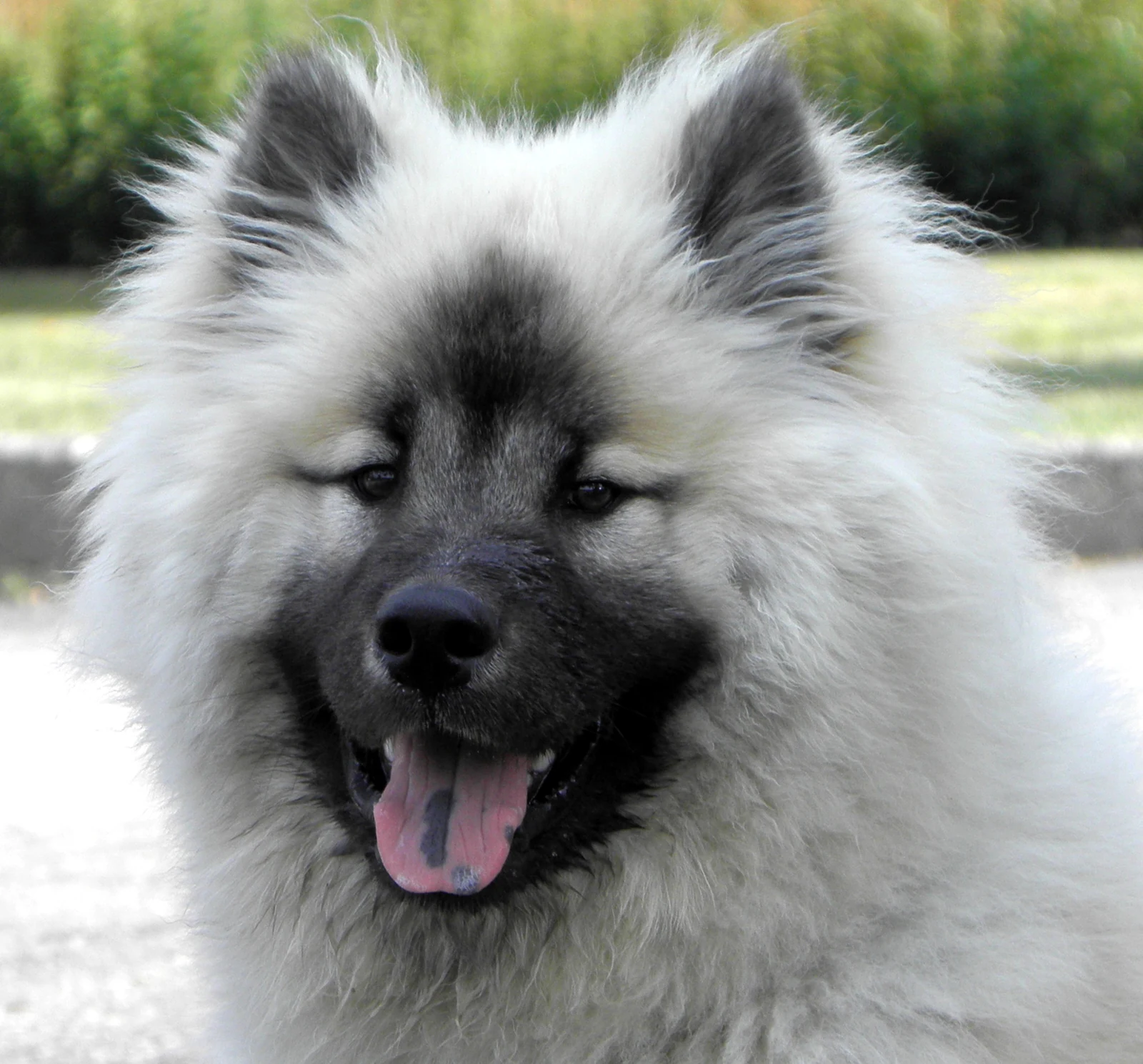
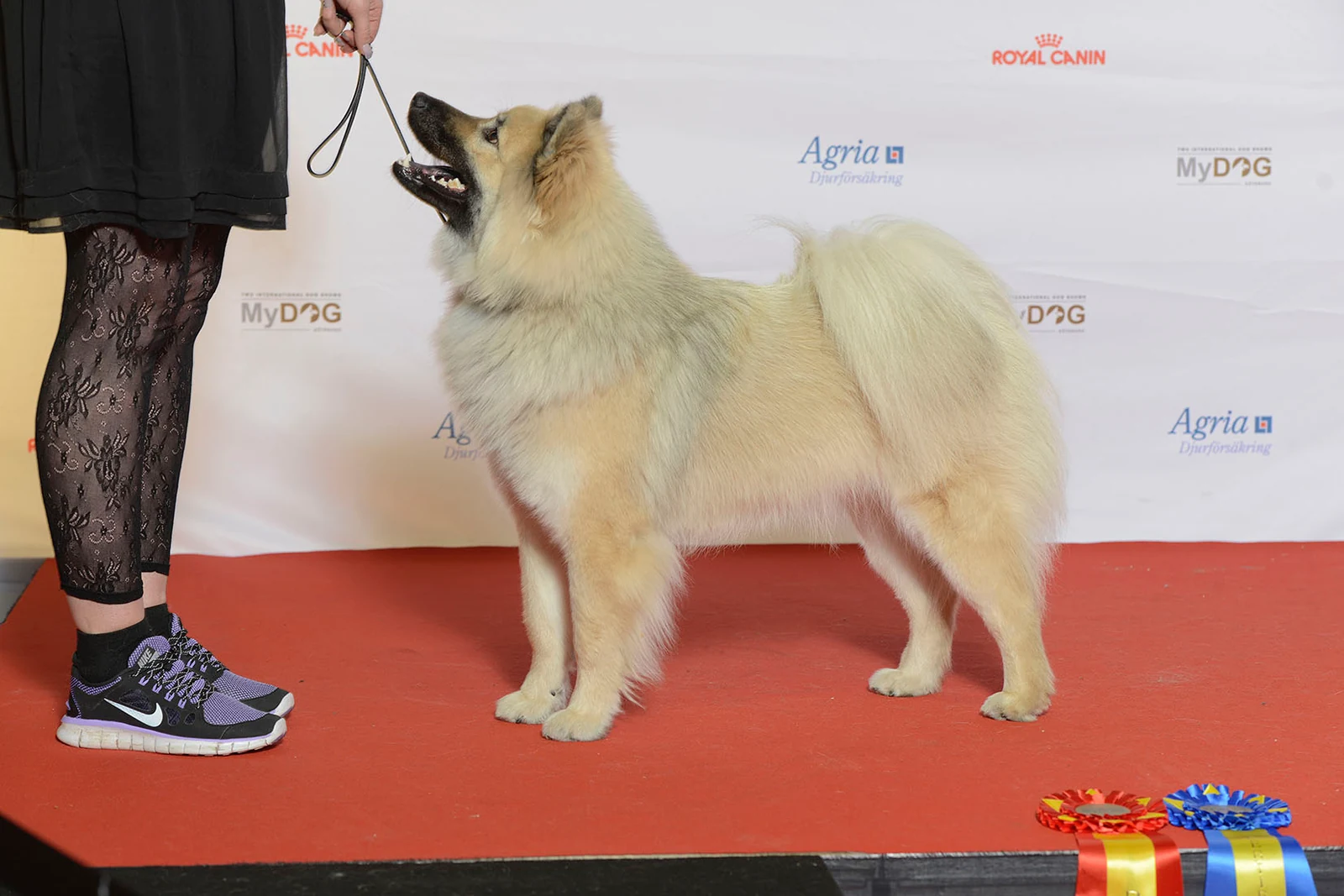
The Eurasier is a medium-sized spitz, slightly longer than tall and strong without being heavy. The British standard gives shoulder heights and weights of 52 to 60 cm and 23 to 32 kg for males, 48 to 56 cm and 18 to 26 kg for females. A wedge-shaped head, erect ears and tail carried over the back define its outline.
Many coat colours are permitted; pure white, liver, merle and large white patches on the body are excluded. Tongue pigmentation can vary. Do not choose a puppy for a rare colour over free movement and relaxed behaviour.
Health
The Royal Kennel Club recommends hip, elbow and eye assessments. Eurasier breed clubs also assess kneecaps and thyroid function and test for a cerebellar developmental disorder called Dandy-Walker-like malformation. The cerebellum helps coordinate movement. Affected puppies may have an unsteady gait from early life without the condition necessarily getting progressively worse. Ask for each parent’s specific results and how any carrier status was considered in the mating.
A dog that repeatedly lifts a leg, suddenly moves unsteadily, becomes unusually tired or develops an unexplained coat change needs veterinary assessment. Bring any available test results to the appointment so the vet can assess the problem in context.
Could this breed fit your life?
Could work well if …
- You want a calm, family-oriented dog and can spend plenty of time together.
- Regular walks and heavier grooming during shedding suit your routine.
May be more difficult if …
- The dog would frequently spend long hours alone.
- You want a dog that greets every visitor enthusiastically from the first moment.
Similar needs, different dogs.
Selected by shared size, activity, grooming and training characteristics.
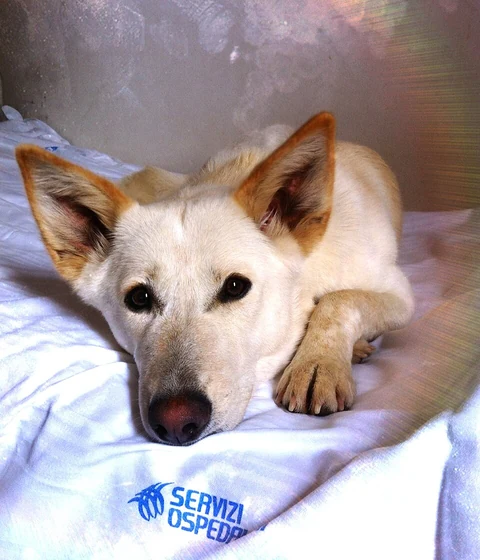
Guardian and companion
Canaan Dog
The Canaan Dog is an alert working breed from the Middle East. It stays close to familiar people but often watches new visitors from a distance first.
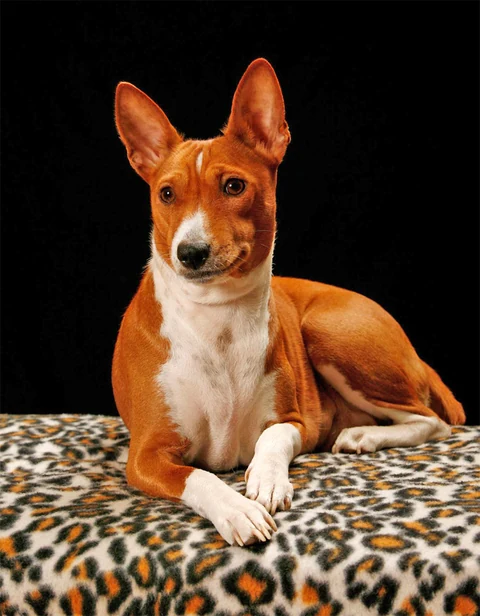
Hound
Basenji
The Basenji rarely barks but can make yodelling sounds. Outside, it may follow a scent or moving animal at speed, so off-lead running calls for secure fencing.
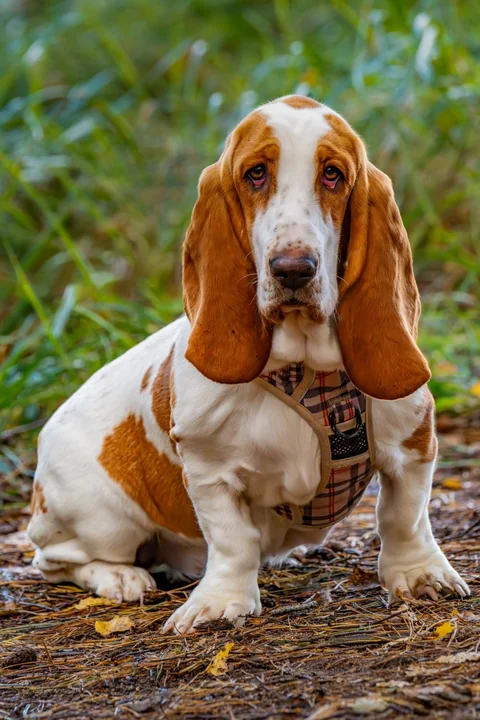
Scent hound
Basset Hound
Easy-going with people and tireless on a trail, the Basset Hound is a sociable hunting dog with a substantial body and a nose that can set the pace outdoors.
Sources and photograph credit
- Teaching your dog to be left alone
Used in this profile for: Staying home alone
- Eurasier dog breed information
Used in this profile for: Temperament, Everyday life, Day-to-day care, Size and build, Health, Lifespan, Could this breed fit your life?
- Promoting healthy Eurasiers
Used in this profile for: Temperament, Everyday life, Size and build, Health, Lifespan, Could this breed fit your life?
- Eurasier, Breeds A to Z
Used in this profile for: Temperament, Everyday life, Day-to-day care, Size and build, Health, Lifespan, Could this breed fit your life?
- Eurasier breed standard
Used in this profile for: Size / Weight, Temperament, Everyday life, Size and build, Lifespan, Could this breed fit your life?
- A deletion in the VLDLR gene in Eurasier dogs with cerebellar hypoplasia resembling a Dandy-Walker-like malformation (DWLM)
Used in this profile for: Health
Portrait · Eurasier · Stiller Beobachter from Ansbach, Germany · CC BY 2.0 · Edited

Side view · BIR Grupp 5: EURASIER, EURO’Jou Capaya · Johan Frick-Meijer / Svenska Mässan · CC BY 2.0 · Edited
.jpg)
In action · agile · Stiller Beobachter from Ansbach, Germany · CC BY 2.0 · Edited

Puppy · Eurasierwelpe · Achim Herzog · CC BY-SA 2.0 · Edited
