 fellfolio
Companion dog
English Bulldog
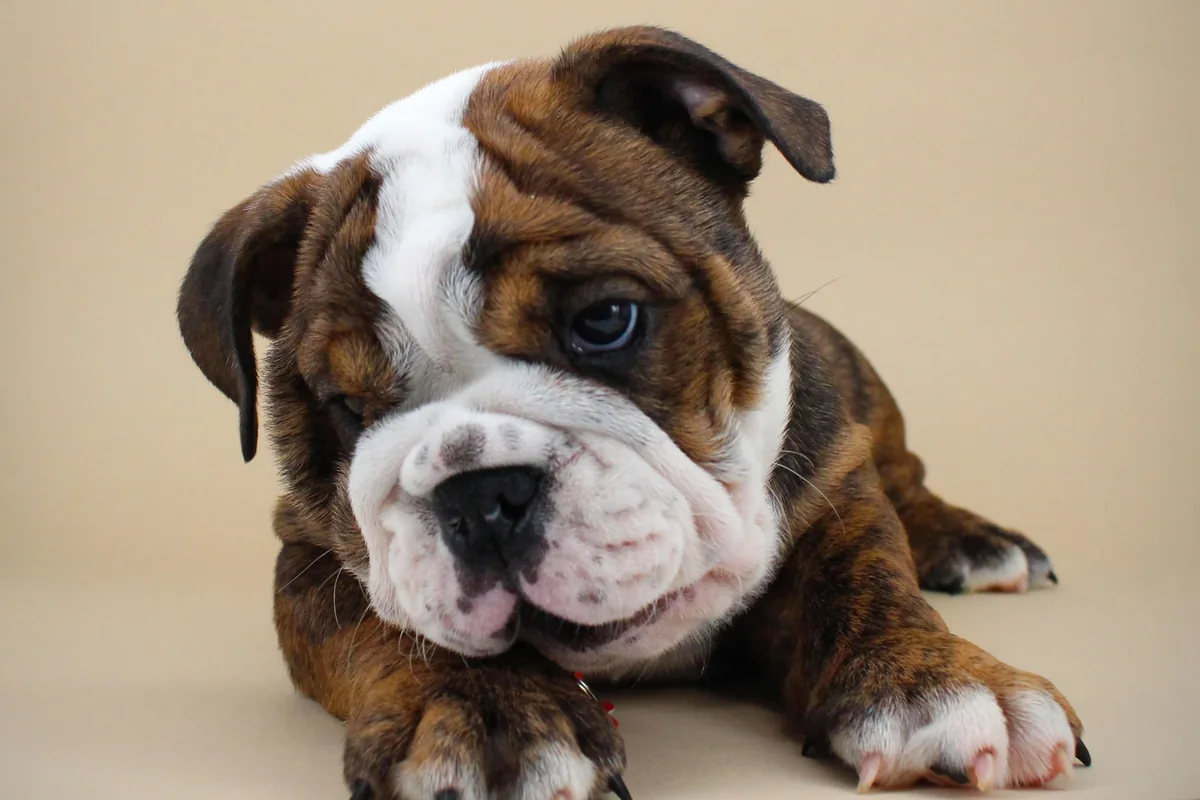
English Bulldogs often enjoy company. Their short muzzle, skin folds and heavy build can hinder breathing and movement. Before choosing a puppy, watch both parents breathe at rest and move on a walk, and ask for their health records.
At a glance
- Size
- Medium
- Height at shoulder
- 31 to 40 cm
- Weight
- 23 to 25 kg
- Lifespan
- under 10 years
- Activity
- Moderate
- Grooming
- Several times weekly
- Training
- Patience & clear guidance
- Owner experience
- First dog with support
Affectionate company with demanding health needs
Many English Bulldogs enjoy being close to their people and greet visitors calmly. A quiet manner, however, does not tell you whether a dog is comfortable. One that breathes noisily after a few steps or takes a long time to recover may be holding back because breathing is hard. Audible breathing while awake is not a harmless breed quirk.
Watch a Bulldog stand up, walk a short distance and settle again, rather than judging it only while it is resting. If you already live with one, a vet can assess breathing, eyes, skin and movement. Problems recognised early are easier to address than those dismissed for years as normal for the breed.
Everyday life
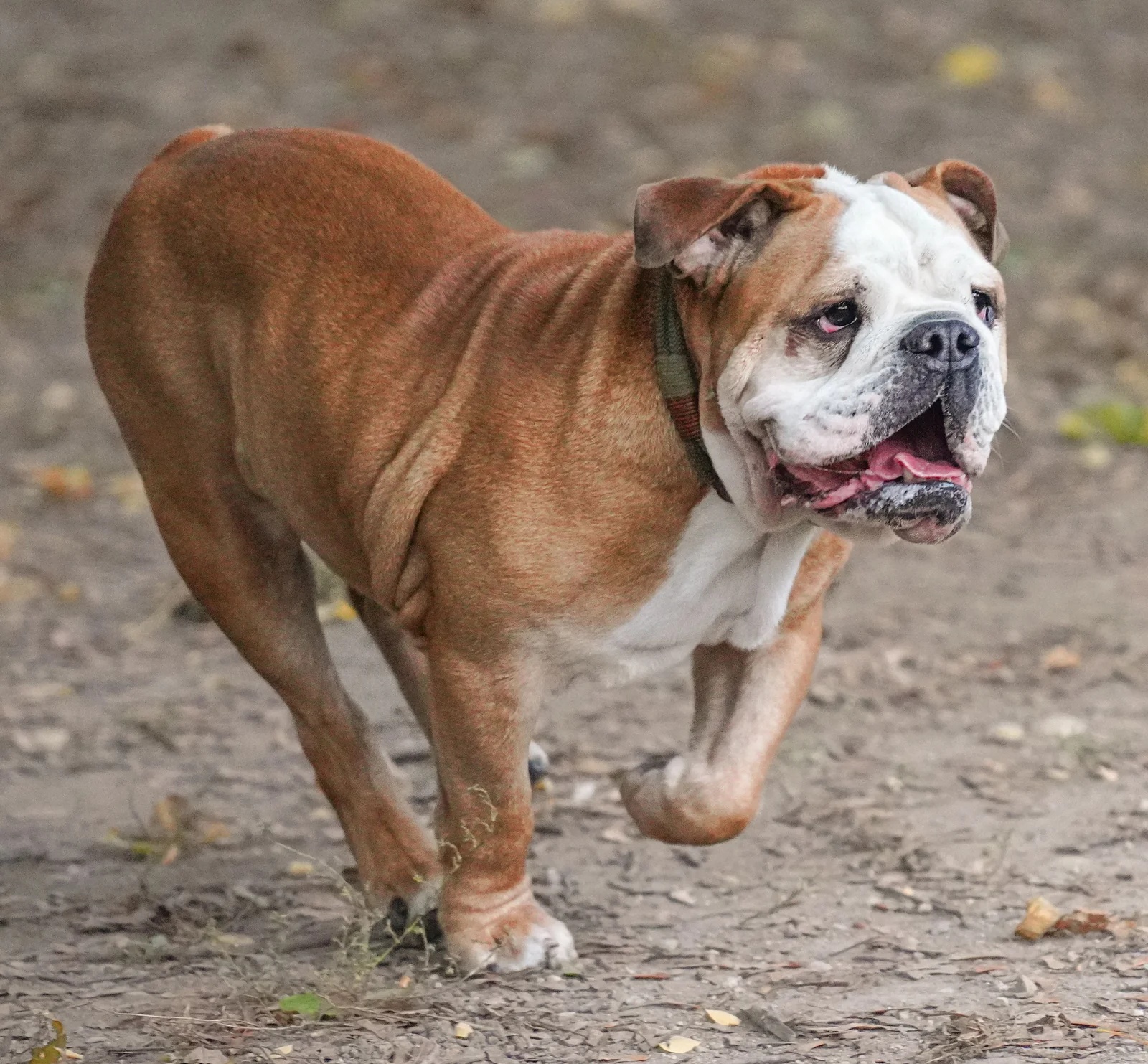
The UK veterinary charity PDSA lists up to an hour of daily exercise, but the dog’s actual breathing and stamina should determine the pace and length of each outing. Several shorter walks with time to sniff are kinder than one route the dog struggles to finish. Choose the cooler morning or evening in warm weather and make sure shade and water are available.
A short muzzle makes panting, and therefore cooling down, harder for many Bulldogs. Noisy breathing after a little exercise calls for a break and veterinary advice. If your Bulldog is visibly struggling to breathe, call your vet or an emergency vet immediately. If it seems overheated and weak, move it out of the heat, start cooling it and call at once.
Staying home alone
Dogs learn to stay home alone in small steps. The RSPCA advises no more than four hours at a time. Puppies and dogs that become unsettled when left alone need shorter absences and gradual practice. Arrange someone to care for your dog when you will be away longer.
Everyday dog training: recall, a loose lead and clear communication ↗
Day-to-day care
The short coat usually needs brushing about once a week. Skin folds need much closer attention: trapped moisture and friction can make them sore and painful. Clean them as your vet advises and dry them carefully, especially around the nose and tail base. Redness, discharge or an unpleasant smell warrants a veterinary check.
Watch the eyes too. Heavy facial skin can turn the eyelids inward or outward, allowing hair to rub the eye or the surface to dry out. If your Bulldog suddenly holds an eye shut in pain, call your vet immediately. Have repeated blinking or discharge checked too. Grooming helps you notice trouble early, but it cannot correct the underlying cause.
Size and build
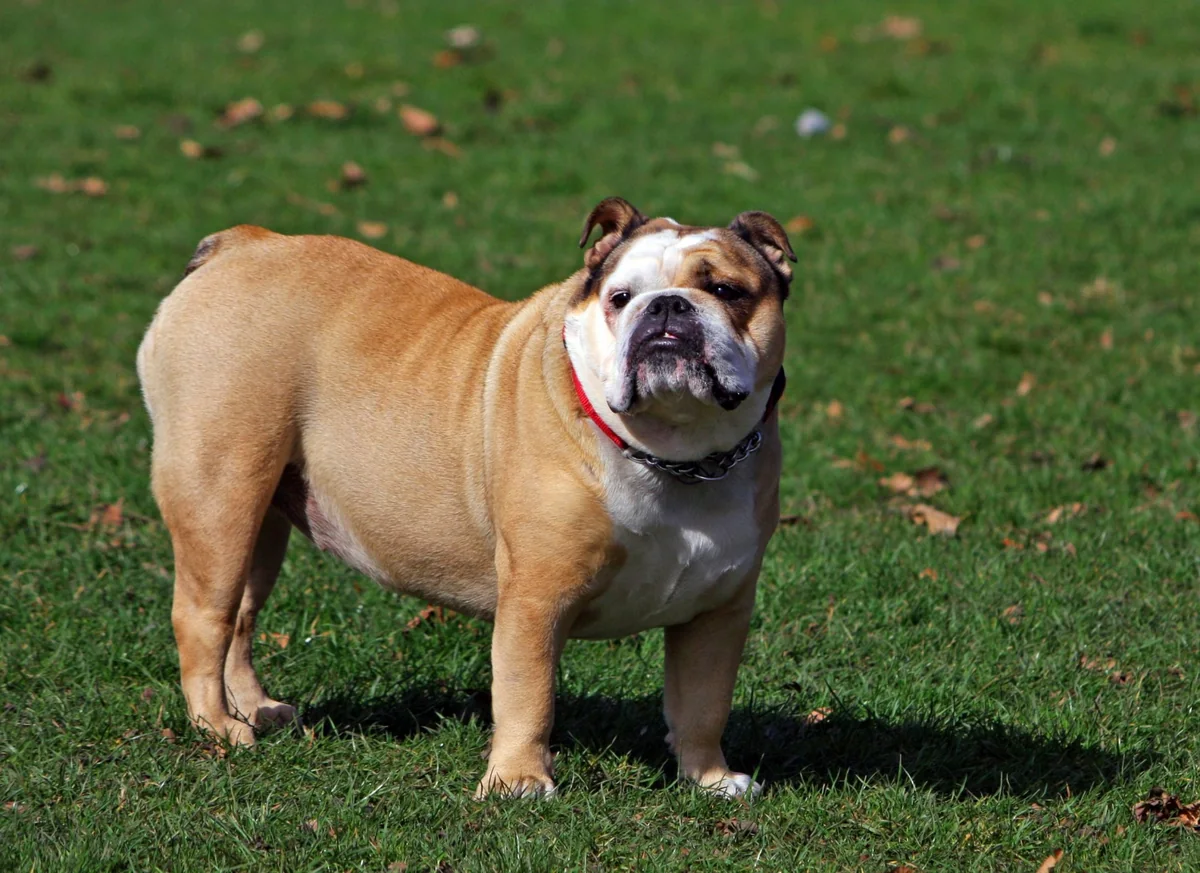
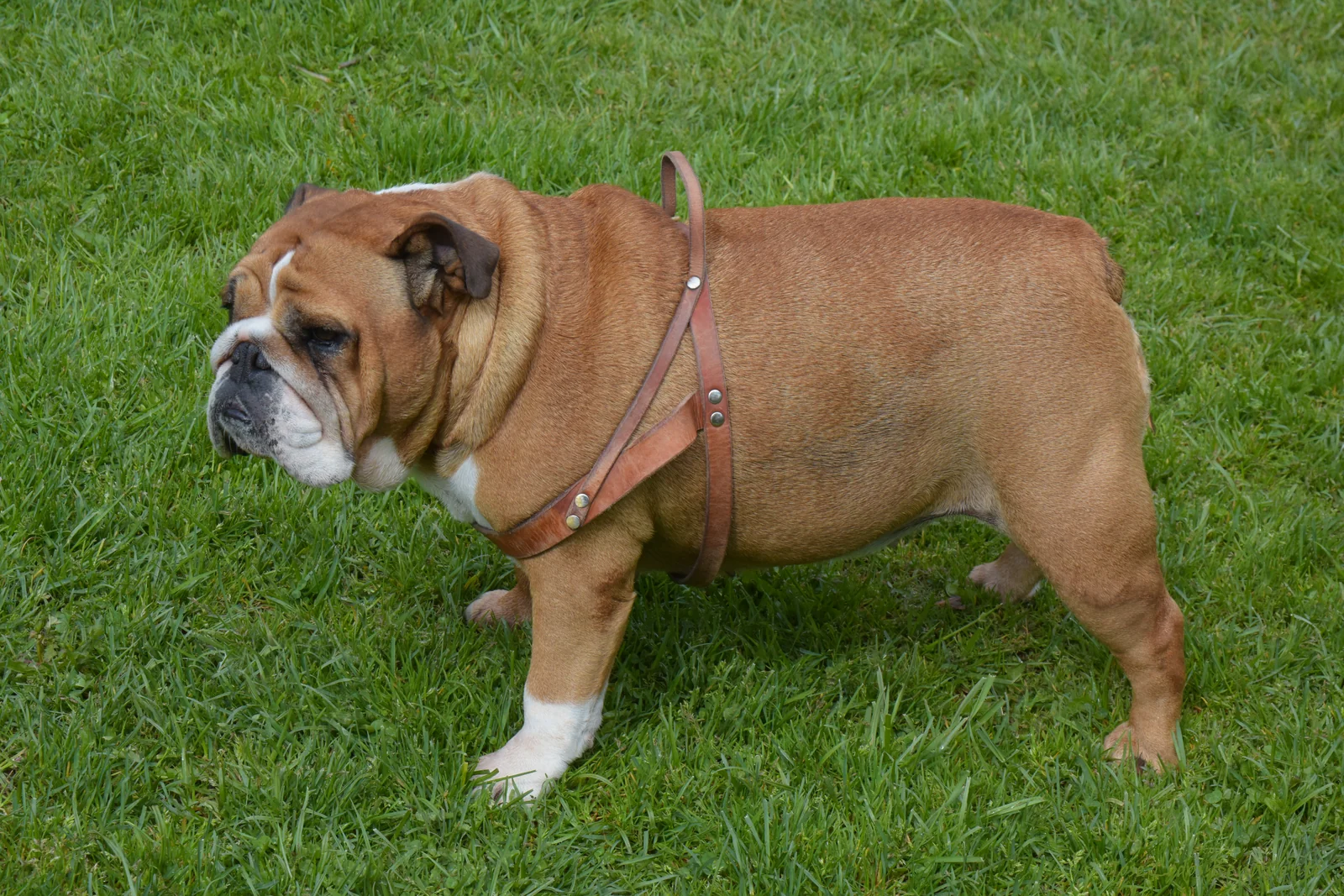
The English Bulldog is low, broad and heavy. PDSA lists a shoulder height of 31 to 40 cm and a weight of about 23 to 25 kg. A large head, very broad chest, short legs and a front-heavy body create the familiar outline. That shape can make movement, and even natural birth, more difficult.
Head shape is especially important. Narrow nostrils and a very short muzzle leave less room in the upper airway. Deep facial folds raise the risk of skin and eye disease. A Bulldog should be able to walk and breathe freely without struggling after a short distance. An even flatter face or heavier frame is not a sign of quality.
From puppy to senior: caring for your dog through every life stage ↗
Health
Brachycephalic obstructive airway syndrome, or BOAS, is the foremost health concern. Narrow nostrils and an elongated soft palate can obstruct airflow. Warning signs include noisy breathing at rest, snoring or retching, poor exercise tolerance and difficulty coping with heat. A vet can assess the airway and discuss treatment, including surgery when appropriate.
PDSA also describes infections in skin folds, eye conditions such as inward-turned eyelids or dry eye, and hip and elbow disorders. The heavy front and narrower pelvis can make giving birth difficult. If you are considering a puppy, ask to see the documented BOAS respiratory function grades for both parents and watch the dogs move while awake. Good results reduce the risk but cannot guarantee that the puppy will breathe freely. Because of the serious problems linked to this body shape, PDSA explicitly recommends considering a healthier breed or a crossbreed too.
Could this breed fit your life?
Could work well if …
- You can arrange ongoing veterinary care for breathing, skin and eyes and plan for possible treatment costs.
- You can tailor walks and daily routines to the dog’s actual stamina, especially in warm weather.
May be less suitable if …
- You would choose an extremely flat face over comfortable breathing and movement.
- You want a companion for long hikes, hot-weather exercise or regular strenuous runs.
Similar needs, different dogs.
Selected by shared size, activity, grooming and training characteristics.
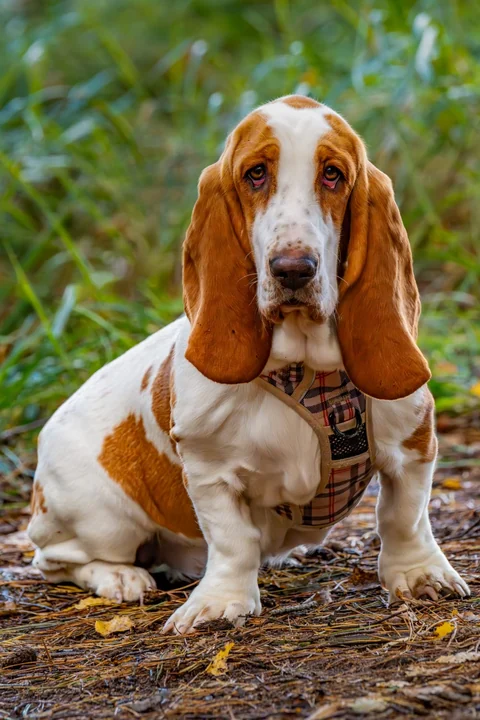
Scent hound
Basset Hound
The Basset Hound is a sociable hunting dog that may look easygoing at home but follow a scent for a long time outdoors. Allow time to sniff on walks and keep it on lead near roads and in open areas.
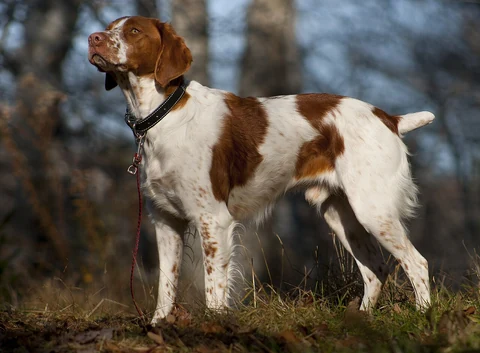
French pointing dog
Brittany
The Brittany is a compact French gundog with plenty of energy and a keen nose. It searches for game, points and retrieves. Pointing means pausing near game it has located to show the handler where it is. Anyone considering a Brittany as a companion should take its hunting instincts as seriously as its often friendly, people-oriented nature.
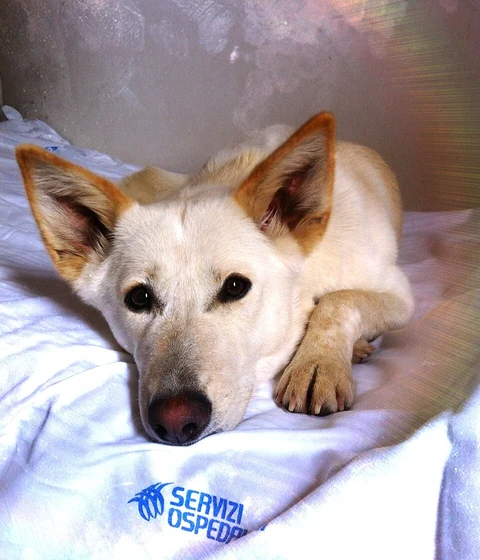
Guardian and companion
Canaan Dog
The Canaan Dog is an alert working breed from the Middle East. It stays close to familiar people but often watches new visitors from a distance first.
Sources and photograph credit
- Teaching your dog to be left alone
Used in this profile for: Staying home alone
- First aid for pets struggling to breathe
Used in this profile for: Everyday life
- Painful eye or eye held closed in dogs
Used in this profile for: Day-to-day care
- Heatstroke in dogs
Used in this profile for: Everyday life
- Respiratory Function Grading Scheme
Used in this profile for: Health
- English Bulldog · breed guide
Used in this profile for: Size / Weight, Temperament, Everyday life, Day-to-day care, Size and build, Health, Lifespan, Could this breed fit your life?
Photo credits
Portrait · kaz (Pixabay user) · CC0 1.0

Side view · Joselodos · CC0 1.0

In action · Andreas Schnabl · Pexels License
Puppy · Lazy Monday · Upet · CC BY 3.0 · Edited
